



*SOLD* Milities Skelatum (Skelator Knights); Rare Soviet ‘Upright’, c.1935-1953
Milities Skelatum (Skelator Knights); Rare Soviet ‘Upright’ Chess Set, c.1935-1953
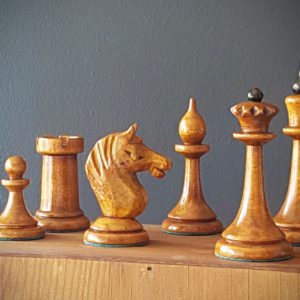
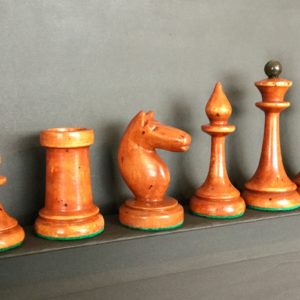
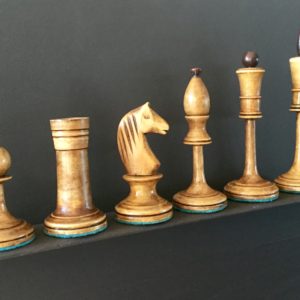
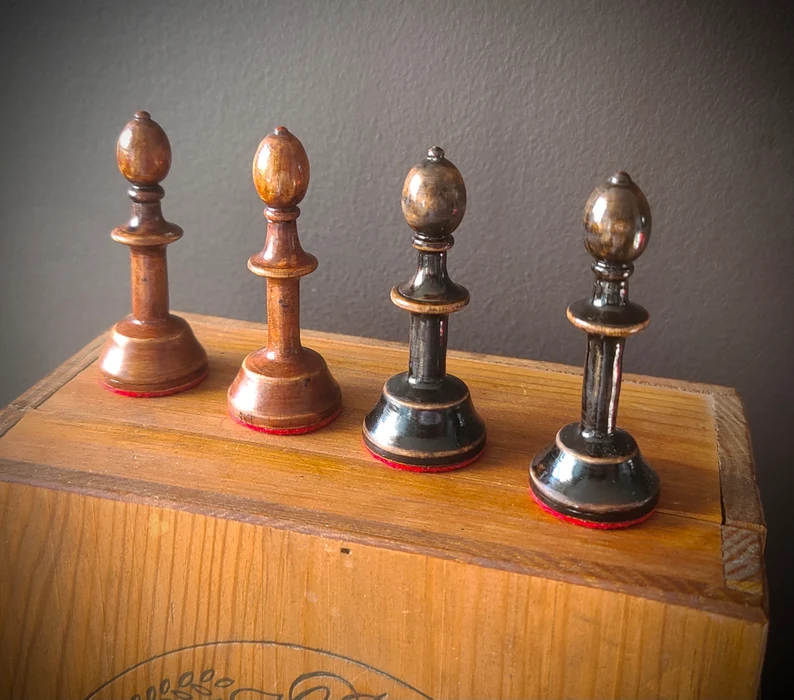
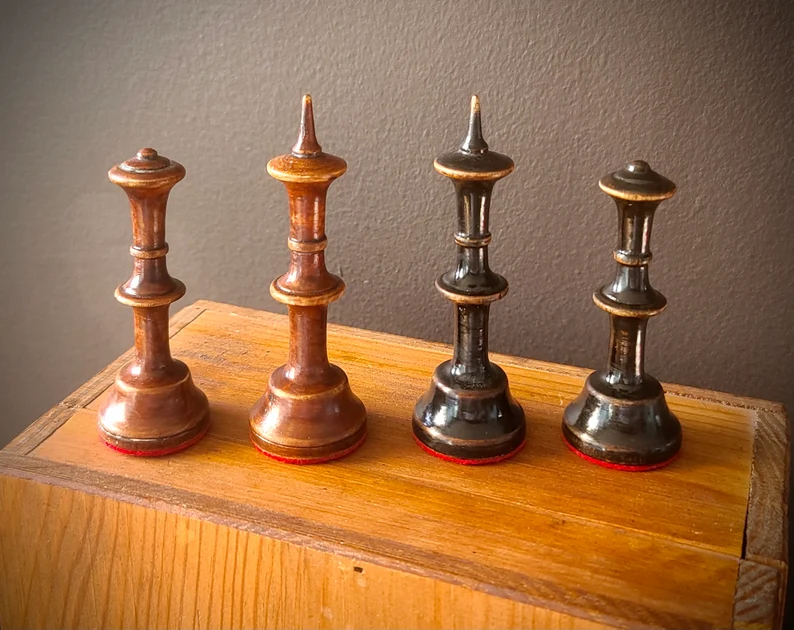
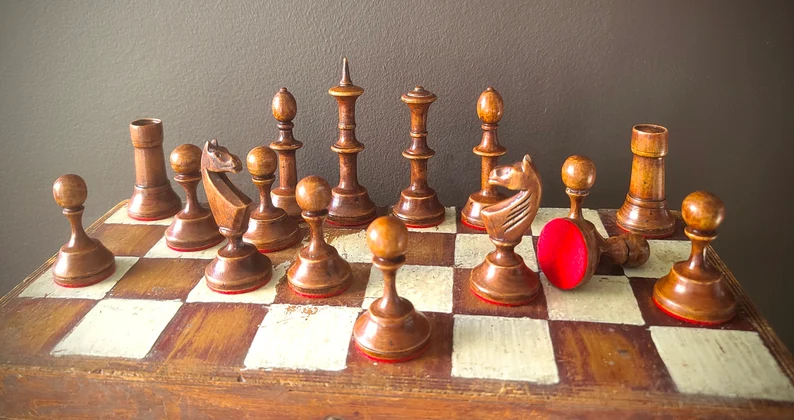
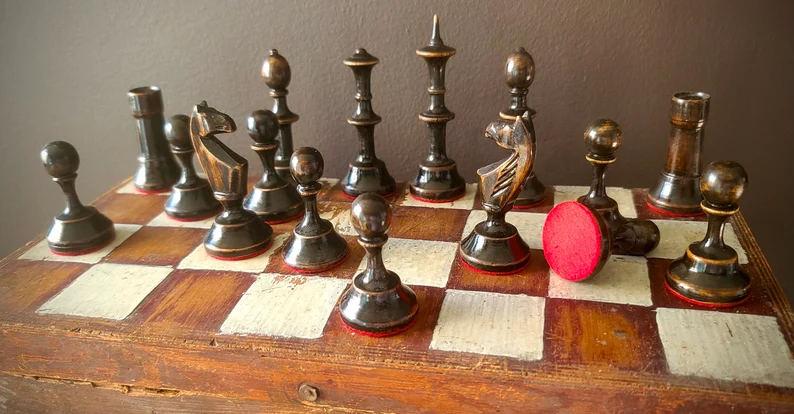
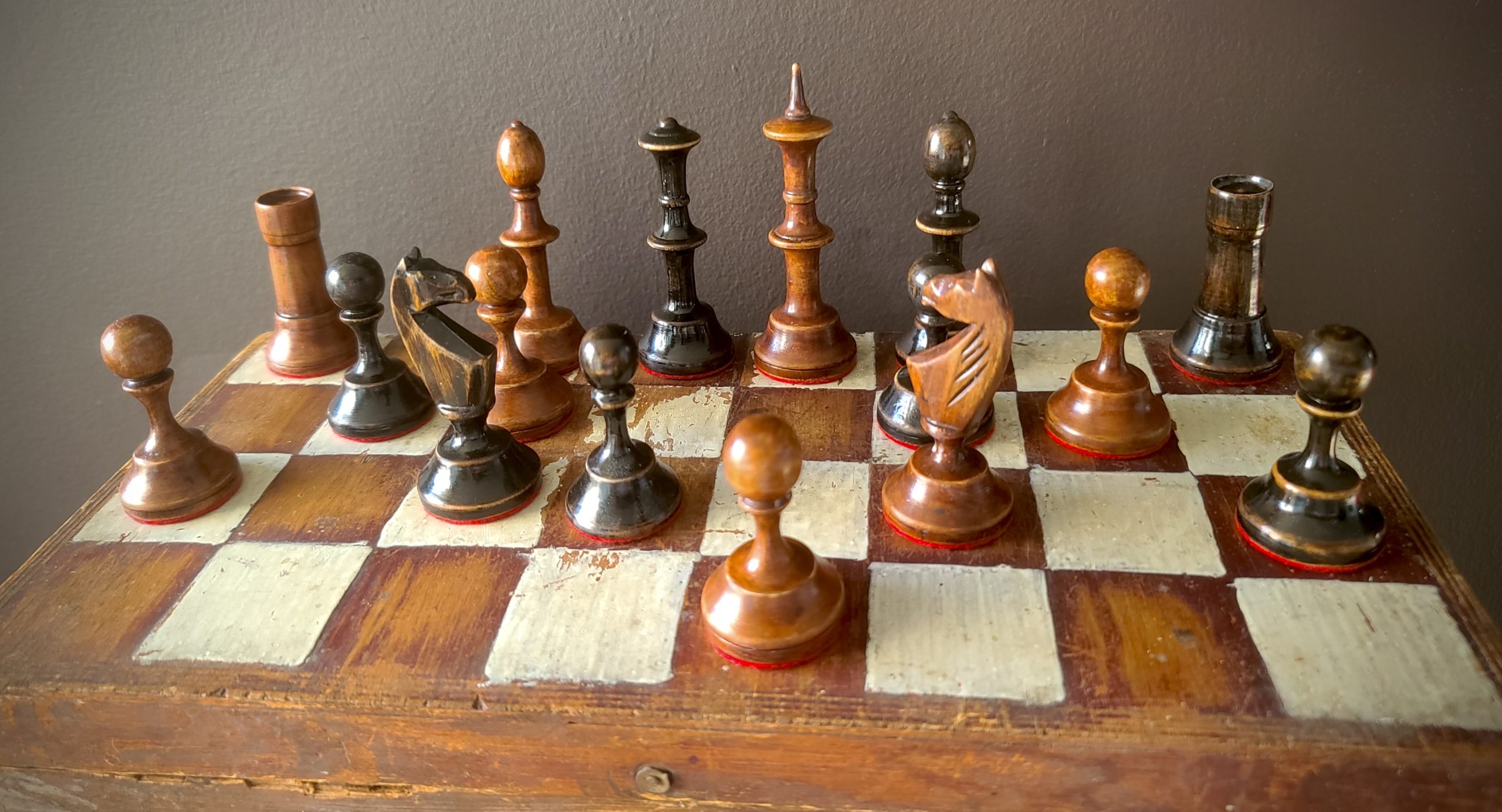
Skelator Knights (Milities Skelatum); 32 weighted chessmen without board, wood, artistically restored, antiqued chestnut red vs. black, c.1940s
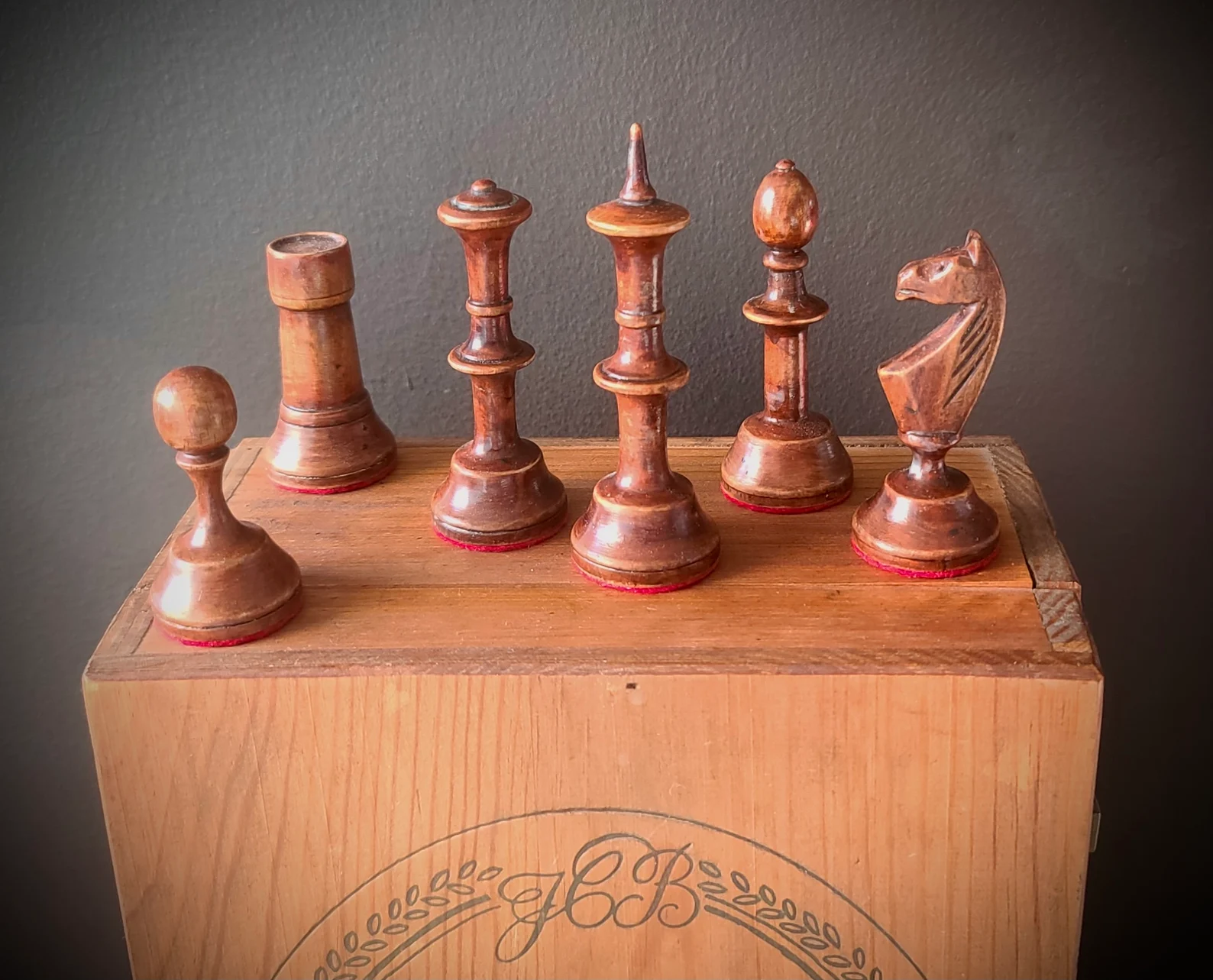
Height; King 9.7cm, weight 15g, base width 3cm; Queen 8cm 12g, Bishop 8cm 14g, Knight 7.2cm 13g, Rook 5.8cm 20g, Pawns 5.2cm 12g.
W: Boudreaux red felt pads, B: same
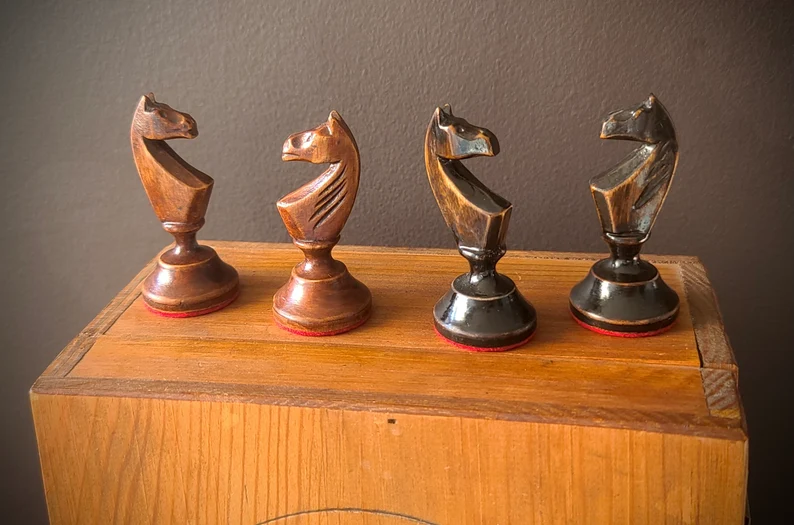
The phrase ‘old sets with a new set feel’ certainly applies to this vintage Soviet ‘upright’ design which stands apart from the more classic Russian patterns of the period. The knights, in particular, carry quite unusual angular features that (to my mind, at least) resemble horse’s skulls lending them an almost menacing feel and provides inspiration for their playful moniker.
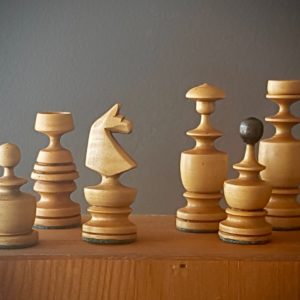
The set came to me with a few missing pawns and a finish/patina that didn’t exactly set the pulse racing. Replacement pawns were kindly turned for me by the master-carver, Misha Sokolov* of the Megrina Art Gallery in Russia, as it just seemed appropriate that these should emanate once again from Russian wood.
*Check out Misha’s Gallery on the ‘Megrina’ Facebook page – his hand-carved replicas of the Isle of Lewis chessmen are truly amazing!
The finish was inspired by a Stalin Era set from my own ‘reference’ collection. The original patina was rough to the touch, I wanted the complete opposite, which I achieved by building up several layers of oil-based paint sanded back between layers with very fine steel wool and then buffed with wax. Now they feel as smooth as Venetian plaster whilst retaining the aged feel of a post-WWII chess set. The vibrant red pads are purposefully dense, the flash of colour bringing the whole set together.
Milities Skelatum are UV resistant and ideal for display as well as casual play. Both kings carry the hand-painted iridescent copper ‘Power’ signature of the artist on their bases and is the first to be listed in 2022.
The set is also accompanied by our unique ‘Certificate of Artistry’ which will be posted out separately once we tally up how many ‘Copper Signature’ sets pass through our galleries in the coming year, “… all good things …” as the old saying goes.
Ref Code:
MS22
Visit our Gallery for more artistically restored vintage chess sets.
Feeling social? Follow us on Instagram, Facebook, or Twitter!