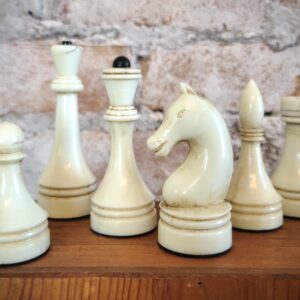
 Et Densi (‘Tusk’); Weighted Soviet Carbolite Chess Set, c.1965-1975
*SOLD* Toro Bravo; Artistic Recreation of the ‘Joc Catalan’ (Catalan Set), Barcelona, 1929
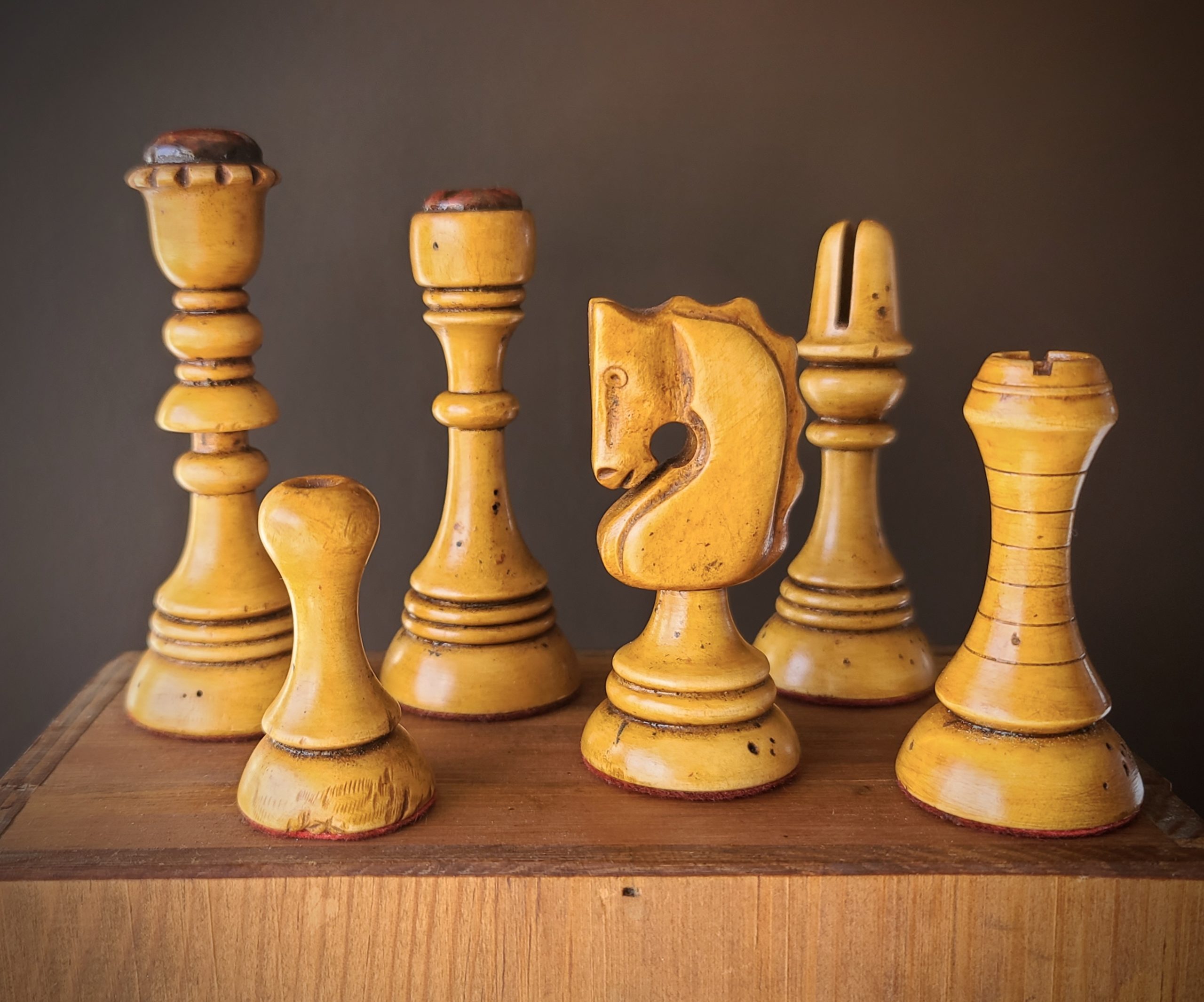
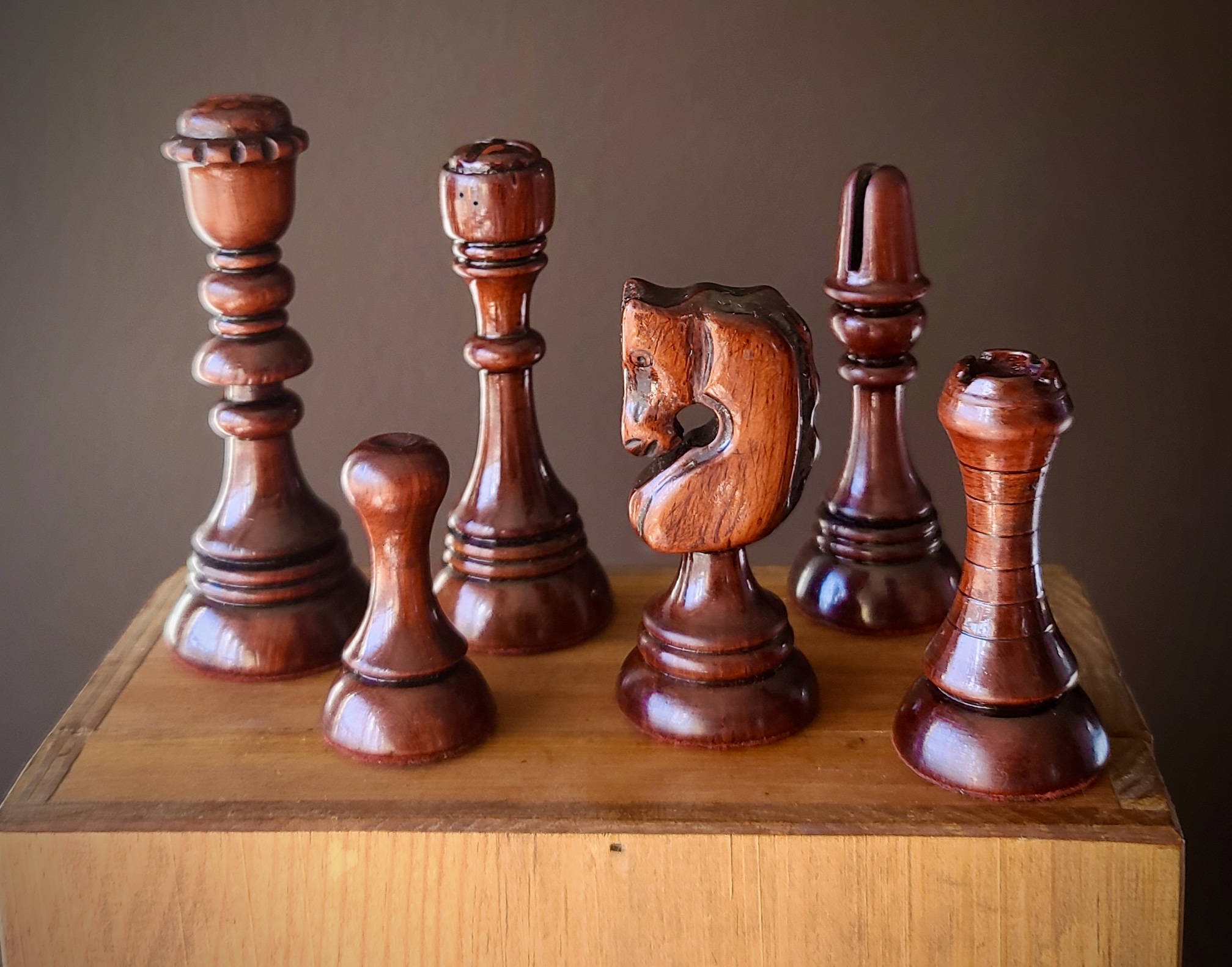
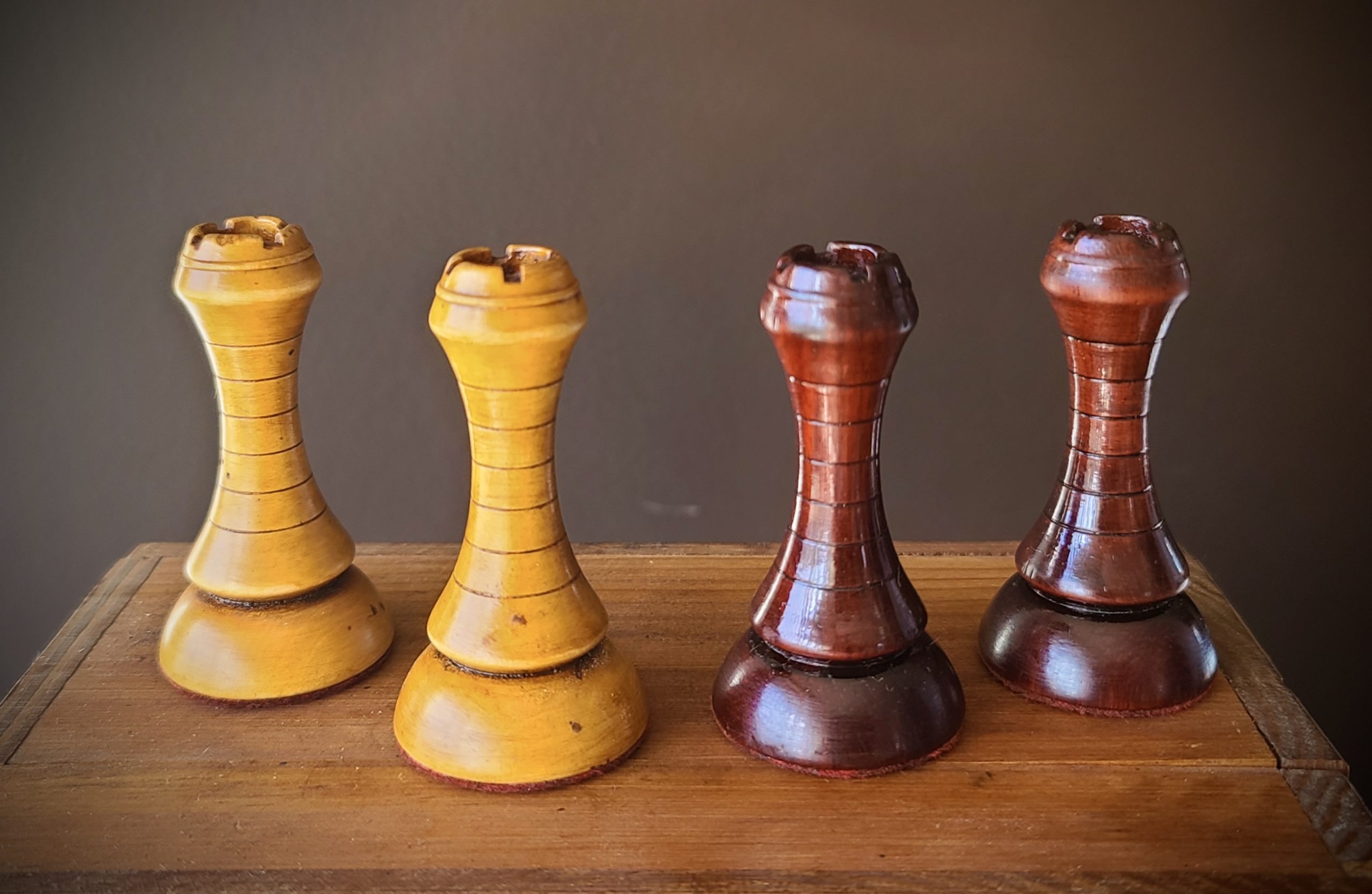
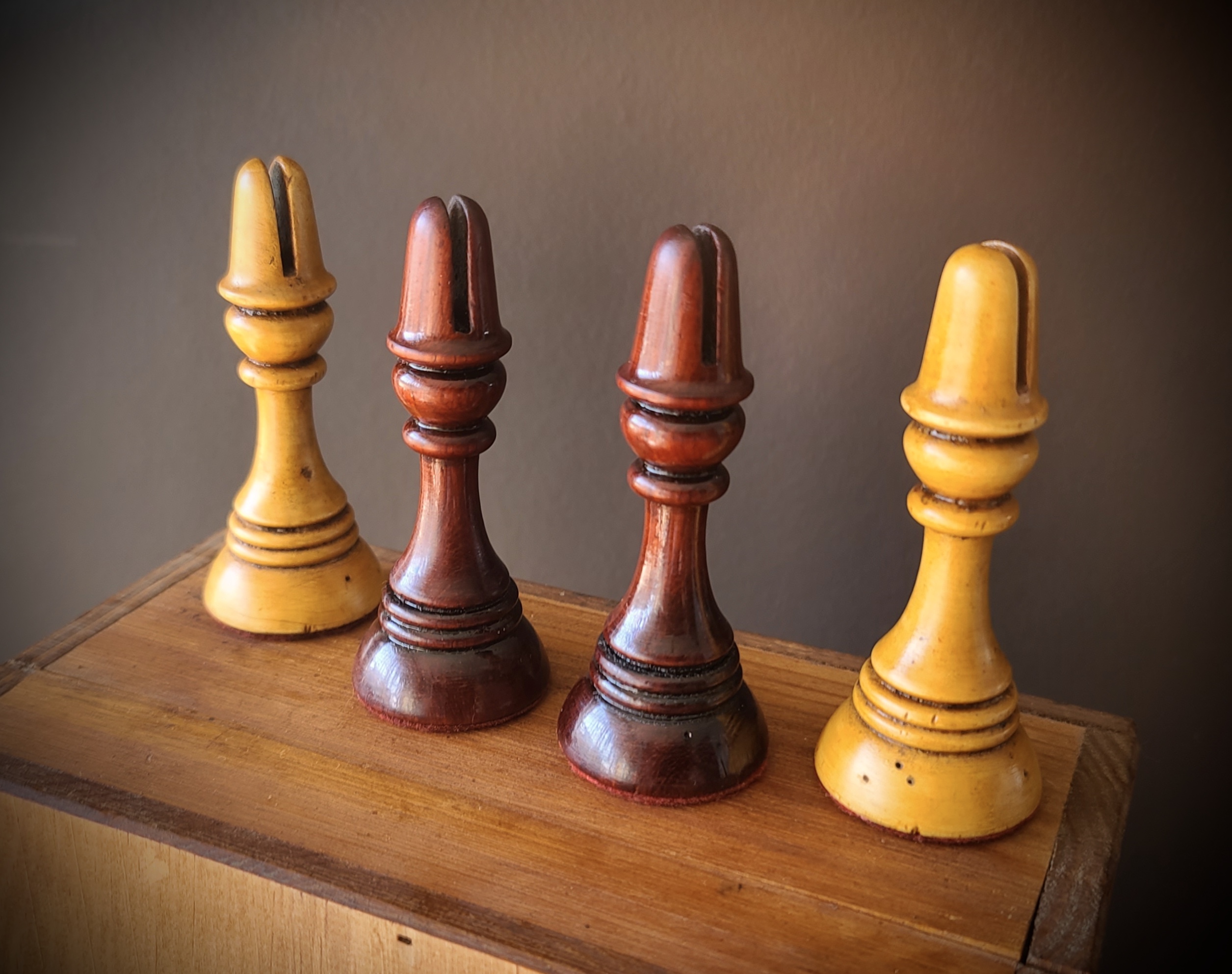
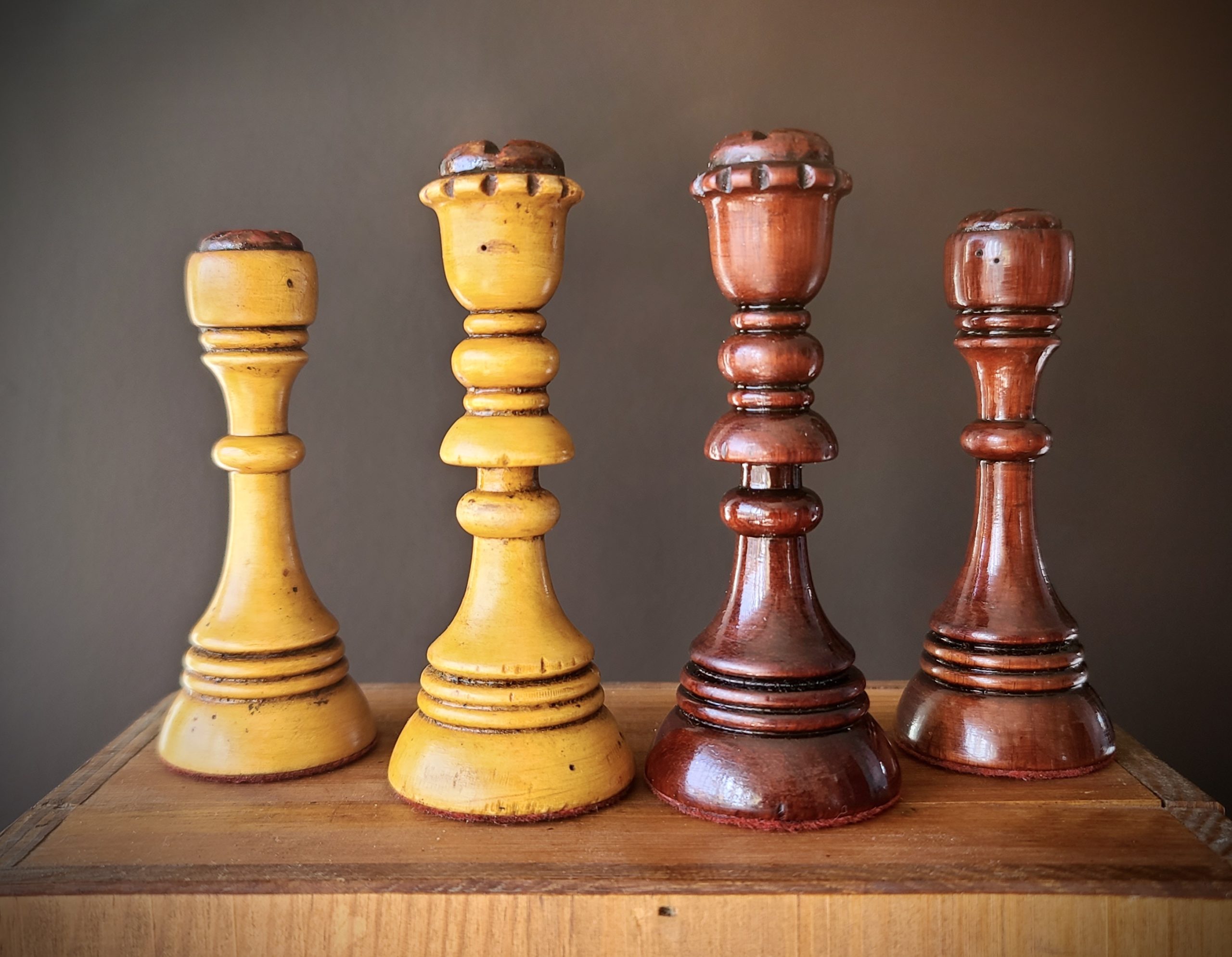
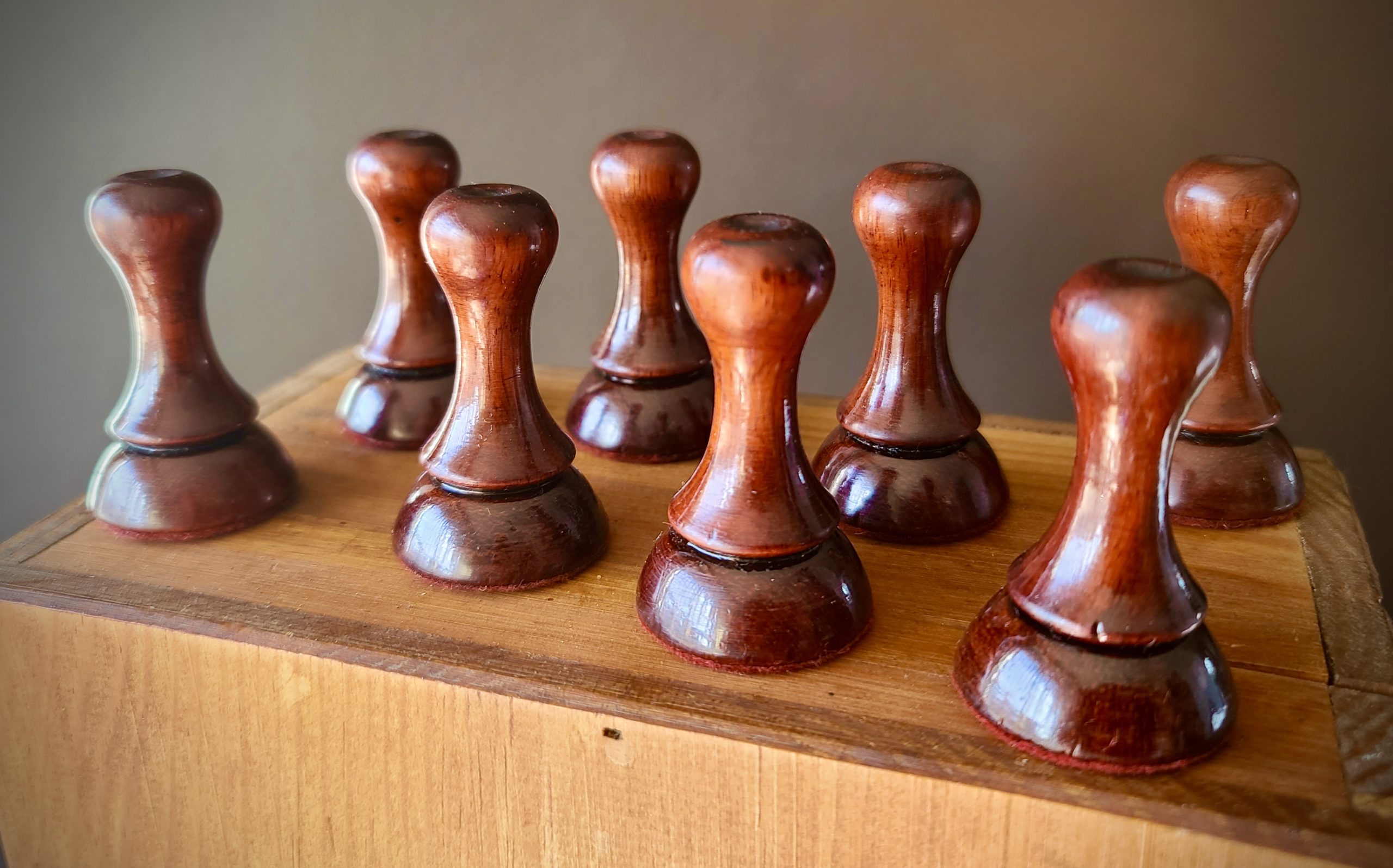
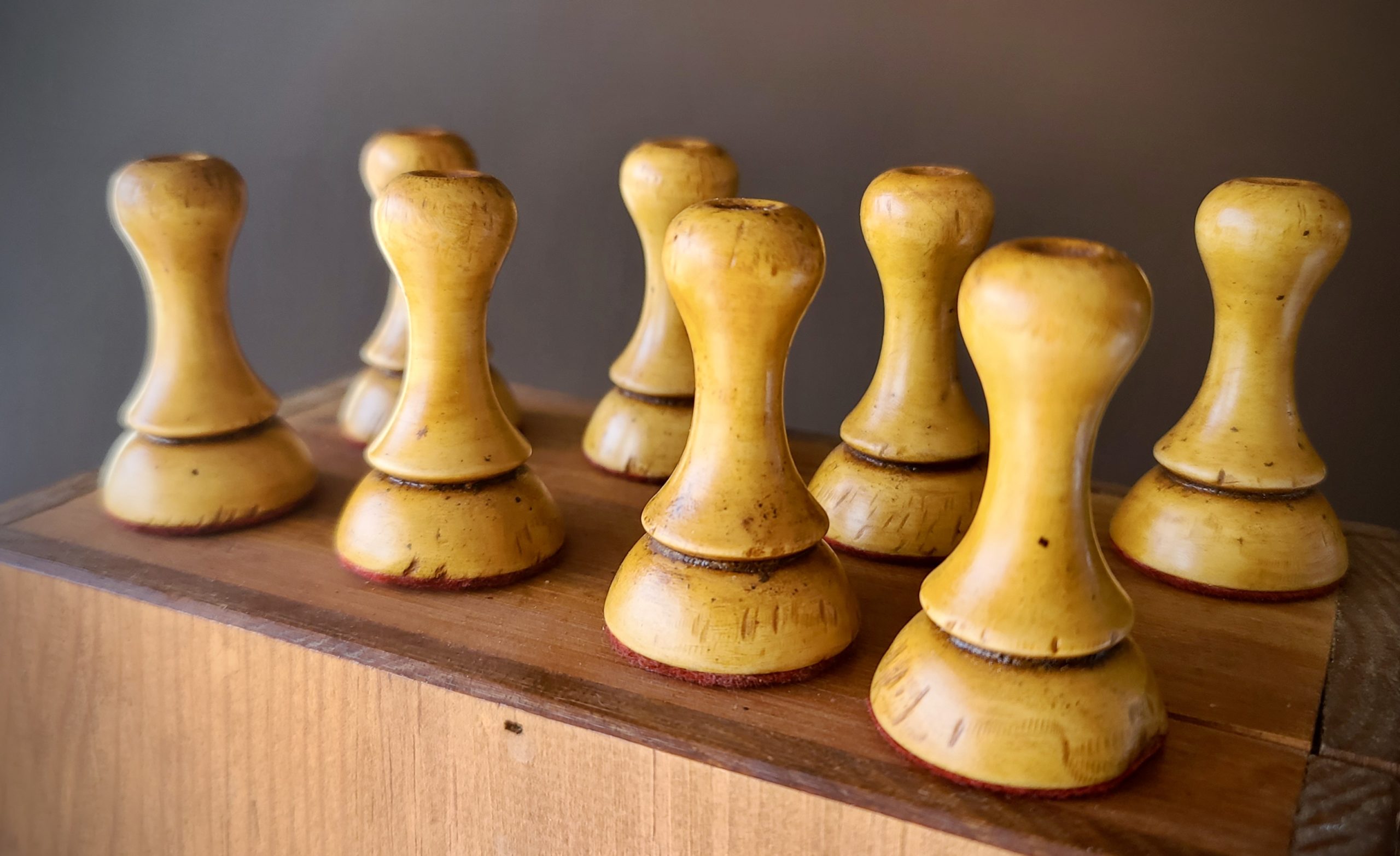
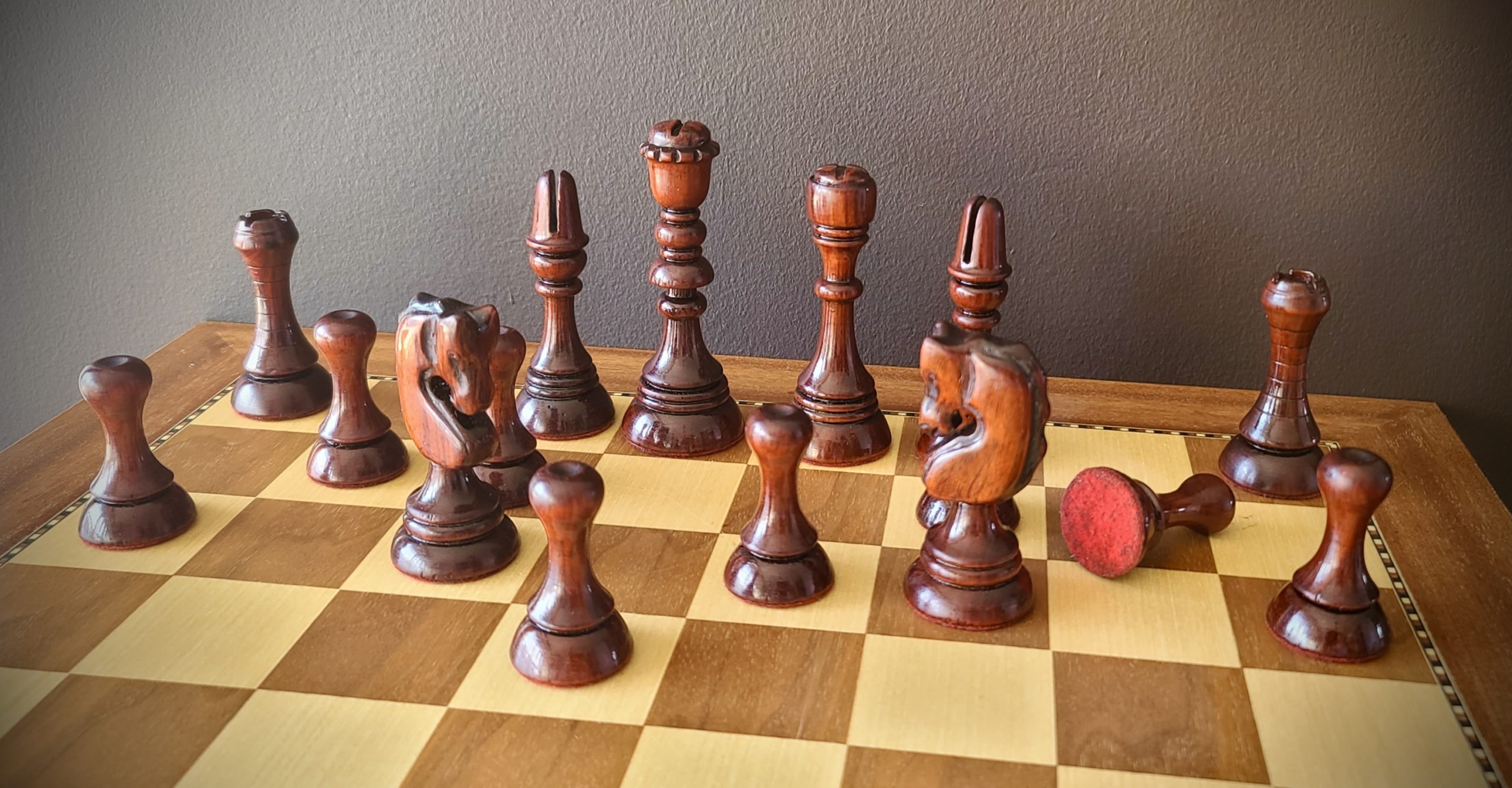
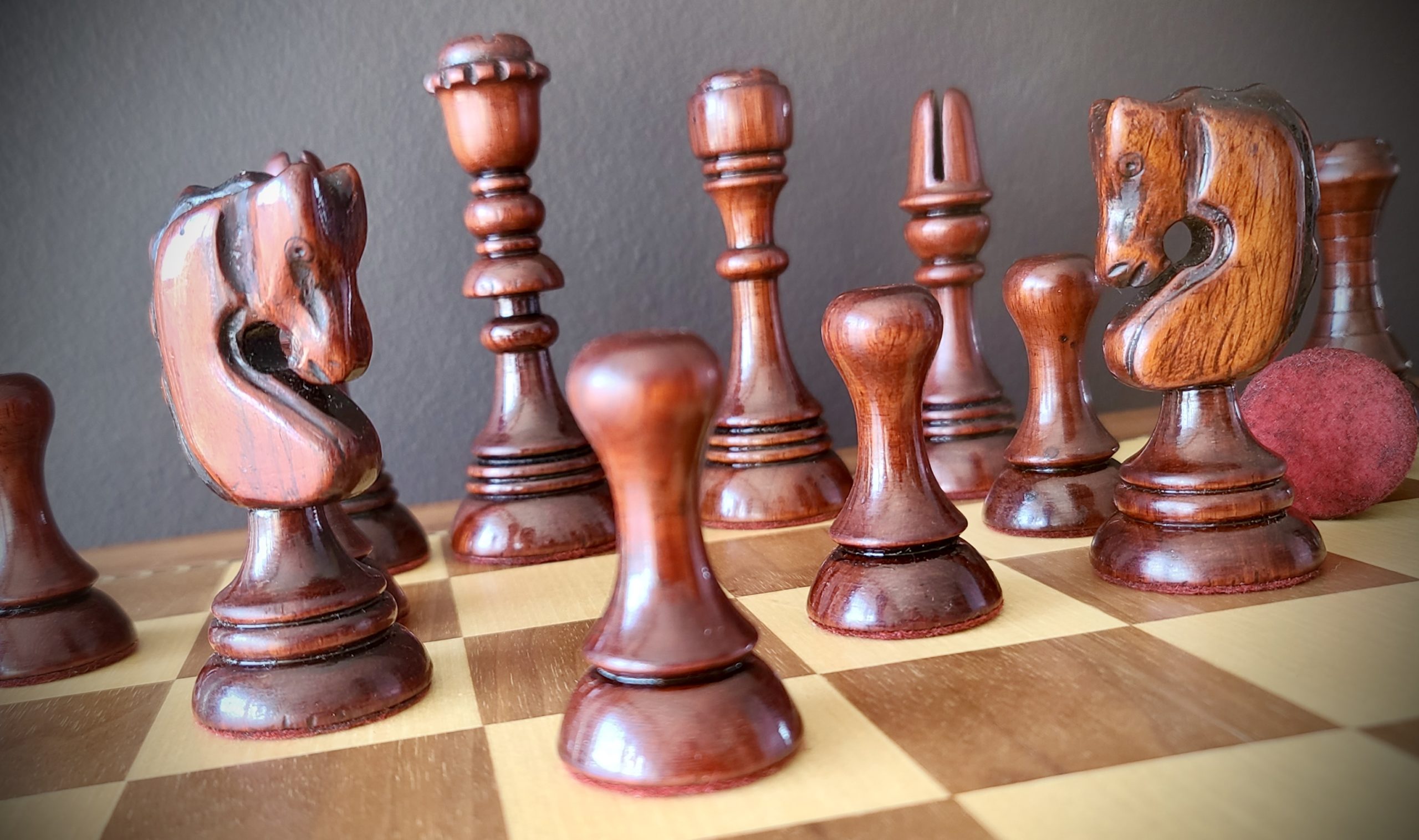
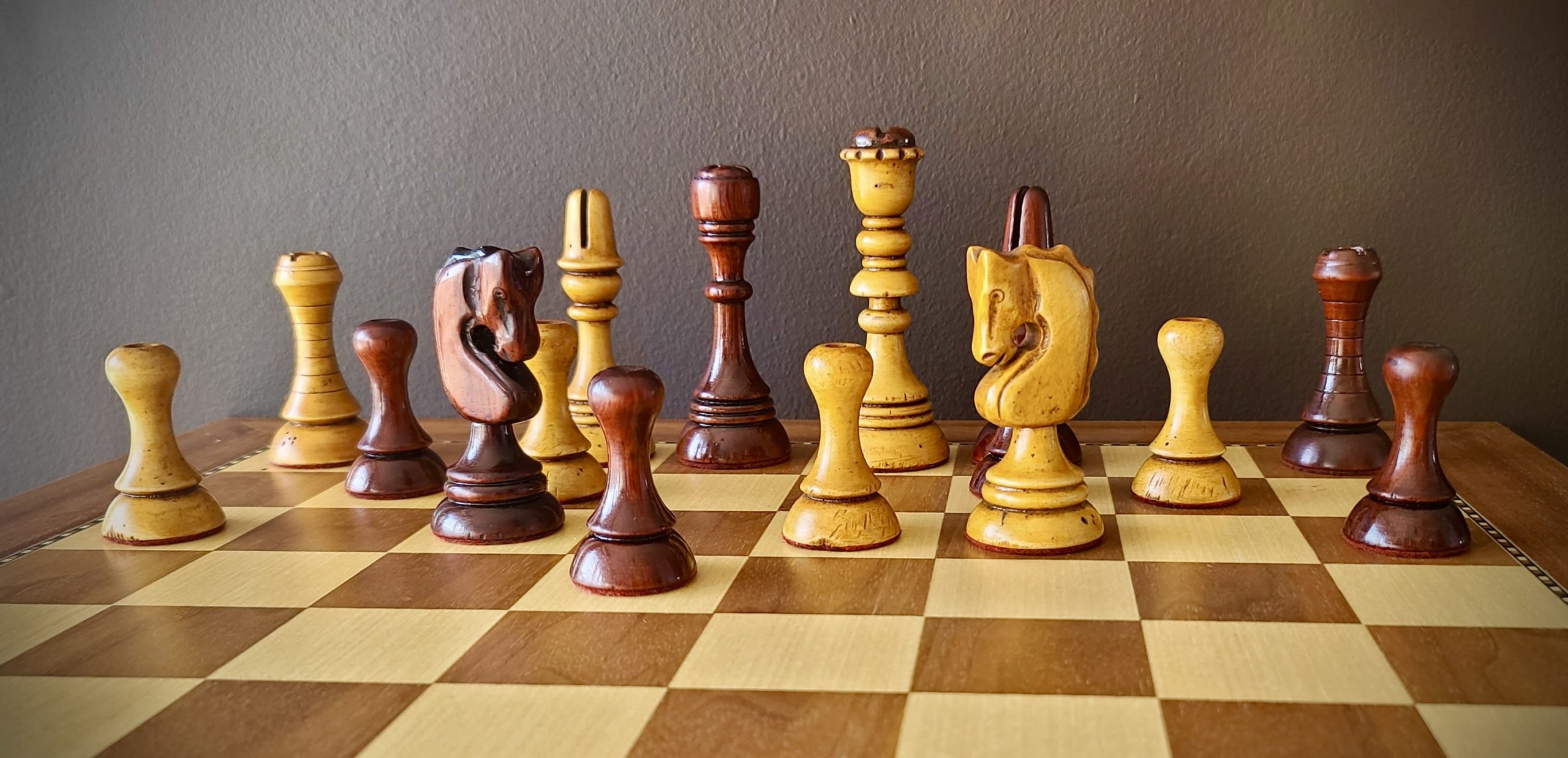
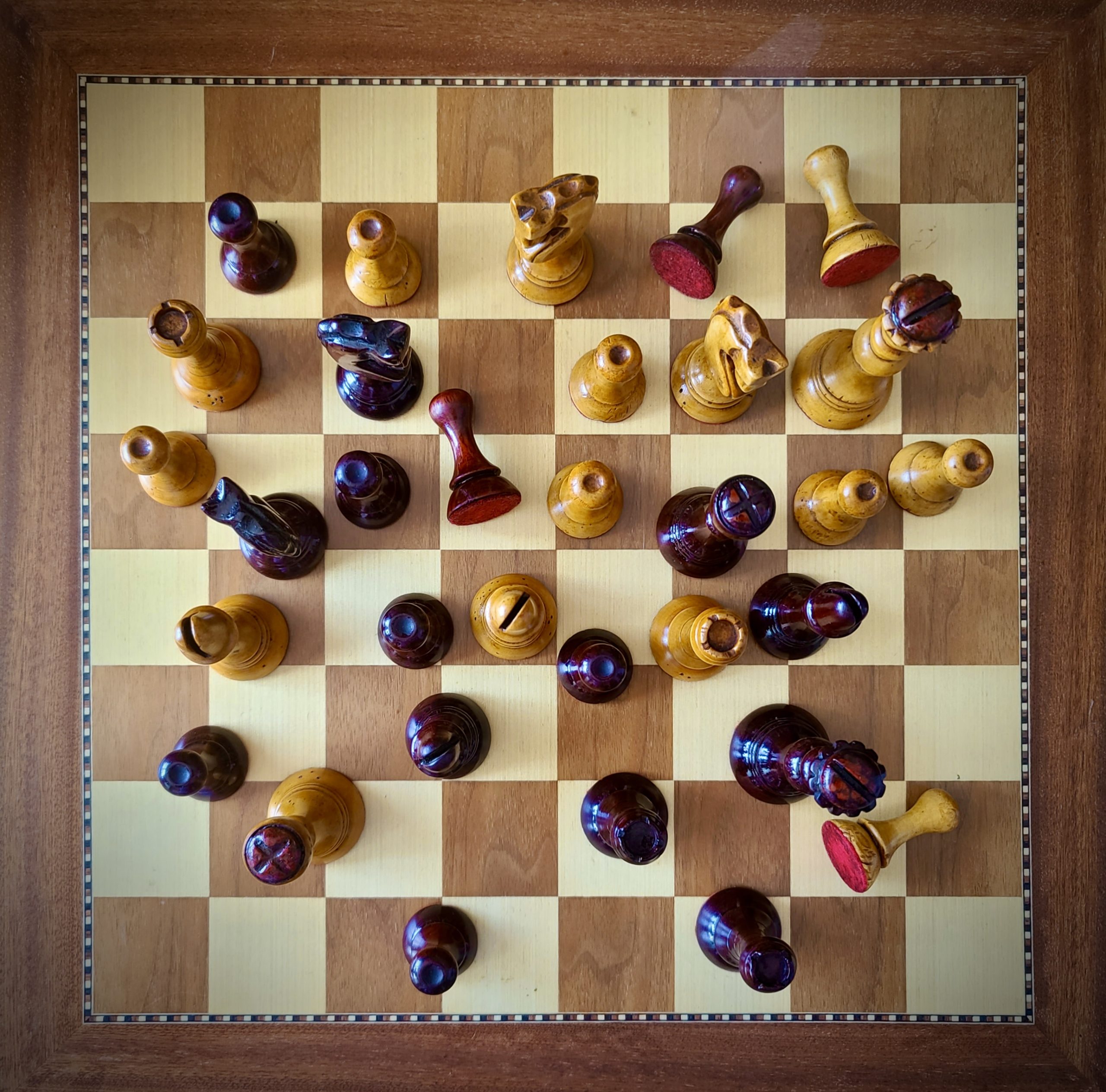
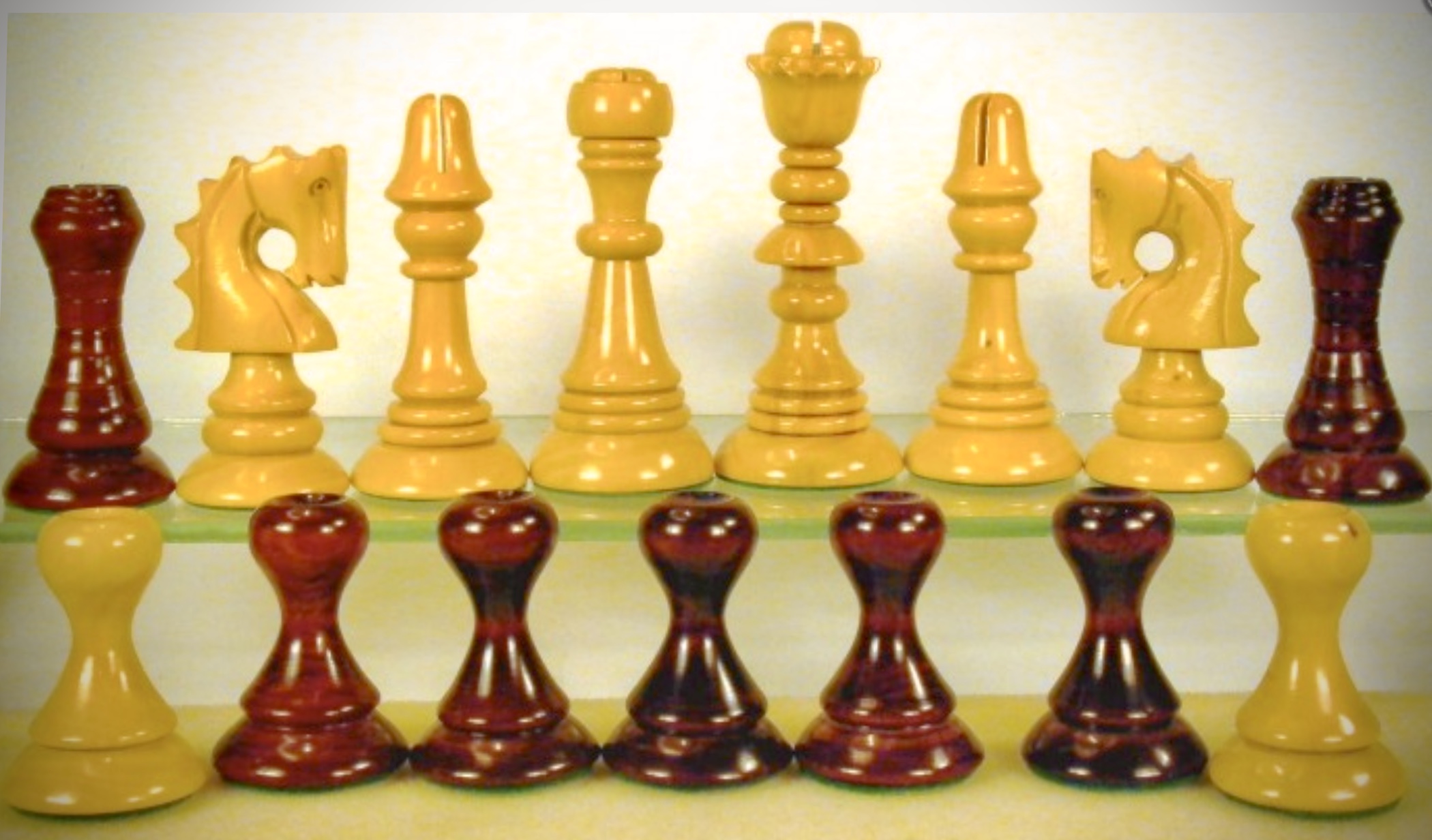
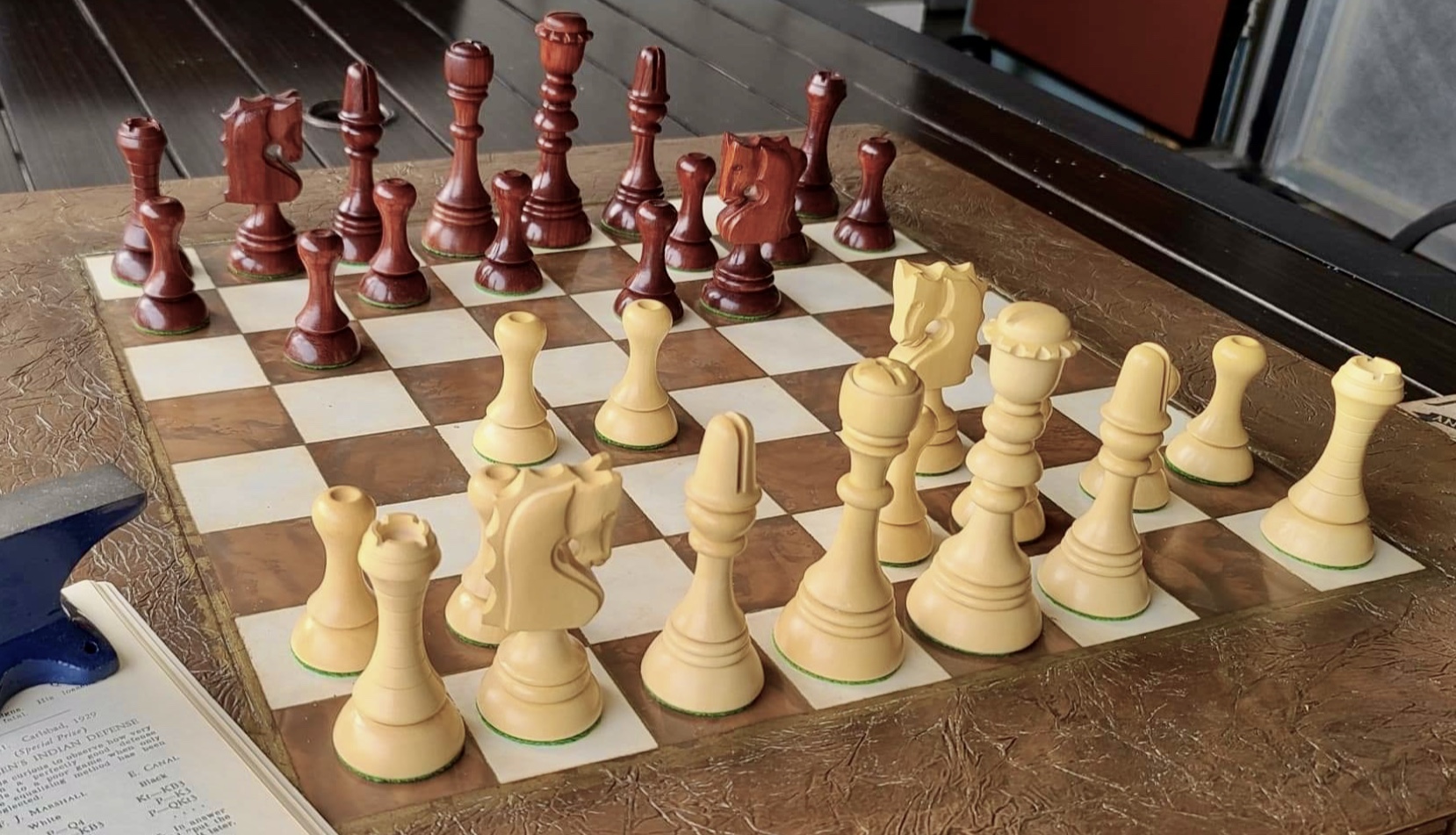
Toro Bravo (Ye Brave Bull); 32 heavily-weighted chessmen without board, wood (boxwood v. blood rosewood), recreated from a Chess Bazaar reproduction of a 1980s reproduction (Industrias de Ajedrez, c.100 sets) based on the surviving pieces of the original 1929 design.
Height: King 11cm wt 67g base width 4.3cm, Queen 10cm 60g, Bishop 9cm 42g, Knight 8cm 47g, Rook 7cm 40g, Pawn 5.5cm 22g.
W: antiqued red felt bases B: same
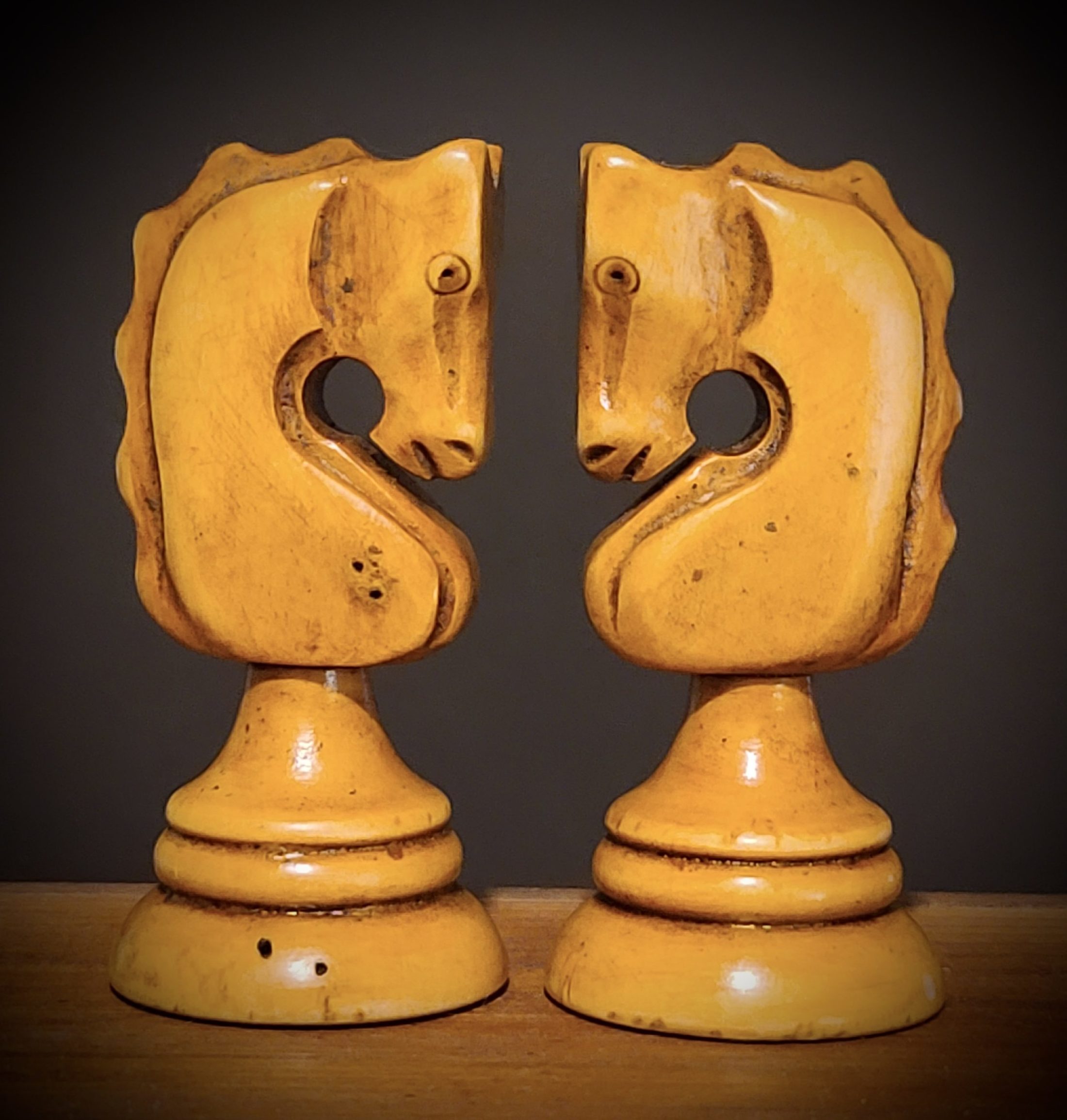
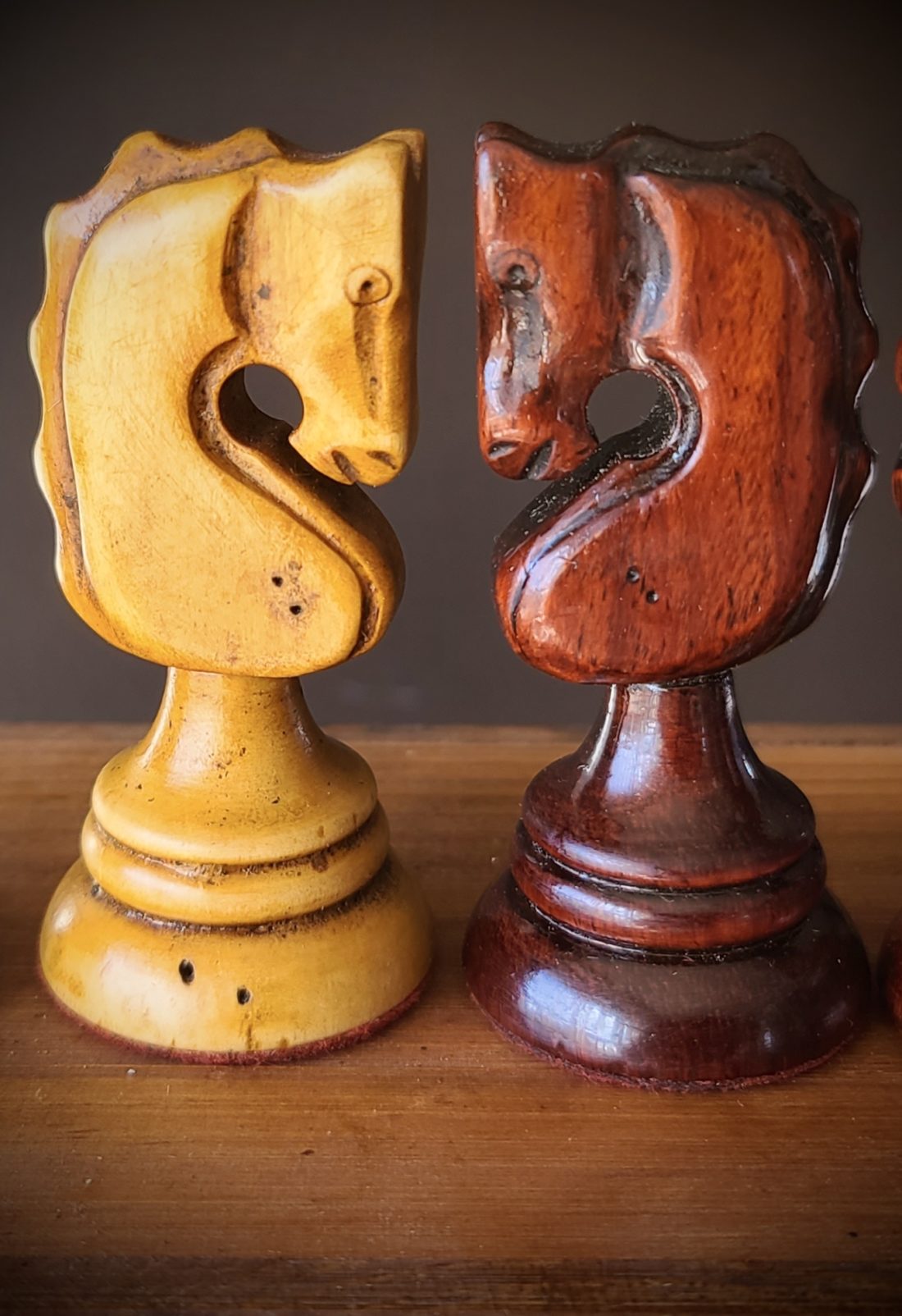
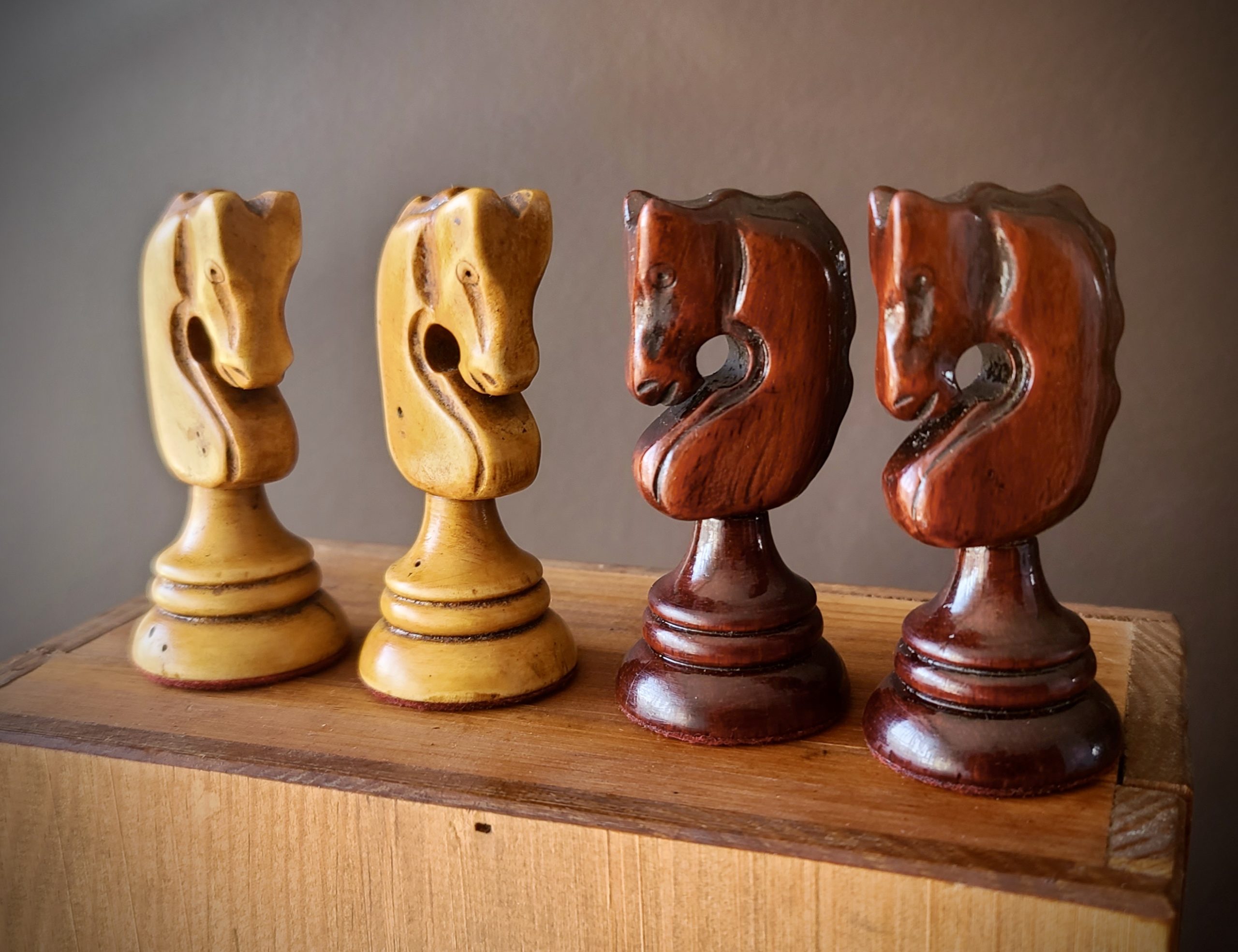
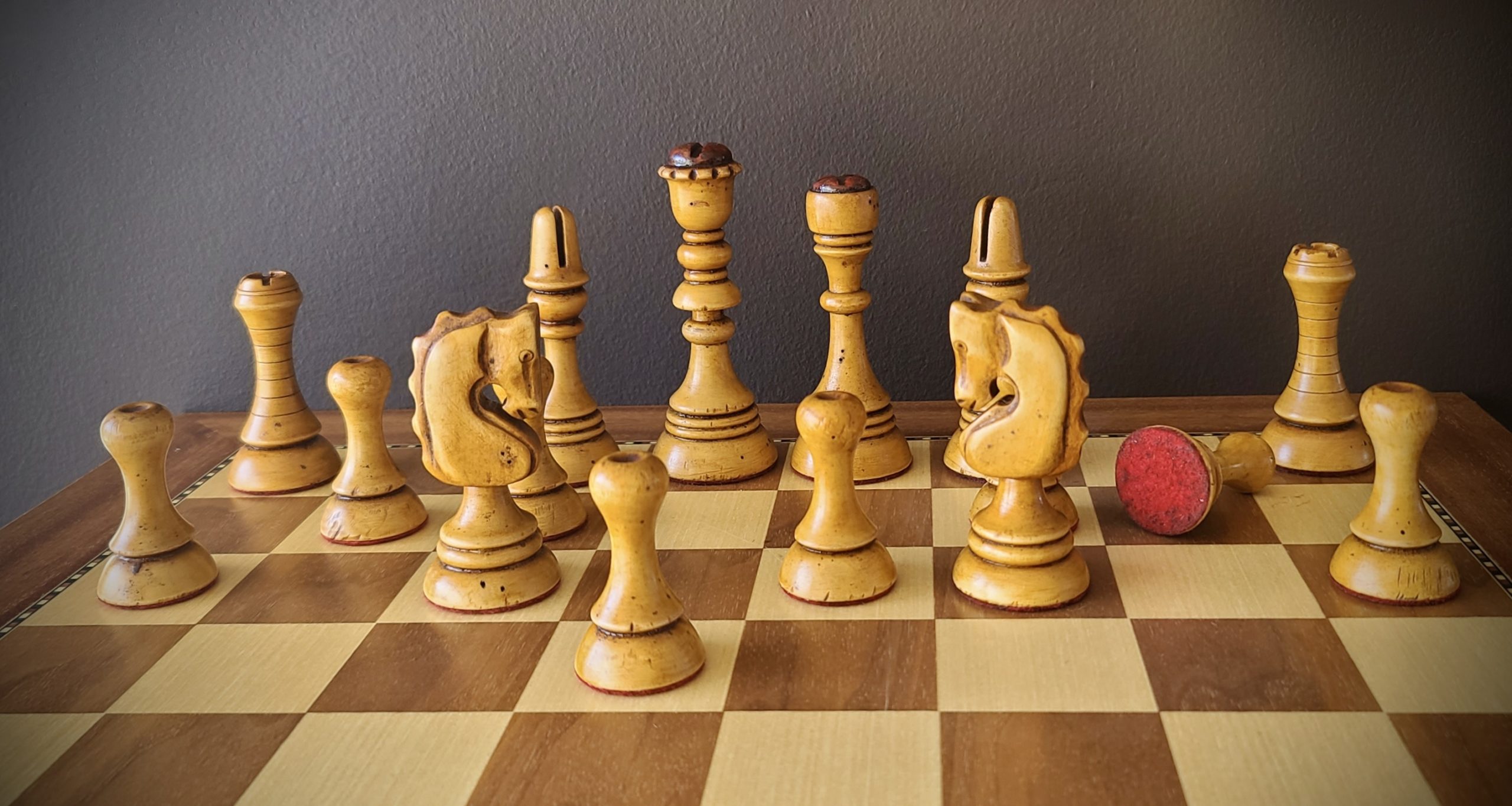
The name ‘Toro Bravo’ is inspired by the fabulous ‘reinvented’ knight of this set – but why name it after a bull, not a horse? Well, at first glance it is easy just to see a beautifully fashioned Art Deco knight, but after toying with the original CB repro ever so slightly it began to dawn on me, more and more (to my eyes, at least) that the knight must have been inspired by the magnificent bulls of Española – its head lowered, staring down the matador, nostrils aflare with large, well-parted ‘ears’ suggestive of the horns of a charging bull on the rampage! The name just seemed to fall perfectly into place. Traditionally in Spain, ‘Toro Bravo’ implies someone or something that oozes strength, tenacity and bravery (much like a chess master, you may say) and the ancient expression is deeply rooted in Spanish culture, especially so in the south, where the murky origins of this set lie.
The original design was introduced at the International Exhibition held in Catalonia in 1929 and was subsequently used at the Barcelona tournament of 1930, won by the wood-pushing wordsmith, Savvy Tartakower. For a more detailed history of the original design just google the chess-museum/Catalan set. Here you will also find the reproduction I based my own version on – with a few twists along the way, of course!
One of those twists was a re-shaping of the knight, making it less angular around the base of the long mane, something that has always irked me as it looked somewhat unnatural and harsh. The set now looks and feels more organic, easy on the eye – and I hope your eyes, too!
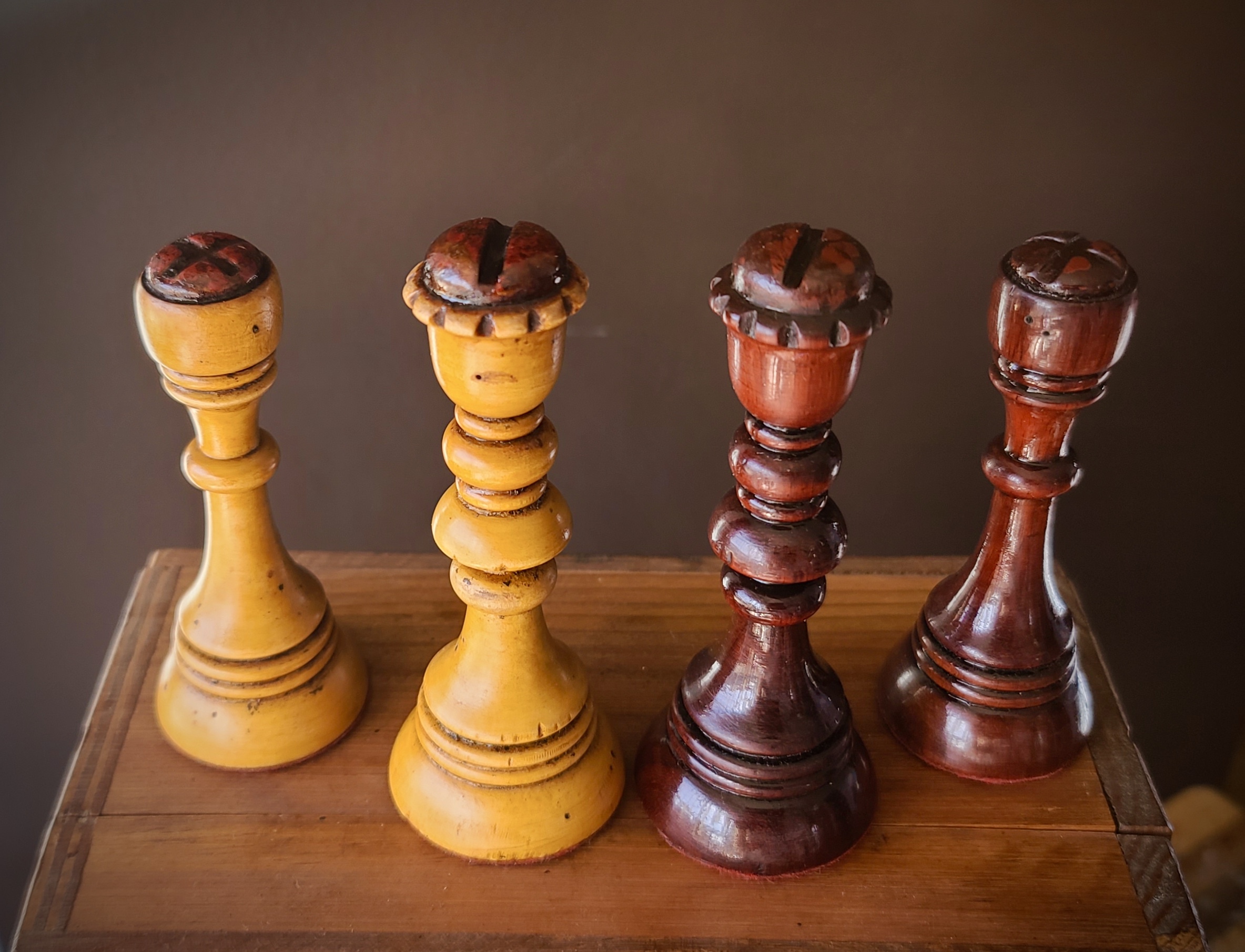
The ‘caps’ or crowns of the royals have also been accentuated, as they are reminiscent of the traditional headwear of a matador, the ‘montera,’ which lays almost flat on the head, puddinglike. Without question, the design reeks of southern Spain, which is very much part of its historic charm.
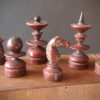
Note that the last two photographs are of the original Chess Bazaar reproduction and the earlier Spanish repro from the ’80s.
The pieces are UV resistant and ideal for display as well as casual play. Both kings carry the hand-painted iridescent silver 2020 ‘power’ signature of the artist on their bases.
Ref code: TB20