

*SOLD* Et Nobilis (The Boyars); Classic Soviet ‘Valdai Nobles’ Chessmen, c.1962-1966
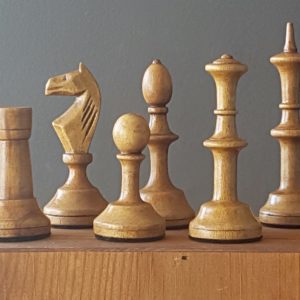
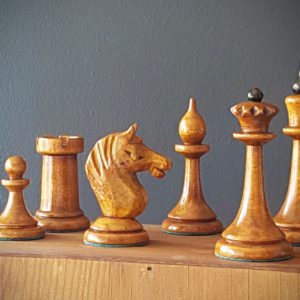
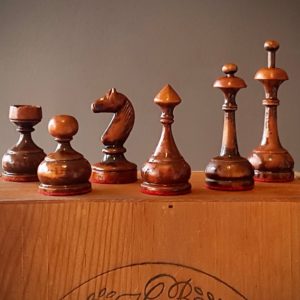
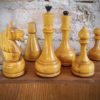
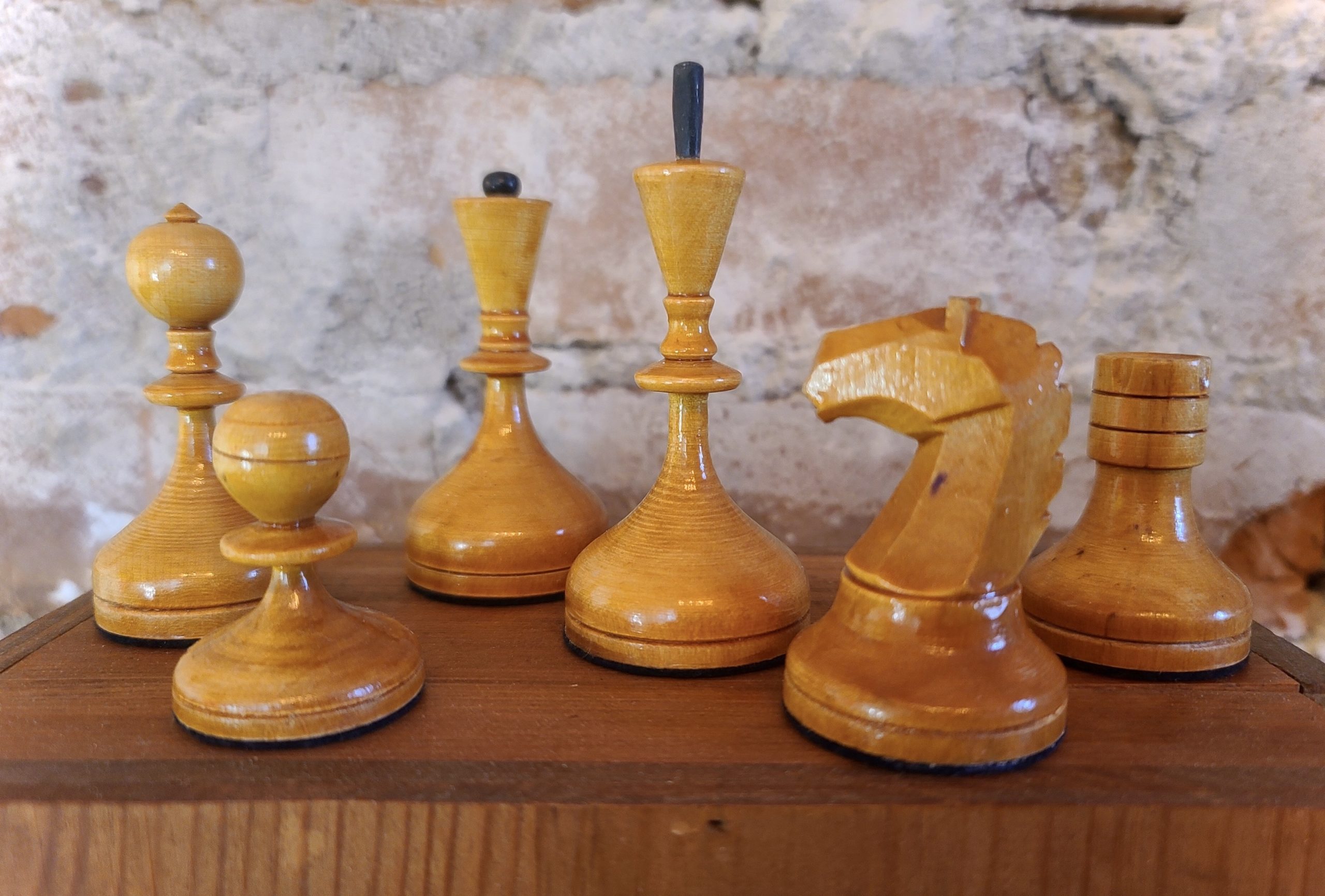
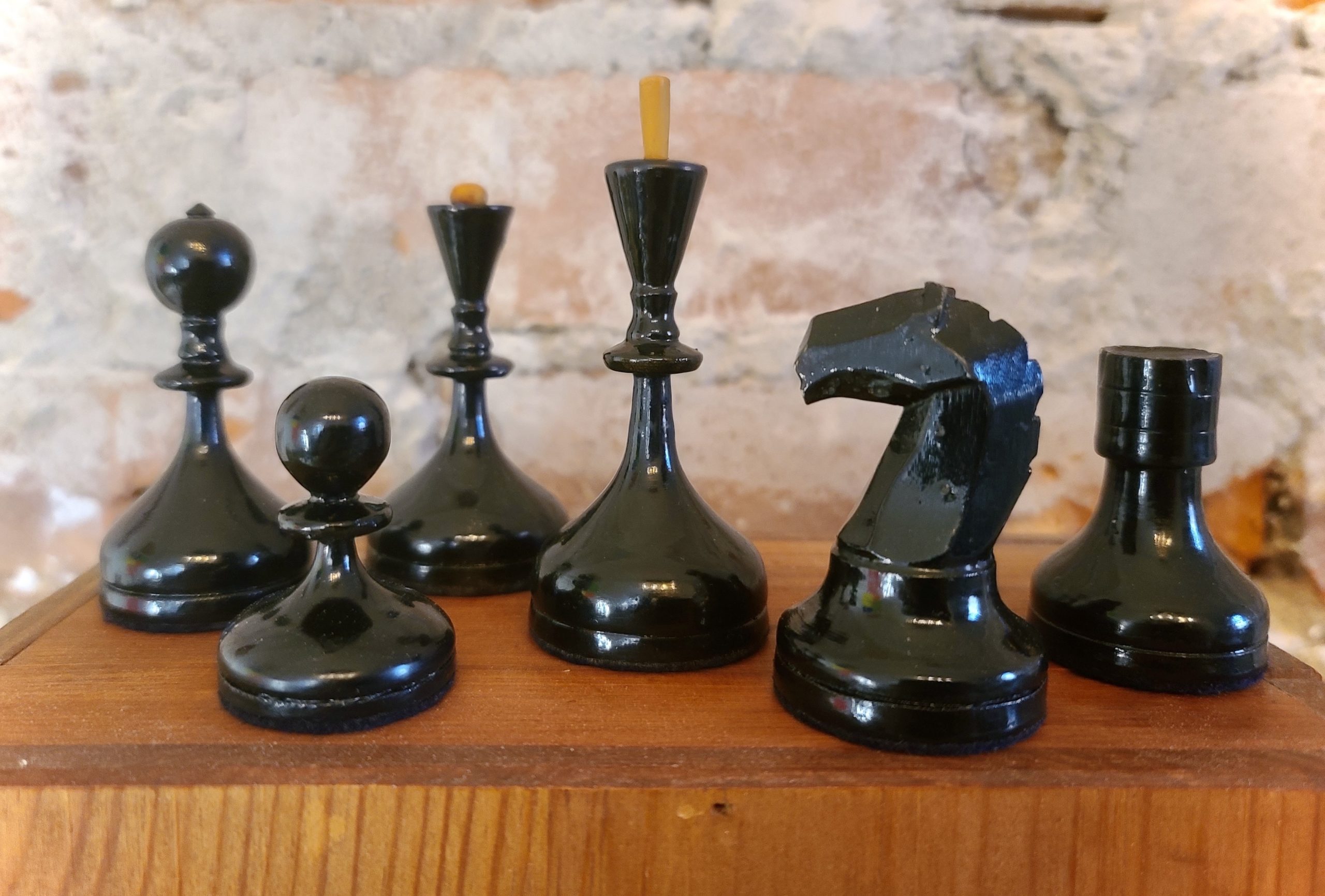
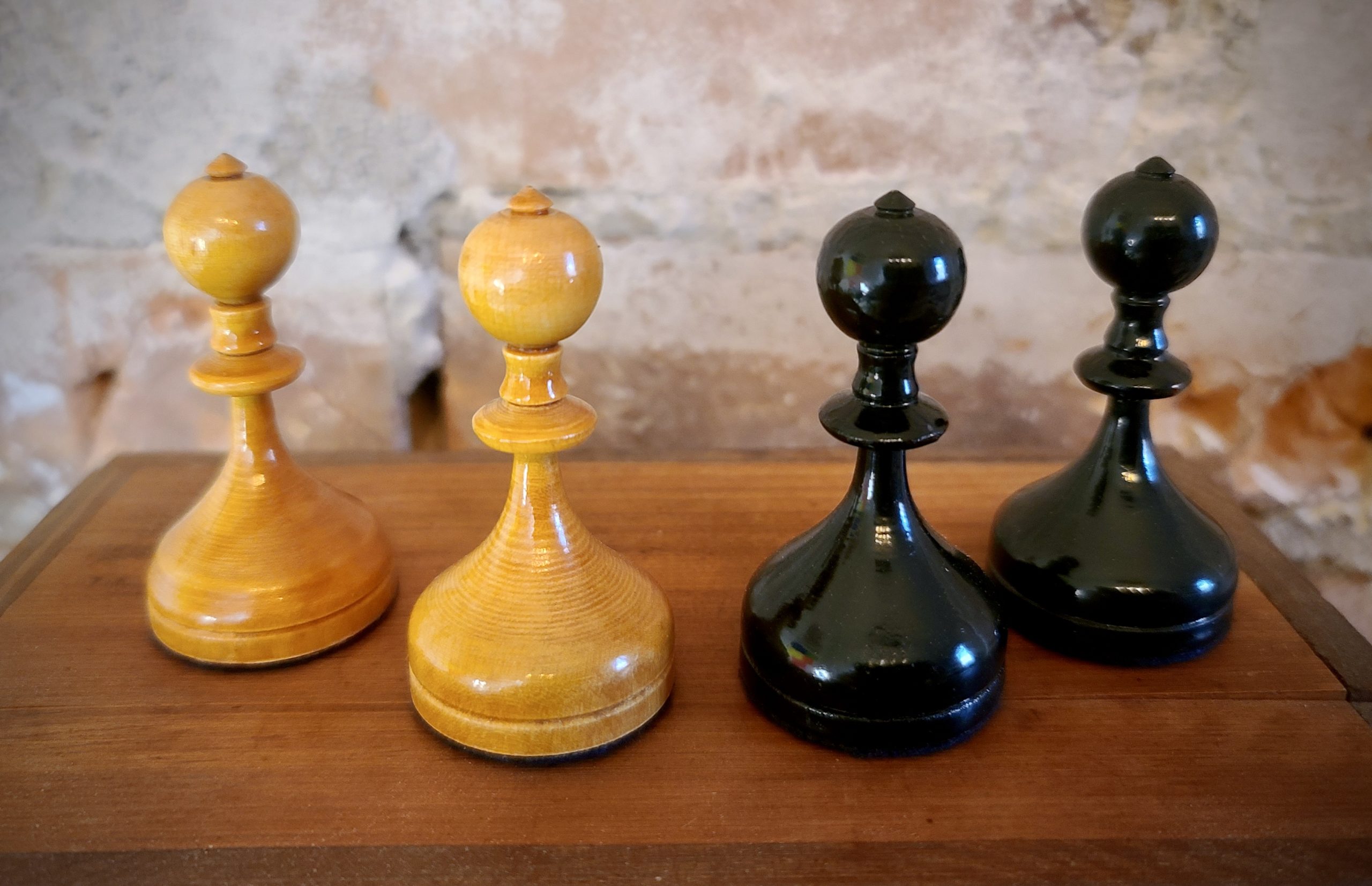
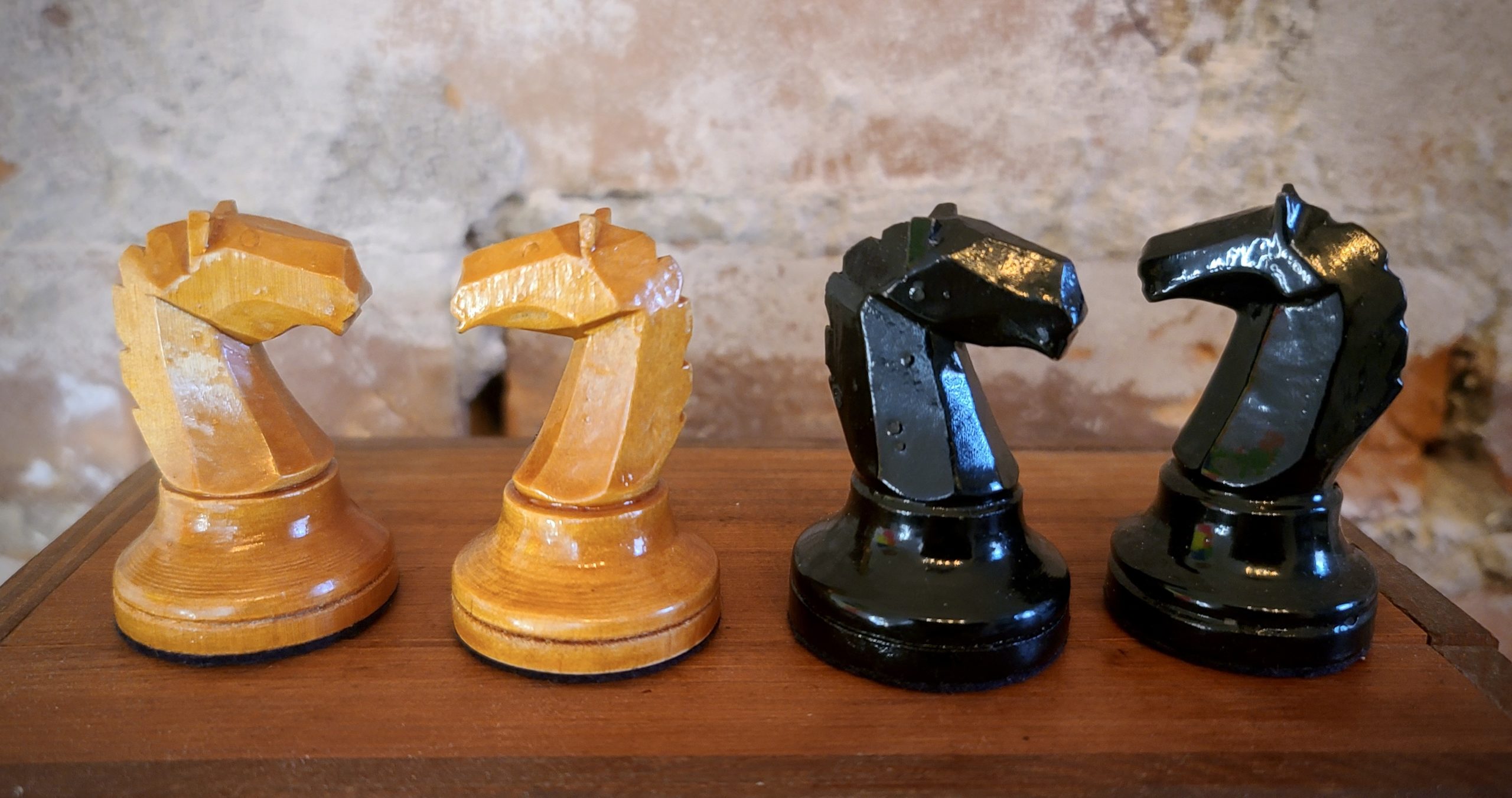
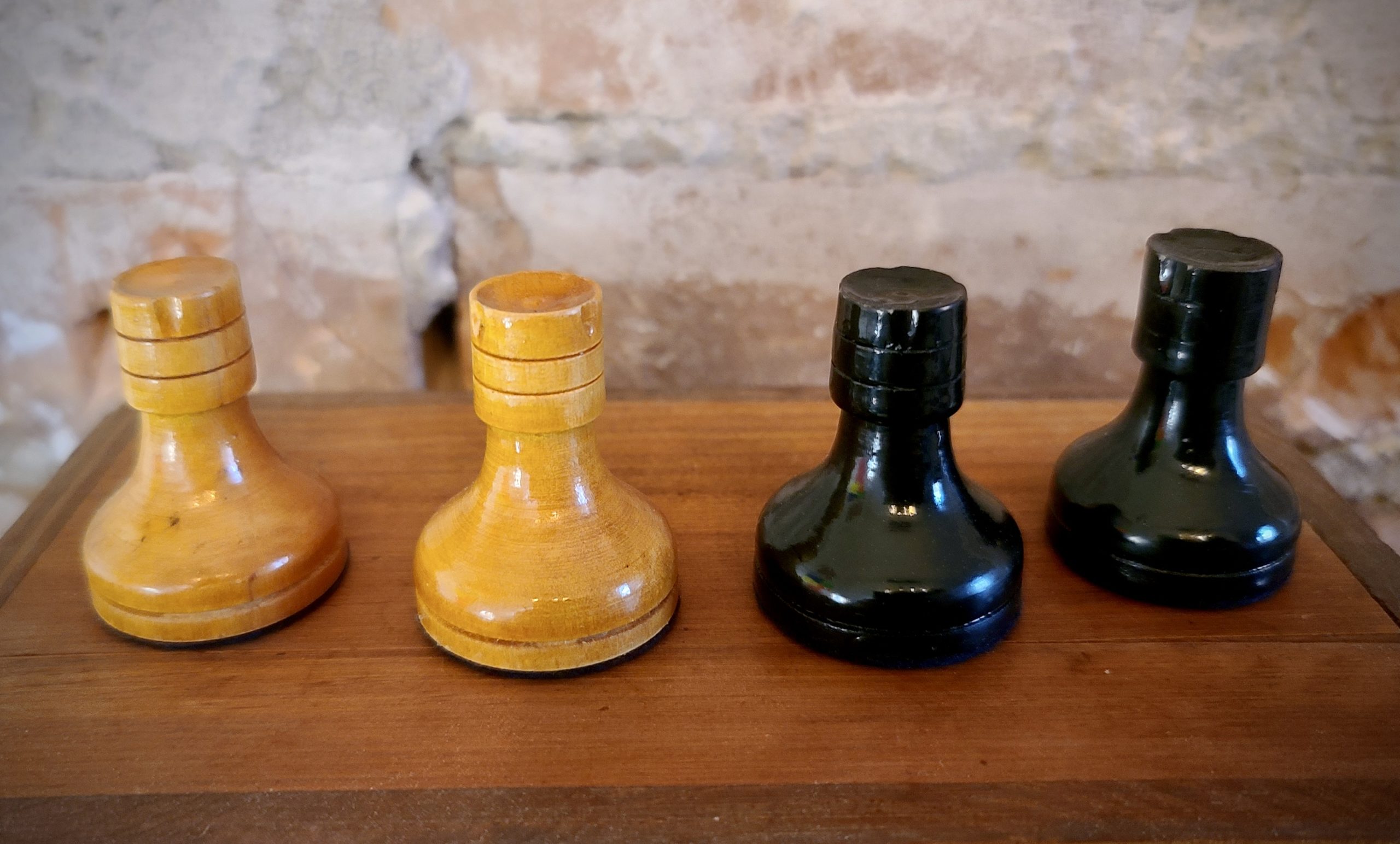
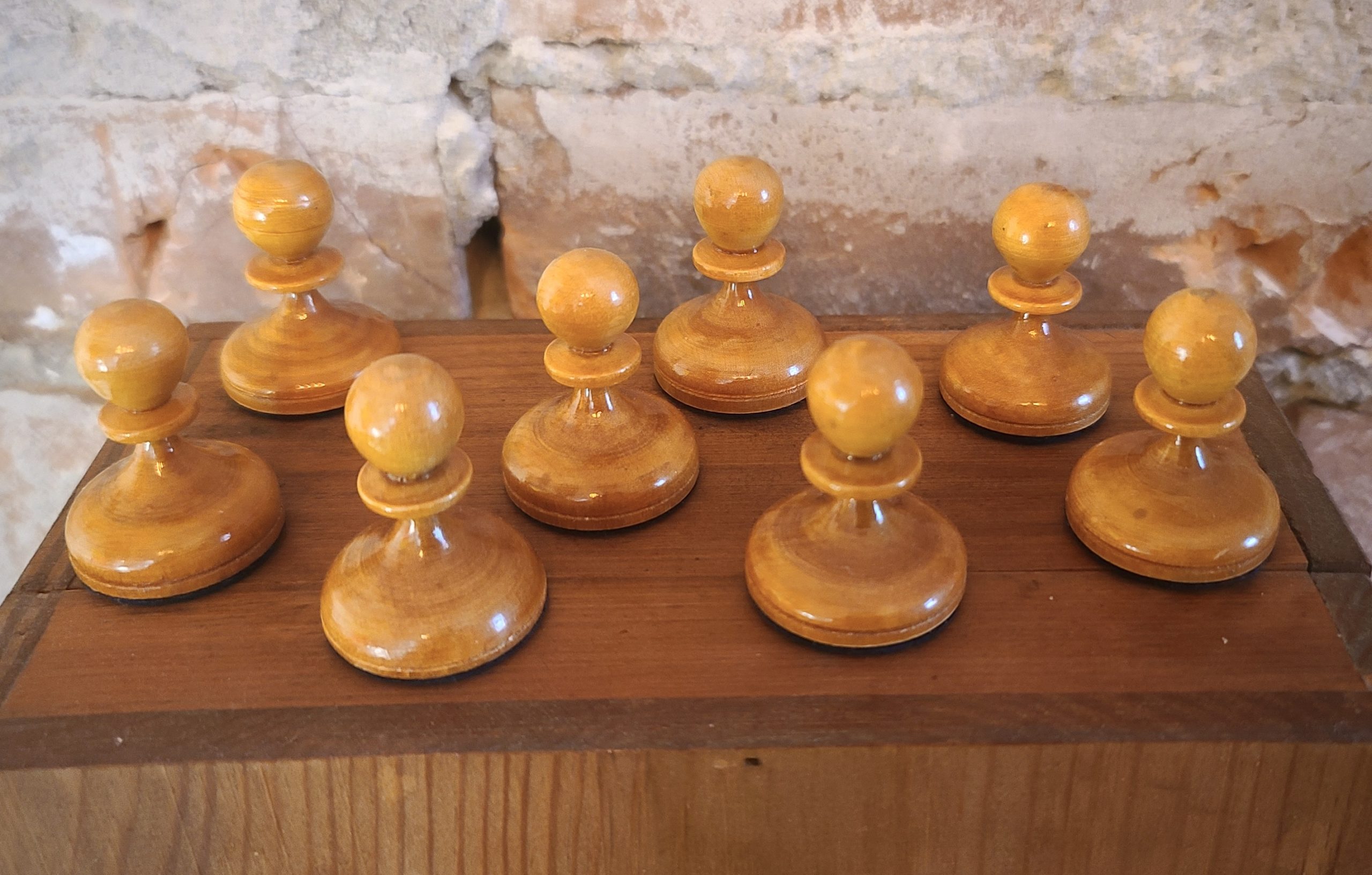
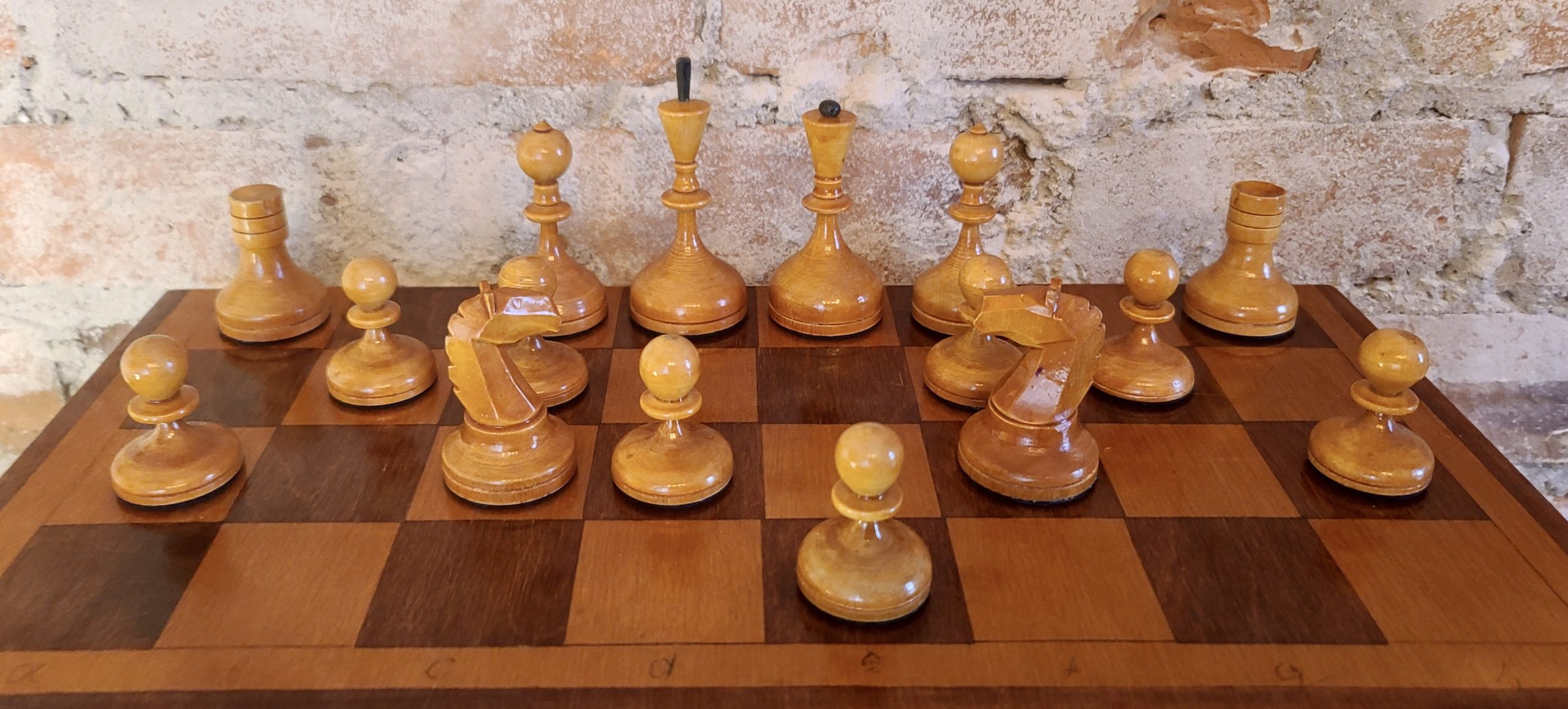
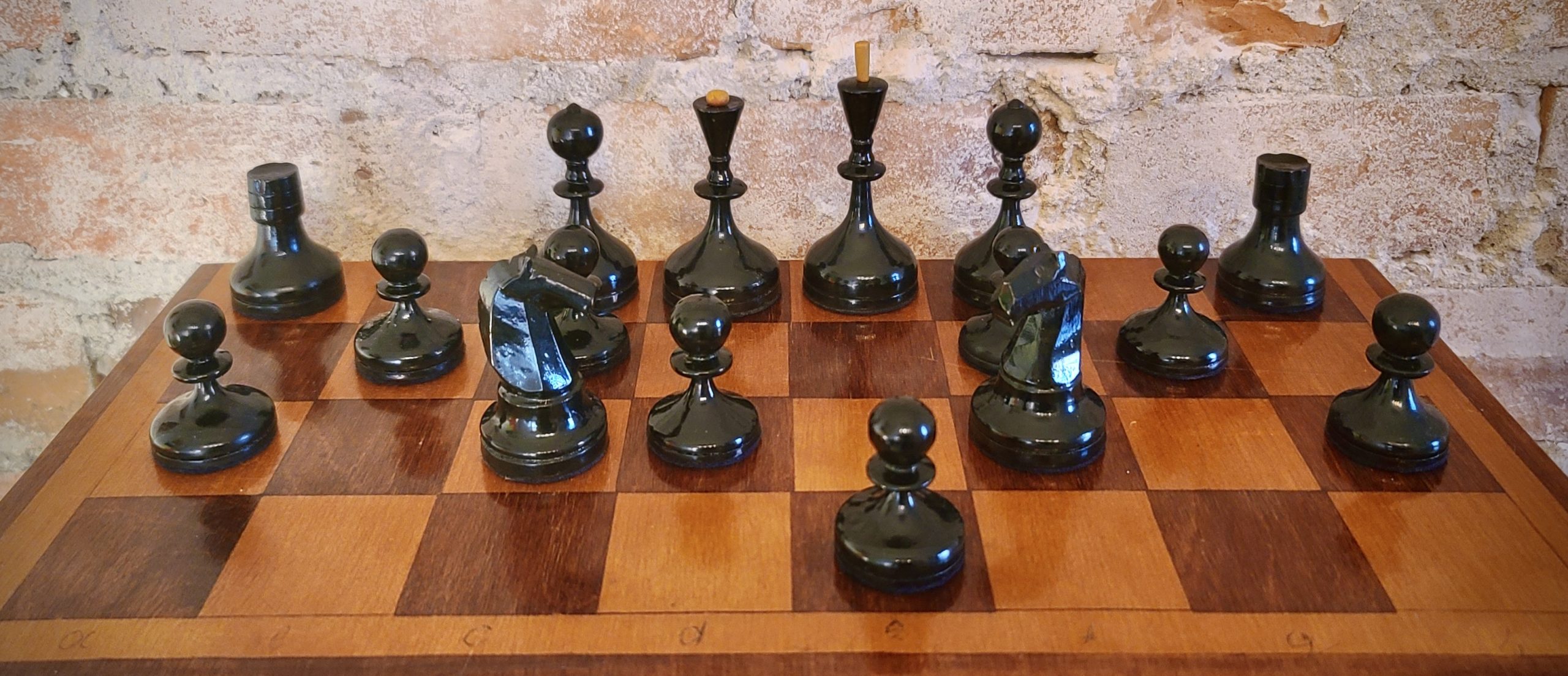
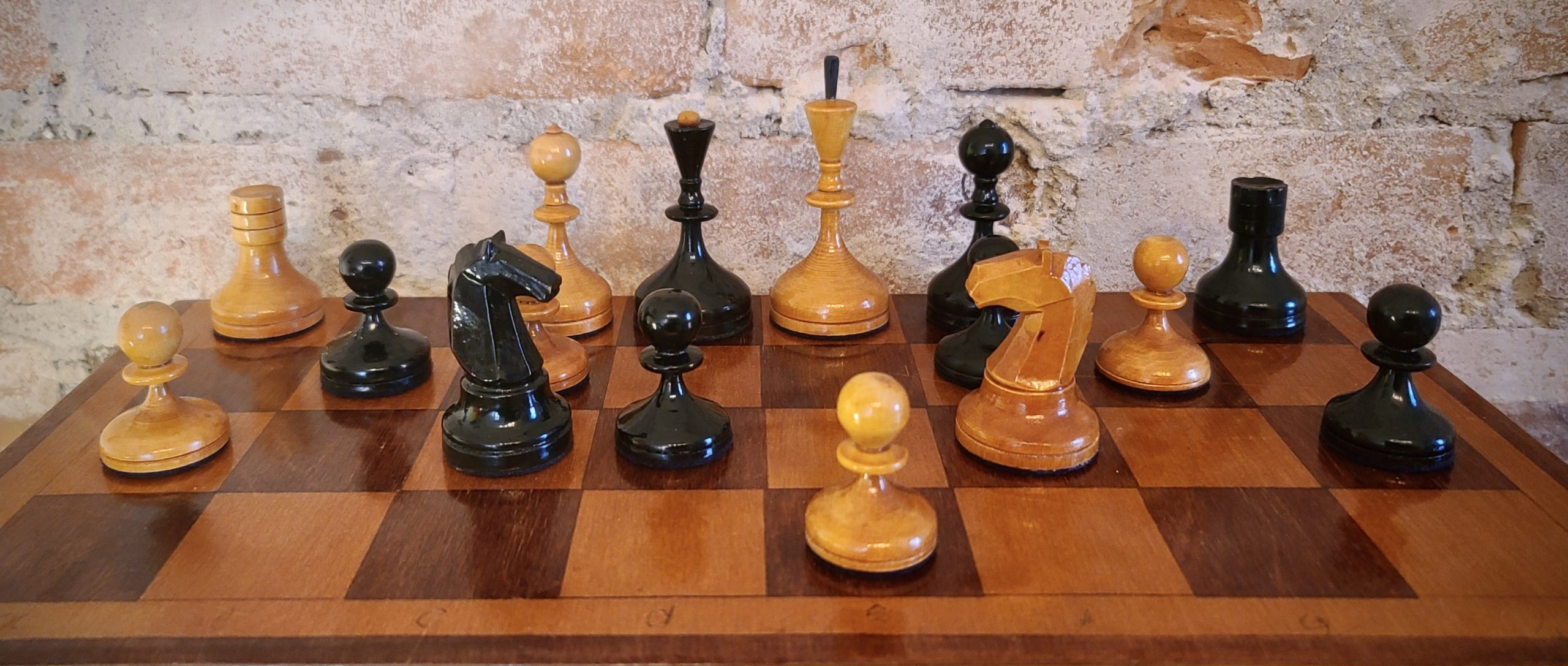
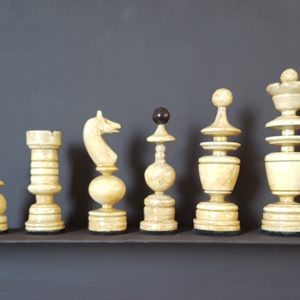
The Boyars (Et Nobilis); 32 vintage chess pieces without board, wood, unweighted, white vs. black, Soviet, partially restored, c.1964.
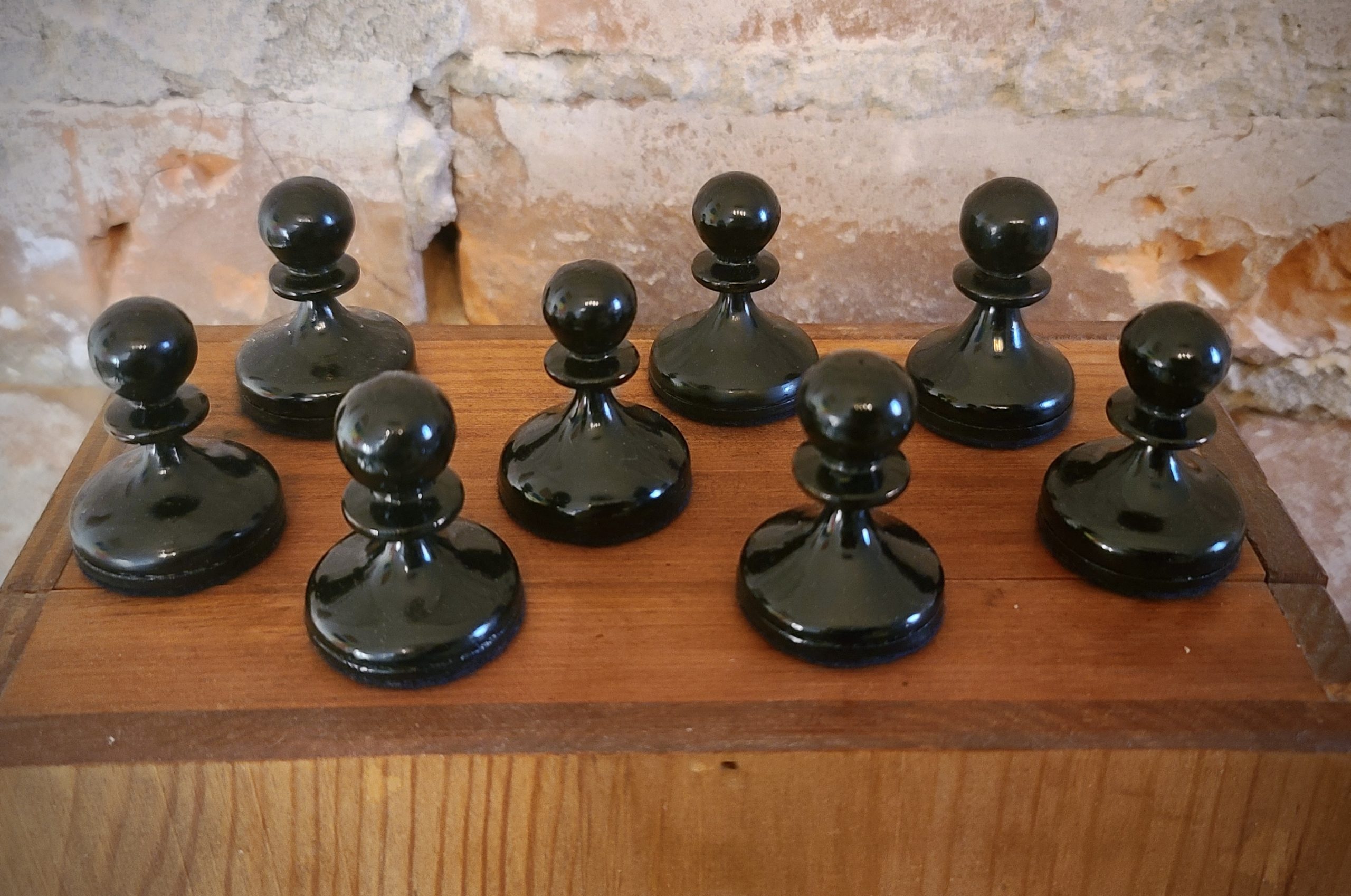
Height: King 8.5cm, weight 14g, base width 3.6cm; Queen 7cm wt 16g, Bishop 6.5cm 12g, Knights 5.5cm 12g, Rook 4.3cm 12g, Pawns 4cm 6g.
W: Lush Prussian Blue felt pads, B: same
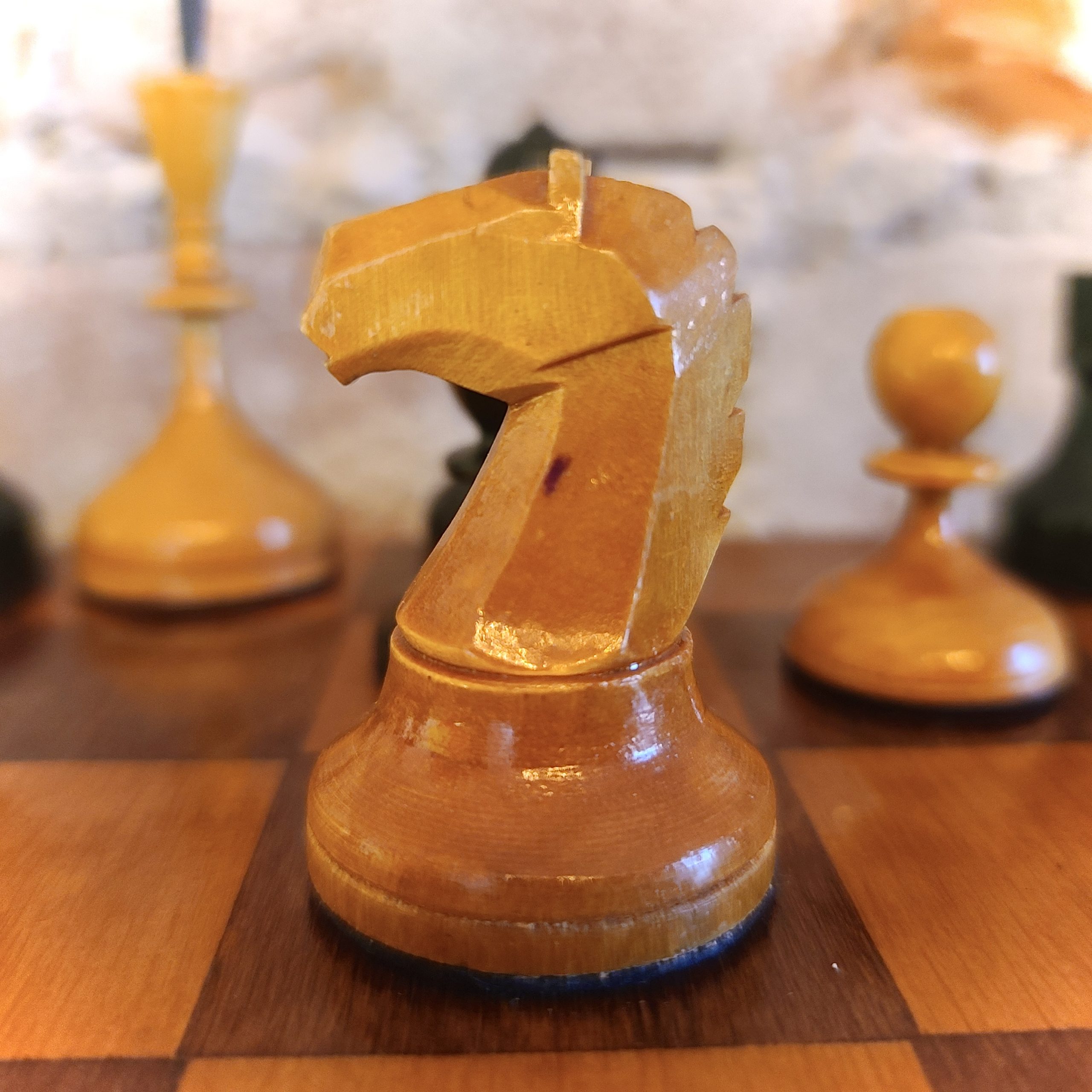
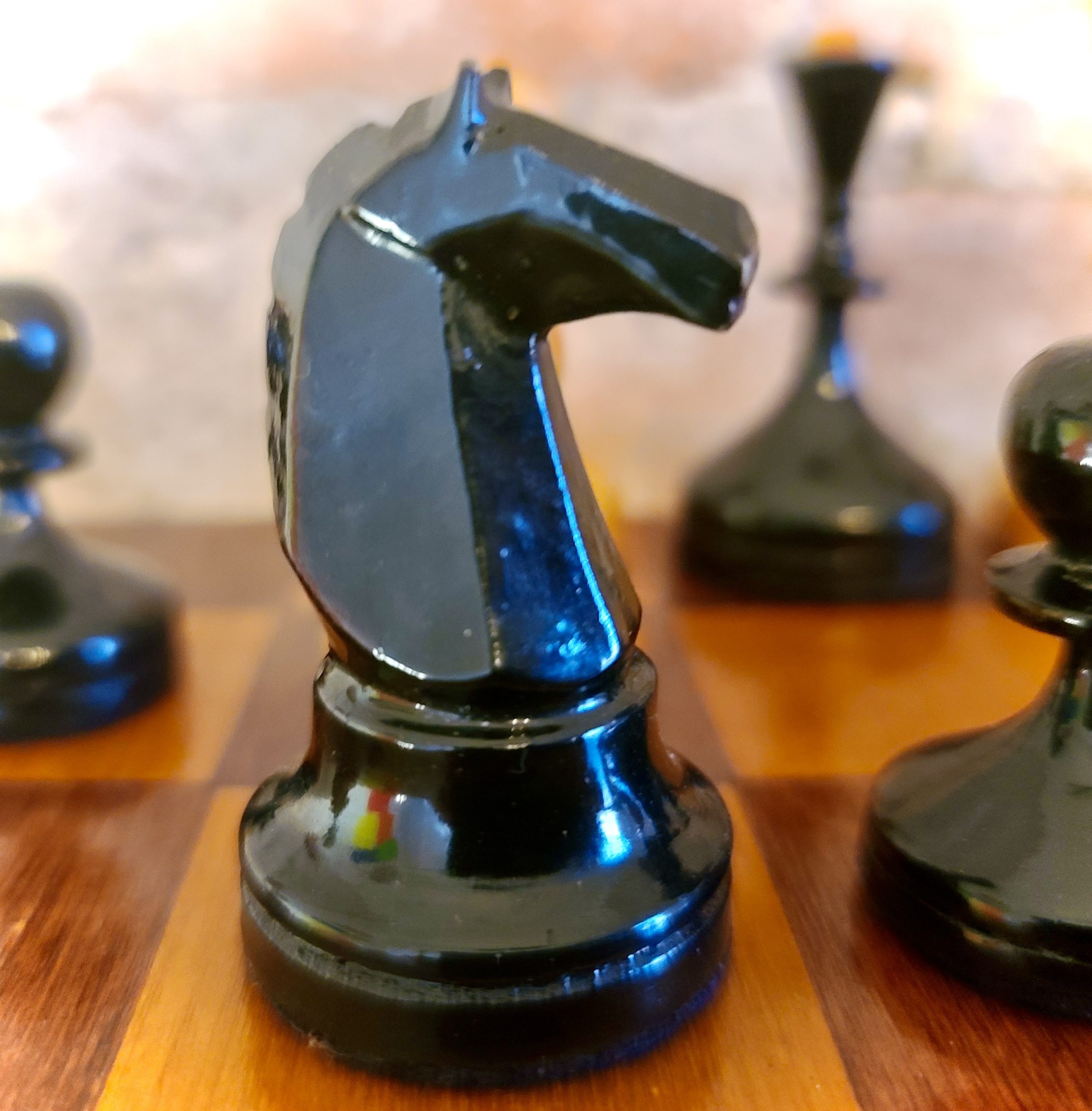
The broad, curvaceous bases of these iconic Valdai chessmen seem to melt like mini-blancmanges into the squares on which they sit. The design is simple, aesthetically pleasing and perfect for the mass production of chess sets that peaked in the Soviet Union during the 1960s and 70s.
The design itself dates back to the 1940s, which was standardized to some degree in the 1950s. These earlier sets are more delicately carved, almost nimble, with smaller domes on the bishops, a tad more ‘bell-bottomed’ in general and almost always found in a deep, chestnut red vs black. These sets were sold in a decorated (chess-themed) cardboard box stating that they were produced at the “Valdai Regional Industrial Manufactory” (a polite Soviet term for a ‘work-camp’) in the ancient Novgorod region roughly situated between the chess hubs of Moscow and St. Petersburg.
The set came to me without finials, which have been replicated in form and colour (modelled on other examples from my collection). The patina is original; a typical rich, honey-blonde glaze on the light side and a smooth, time-worn black painted finish on the dark. The knights’ muzzles vary slightly (as they should), a common occurrence with these hand-carved ‘factory-line’ chess pieces. A few unsightly scrapes and nicks have been carefully repaired, but these were few and far between and are now invisible.
All-in-all a wonderful specimen of the 1960s Valdai Nobles chessmen. Incidentally, the pet-moniker “Nobel”(as it first came to my attention via a Ukrainian collector) is most probably a Westernized interpretation of ‘boyar’, an Old Rus/Slavic term for the aristocracy or landed gentry during the Tzarist Era. A mysterious and somewhat unusual nickname for a set manufactured in the communist work-camps of Cold War Russia!
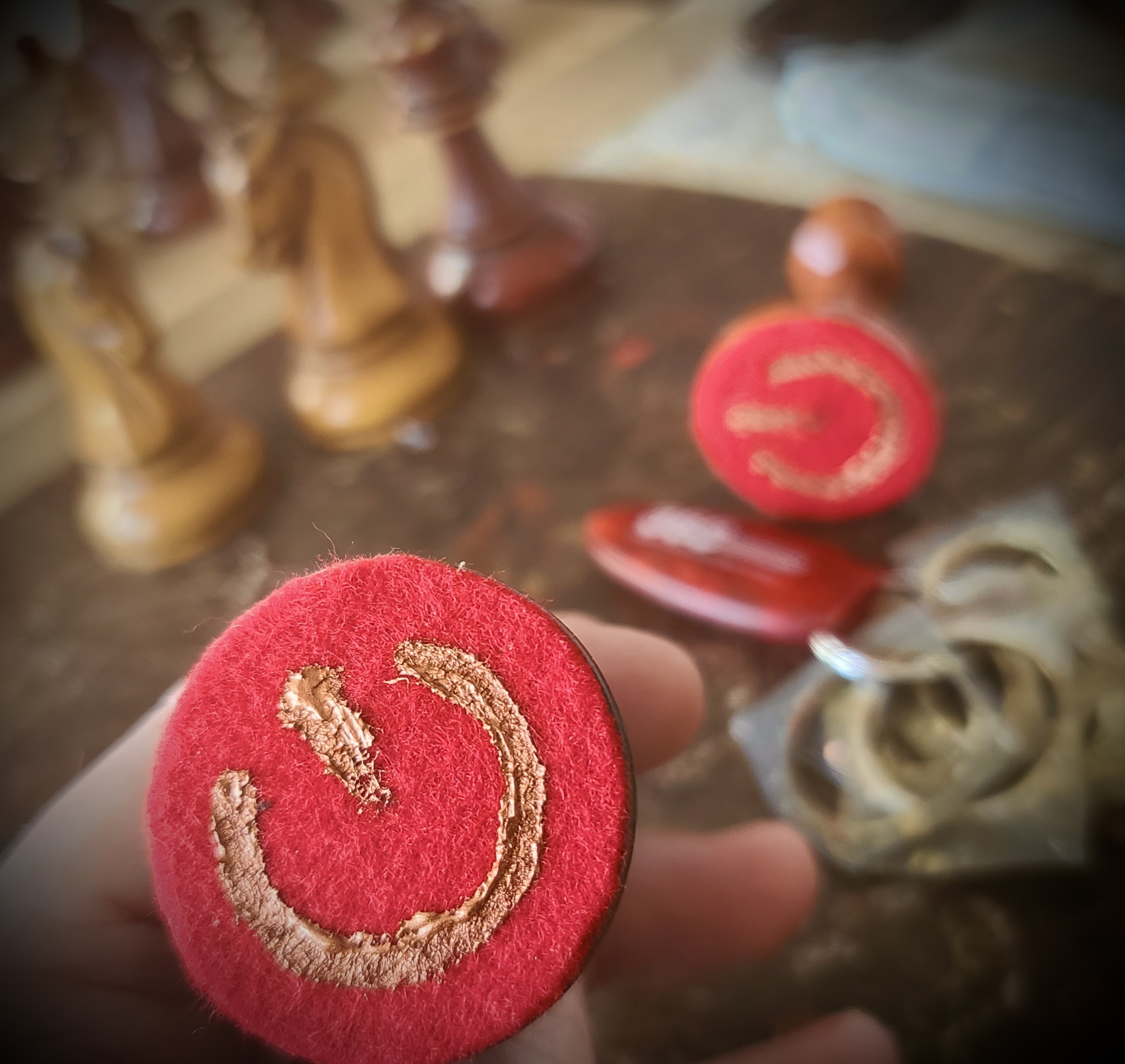
Both kings carry the hand-painted iridescent copper ‘Power’ signature of the restorer on their bases and are also accompanied by our unique Chess Schach ‘Certificates of Artistry’ which are posted out separately once we tally up how many ‘Copper Signature’ sets passed through our galleries in 2022 …“All good things…” as the old saying goes.
For more info on the Valdai sets visit the ALL ABOUT CHESS page at our HQ and click on our Nov. 2019 chessay, ‘Gulag Knights.’
Ref Code: EN22
Related products
Out of stock