
*SOLD* Rubrum Diabolis (Red Devils); Large Czech Club Chess Set, ‘Ceska Klubovka’ circa 1960-1970
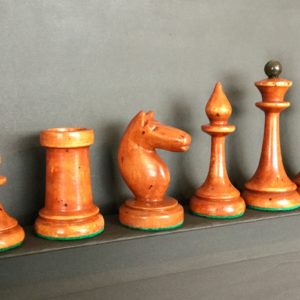
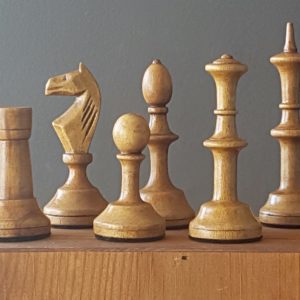
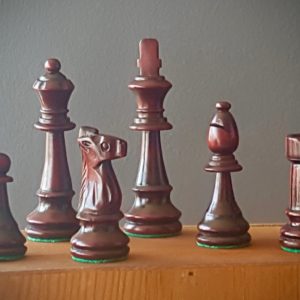
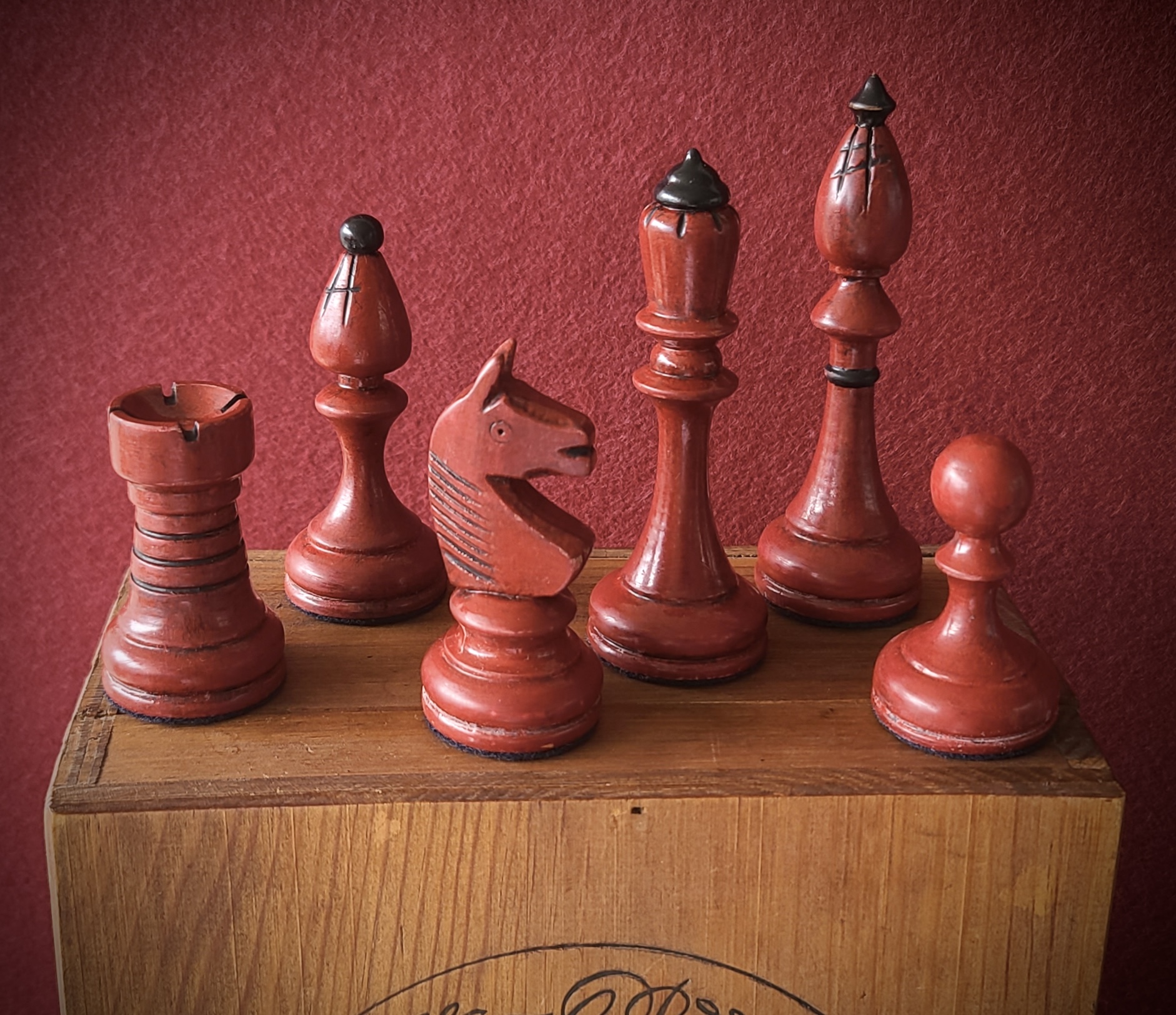
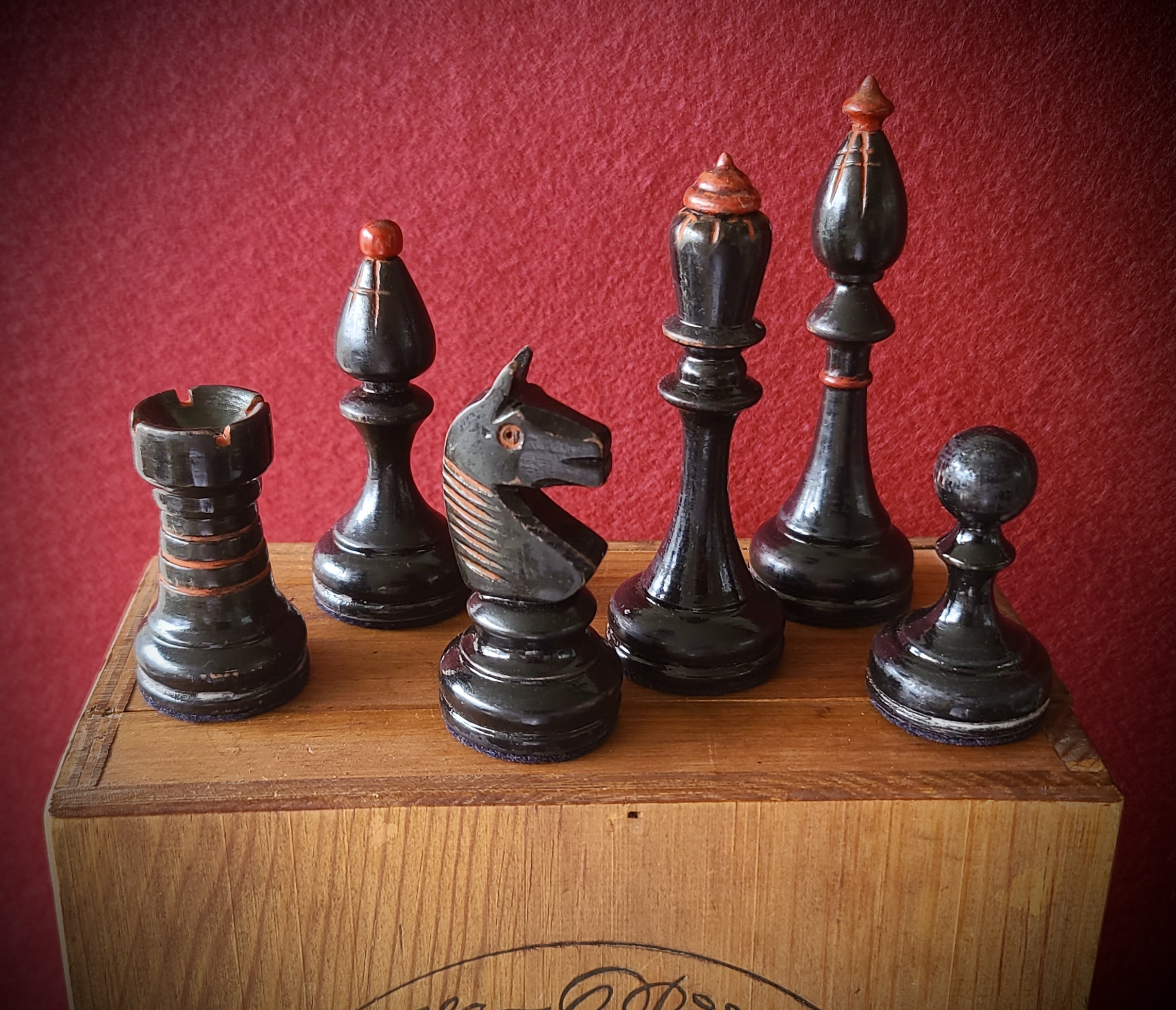
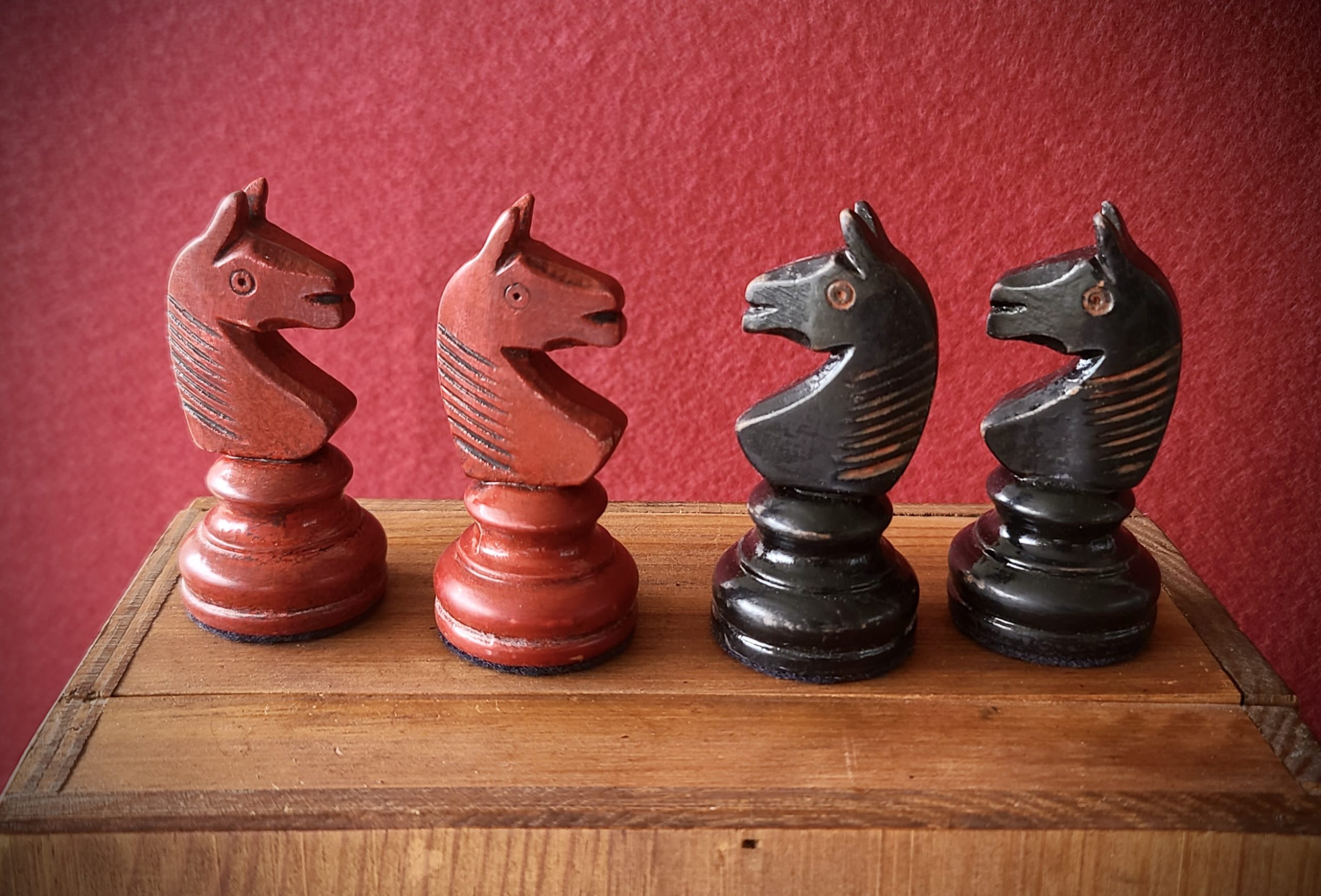
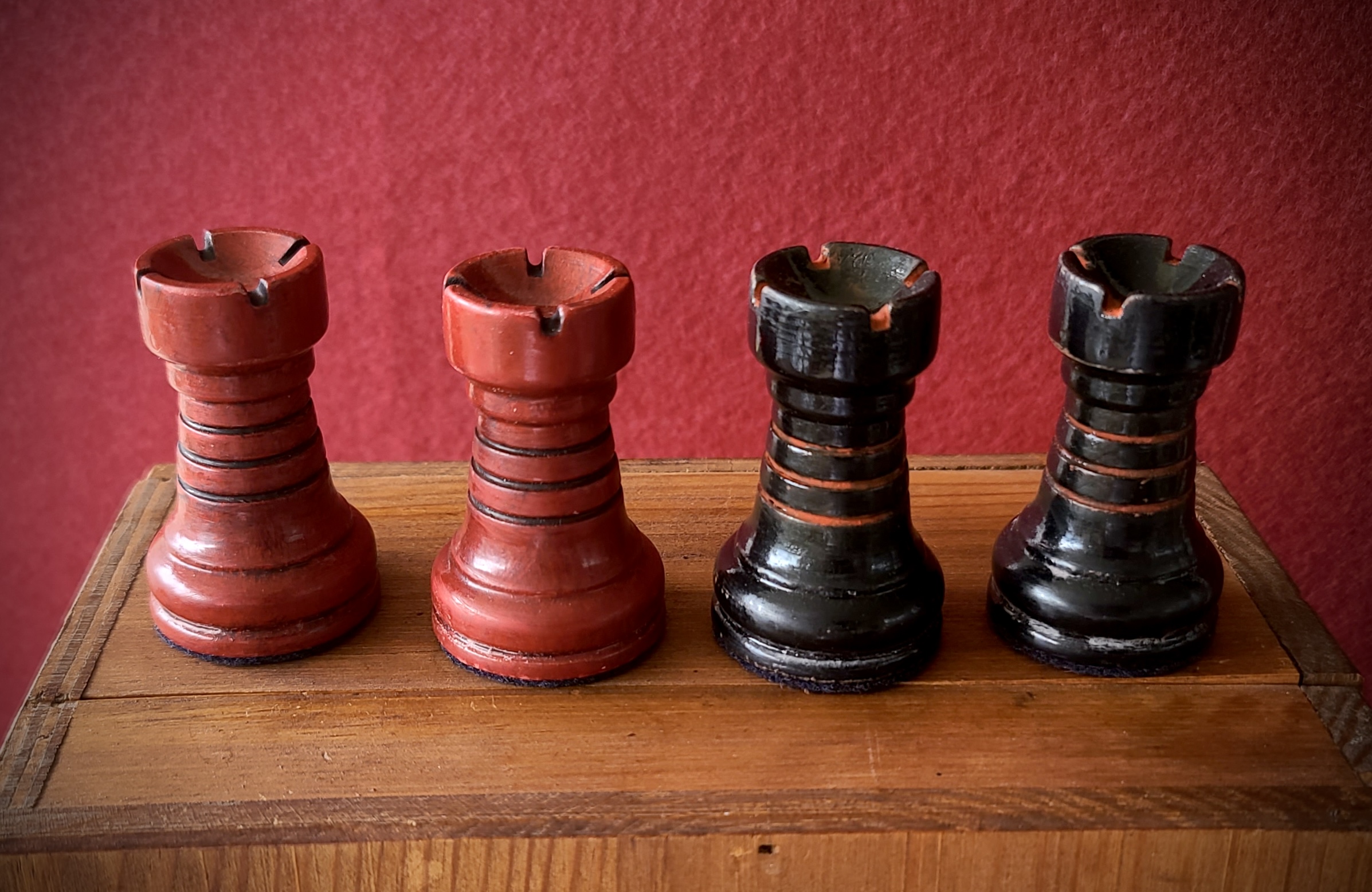
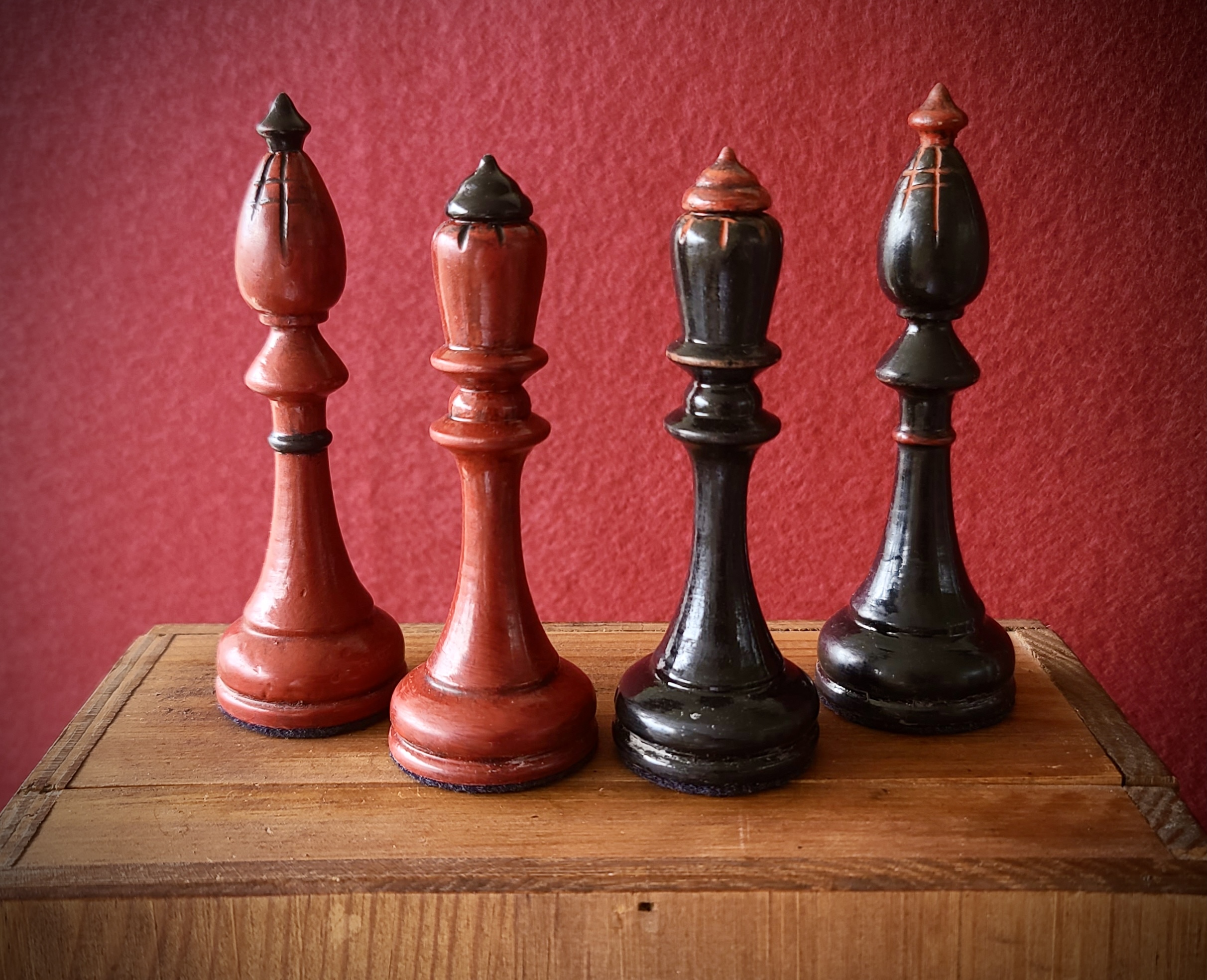
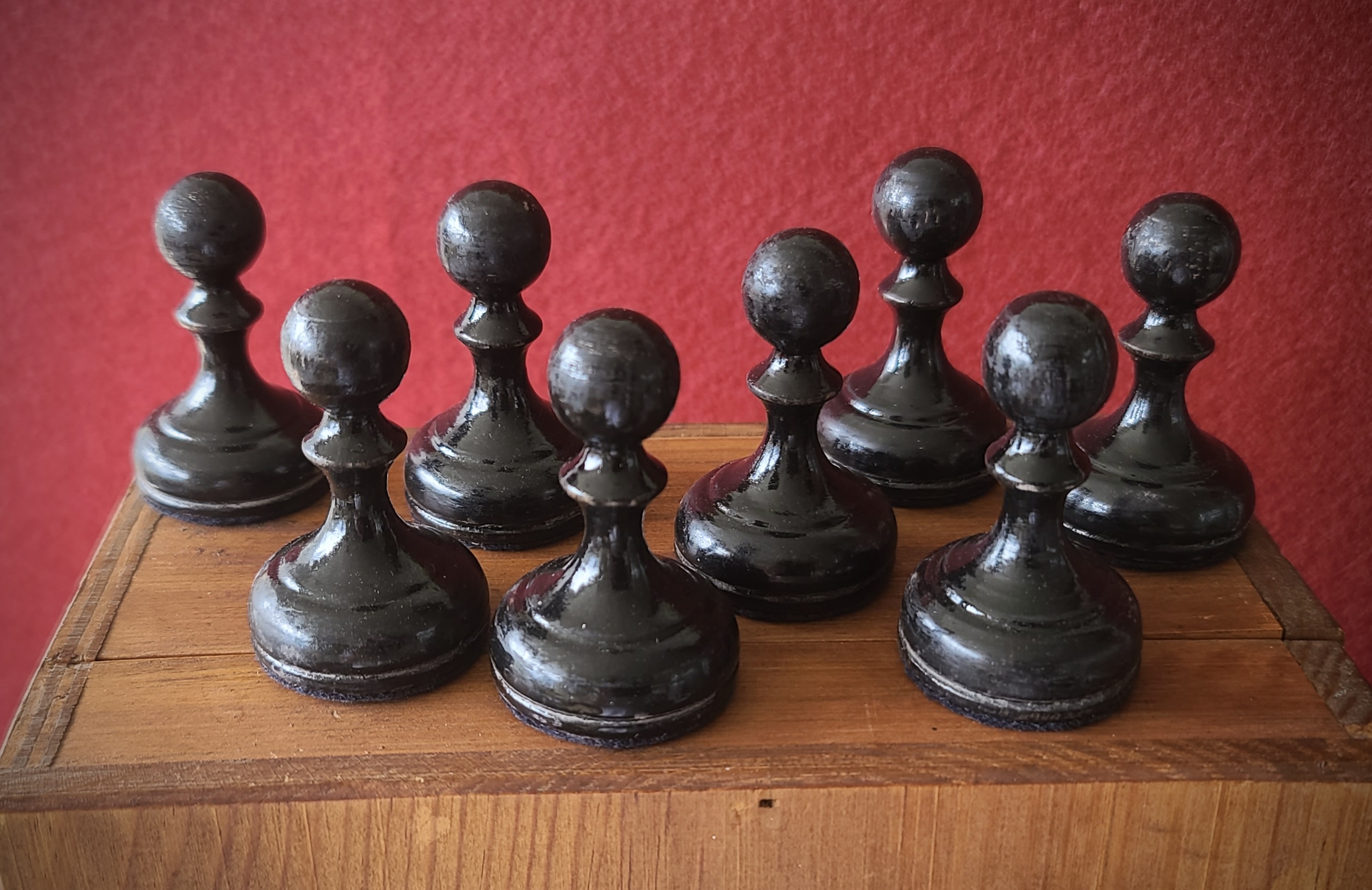
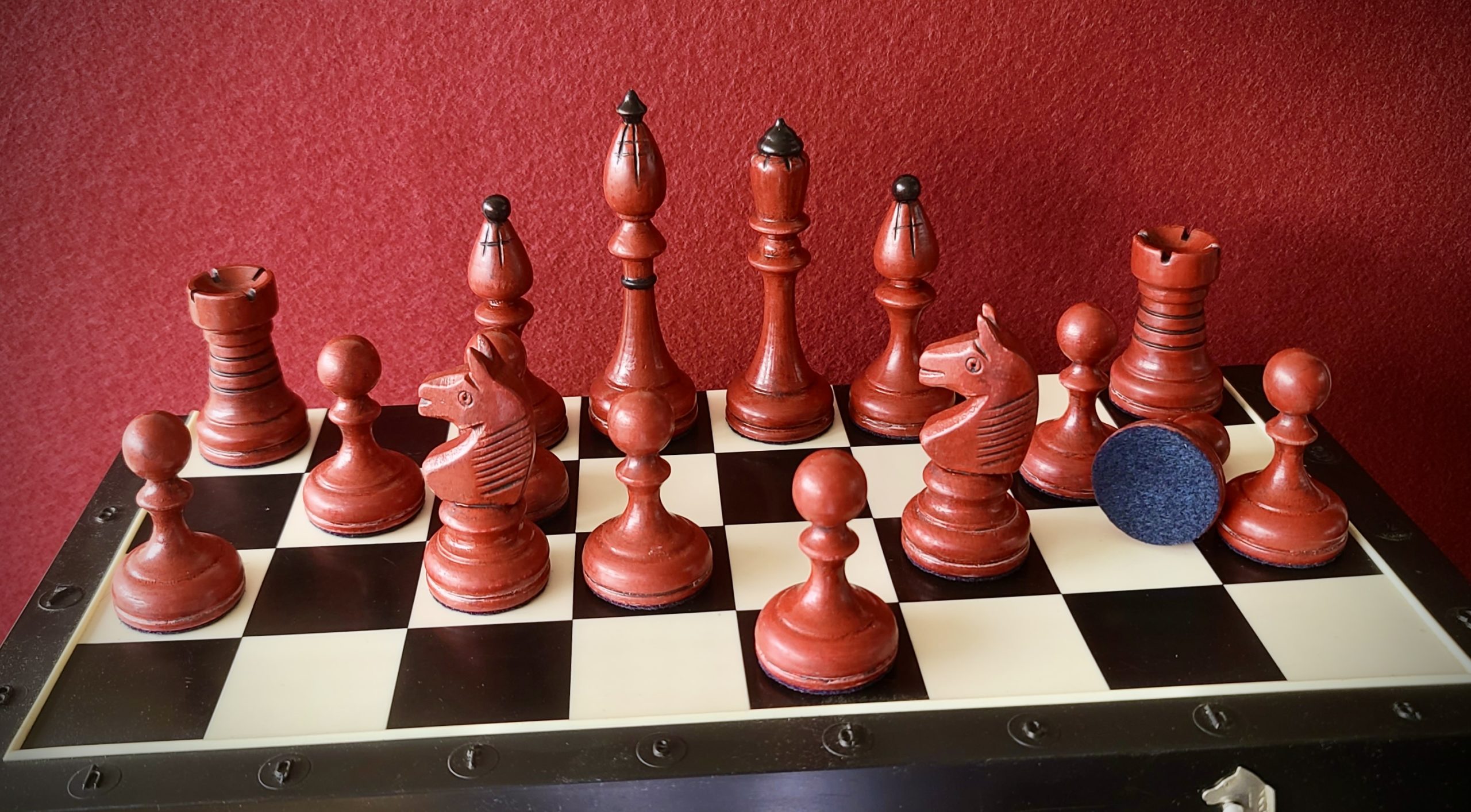
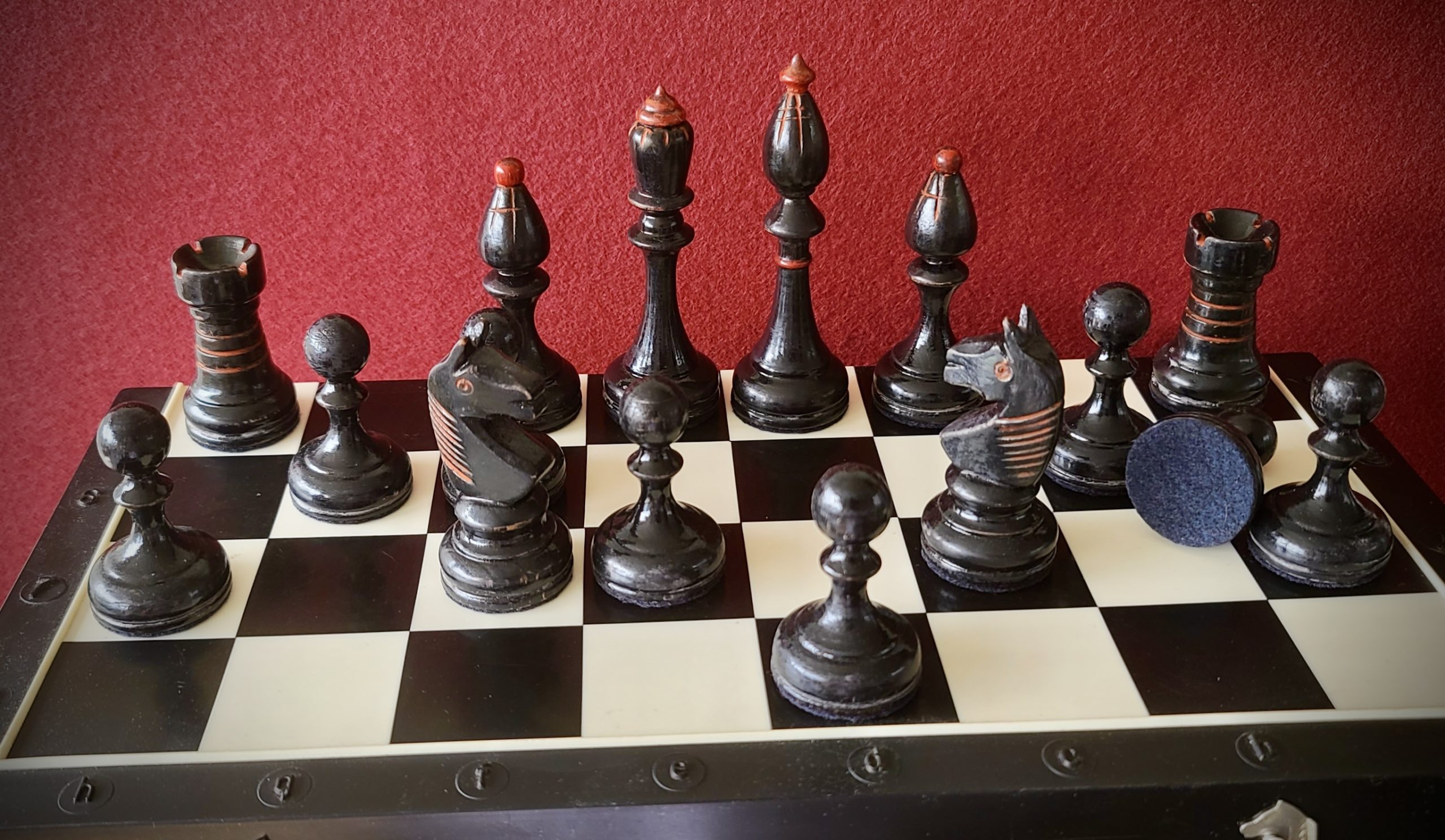
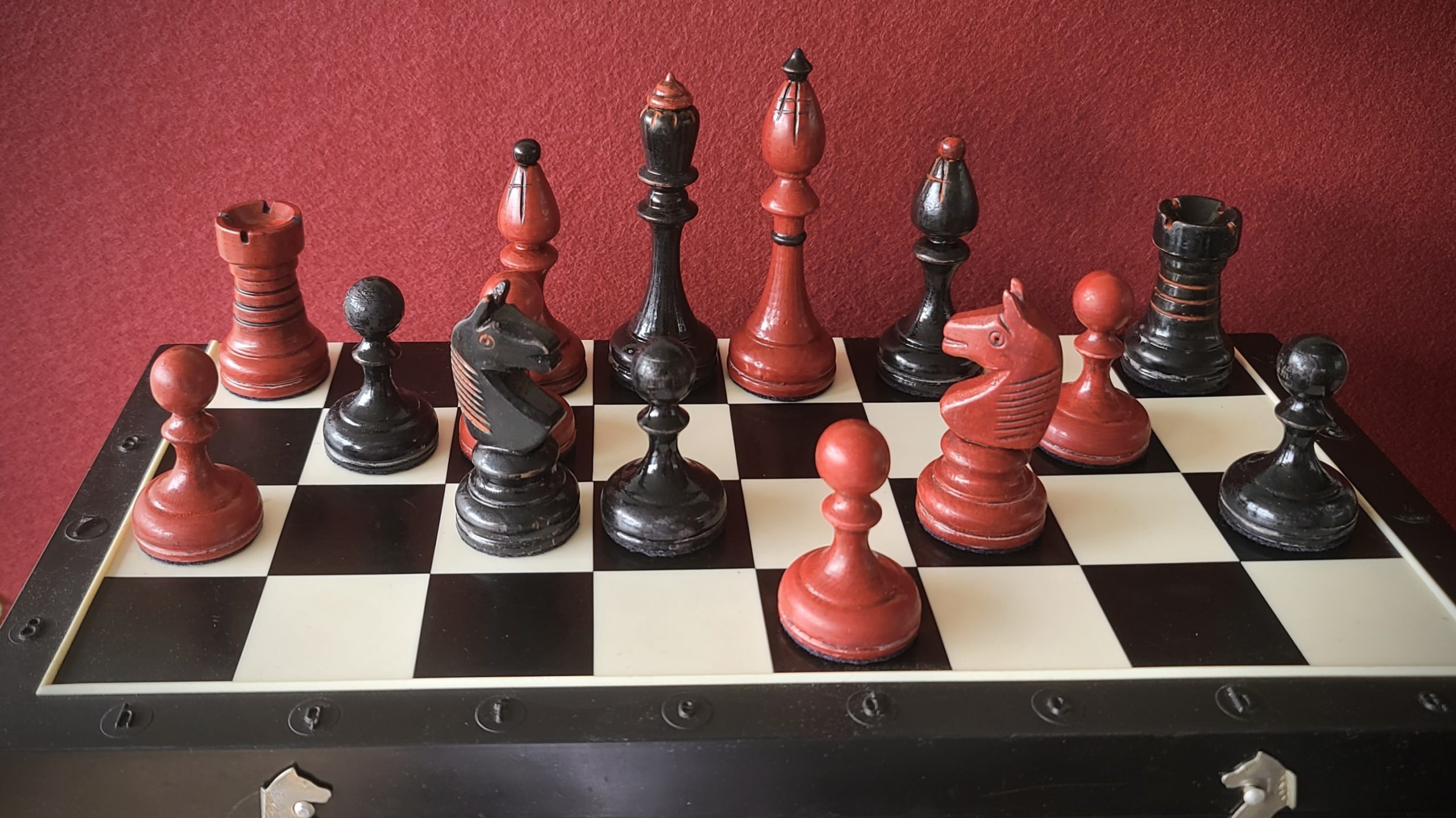
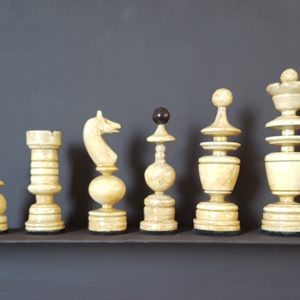
The Red Devils (Rubrum Diabolis); 32 Large Club/Tournament Chess Pieces without board, Czech, red vs. black, wood, unweighted, artistically reimagined and aged, c.1965
Height: King 11.6cm, weight 24g, base width 3.5cm; Queen 10.7cm wt. 22g, Bishop 8.8cm 19g, Knight 7.5cm 24g, Rook 6cm 15g, Pawns 6cm 15g.
W: Lush navy blue felt pads; B: same
The Red Devils carry a steadfast, traditional Czechoslovakian pattern that dates back to the late nineteenth century, the brain-child of the patriotic Czech sculptor, Bohuslav Schnirch (1845-1901). These unmistakably Czech designs first appeared in the smoke-laden gentleman’s gaming rooms such as the Cafe Slavia and the Cafe Union of the old Habsburg Empire (now the Czech Republic and Slovakia) back in the late 1880s and have very close and obvious links to the well-known kaffeehaus or ‘Coffeehouse’ patterns of eastern Europe, their brothers-in-arms, one might say.
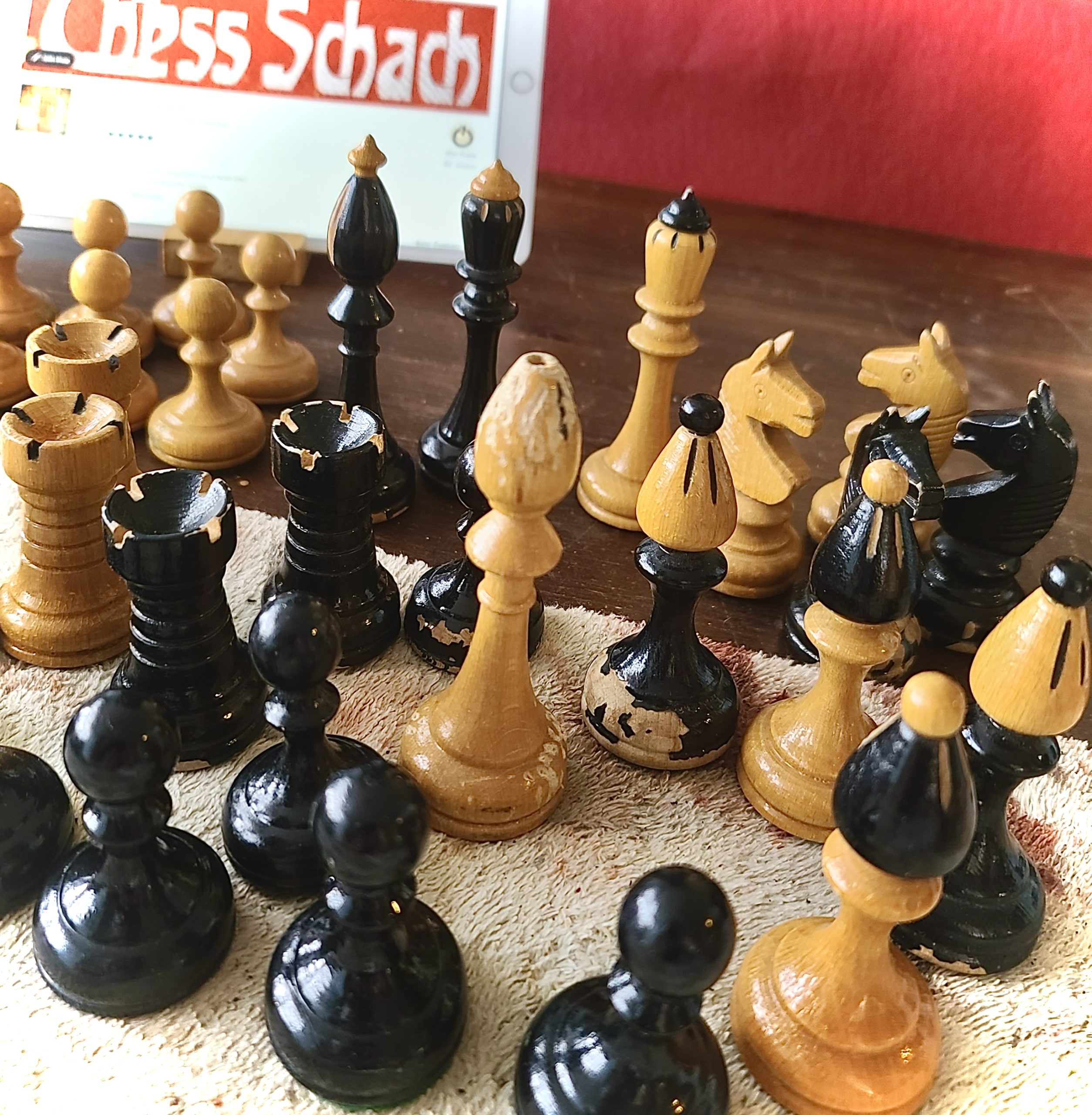
This example came to me direct from the Czech Republic in fairly poor condition. The black paint had chipped away from many of the bases and a few of the light pieces looked like they had been gnawed on by a small dog. The decision was therefore made to repaint the whole set.
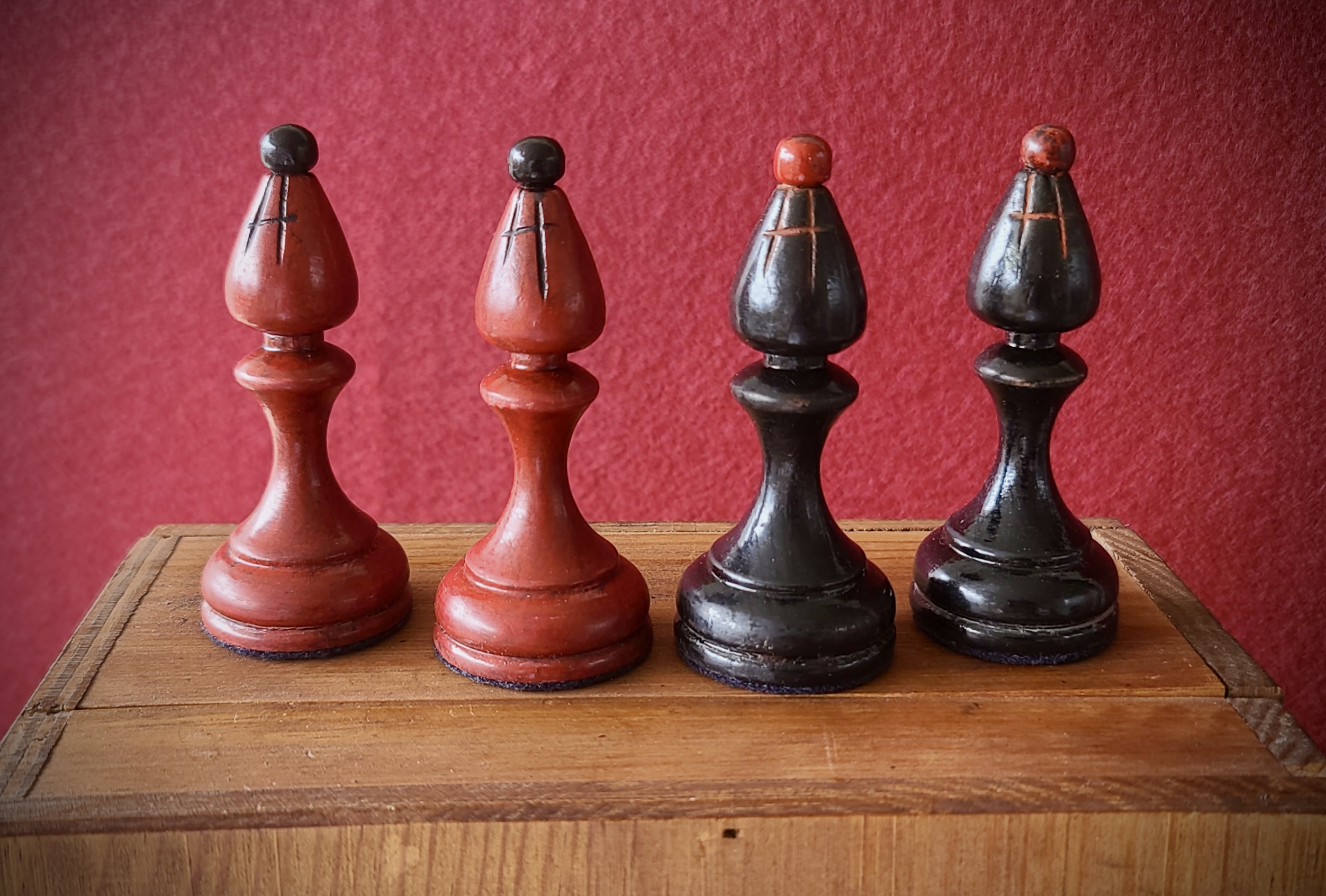
Having restored several Czech Club sets over the years I was excited at the prospect of artistically restoring one in non-traditional colours whilst keeping the traditional opposing coloured theme alive. In saying that, the bishop’s mitres are generally of opposing colours, which I’ve kept to suit, adding to the black vs. red contrast. Extra opposite coloured highlights have also been added; the ribs on the barrels of the rooks, the knight’s mane and eyes, the coloured rings on the stems of the kings, for example.
The paint used is generally used for barges and canal boats (which I also restored back in England many years ago) and most resembles the old oil-based paints favoured in the last century. This has been rubbed down, aged and antiqued to give the set not only the look, but the ‘feel’ of a vintage set of the 1960s.
To see this pattern and many other museum quality Czech examples visit the ‘Ceska Klubovka’ website @ sachy.csla.cz or visit The Gallery for more pictures of the sets transformation.
Both kings carry the hand-painted iridescent copper 2022 ‘Power’ signature of the artist on their bases and The Red Devils are accompanied by one of our unique Certificates of Authenticity which are posted off at the end of the year, once we tally up how many sets passed through our galleries in 2022. See the Jan. 2022 chessay for more info on this.
Ref Code: RD22
Related products
Out of stock