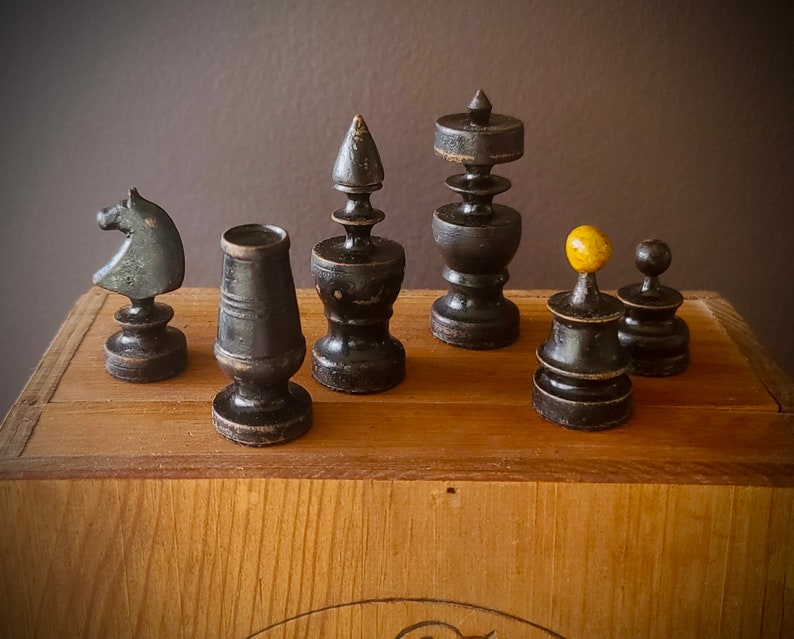


*SOLD* Capulus Dom Polonica (Polish Coffee House); Rare Polish Coffee House/Regence Style Chessmen with Original Board, Pre-WWII
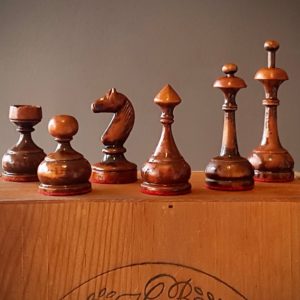
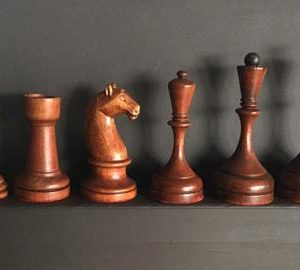
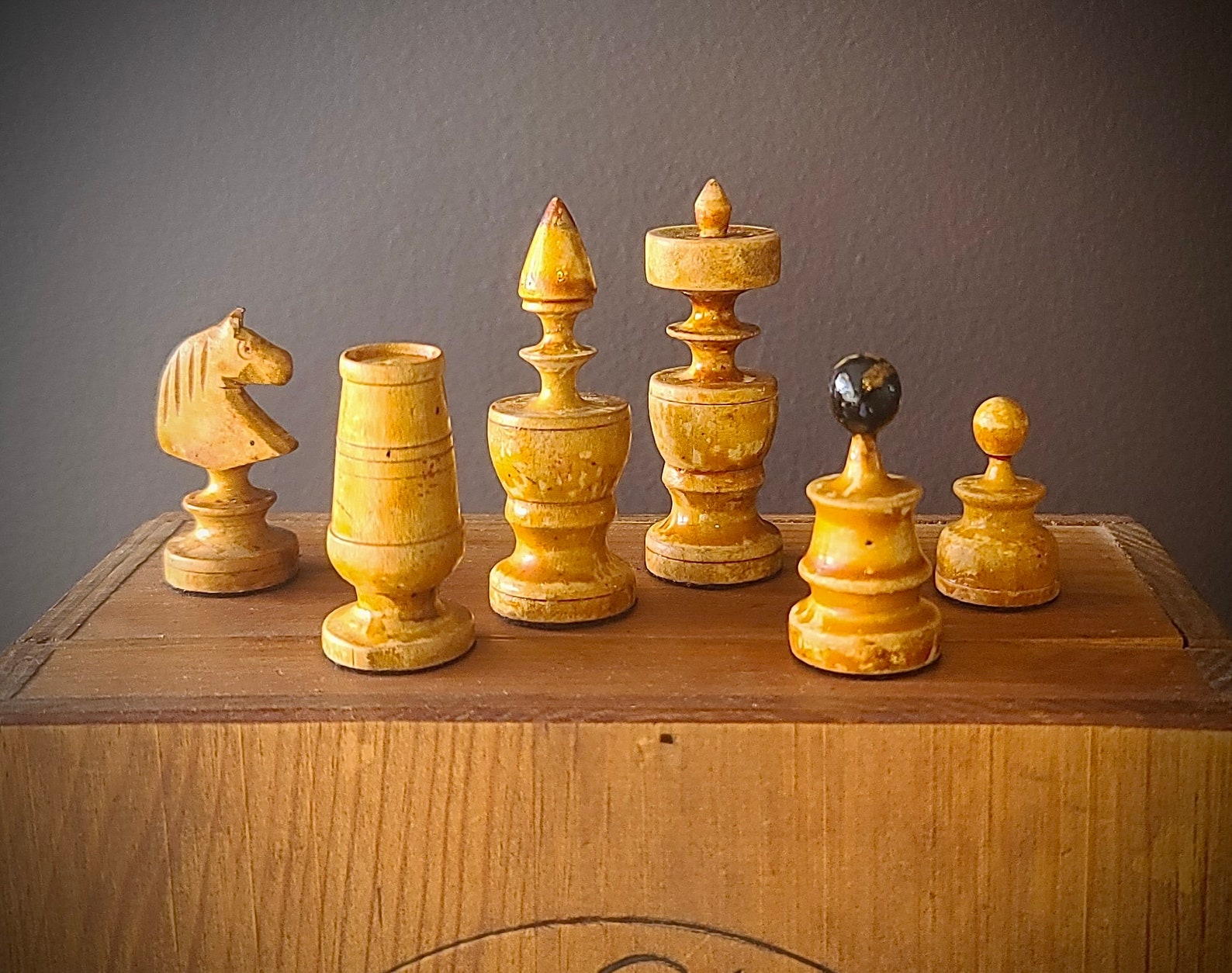
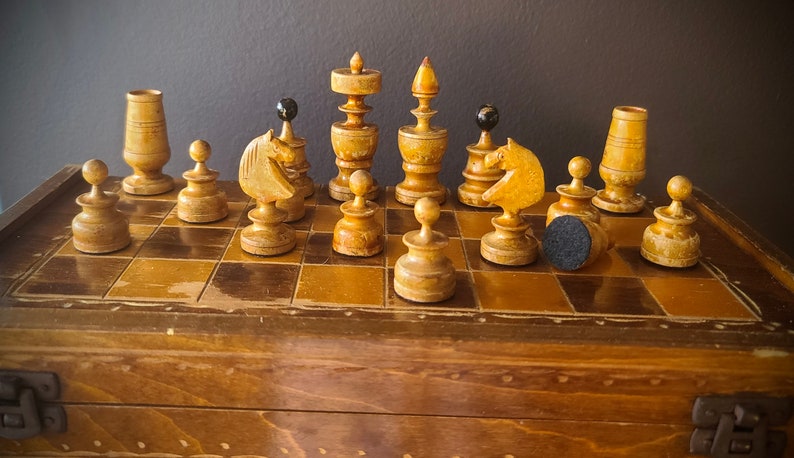
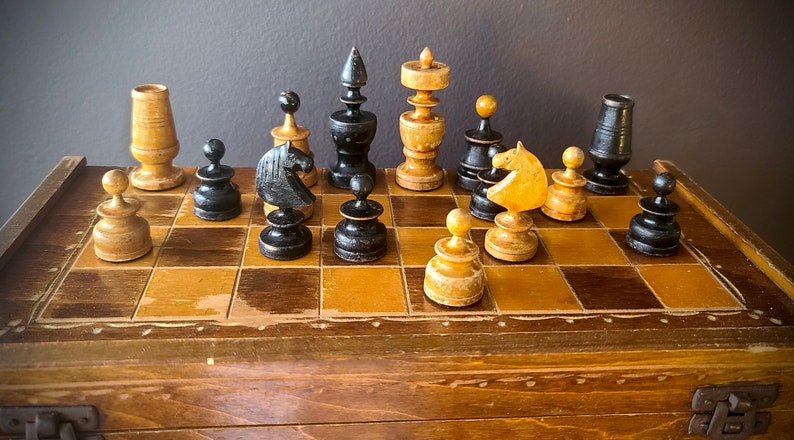
Capulus Dom Polonica (Polish Coffee House); 32 medium sized chessmen with original board, wood, white vs. black, unweighted, Polish, partially restored, c.1920-1939
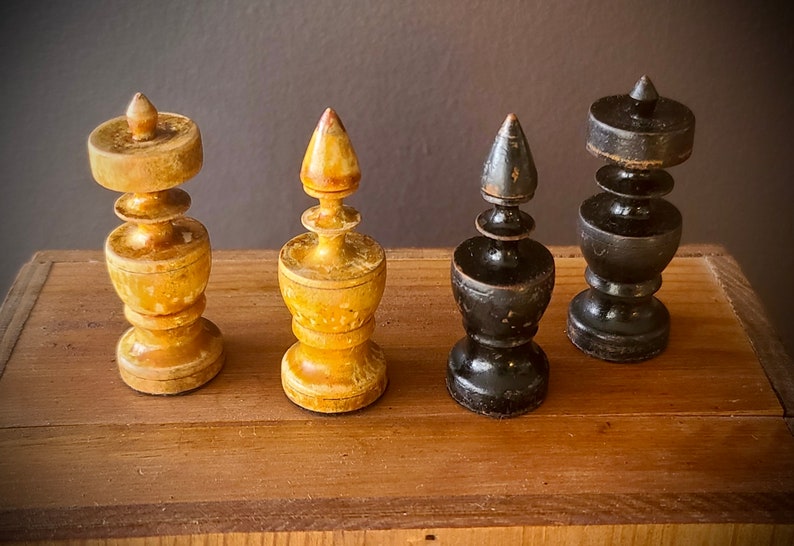
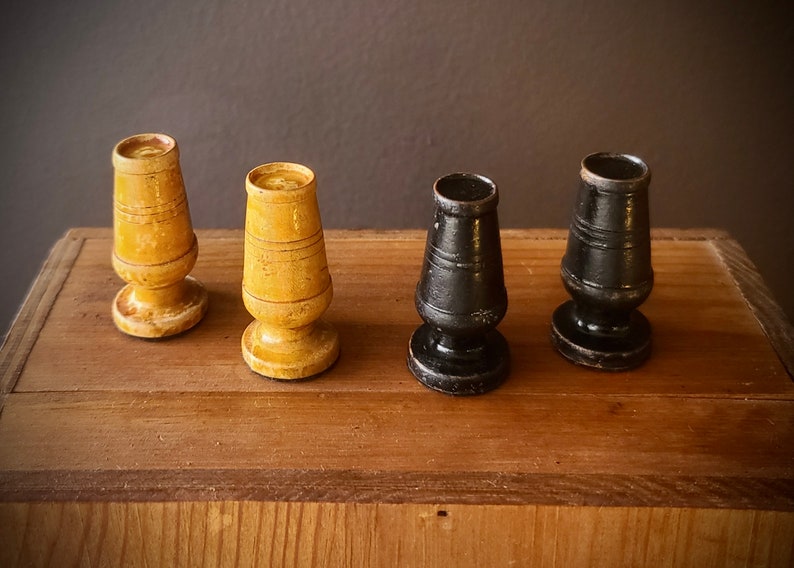
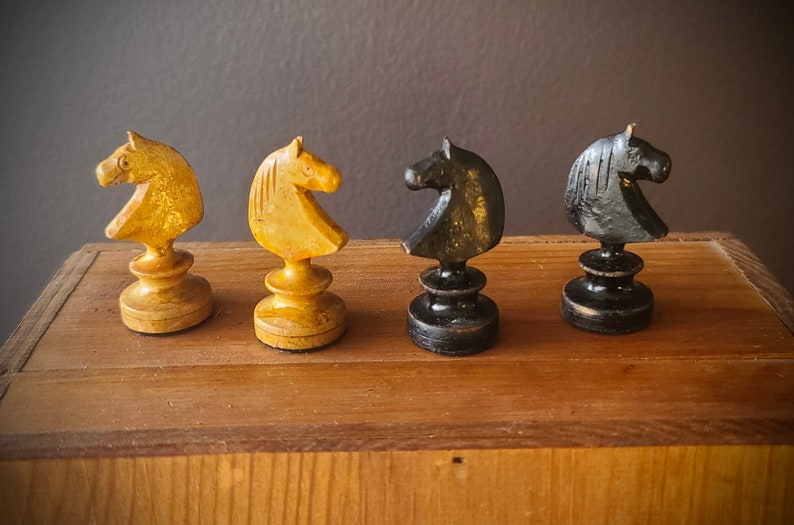
Height: King 7cm, weight 12g, base width 3cm; Queen 7g wt 10g, Bishop 4.8cm 6g, Knight 5cm 5g, Rook 4.8cm 9g, Pawns 3.5cm 4g.
W: black felt pads, B: same
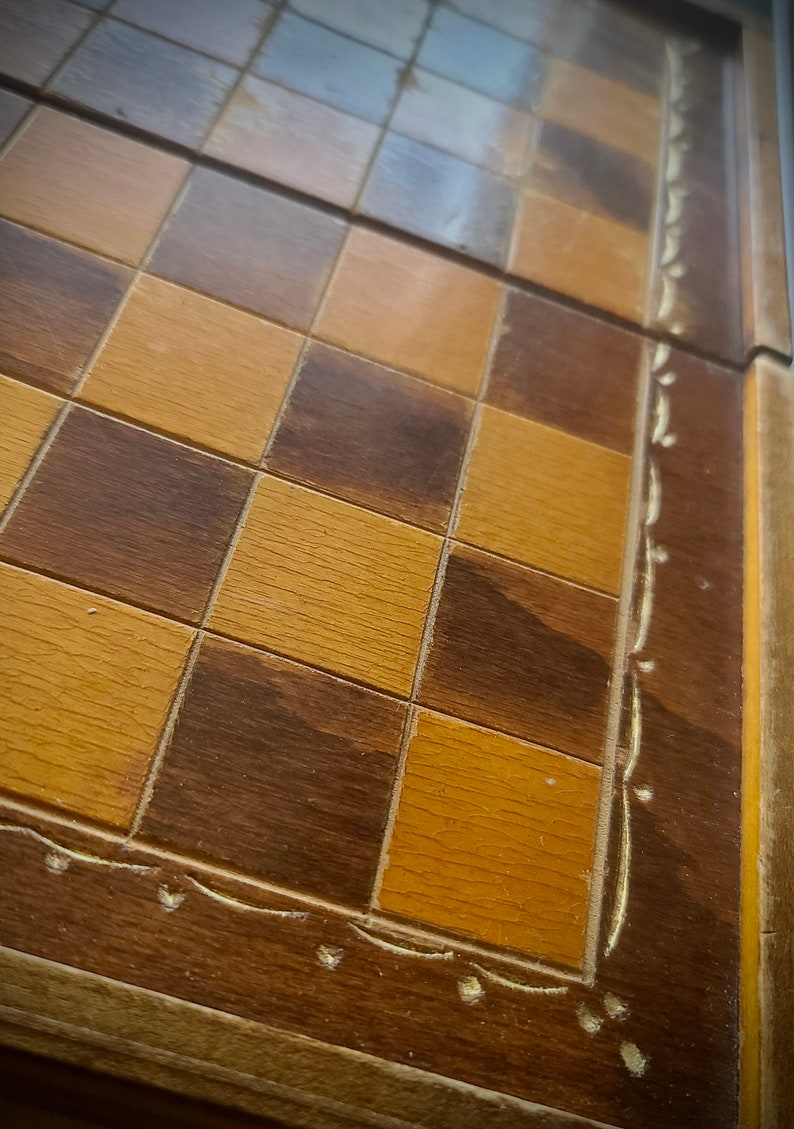
Board size is 13”x13 in. or 31cm x 31cm, sq. size 4.5cm or 1” 1/4”. There is very nice, hand-carved decorative detailing work around the outside of the board and surrounding the field of play. The latter I have highlighted in fine gold. The latches work perfectly and have a nice ‘rustic’ patina. On the inside is a backgammon field.
More photographs of the set and board can be seen at our HQ, thechessschach.com
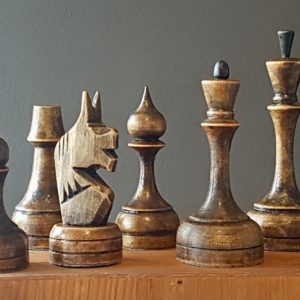
A set of old coffee-house chessmen that have clearly seen some action over the last 100 years or so! Almost too much action in fact, as the original thin layer of varnish was virtually non-existent on several of the pieces which looked more like mangy hounds than a wonderful and intriguing relic of the last century.
This sorry state was remedied with a partial restoration, which involved colour-matching the beautifully-worn, aged patina in look and feel to bring the whole set together. I’ve also added some very subtle flecks of rouge along the way as seen on similar patinas from this era. Also, one ball finial of a black bishop was also replaced as a past repair was an unsightly, makeshift attempt.
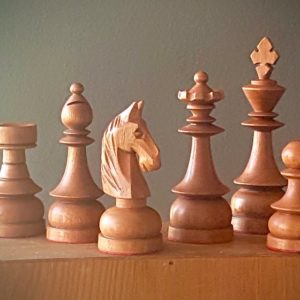
I mention an ‘intriguing relic’ of the past, because for me this early Polish pattern is an artful combination of the famous Austrian Coffee House and French Regence patterns of the past. The rooks in particular reflect the Regence sets, as do the urn-shaped pedestals of the royals. The ‘cheese-wheel and bullet’ crowns of the royals, however, are typical of later Polish sets (see Capulinum Tempi, or Coffee Time in our Archive Gallery for a 1950s example) and a trademark of Polish designs. The bishops, with opposing coloured domes are an obvious reflection of the Kaffeehaus sets of Austria and Germany, making these Polish example a rare, potpourri of early European chess set designs.
Both kings carry the hand-painted, iridescent copper ‘Power’ signature of the artist on their bases. Capulus Dom Polonica is also accompanied by our hand-drawn ‘Certificate of Artistry’ which will be posted out separately once we tally up how many ‘Copper Signature’ sets pass through our galleries in 2022 “… all good things …” as the old saying goes.
Ref Code: CD22