


*SOLD* Mordovium Militae; Mordovian ‘Queen’s Gambit’ Style Soviet Weighted Chess Set, c.1955
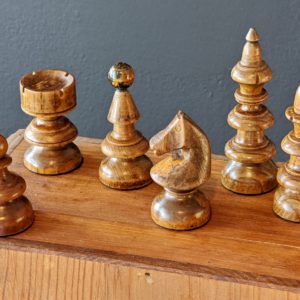
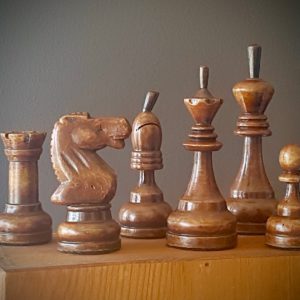
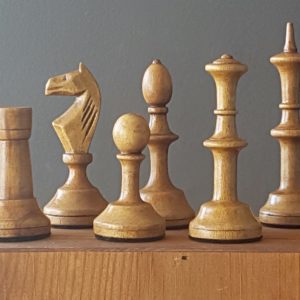
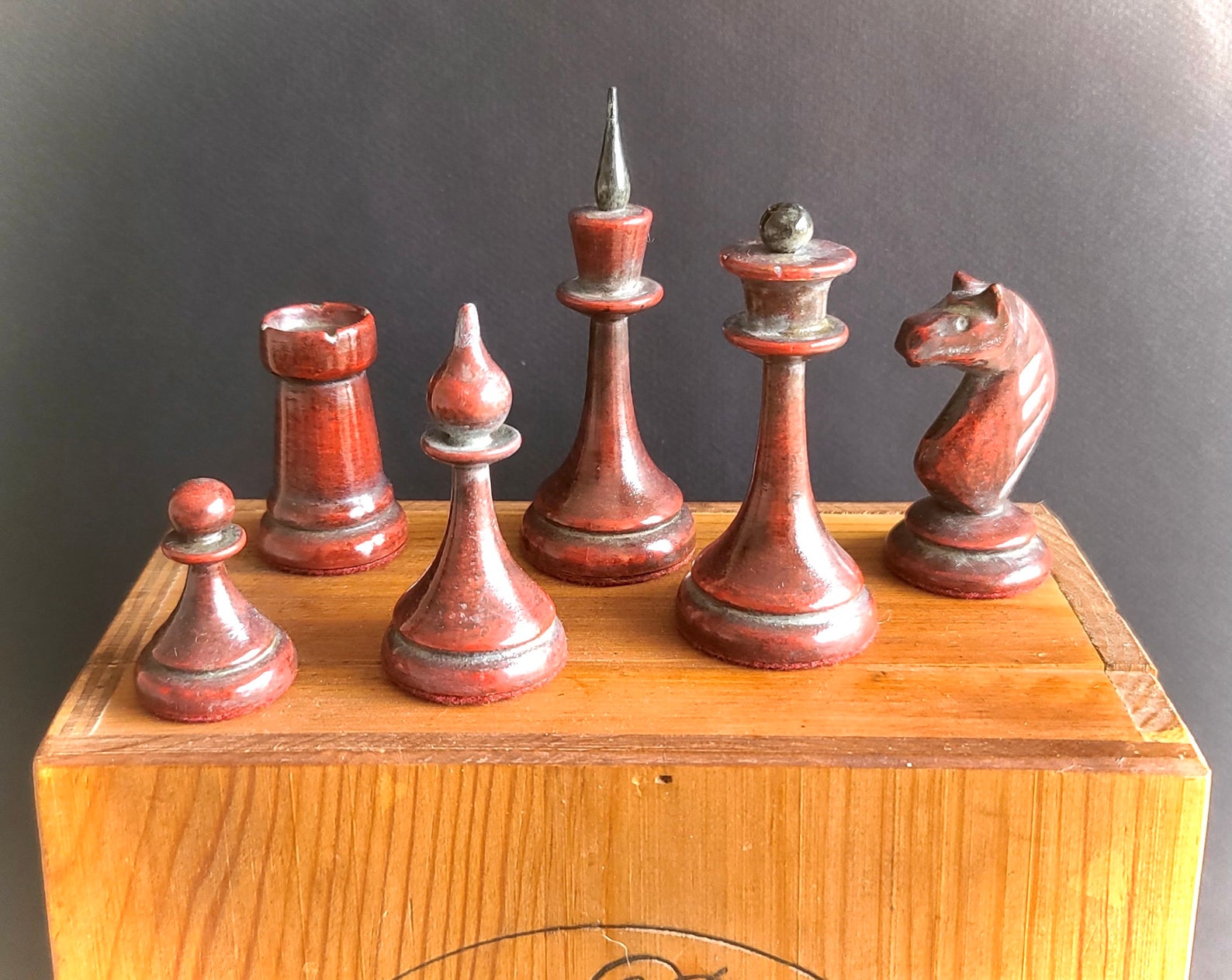
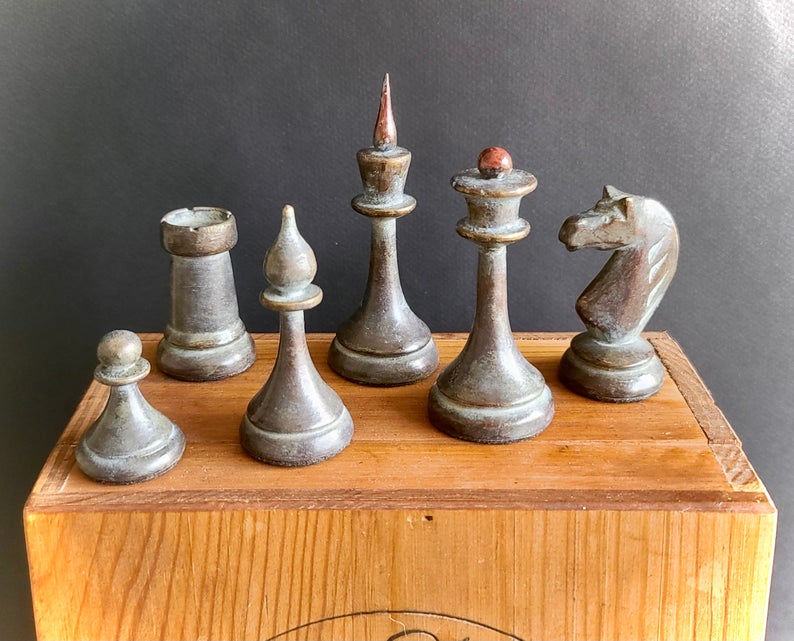
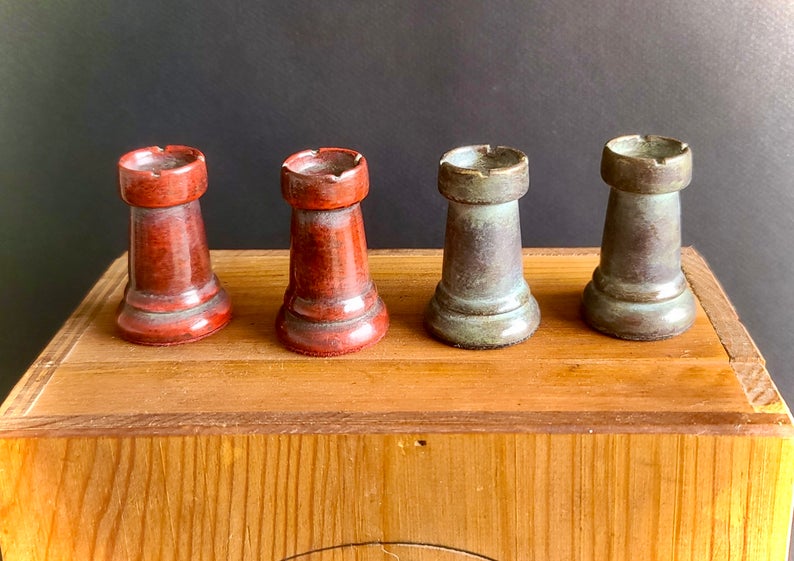
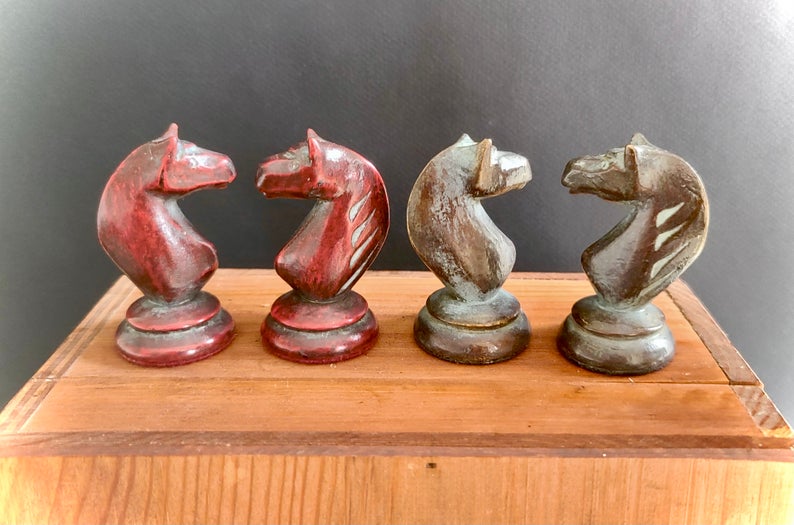
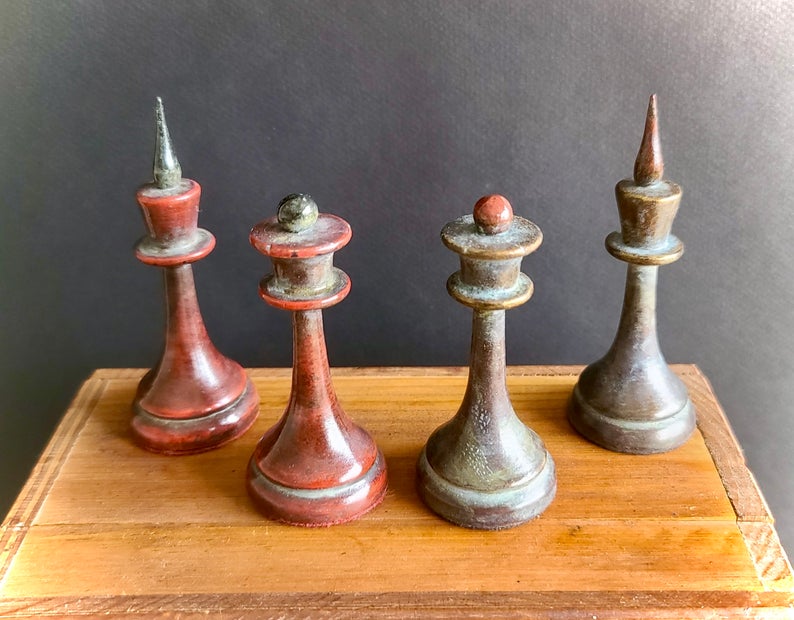
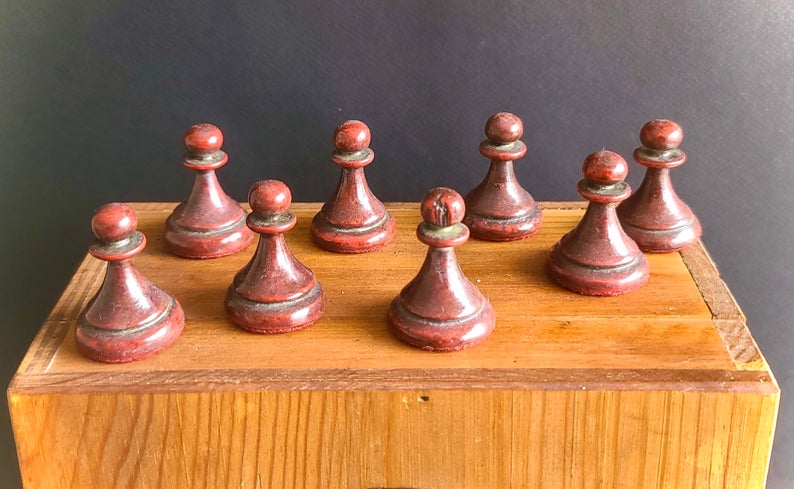
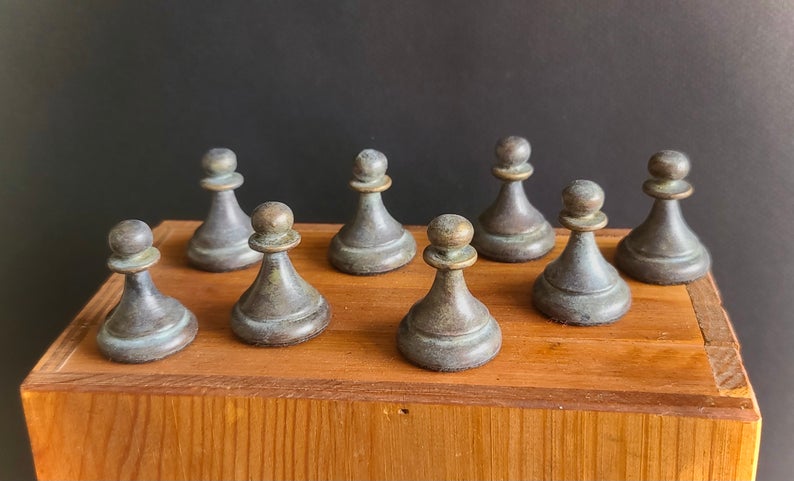
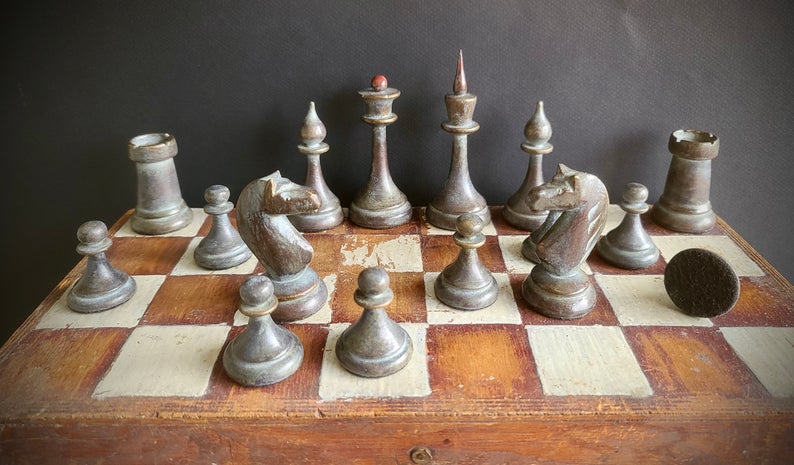
Mordovian Militia (Mordovium Militae); 32 chess pieces without board, wood, Soviet Era, lightly weighted, artistically restored and reimagined, scarlet vs. bronze, antiqued, c.1950-1960
Height; King 4″ or 10.2cm, weight 21g, base width 4cm; Queen 8.5cm, wt 21g, Bishop 7.2cm 15g, Knight 6.5cm 15g, Rook 5.3cm 22g, Pawns 4cm 6g.
W: lush burgundy felt pads; B: lush black felt pads
The infamous dictator, Joseph Stalin, was said to have preferred ‘red vs. black’ pieces rather than the traditional white vs. black set-up and many of the earlier Soviet sets reflect this. Here, I’ve taken this idea a stage further using a fiery, scarlet red for the lighter pieces and a deep bronze for the dark side. Several shades of verdigris washes give the set an antiqued feel about them and the added weight makes this famous design very enjoyable to play with over the board.
I use the term ‘famous’ because just recently a slightly different version of this iconic Soviet pattern was used in the hit mini-series, THE QUEEN’S GAMBIT, although this design appeared a few decades earlier than the 1980s version used by Beth Harmon in the nail-biting finale of episode seven.
The trademark ‘elbow’ or ‘S’ shaped knights have a stark simplicity about them and the equally simple ‘tear-drop dome of the bishop can only be inspired by Moscow’s Saint Basil’s Cathedral, erected during the reign of Ivan the Terrible in the 16th century “…its towering domes shaped like the flames of a bonfire rising into the sky” (A. Ivanov, The Tsars p.100). A vivid description I bore in mind when choosing the fiery red for the lighter pieces.
The set was actually completed in April but I decided to hang on to it for a few months to use as my playing set. During this time there was a little accident with the queen’s crown, the full story of which is the subject of my July Chessay … check it out for the full scoop – and pick up a few reno tips along the way!
All of our chess pieces are UV resistant and ideal for display as well as casual/blitz play and both kings carry the hand-painted iridescent bronze 2021 ‘Power’ signature of the artist on their bases.
NOTE: The dark queen also carries the Power signature – a slight mistake on my part. I was going to replace the pad, but decided to let it ride – consider it a bonus! Thank me later…
Mordovium Militae also comes with our unique ‘Certificate of Artistry’ which will be posted separately once we tally up how many listings passed through our galleries in 2021 – “All good things …” as the wise man once said…
Ref Code MM21