
*SOLD* Mordovian (aka ‘Latvian’) ‘Queen’s Gambit’ Style Soviet Analysis Chess Set with Original Commemorative Board, c.1965
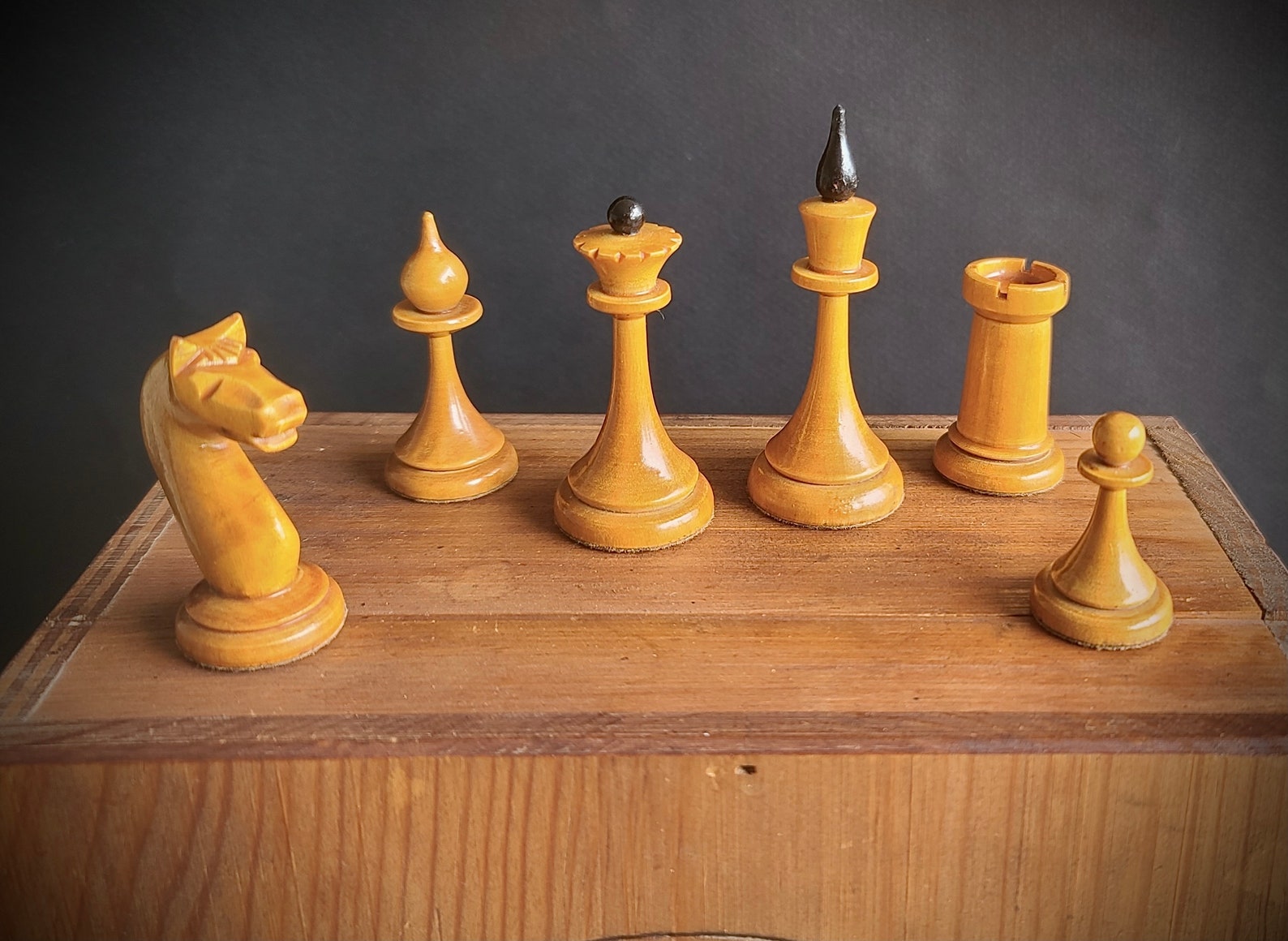
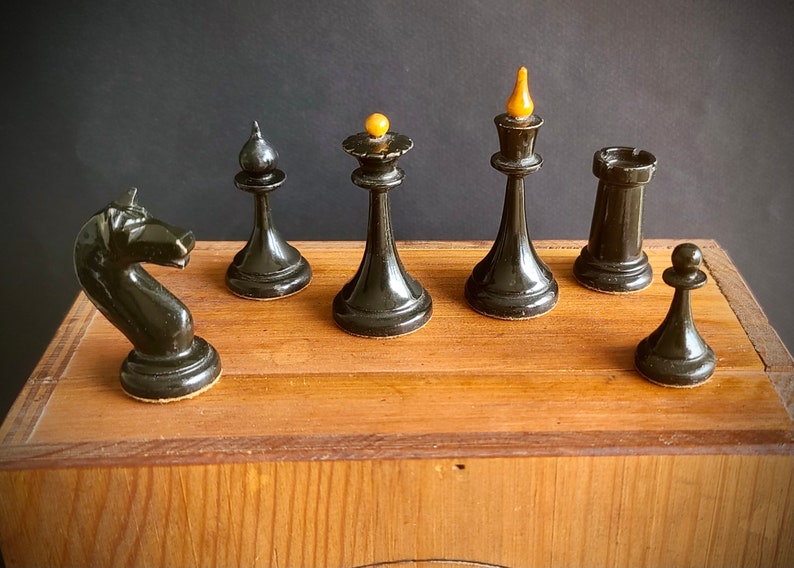
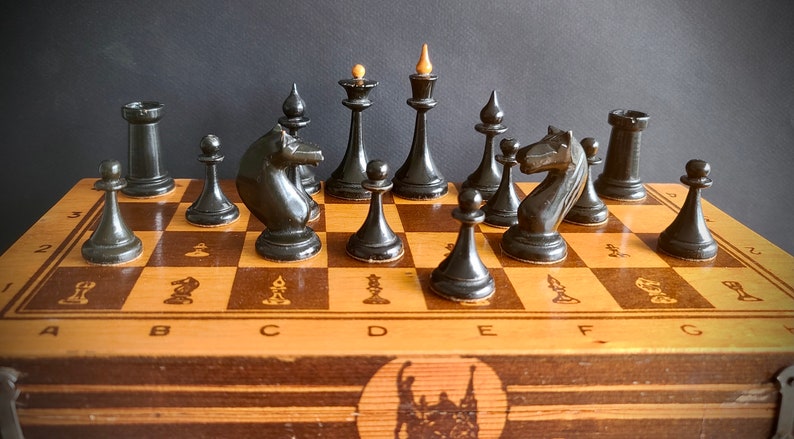
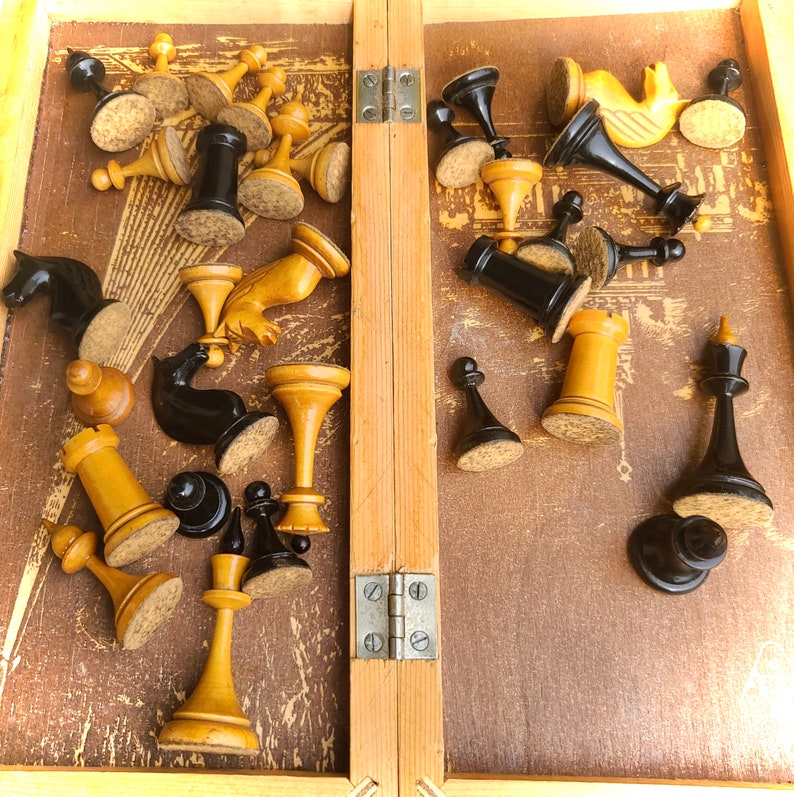
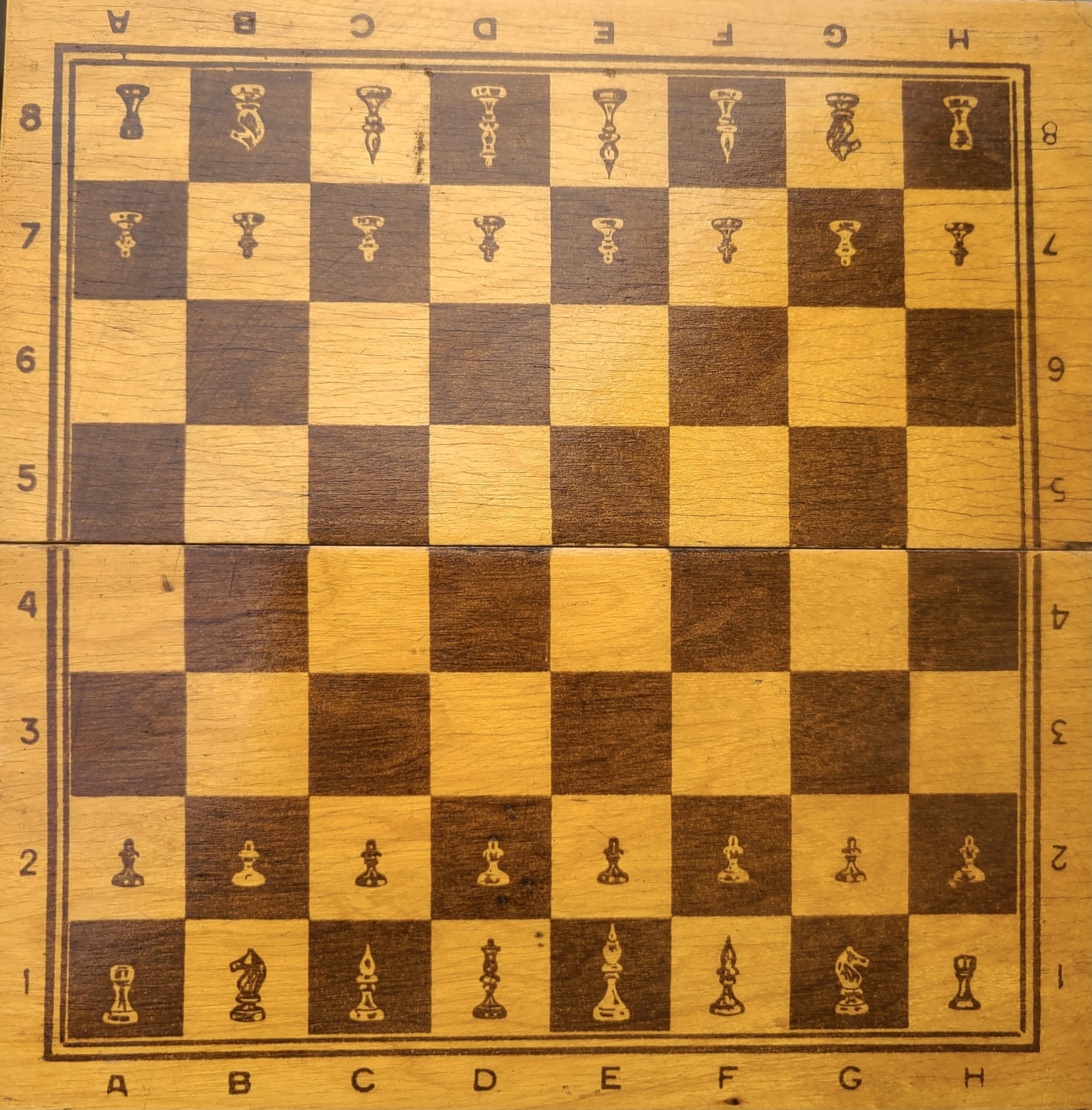
Moldovian ‘Latvian’ Pattern: 32 unweighted analysis chess pieces with folding original vintage board, wood, Soviet Era, c.1960-1970
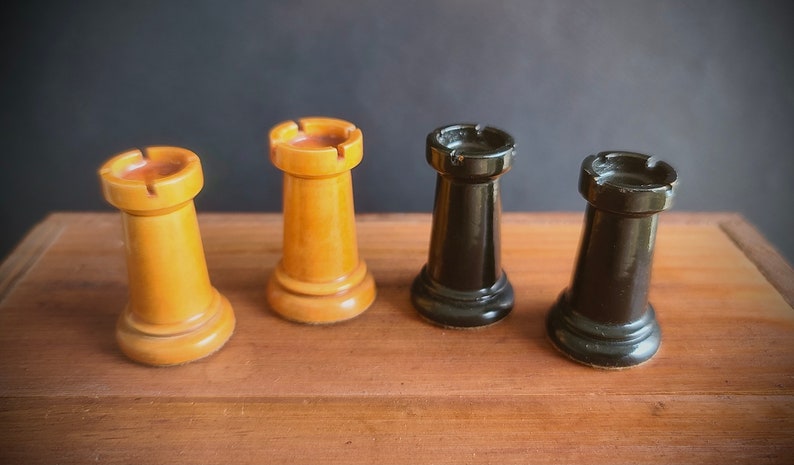
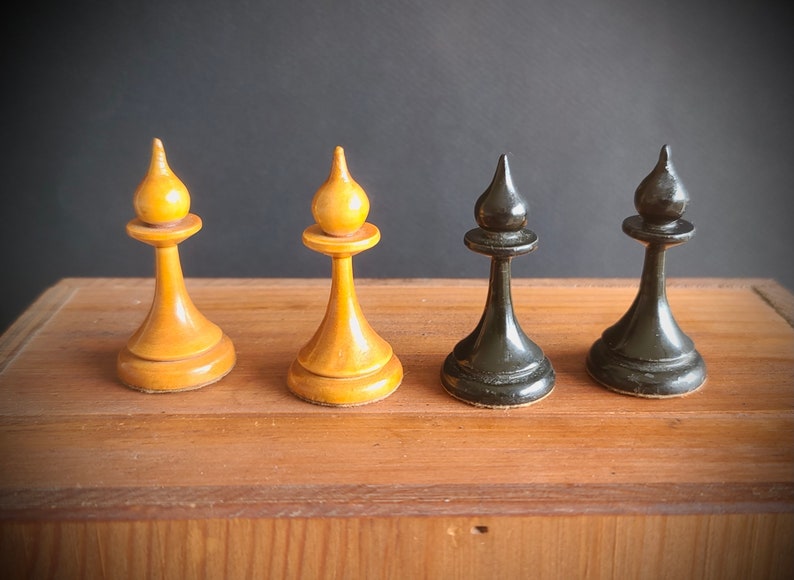
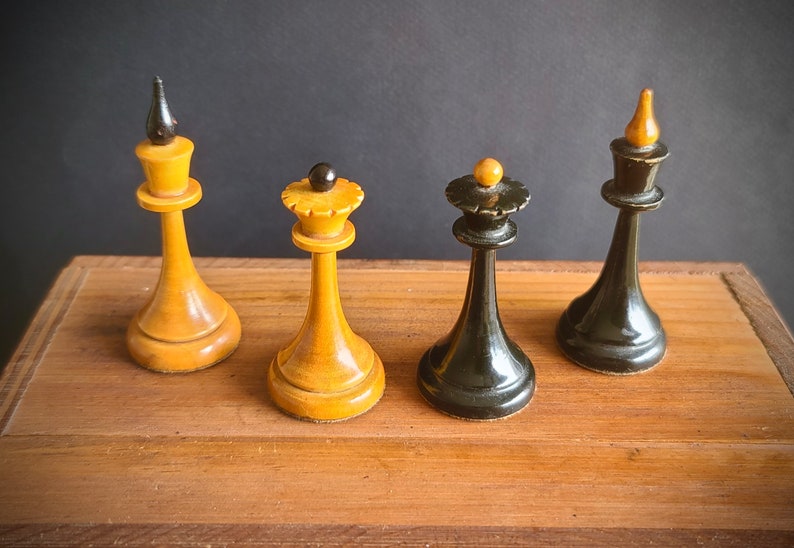
Height; King 7.3cm, weight 6g, base width 2.8cm; Queen 6cm, wt 6g, Bishop 5.2cm 4g, Knight 5cm 6g, Rook 4cm 5g, Pawns 3.7cm 3g.
W: antiqued beige felt pads; B: same
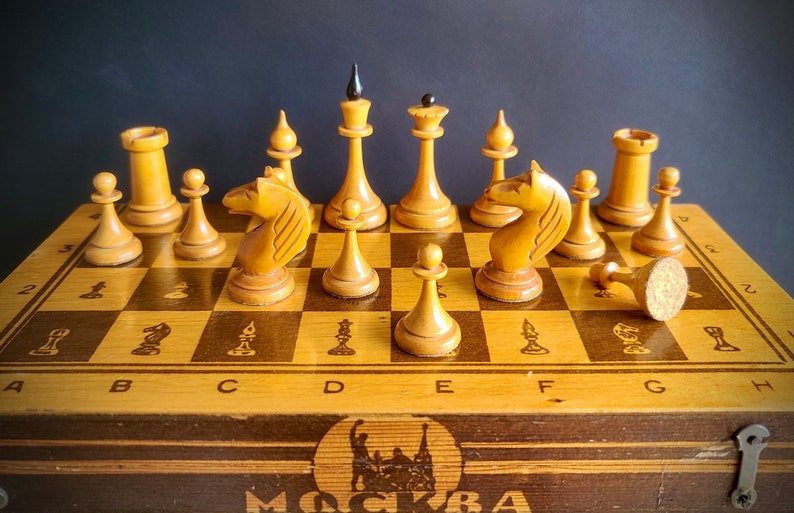
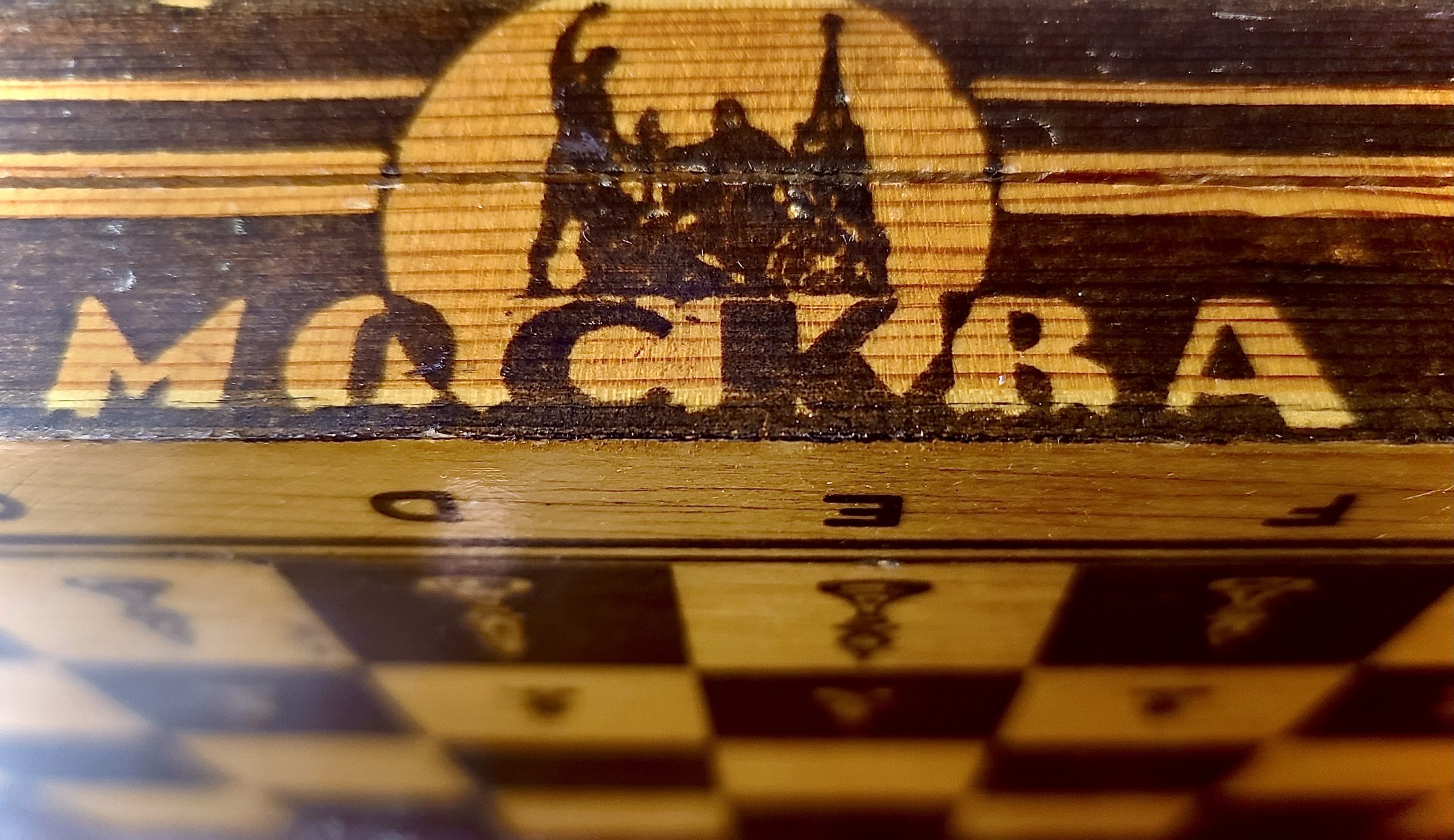
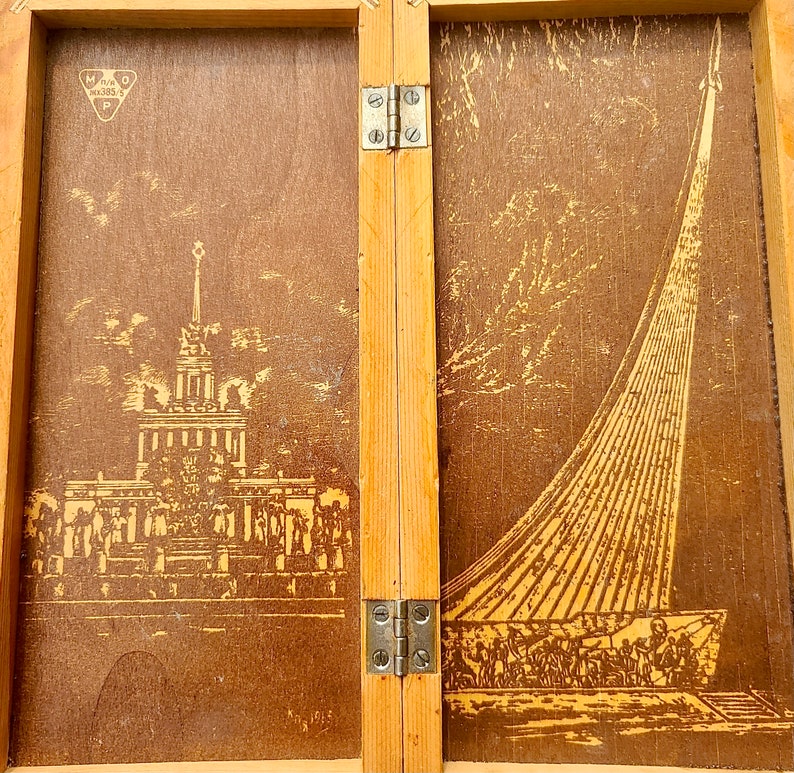
Board Size: 30cm x 30cm. Squares are 3cm. Original stencil artwork on the front and interior commemorating the opening of the Moscow Space Park and Museum in 1964. See my Facebook page The Chess Schach for more info! All in all, a perfect lightweight travel companion and a great gift for a young student of the game or budding historian/collector.
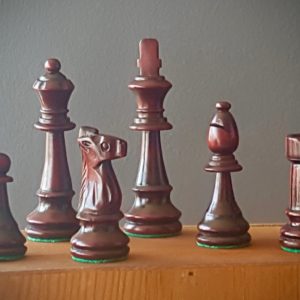
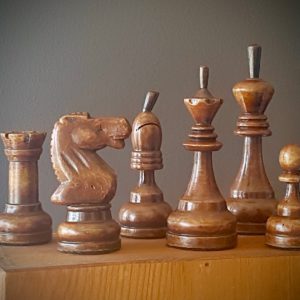
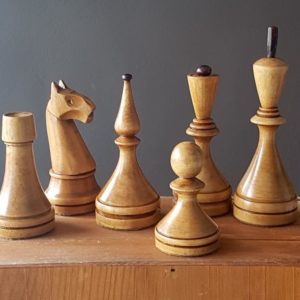
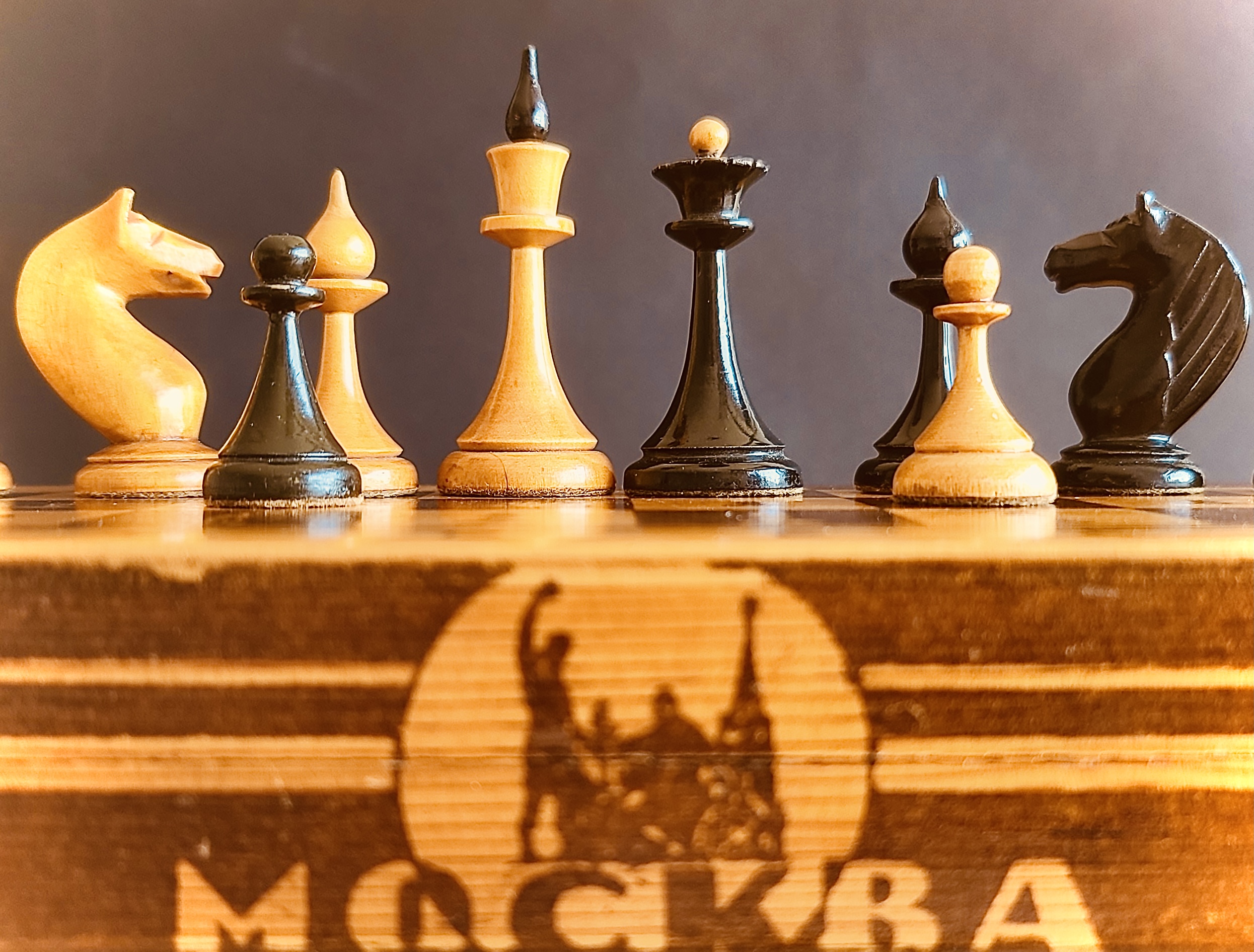
This famous Soviet design was once said to be “a favourite” of the legendary ‘magician from Riga’ – Mikhail Tal – which is why the set is sometimes confusingly called the ‘Latvian’ set. I make use of the term ‘famous’ because just recently a slightly larger version of this timeless Cold War pattern was used in the hit mini-series, THE QUEEN’S GAMBIT, although this particular design appeared a few decades earlier than the late 1980s version used by Beth Harmon in the nail-biting finale of episode seven.
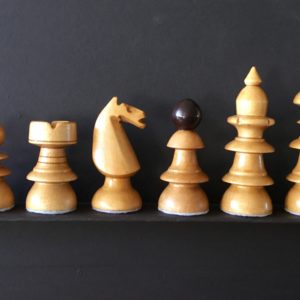
The trademark ‘elbow’ or ‘S’ shape of the Moldovian knights have a stark simplicity about them and carry a ‘lean’ that is seen in another famous set named after Tal. The bishops, too, have an equally simple ‘tear-drop’ shaped dome that can only be inspired by Moscow’s Saint Basil’s Cathedral erected during the reign of Ivan the Terrible in the 16th century with “…its towering domes shaped like the flames of a bonfire rising into the sky” (A. Ivanov, The Tsars p.100). Also of note here is that the Royal’s finials are of the traditional “Latvian” design, as opposed to the ‘diamond’ and ‘bonnet’ pattern of the two similar sets listed in the gallery recently.
The set also comes with our unique ‘Certificate of Artistry’ which will be posted separately once we tally up how many listings passed through our galleries in 2021 – “All good things …” as the wise man once said…