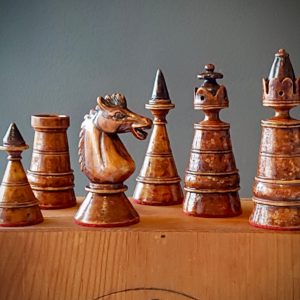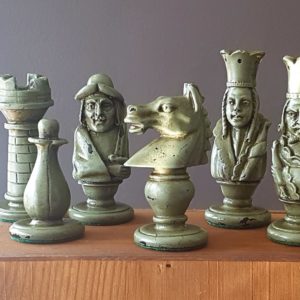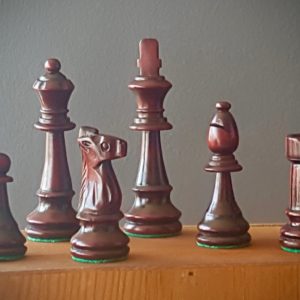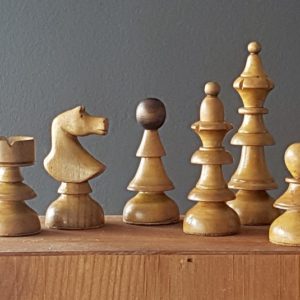

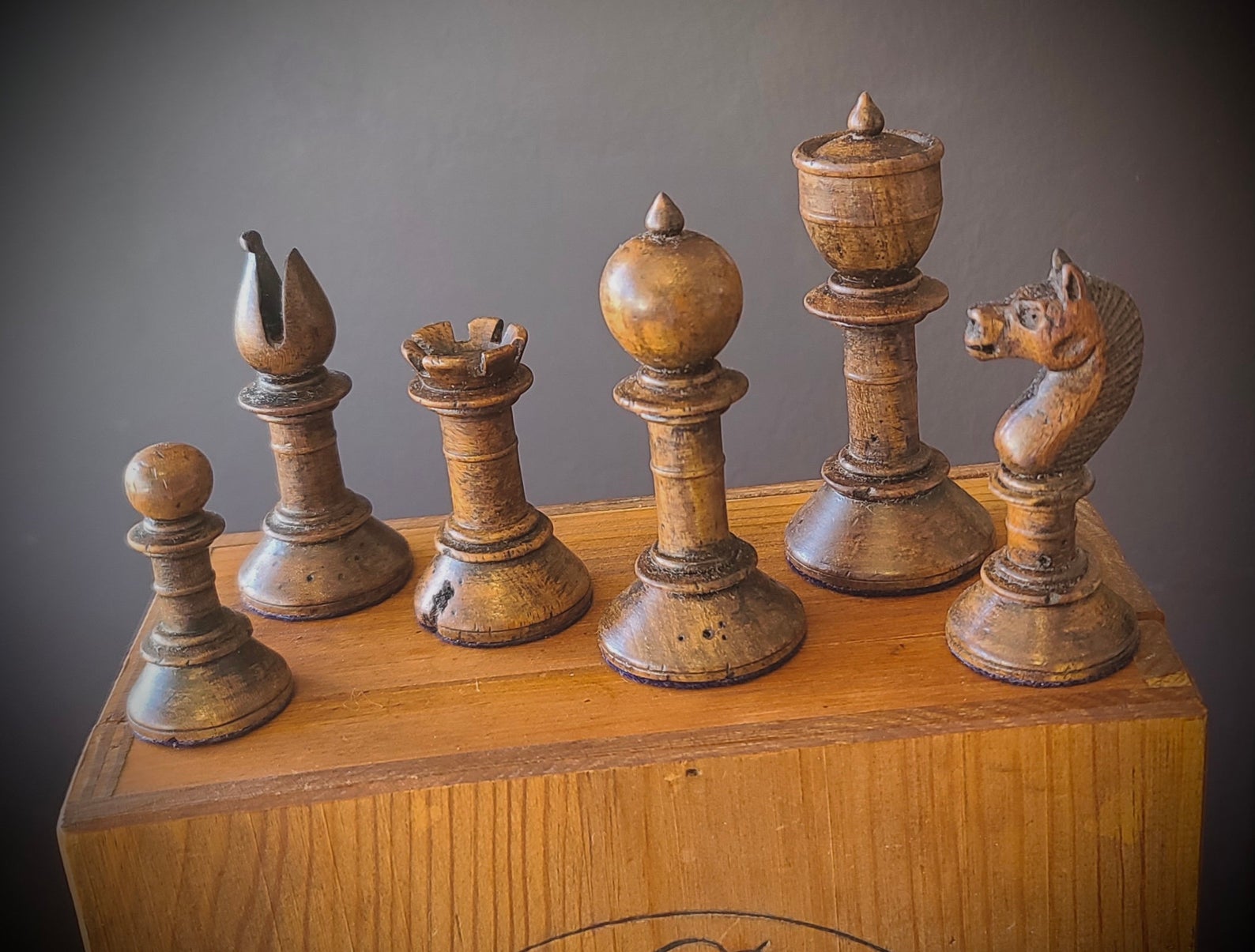
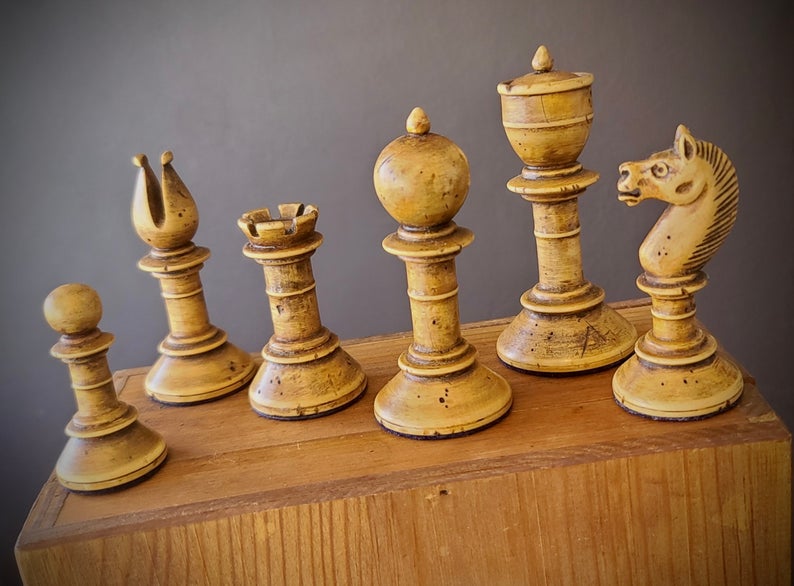

*SOLD* Dunbughi Verticum: Artistic Recreation of a Mid-19th Century Edinburgh Upright Tournament Chess Set
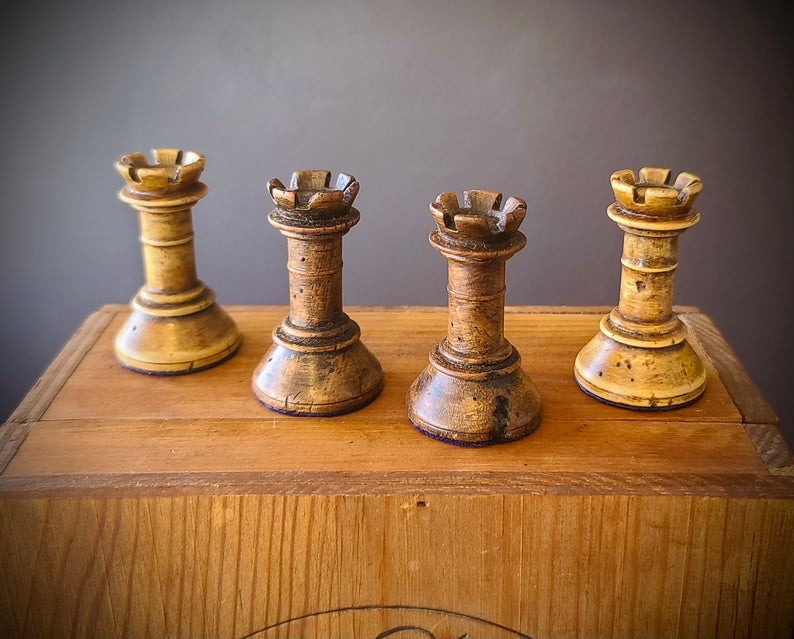
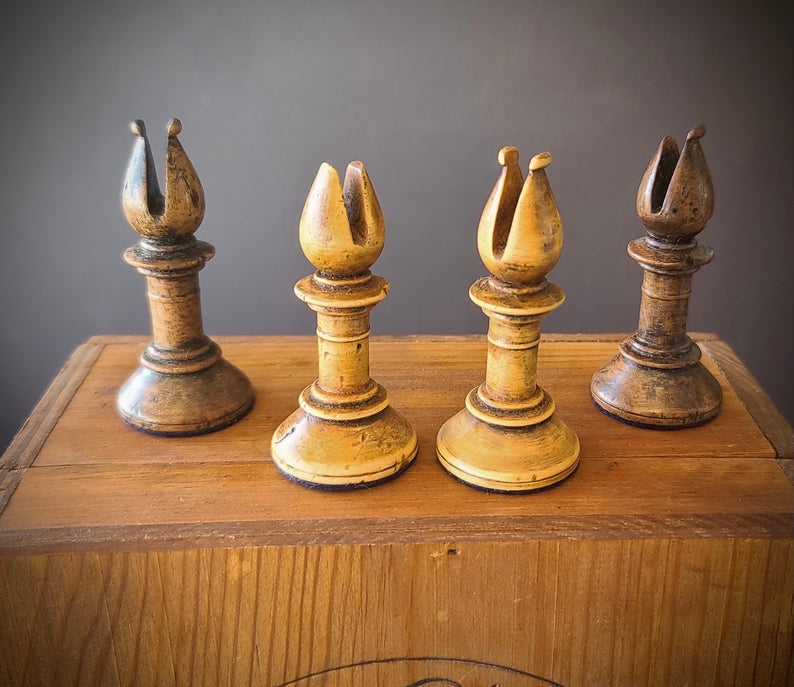
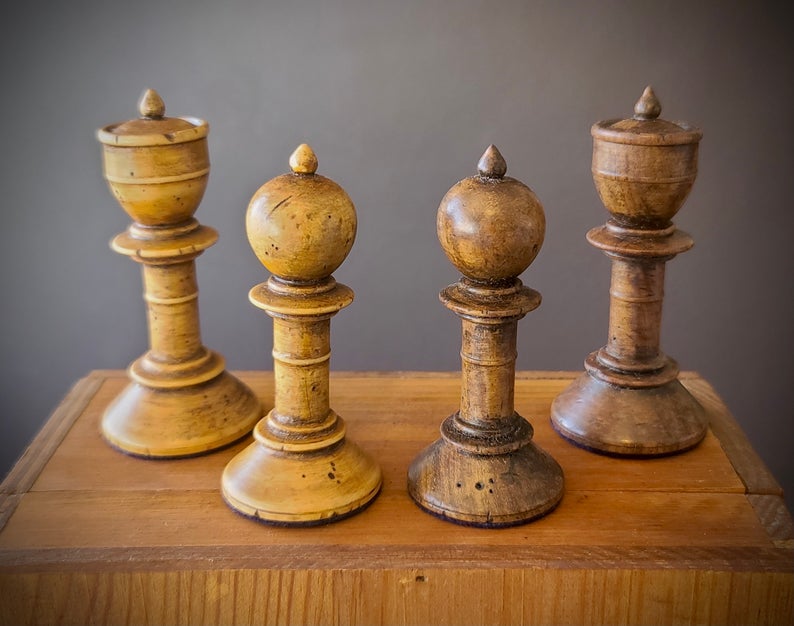
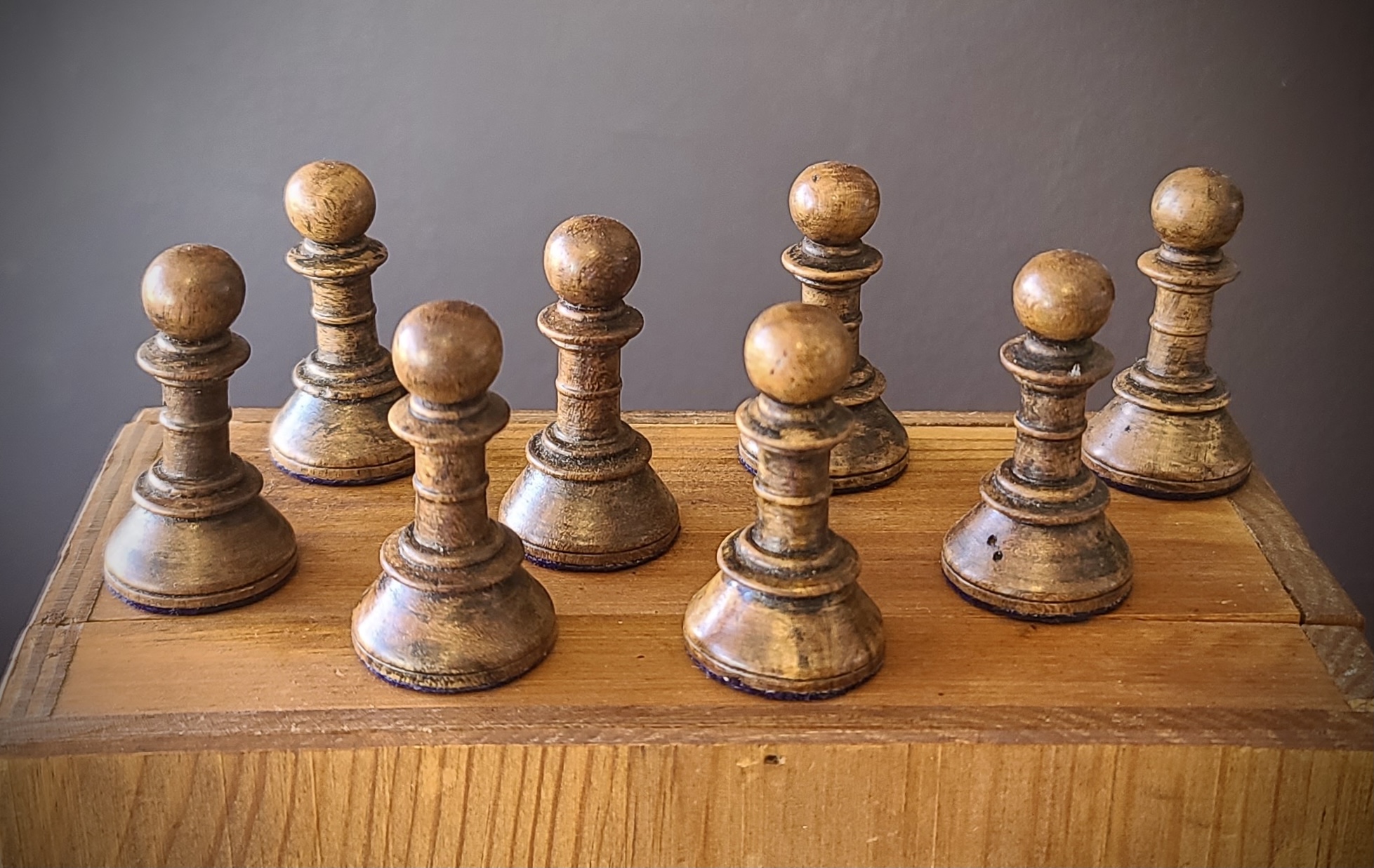
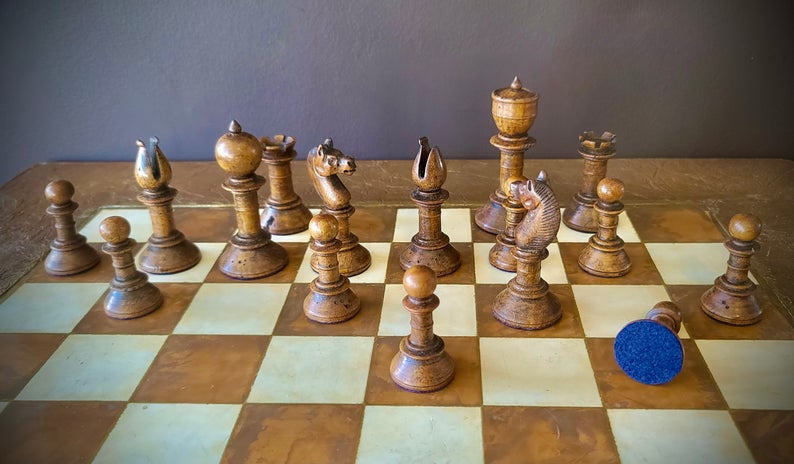
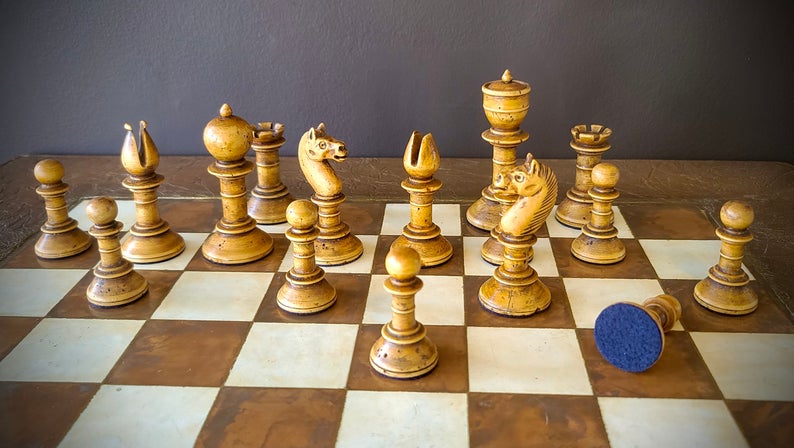
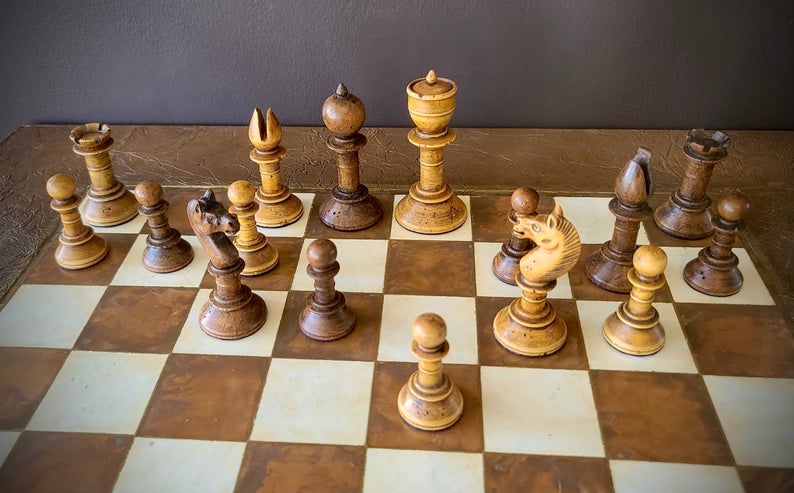
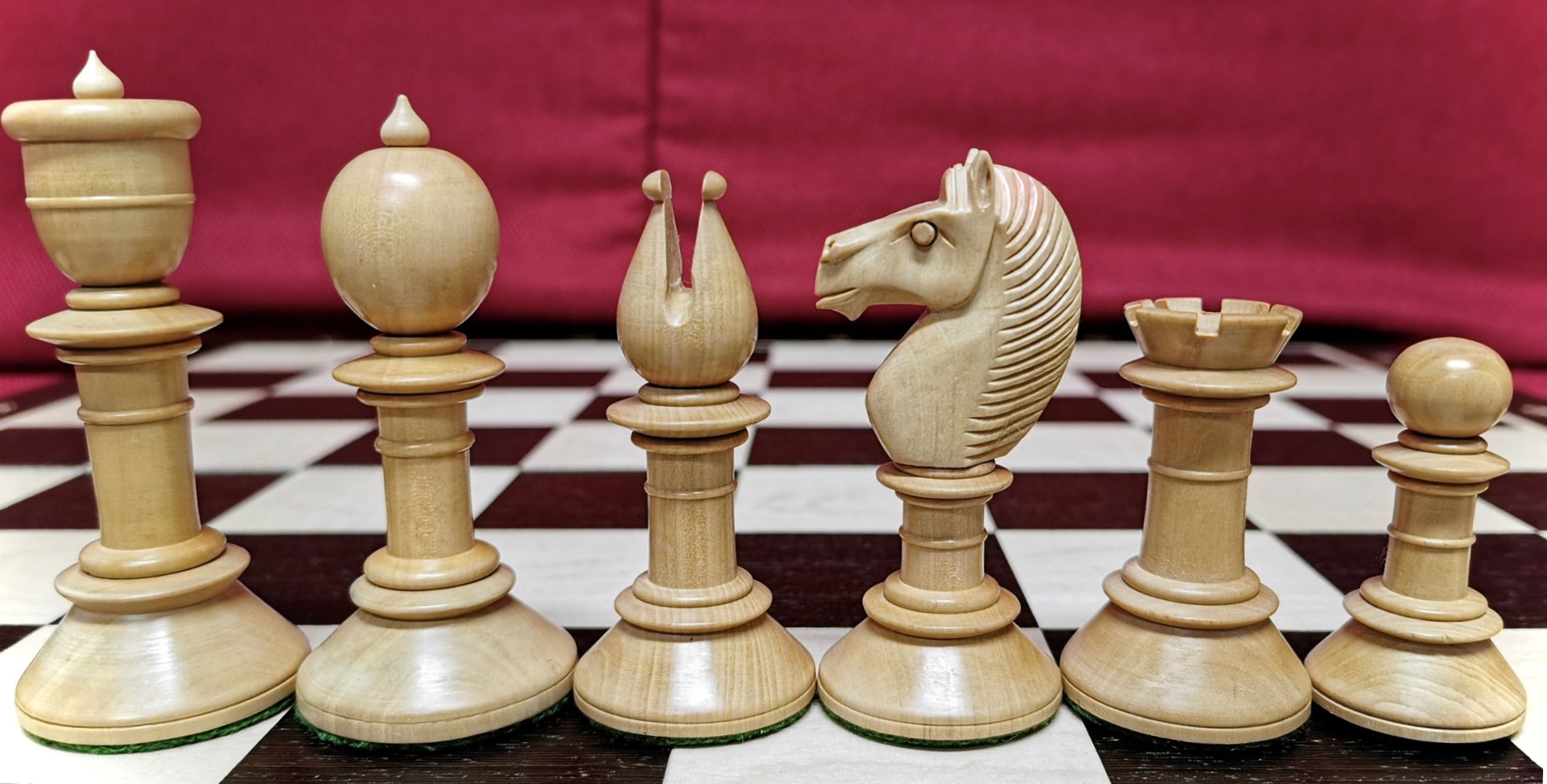
Dunbughi Verticum (Edinburgh Upright): 32 weighted chessmen without board, boxwood v. rosewood,, antiqued and heavily distressed, recreated from a Royal Chess Mall reproduction of the popular Victorian Northern Upright design of the 1840-1880s.
Height: King 9.5cm or 3 3/4”, weight 48g, base width 4.5cm: Queen 8.7cm, wt 40g, bw 4cm; Bishop 7.7cm 30g, Knight 7.5cm 30g, Rook 5.7cm 30g; Pawns 5.5cm 17g.
W: lush royal blue felt bases B: same
In my humble opinion, this attractive reproduction by RCM is one of the best playing sets on the market today. All I have endeavoured to do here, using numerous ageing and antiquing techniques, is to take the pieces to another level i.e. back to their roots, making them look and feel, in every conceivable way, like they belong to the era in which they were originally created – warts and all!
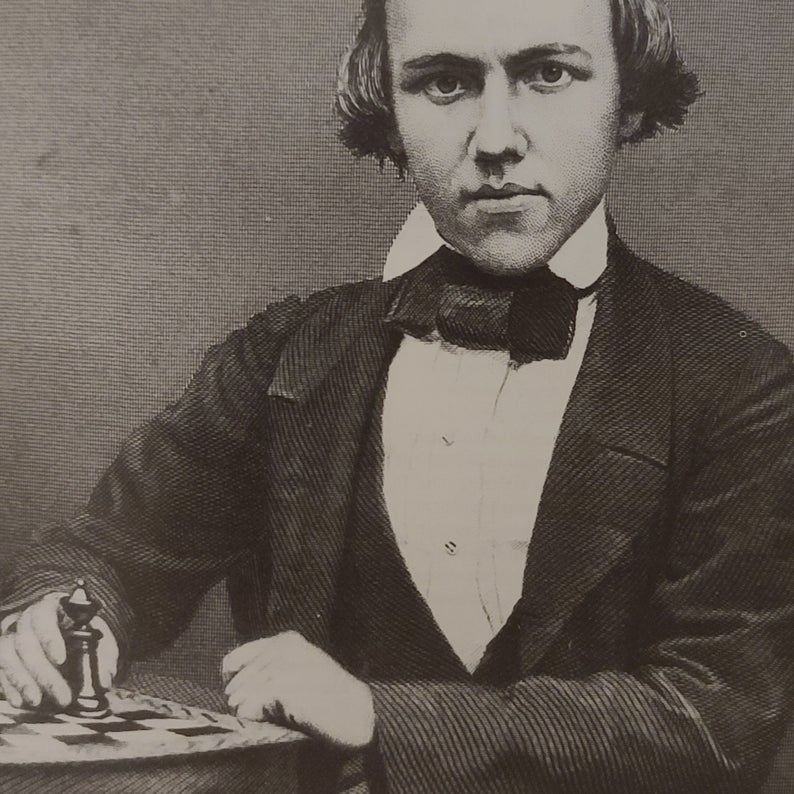
This era coincided with the life of one of the great names in chess history, the genius that was Paul Morphy (1837-1884), seen above pictured with an Edinburgh Upright set when he toured England in 1858-59. The tag ‘Edinburgh’ can be traced back to the Edinburgh Chess Club and one of its leading members, Lord John Hay, who is said to have penned the blueprints for the set in the 1830s, but companies such as Calvert and Jaques of London also produced this type of pattern around the same time too. But whatever its origins the Upright remains one of the more memorable designs of the Pre-Staunton era whose influences can be seen as far afield as Austria, Czechoslovakia and the Soviet Union.
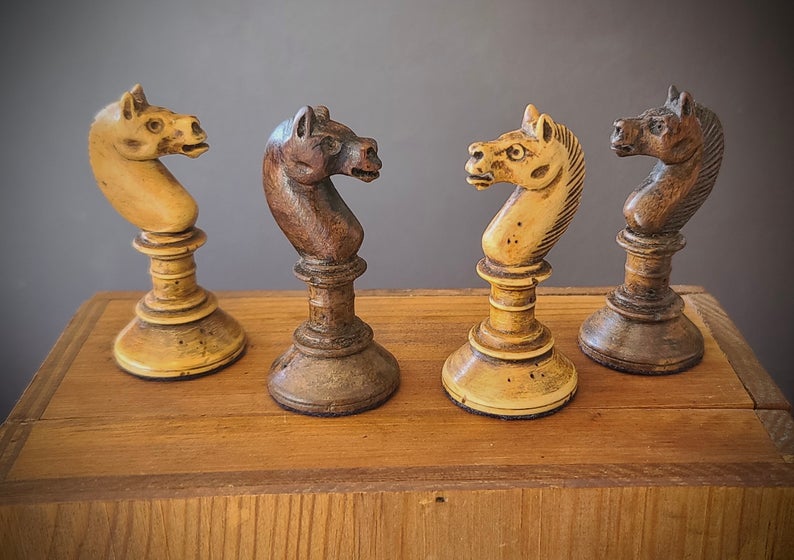
In this ‘one-off’ artistic recreation you will see elements of the John Jaques designs in the knights especially, which have been completely reworked, bringing them closer to the patterns of the mid-1800s – the mane being carved into the left side only while the right remains smooth. The mouth has also been ‘opened’ similar to the ‘drop-jaw’ patterns and the nostrils have been slightly relocated and enlarged. The eyes and ears have also been detailed, adding more character, in keeping with the older sets (for comparisons to the original RCM and ‘work-in-progress please visit our main Gallery at thechessschach.com where there are no limits on pictures).
Both kings carry the hand-painted iridescent bronze ‘Power’ signature of the artist on their bases and are UV resistant and ideal for display as well as blitz or casual play.
The set is also accompanied by a ‘Certificate of Artistry’ which will be posted out separately once we tally up how many ‘Bronze Signature’ sets passed through our galleries in 2021. “All good things …” as the saying goes.
Etsy Set Price: $895.00
Set of the Month Price: $675.00
Ref code: DV21
Visit our Gallery for more artistically restored vintage chess sets.
Feeling social? Follow us on Instagram, Facebook, or Twitter!