-
×
 Et Densi (‘Tusk’); Weighted Soviet Carbolite Chess Set, c.1965-1975
1 × $500.00
Et Densi (‘Tusk’); Weighted Soviet Carbolite Chess Set, c.1965-1975
1 × $500.00 -
×
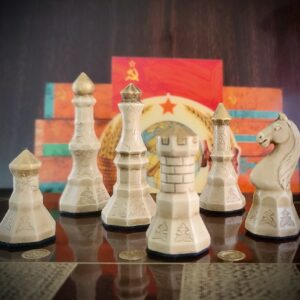 Octigenti (The Eight); Soviet Drueke Influenced “Kremlin” Chess Set, c.1960s
2 × $450.00
Octigenti (The Eight); Soviet Drueke Influenced “Kremlin” Chess Set, c.1960s
2 × $450.00 -
×
 Red Wolves (Lupus Rufae); Soviet GM1 ‘Wolf-Eared Knights’ Tournament Chess Set, c.1965
2 × $750.00
Red Wolves (Lupus Rufae); Soviet GM1 ‘Wolf-Eared Knights’ Tournament Chess Set, c.1965
2 × $750.00 -
×
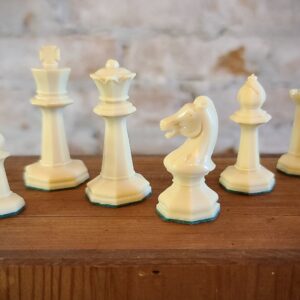 Drueke’s American-Made Chessmen, No.22, c.1955-1965
1 × $175.00
Drueke’s American-Made Chessmen, No.22, c.1955-1965
1 × $175.00 -
×
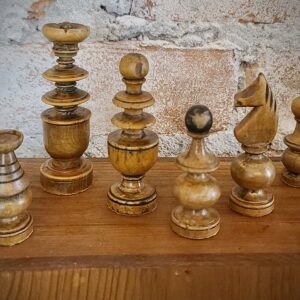 Régence de la Habsburg; French ‘Regency’ Style Wooden Chess Set, c.1930s
1 × $650.00
Régence de la Habsburg; French ‘Regency’ Style Wooden Chess Set, c.1930s
1 × $650.00 -
×
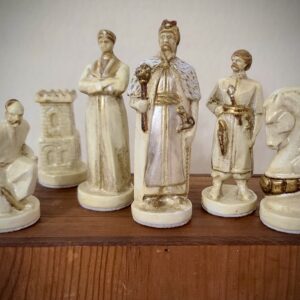 Cosaccorum (The Cossacks); Khatman ‘Bohdan Khmelnytsky’ Ukrainian Figural Chess Set, c.1980
1 × $750.00
Cosaccorum (The Cossacks); Khatman ‘Bohdan Khmelnytsky’ Ukrainian Figural Chess Set, c.1980
1 × $750.00 -
×
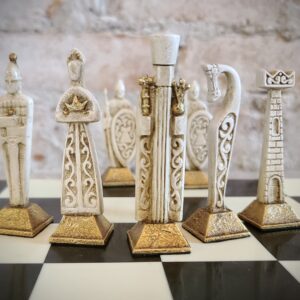 Soviet ‘Kyivan Rus’ Hand-Painted, Plastic Silhouette Chess Set, c.1970
1 × $550.00
Soviet ‘Kyivan Rus’ Hand-Painted, Plastic Silhouette Chess Set, c.1970
1 × $550.00 -
×
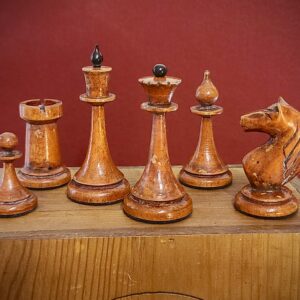 ✨SET OF THE MONTH✨ Mordor (Field of Shadows); Classic Mordovian U.S.S.R. Chessmen with Hand-Painted Board, c.1952
1 × $765.00
✨SET OF THE MONTH✨ Mordor (Field of Shadows); Classic Mordovian U.S.S.R. Chessmen with Hand-Painted Board, c.1952
1 × $765.00 -
×
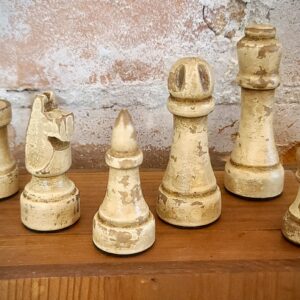 Alekhine’s Army; Classic German ‘Bundesform’ Wooden Tournament Chess Set, c.1975-1985
1 × $400.00
Alekhine’s Army; Classic German ‘Bundesform’ Wooden Tournament Chess Set, c.1975-1985
1 × $400.00 -
×
 Cupri Columni (Copper Necks); Soviet Botvinnik-Flohr (BFII) Tournament Chess Set, c.1950-1960
1 × $650.00
Cupri Columni (Copper Necks); Soviet Botvinnik-Flohr (BFII) Tournament Chess Set, c.1950-1960
1 × $650.00 -
×
 The Monochrome Set: Soviet ‘Mordovian Style’ Gulag Chessmen, c.1955
1 × $450.00
The Monochrome Set: Soviet ‘Mordovian Style’ Gulag Chessmen, c.1955
1 × $450.00
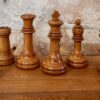
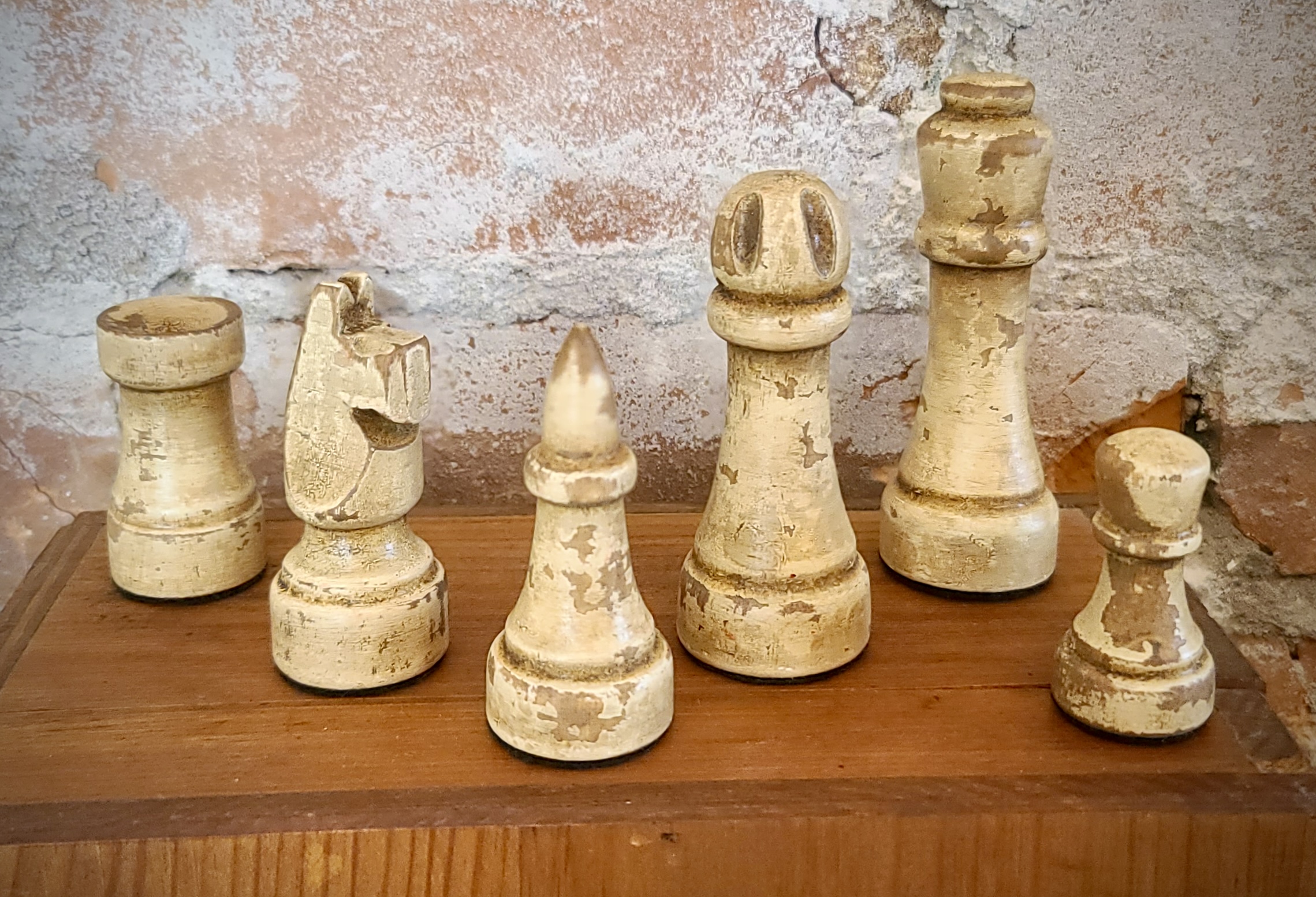
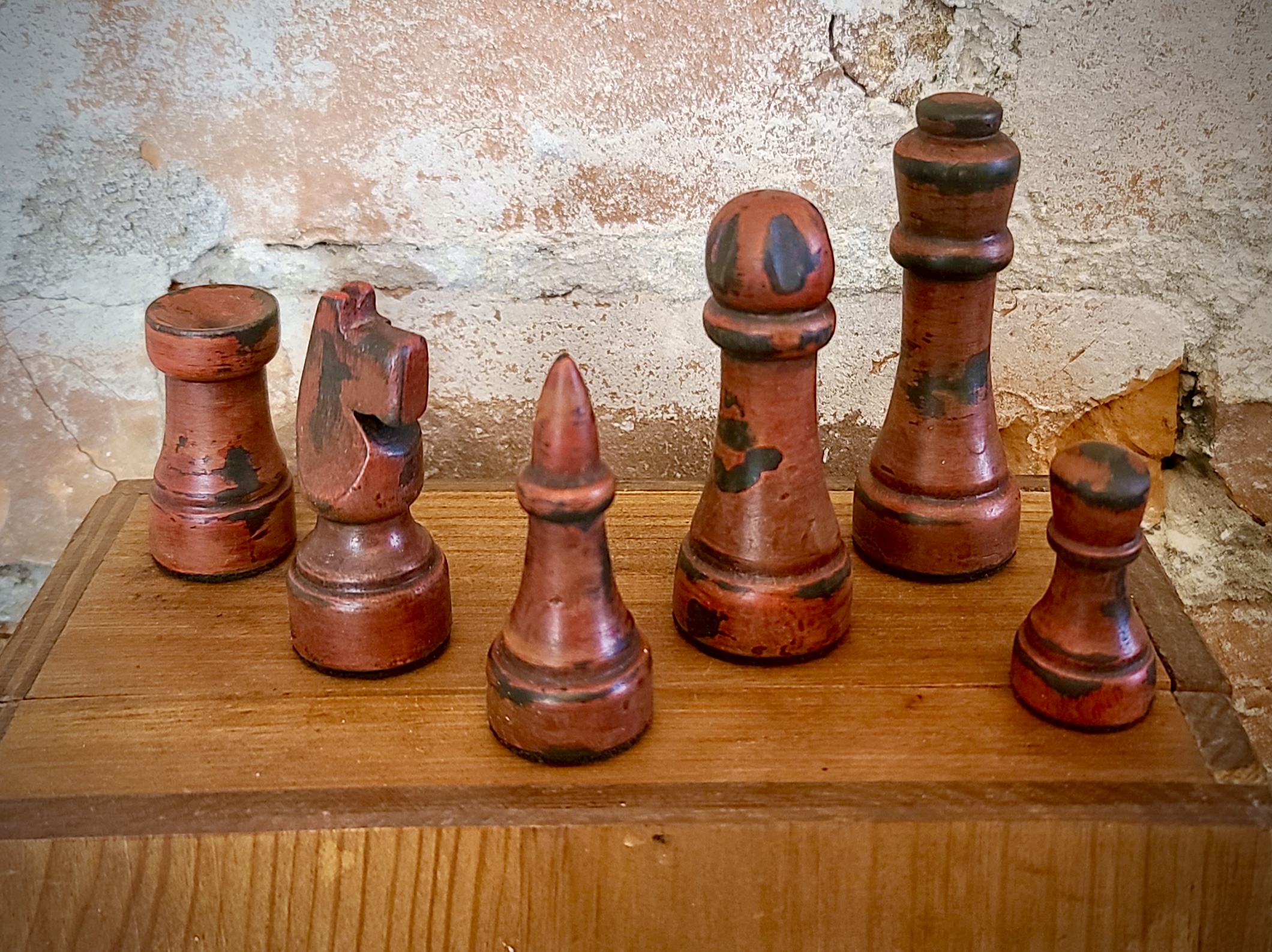
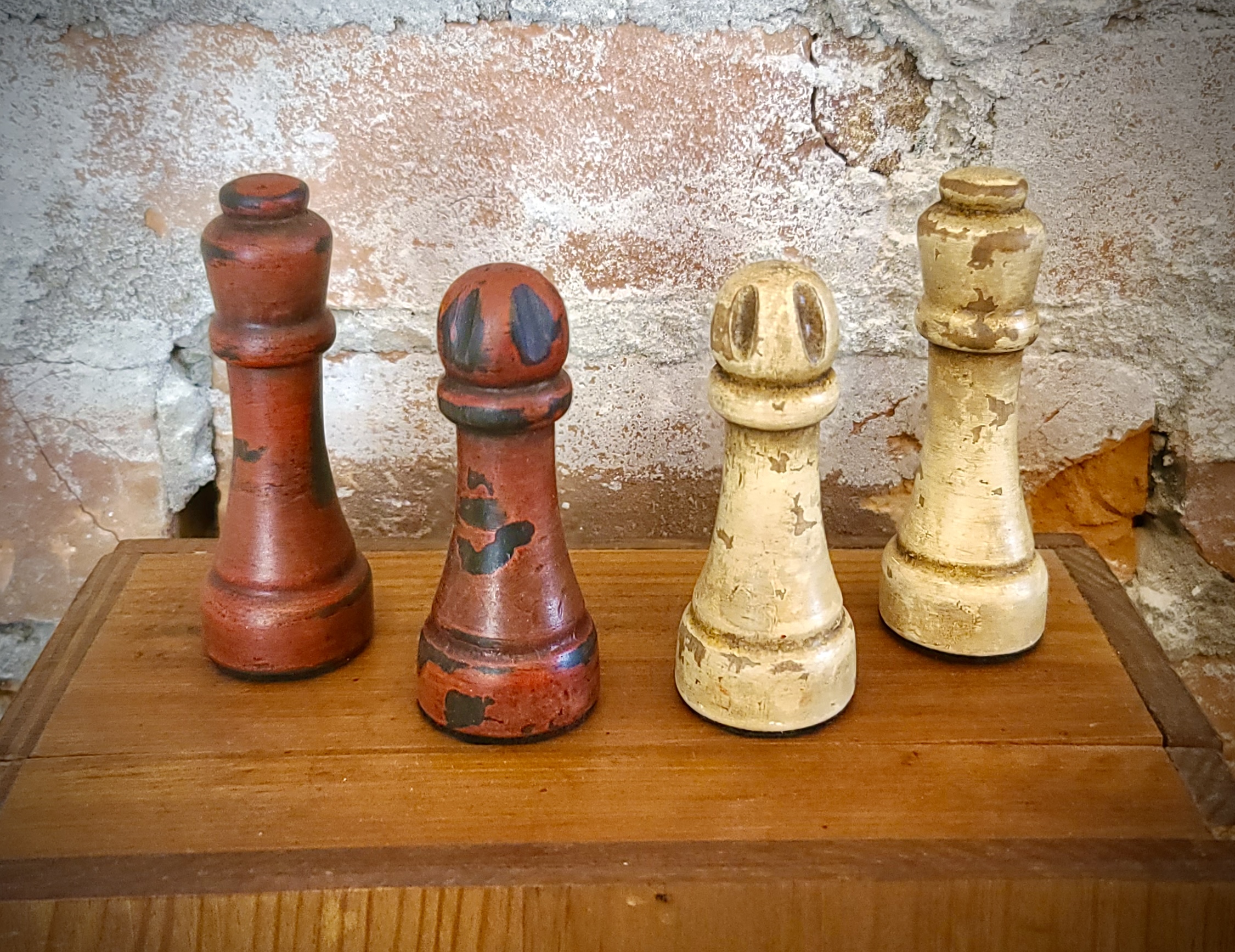
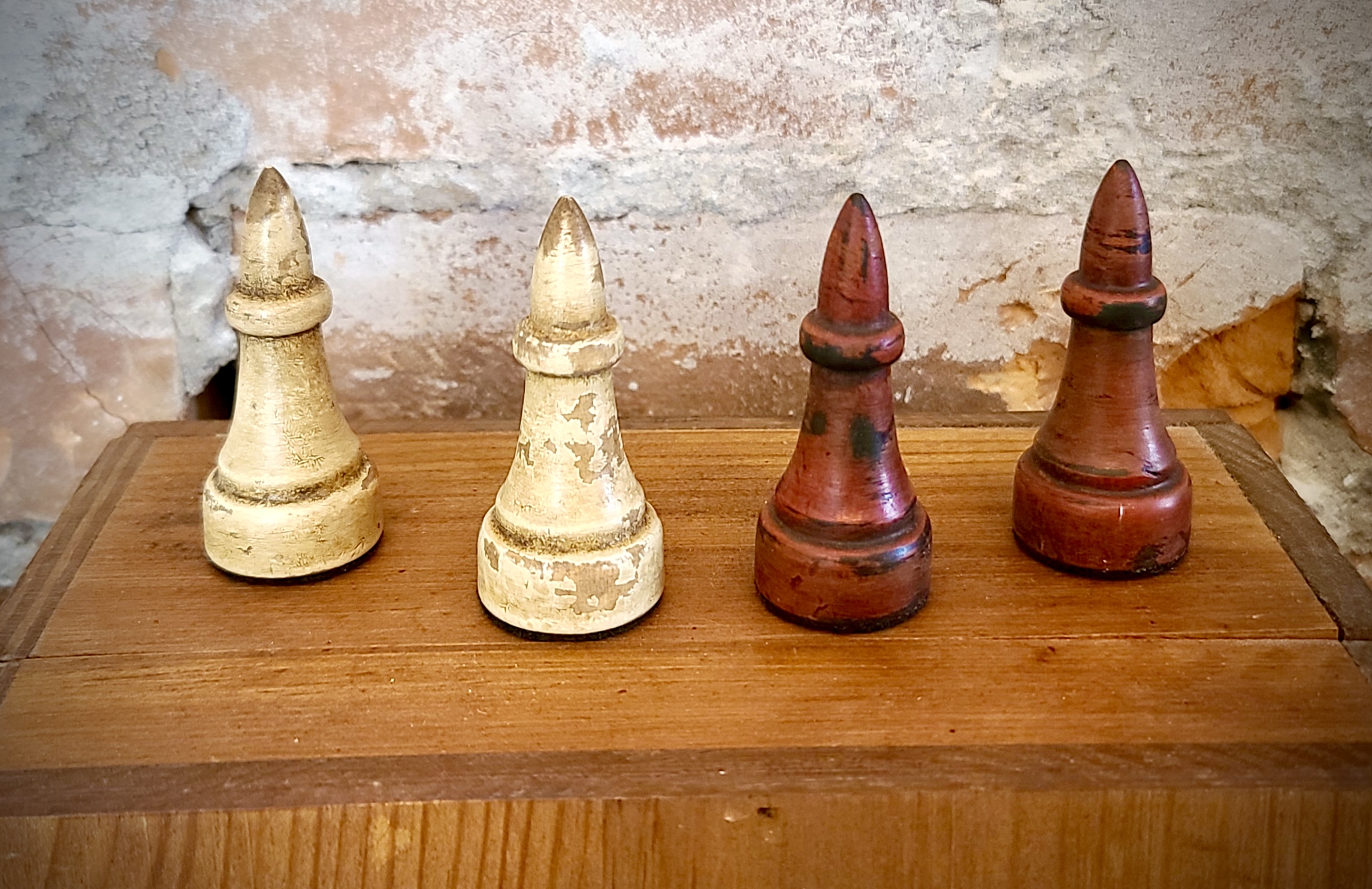
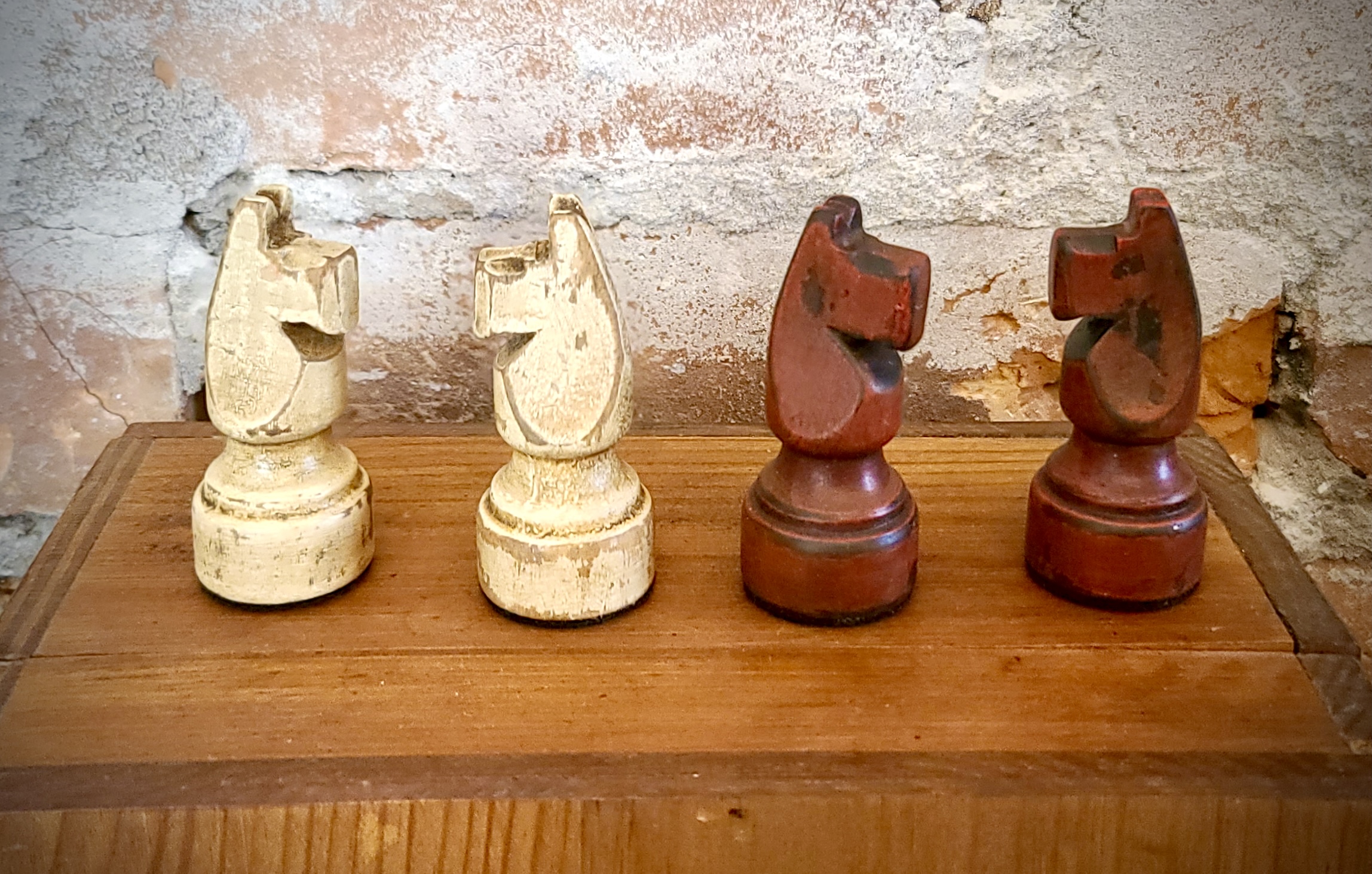
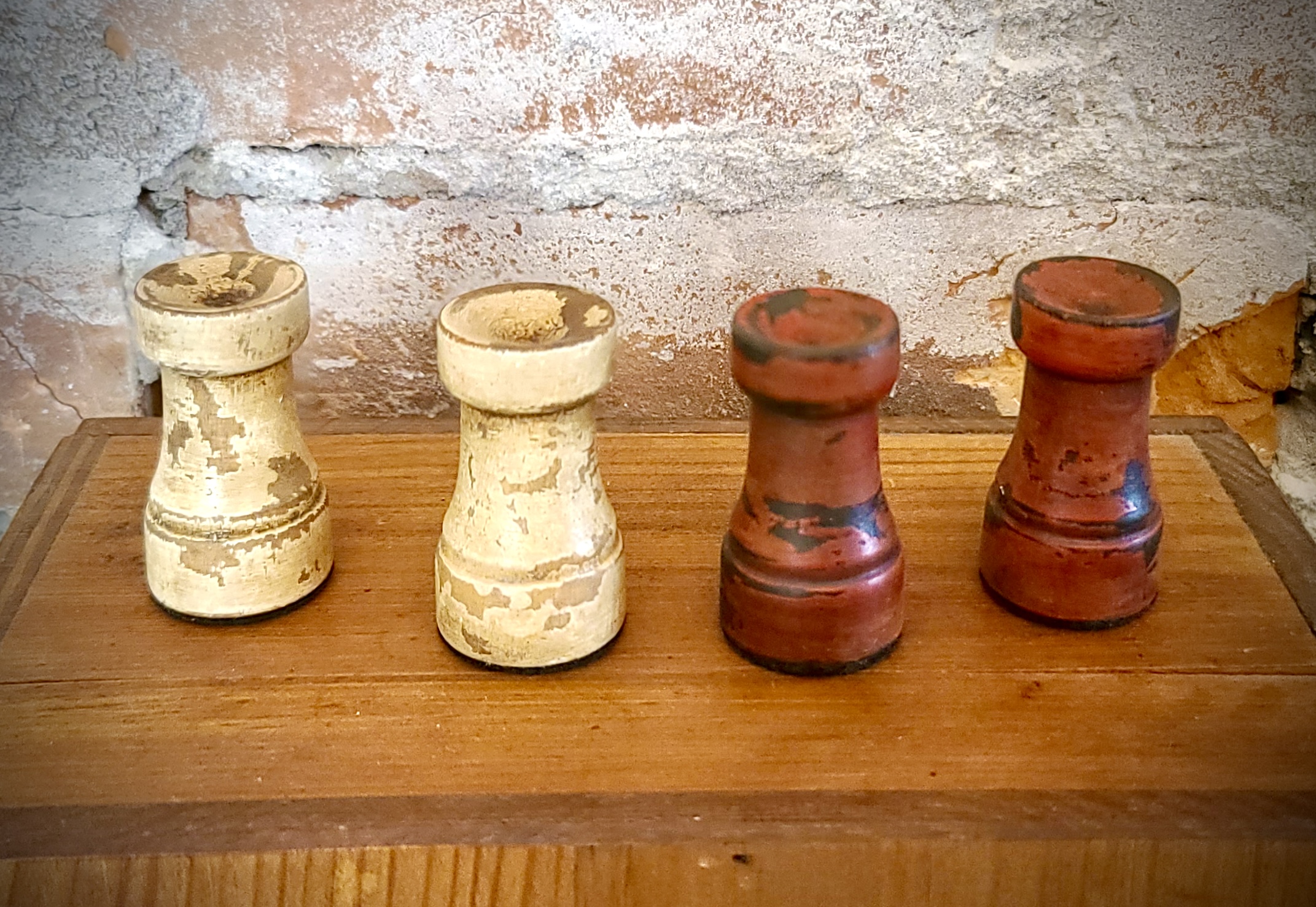
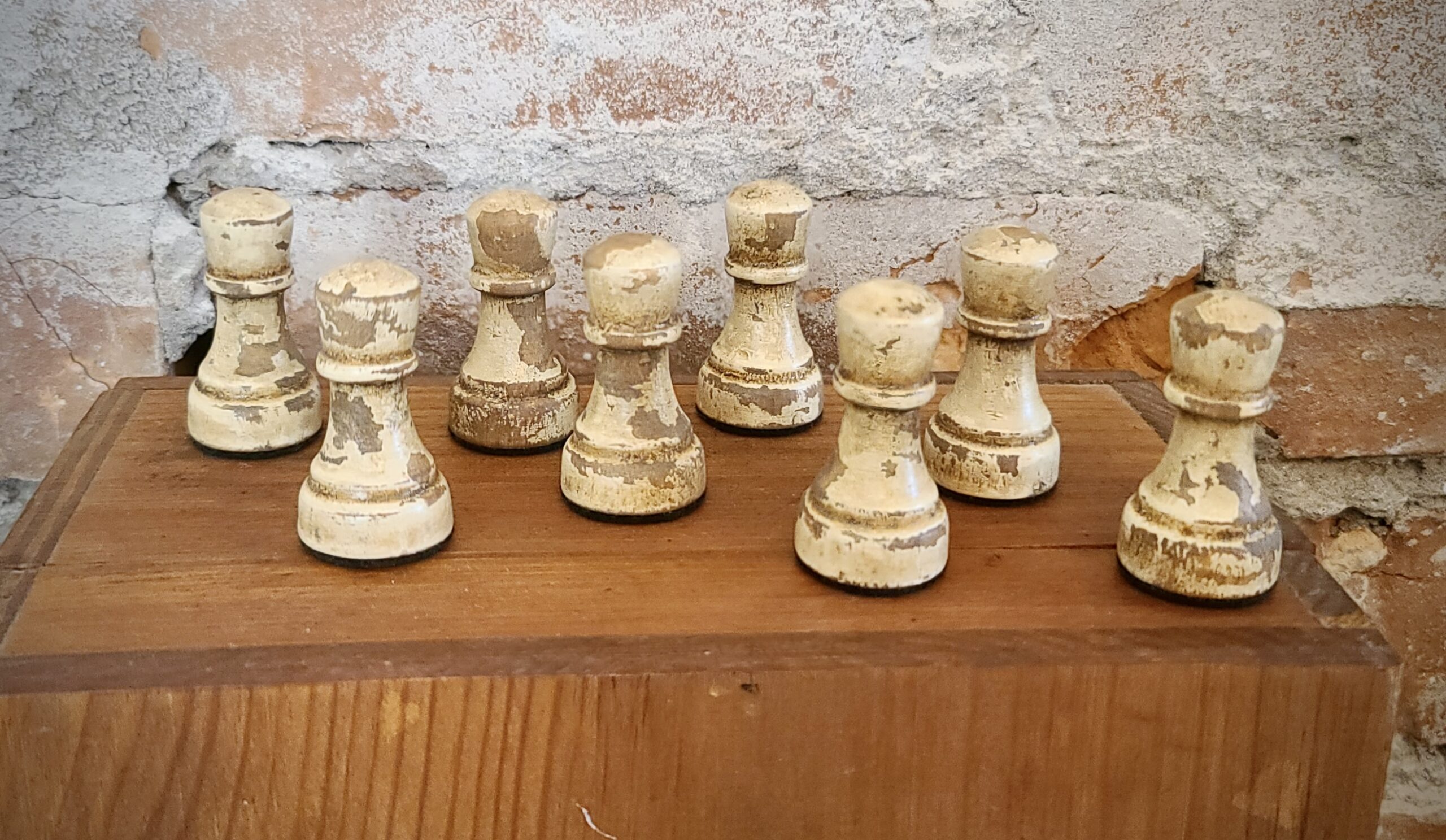
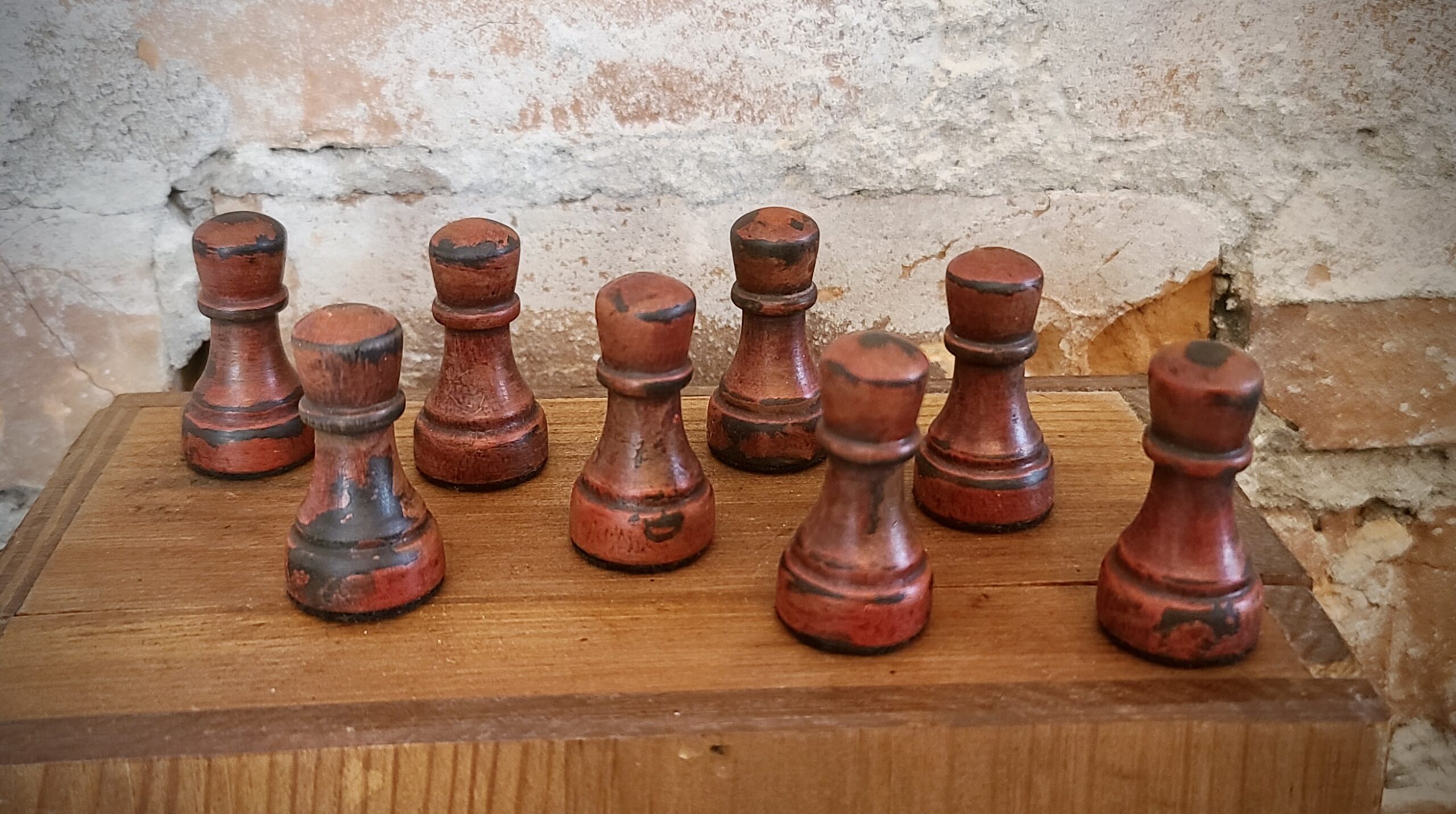
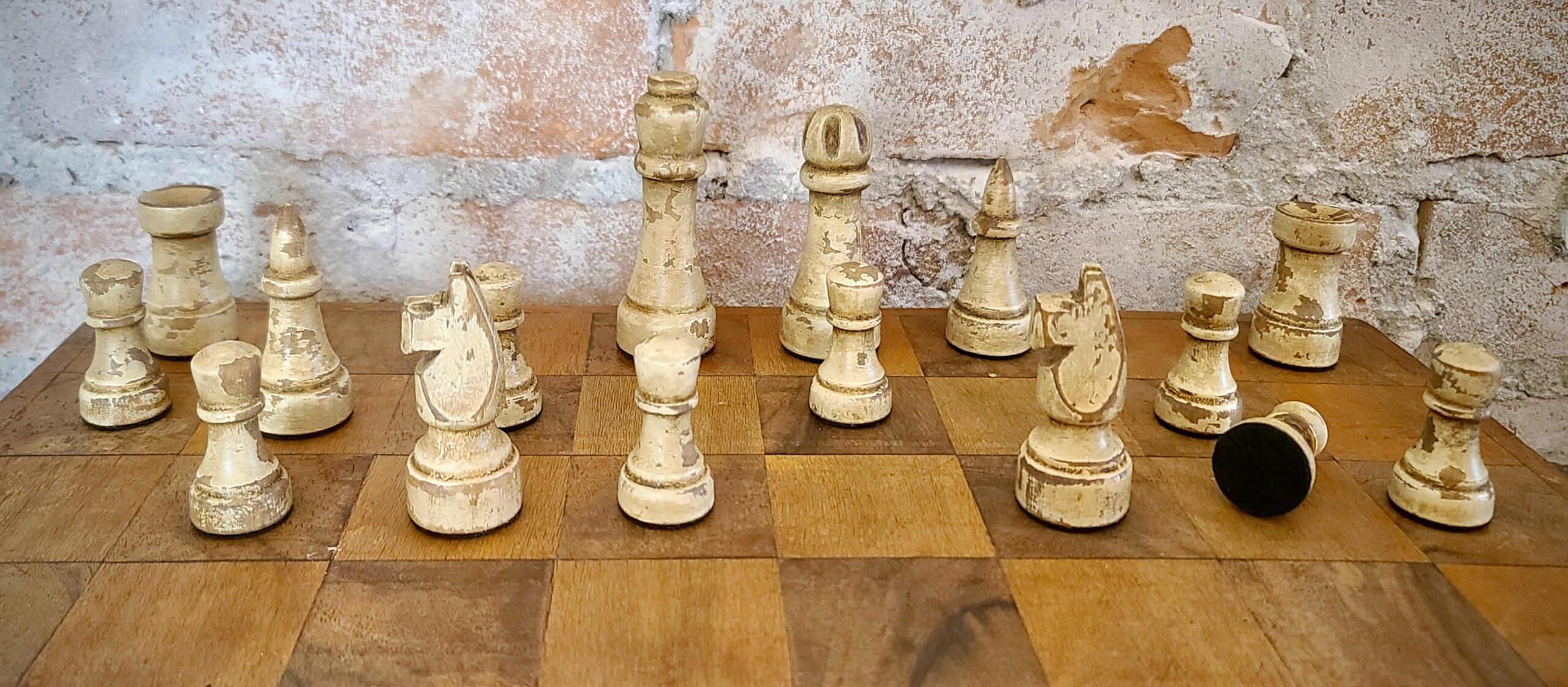
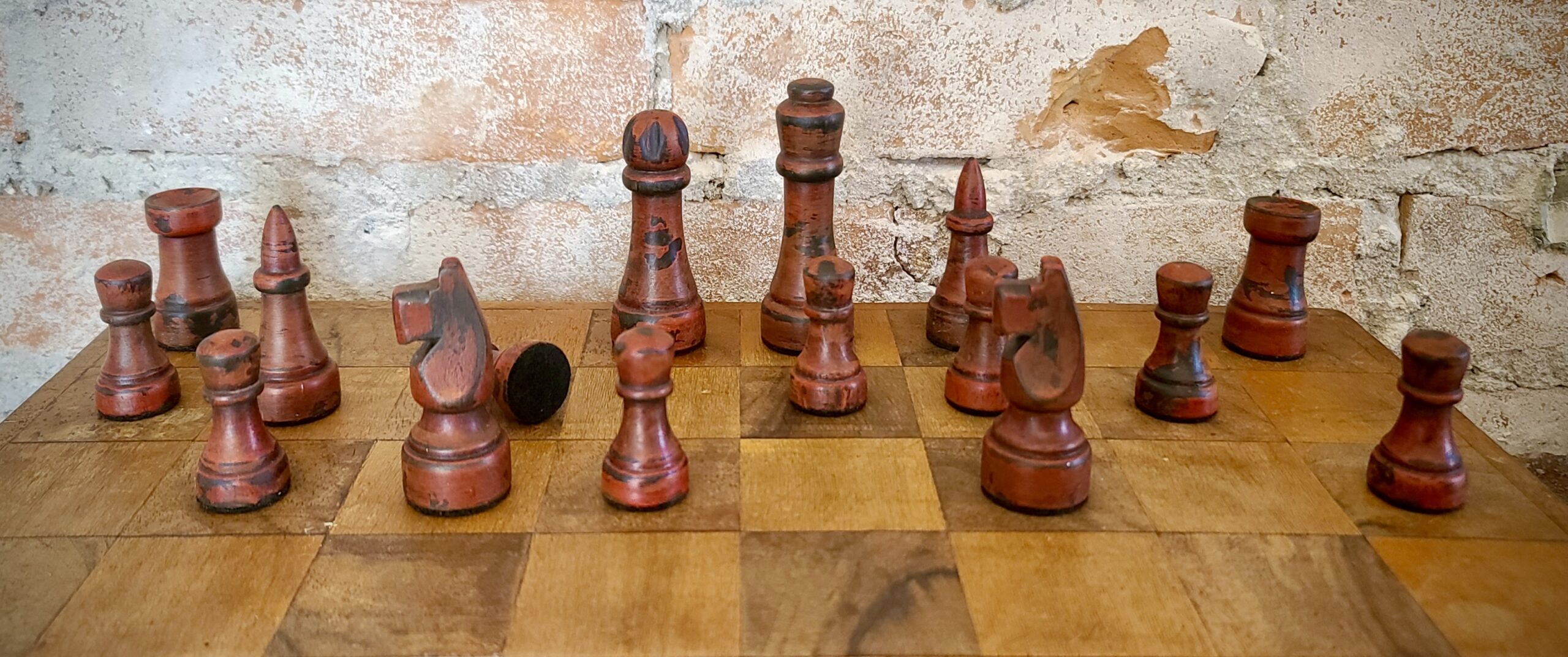

Alekhine’s Army; Classic German ‘Bundesform’ Wooden Tournament Chess Set, c.1975-1985
$400.00
Alekhine’s Army; 32 well-weighted ‘Deutsche Bundesform’ tournament club pieces without board, wood, white v. red, German, heavily weighted, antiqued, c.1975-1985
Height: King 8.5cm, weight 32g, base diameter 3cm; Queen 7.5cm, wt 35g, Bishop 6cm 20g, Knight 6cm 20g, Rook 4.6cm 25g, Pawns 4.3cm 10g.
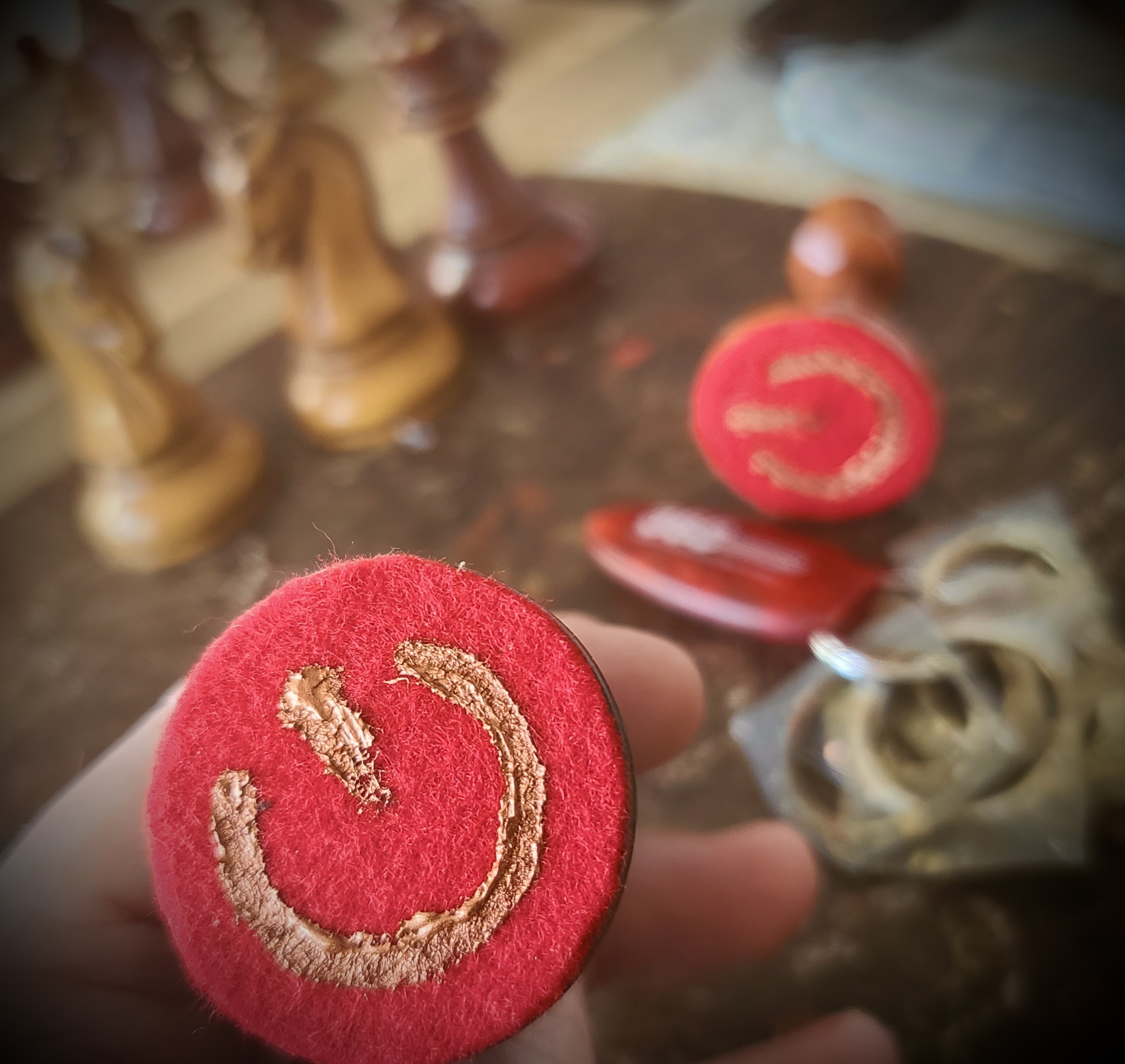
W: lush black felt pads, B: same
A timeless ‘Bundesform’ tournament chess set originally designed under the supervision of the Nazi Third Reich’s ‘Ministry of Propaganda and Enlightenment’ for the Munich Chess Olympiad of 1936. The honorary president of the Grossdeutsche Schachbund (The German Chess Federation) at the time was also the Minister of Propaganda, Hitler’s right-hand man, Dr. Joseph Goebbels. In this capacity, Herr Goebbels controlled, besides any international chess tournaments as such, newspapers, radio, theatre, films, literature, music, and the fine arts, and would have undoubtedly had to approve the ‘Bundesform’ design for the Munich Olympiad that survived well after his death in 1945.
Despite these blackened ‘Nazi’ origins the design remained popular in post-war East and West Germany and can still be purchased in numerous forms today. This version, with the square-jawed knight, dates from the late 70s, but is loosely inspired by an original post-WWII set that recently came to me via the well-known U.S. collector, Chuck Grau* (see my social posts for its artistic transformation from cygnet to swan!). The tri-colour of the set, red, white and black, were chosen intentionally reflecting its historical origins in the Nazi propaganda machine of the early 1930s. The black felt pads seemed appropriate as a mark of respect for all the lives lost during two great wars, including more than a few of my own family members, too.
Why the name Alekhine’s Army? I’ll leave that for you to investigate and draw your own conclusions. As chess players we constantly have to choose sides. Alekhine won many beautiful battles, but like these Bundesform pieces his name carries with it a tarnished history.
The set is UV resistant and ideal for display as well as casual/blitz play and both kings carry the hand-painted iridescent bronze ‘Power’ signature of the artist on their bases. Alekhine’s Army also comes with a ‘Certificate of Artistry’ which will be posted on separately once we tally up how many listings passed through our galleries in 2021 … “All good things …” as the wise man once said.
Etsy Set Price: $500.00
thechessschach.com Set Price: $400.00
Ref code: AA21
*visit Chuck’s wonderfully informative site, ‘Soviet and Russian Chess Sets’ over on fb. It’s a blast from the Soviet past!
Visit our Gallery for more artistically restored vintage chess sets.
Feeling social? Follow us on Instagram, Facebook, or Twitter!
Related products