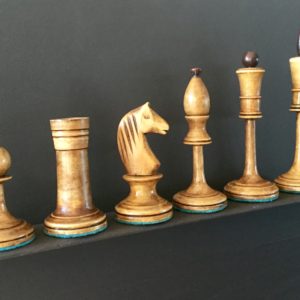
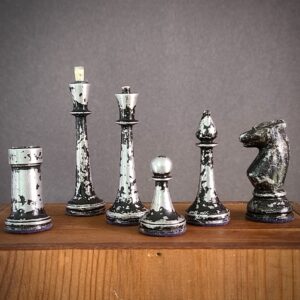
 Alto Reges (The High-Kings); Soviet Upright Metal Chess Set, c.1960
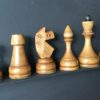
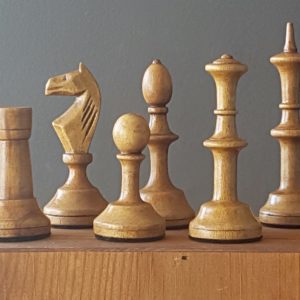
*SOLD* Serpenticus (The Serpents); Austrian/Hungarian Wooden ‘Coffeehouse’ Vintage Chess Set, circa 1930-1940
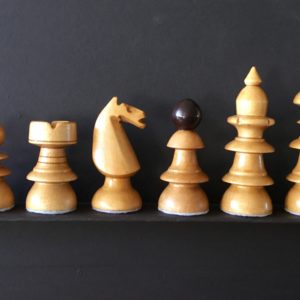
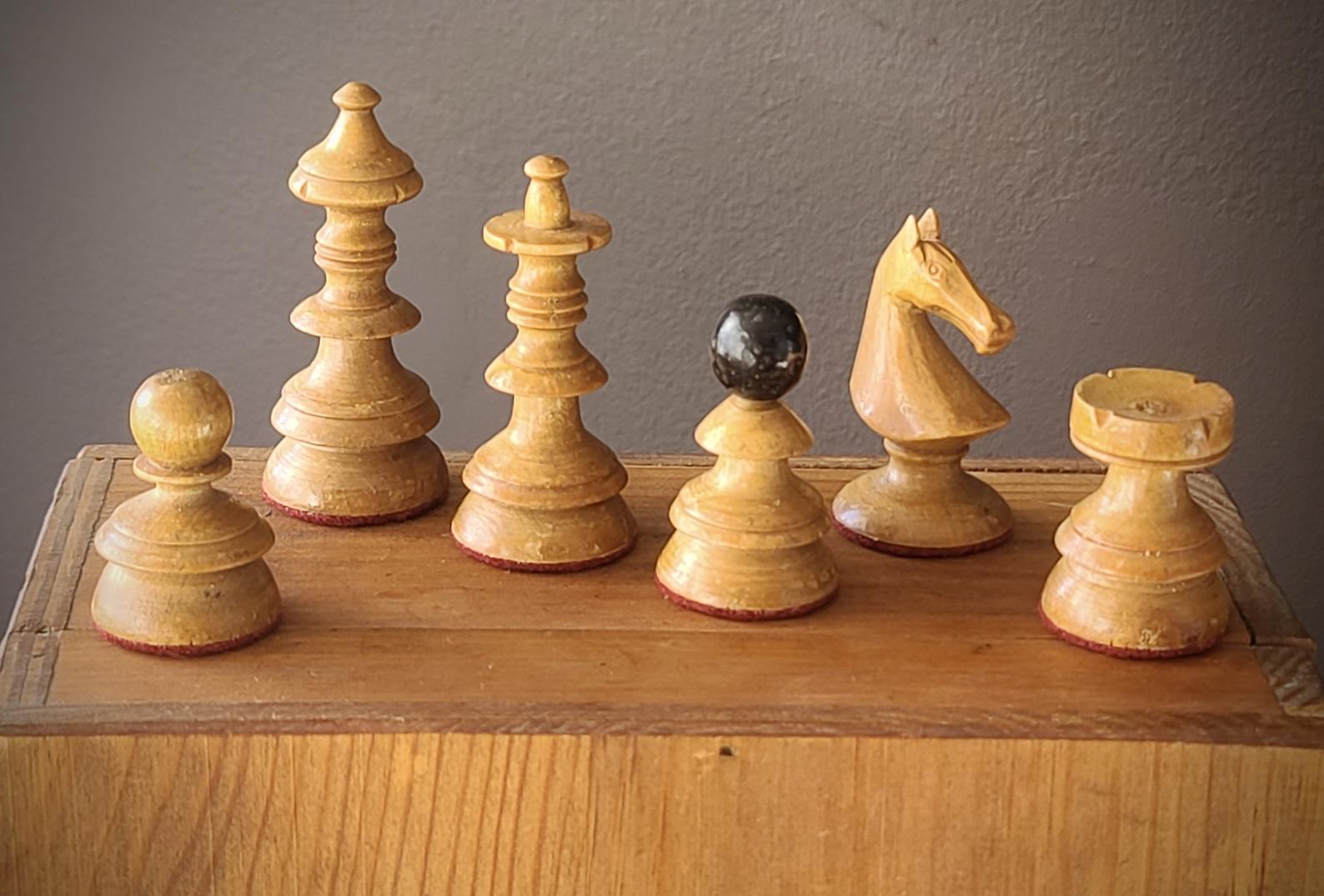
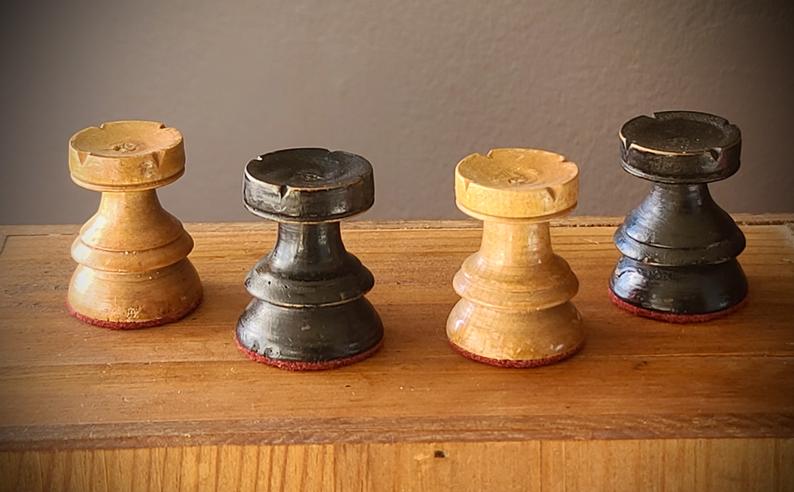
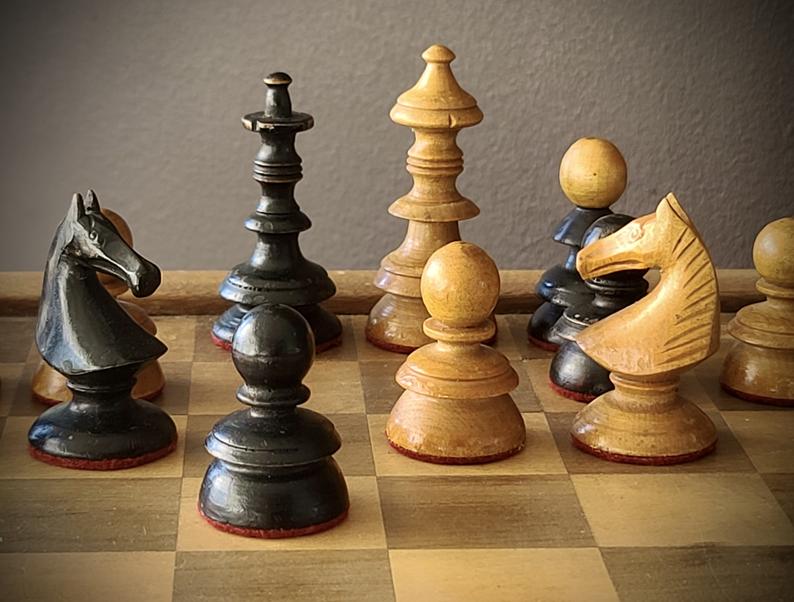
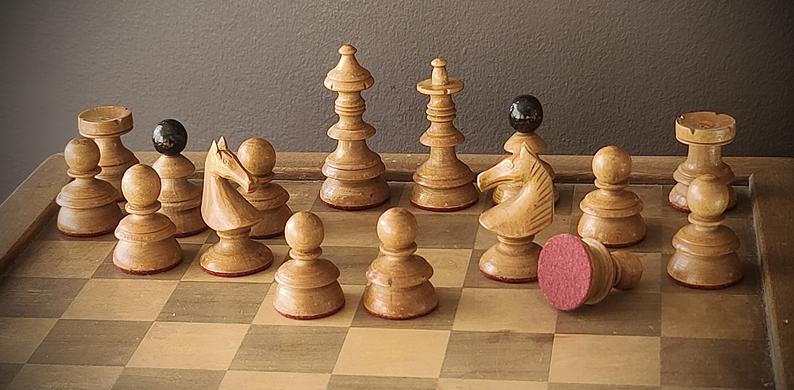
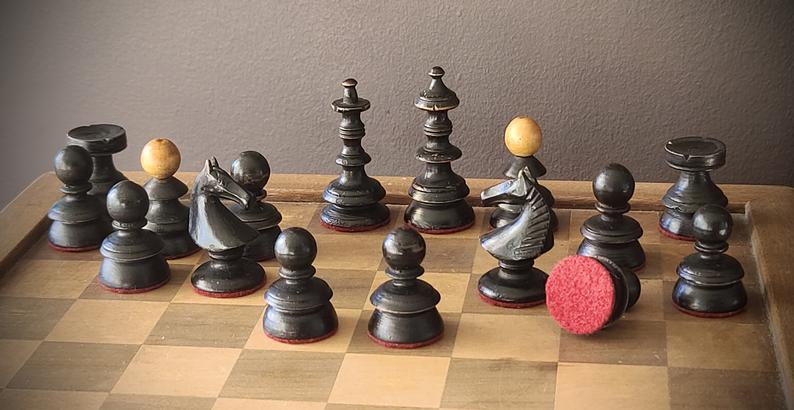
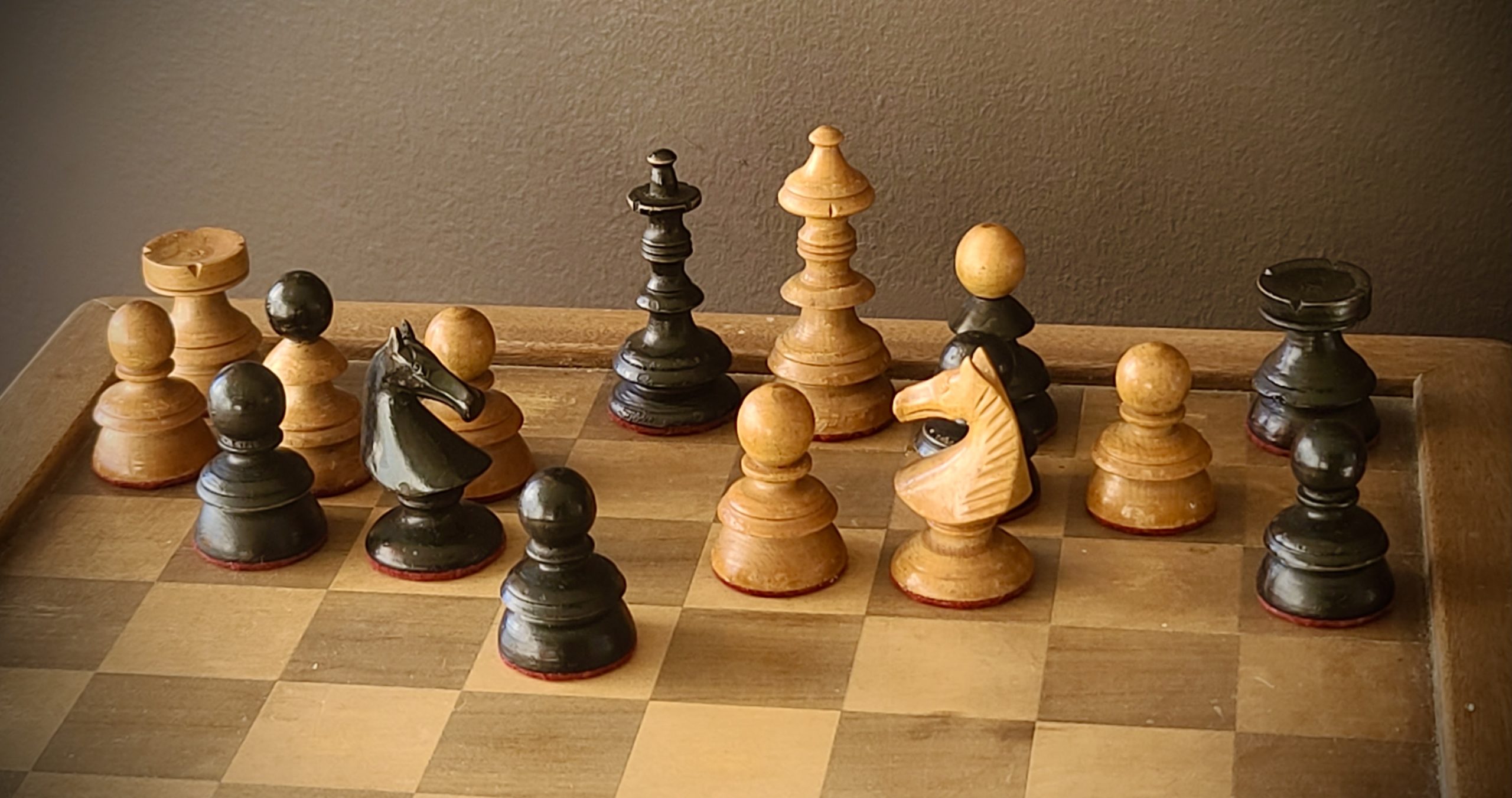
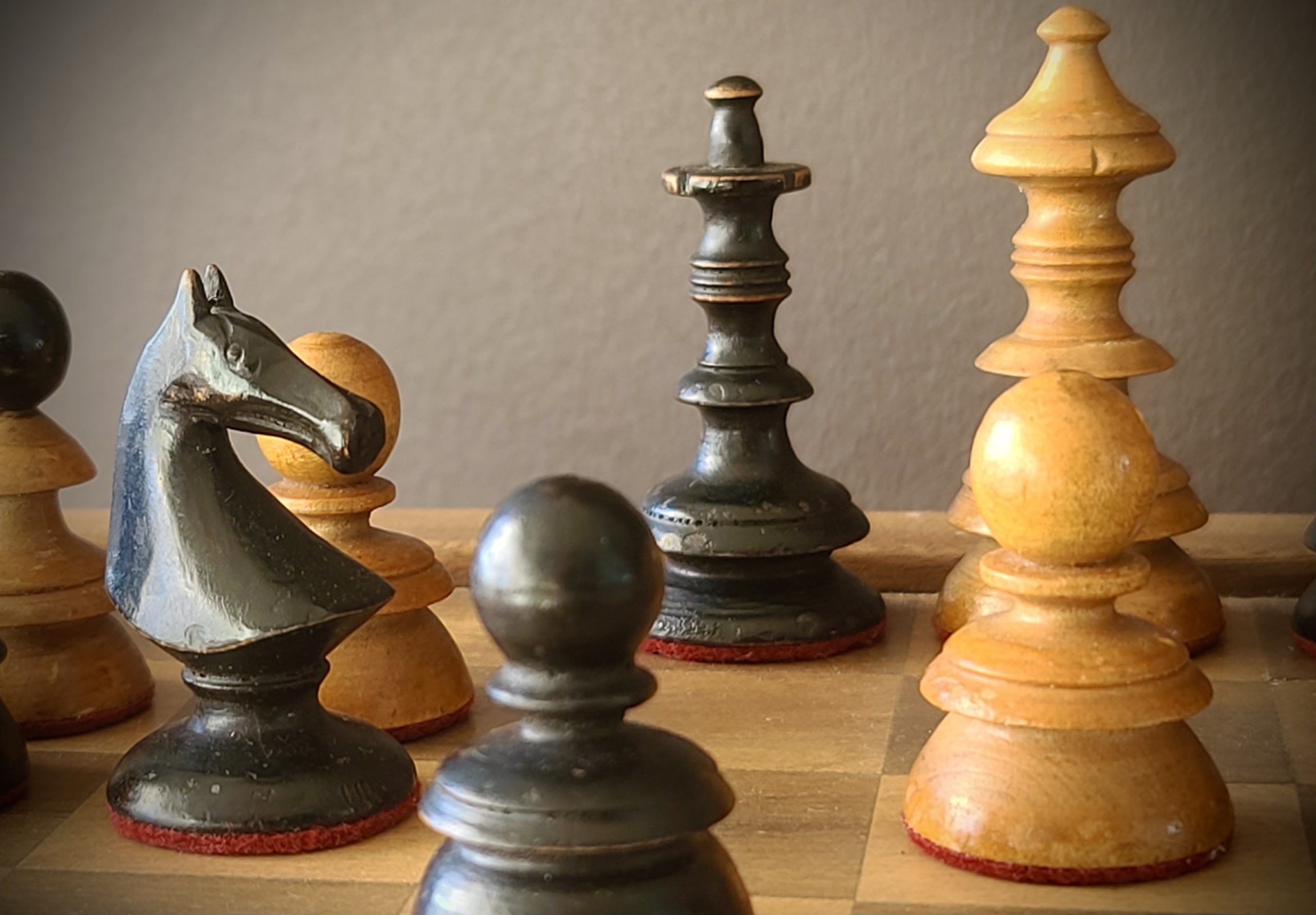
Serpenticus (The Serpents); 32 lightly-weighted chessmen without board, wood, Austrian or Hungarian ‘kaffeehaus’ pattern, white v black, c.1930s
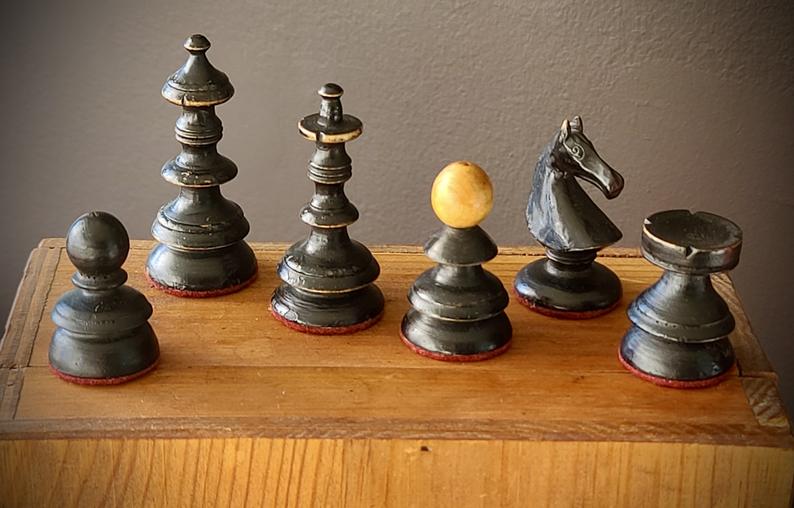
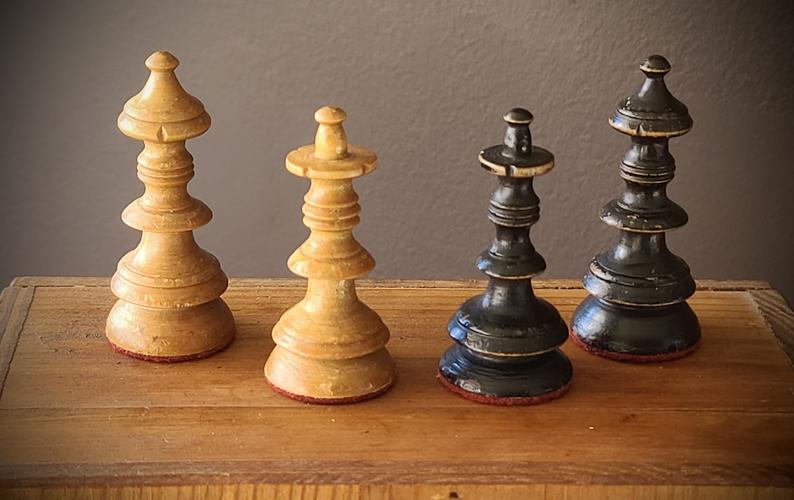
Height: King 7.1cm, wt 15g, base width 3cm; Queen 6.4cm 10g, Bishop 5cm 10g, Knight 5.3cm 9g, Rook 4cm 12g, Pawn 4cm 9g.
W: burgundy felt pads B: same
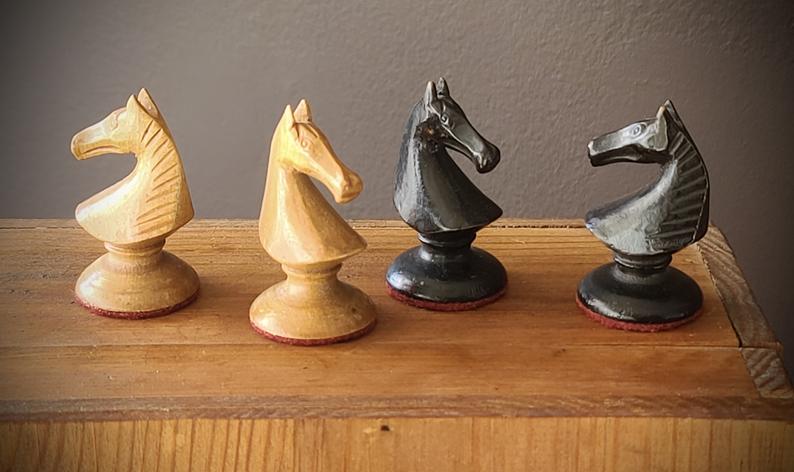
A fairly rare and unusual example of the Austro-Hungarian Coffee-House design found throughout the Habsburg Empire and parts of northern Italy from the late XIXth century on. The knights catch the eye instantly as they are particularly well-carved for this period; their long, exaggerated muzzles (making them easy to handle during a fast game) and tall, erect ears altogether poised in a Cobra-like stance ready to strike out at the opposition.
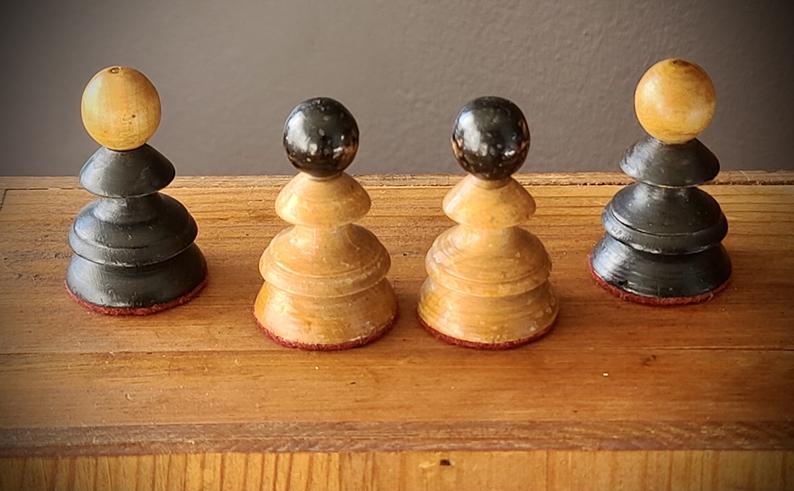
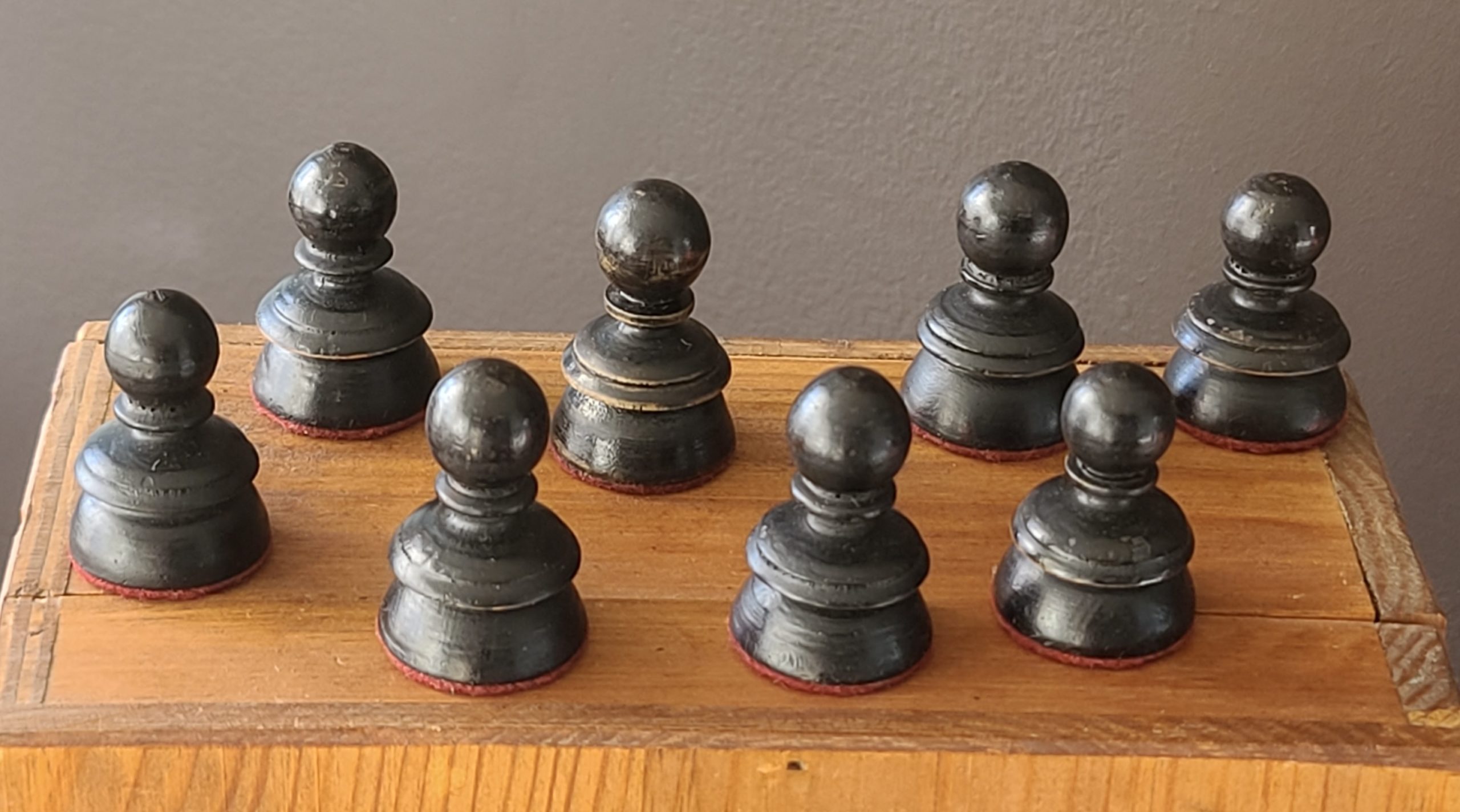
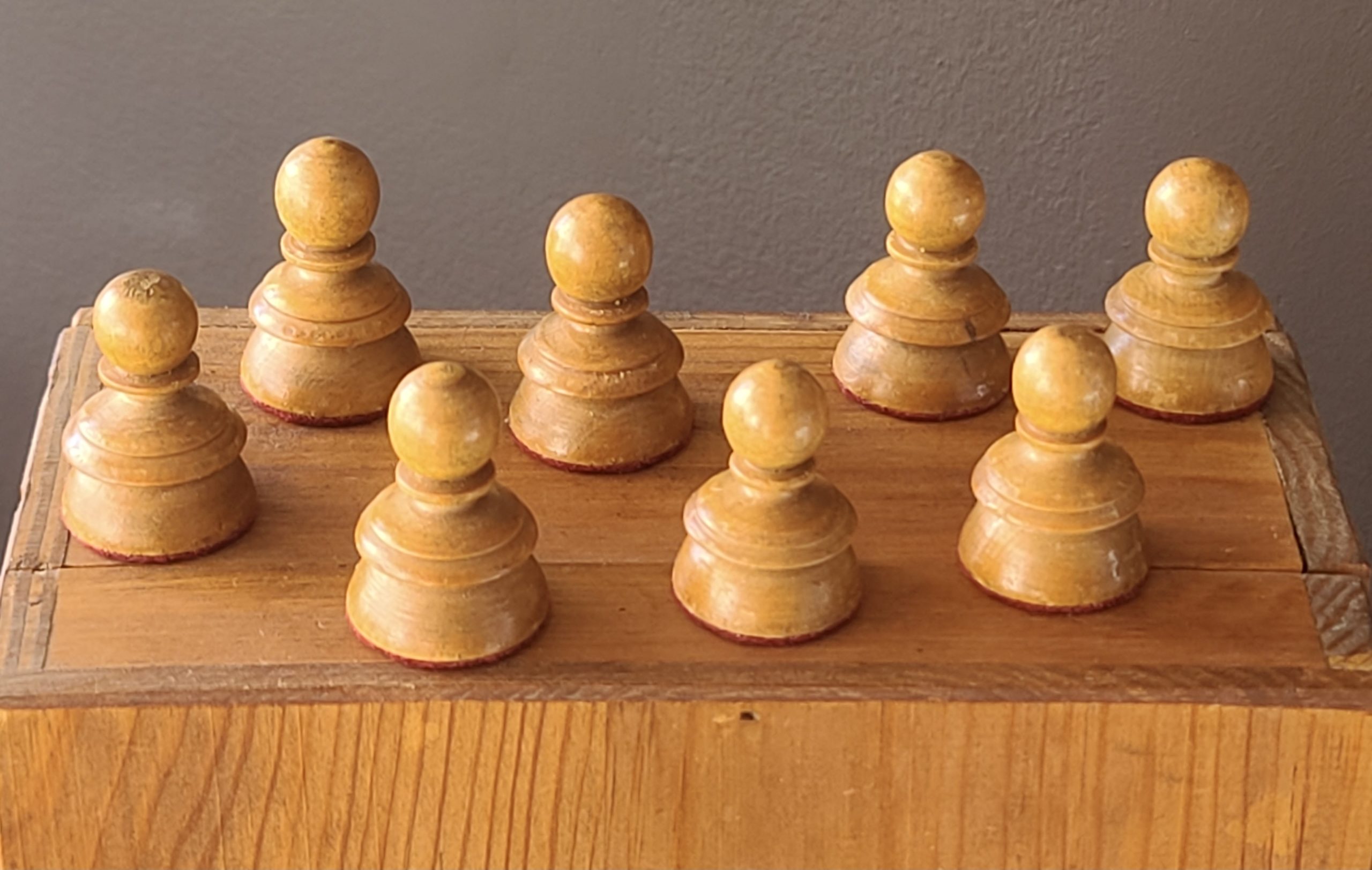
The bones of the set are in excellent overall condition given its age (there is a slight nick on the torso of one black night – a ‘battle-scar’ one would expect to see for a set this old. It came to me with only one major fault; it was short of one black pawn, this was remedied by the services of the master wood-craftsman, Alan Dewey, who kindly turned a new pawn which I have colour-matched/antiqued to the originals – “Alan’s to the Power of two” as one collector from Germany wittily remarked.
Quite honestly, I’ve hardly touched the original patina as the pieces speak for themselves. I’ve merely repaired a few unsightly nicks here and there and added a little weight, nothing overboard, but many of these early Coffeehouse sets need a little extra ‘oomph’ down below, and they feel much the better for it. Lush burgundy felt has also been added for an additional sense of grandeur turning them into the perfect set for running over the famous games of the old Austrian masters, Schlechter, Spielmann and Steinitz, the heralded “Austrian Morphy.”
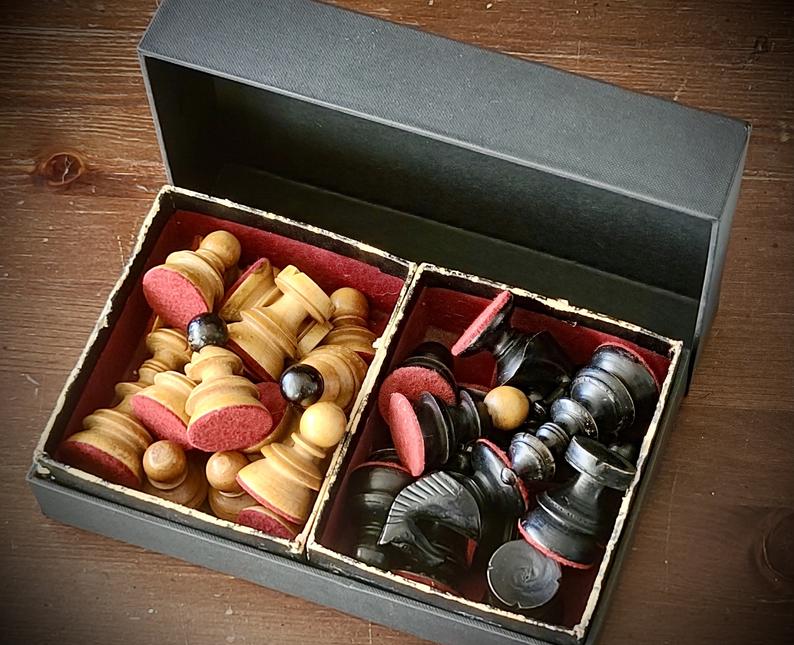
The set will be carefully packed and individually wrapped in the box shown.
Both kings carry the hand-painted iridescent silver signature of the artist on their bases and are ideal for blitz and casual play.
Ref code: TS20