

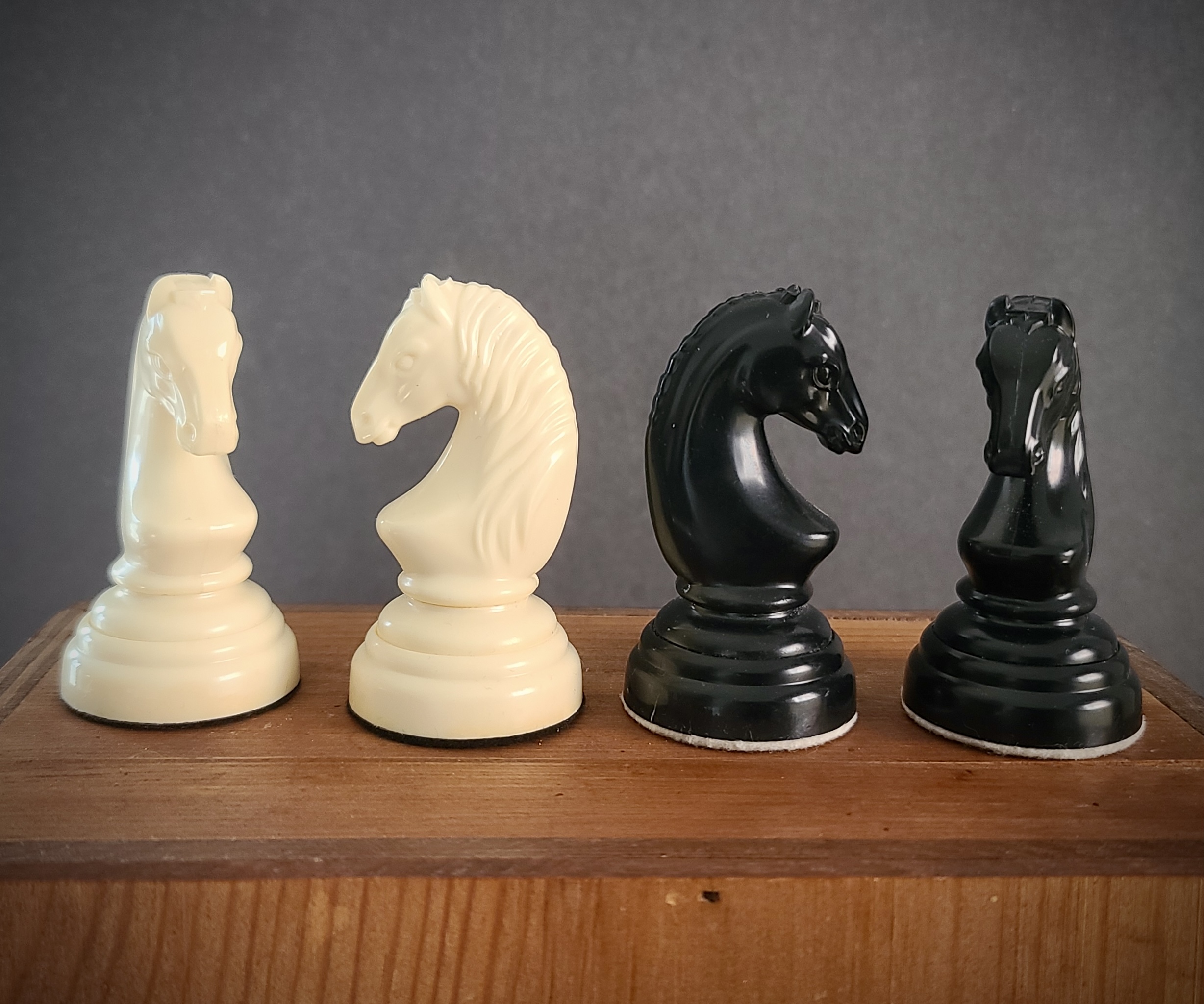

*SOLD* The Bohemian Club: Vintage ‘Sachy Klubove’ Czech Plastic Chess Set, c.1985
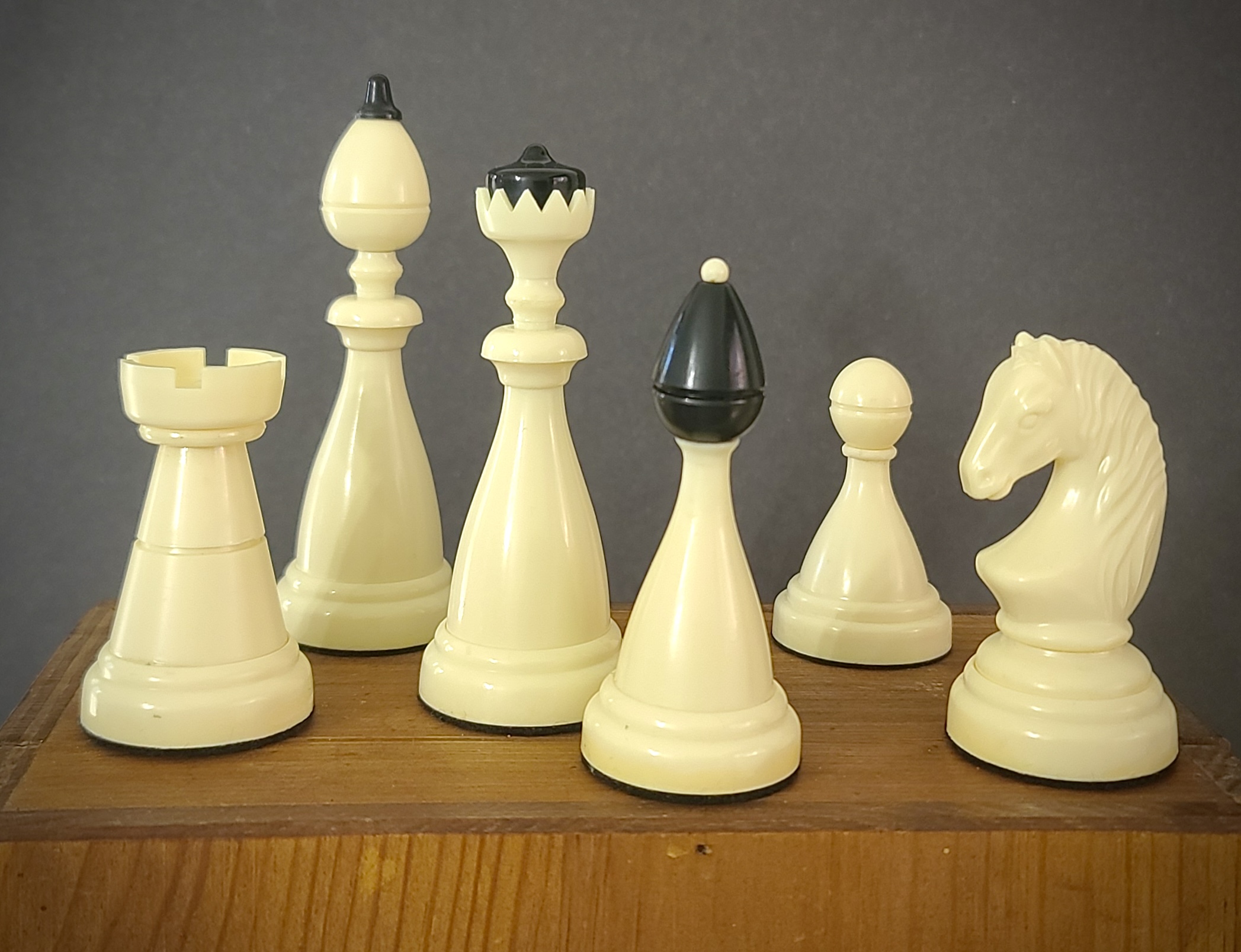
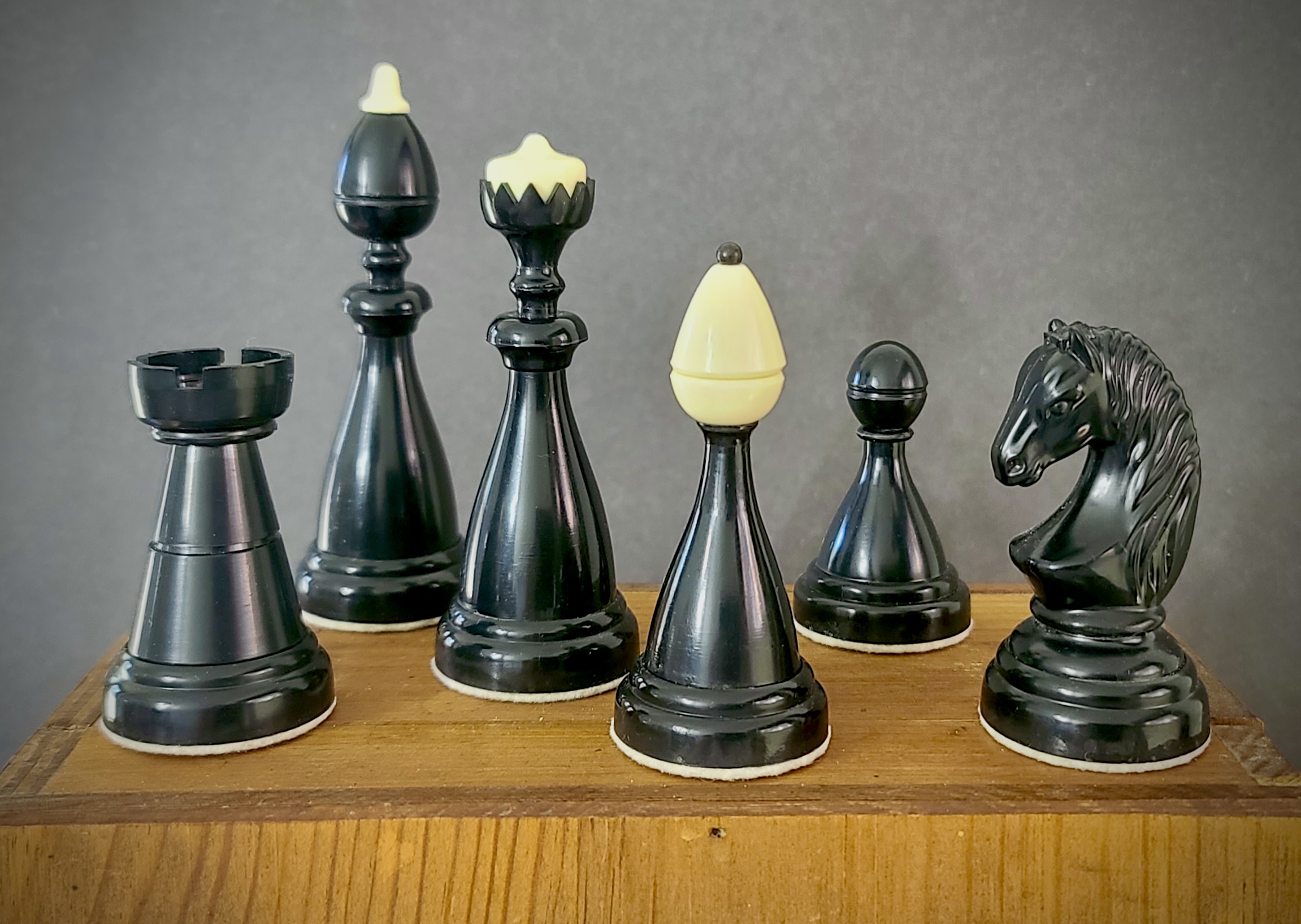
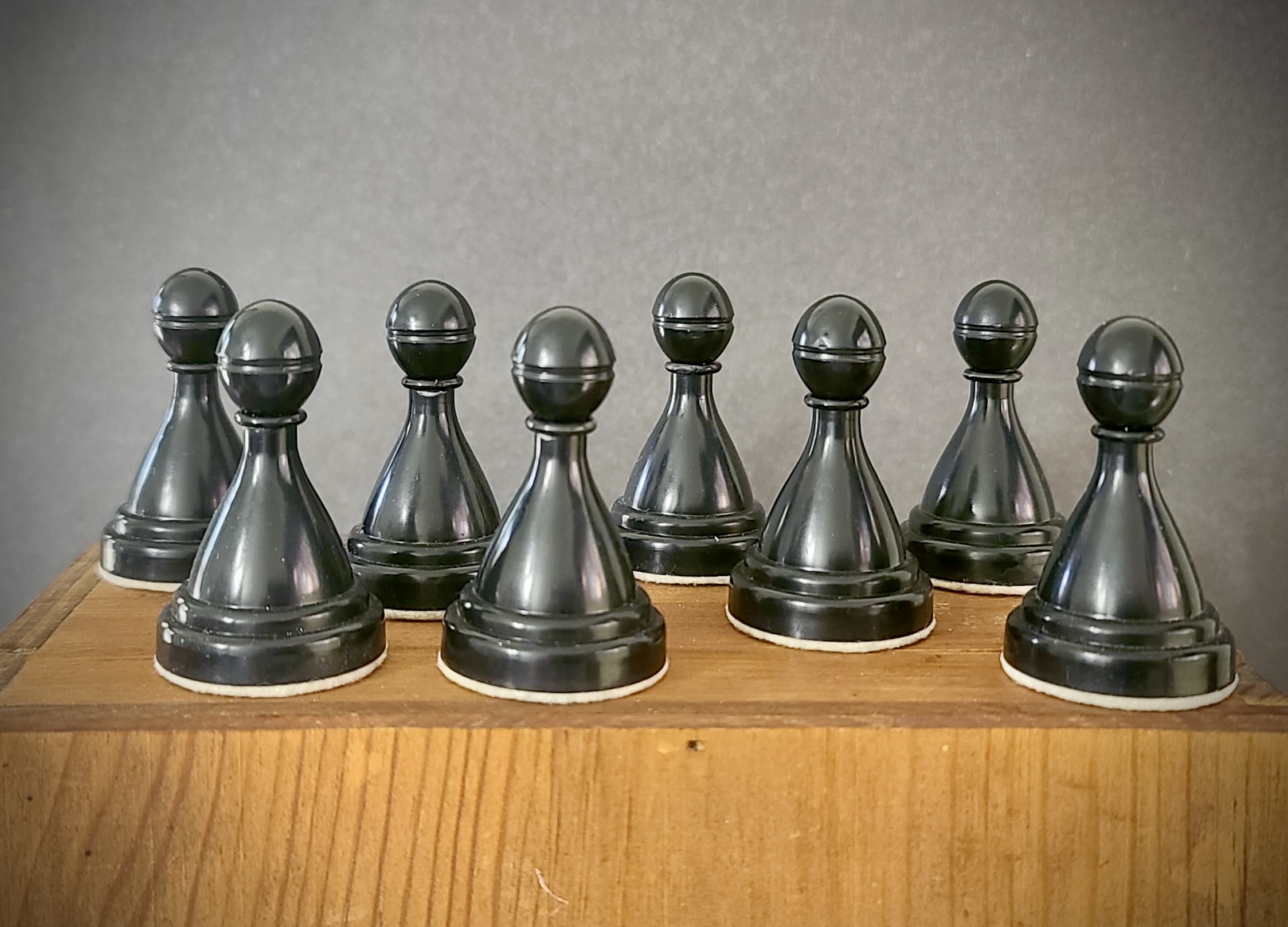
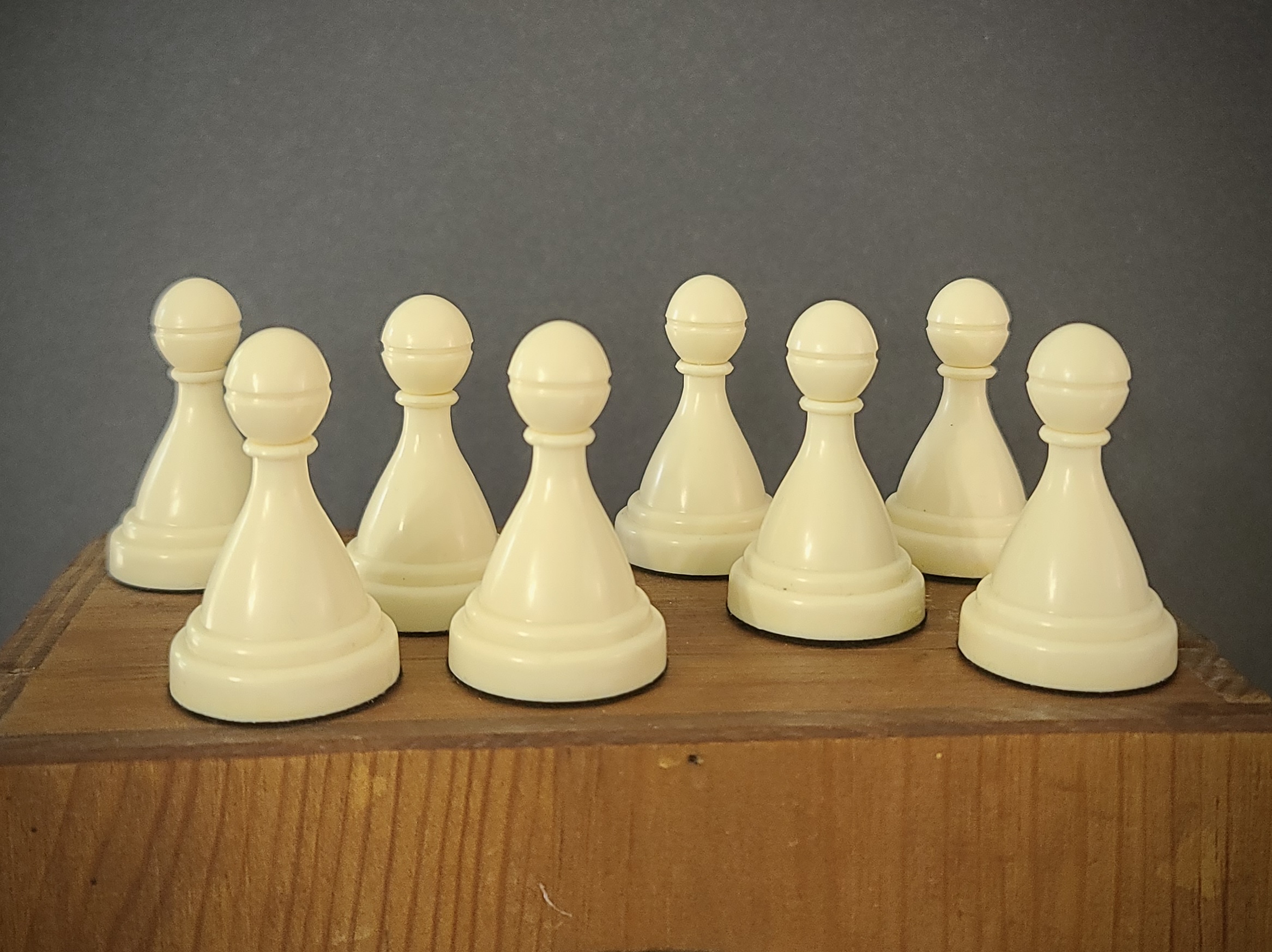
The Bohemian Club; 32 vintage chess pieces in original box with vinyl club board, Czechoslovakian (Ceska Klubovka), moulded plastic, ivory vs. black, weighted, c.1985-1995.
Dimensions:
King 11cm, weight 40g, base width 3.7cm
Queen 9.5cm, wt. 38g
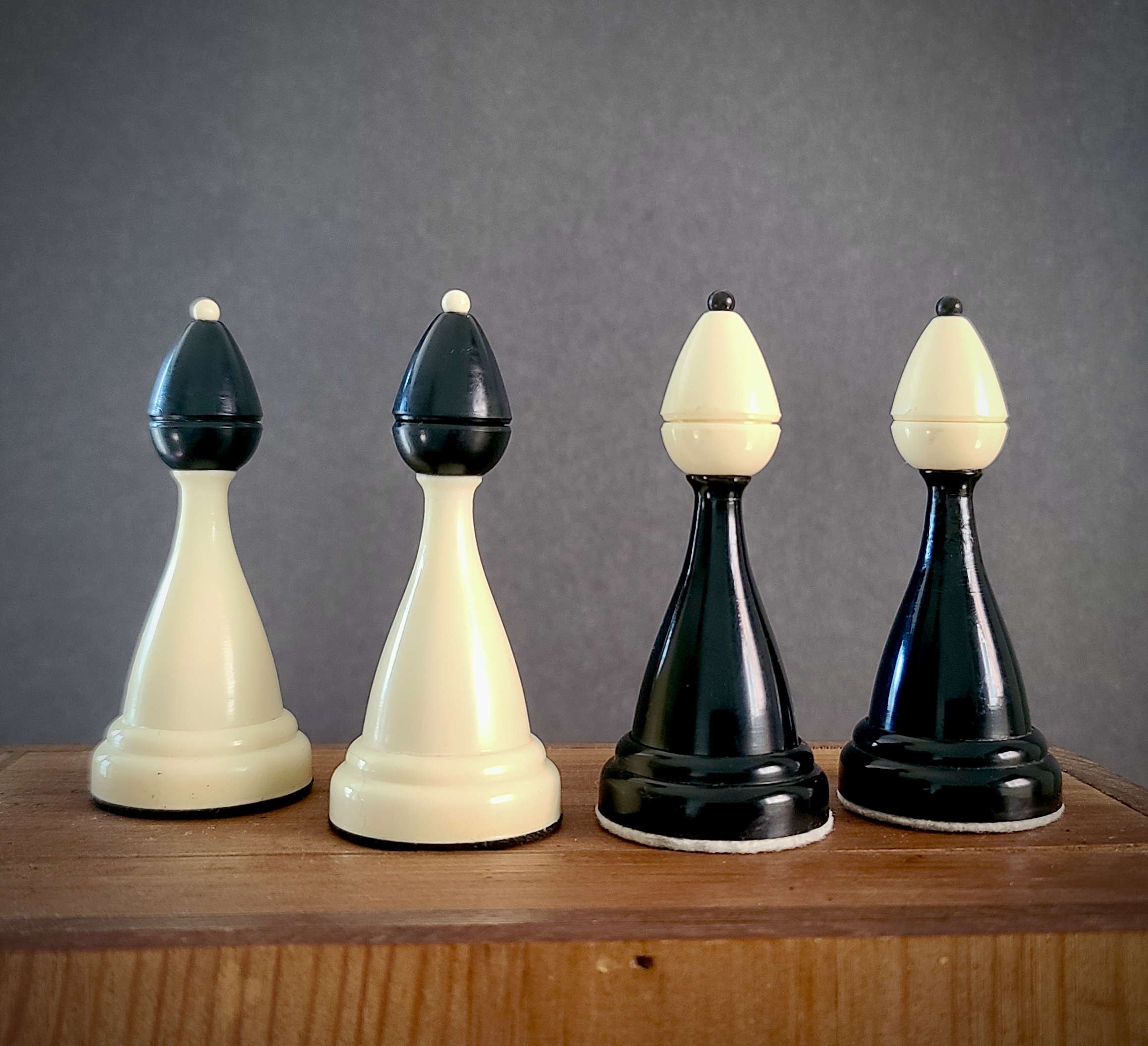
Bishops 8cm, 25g
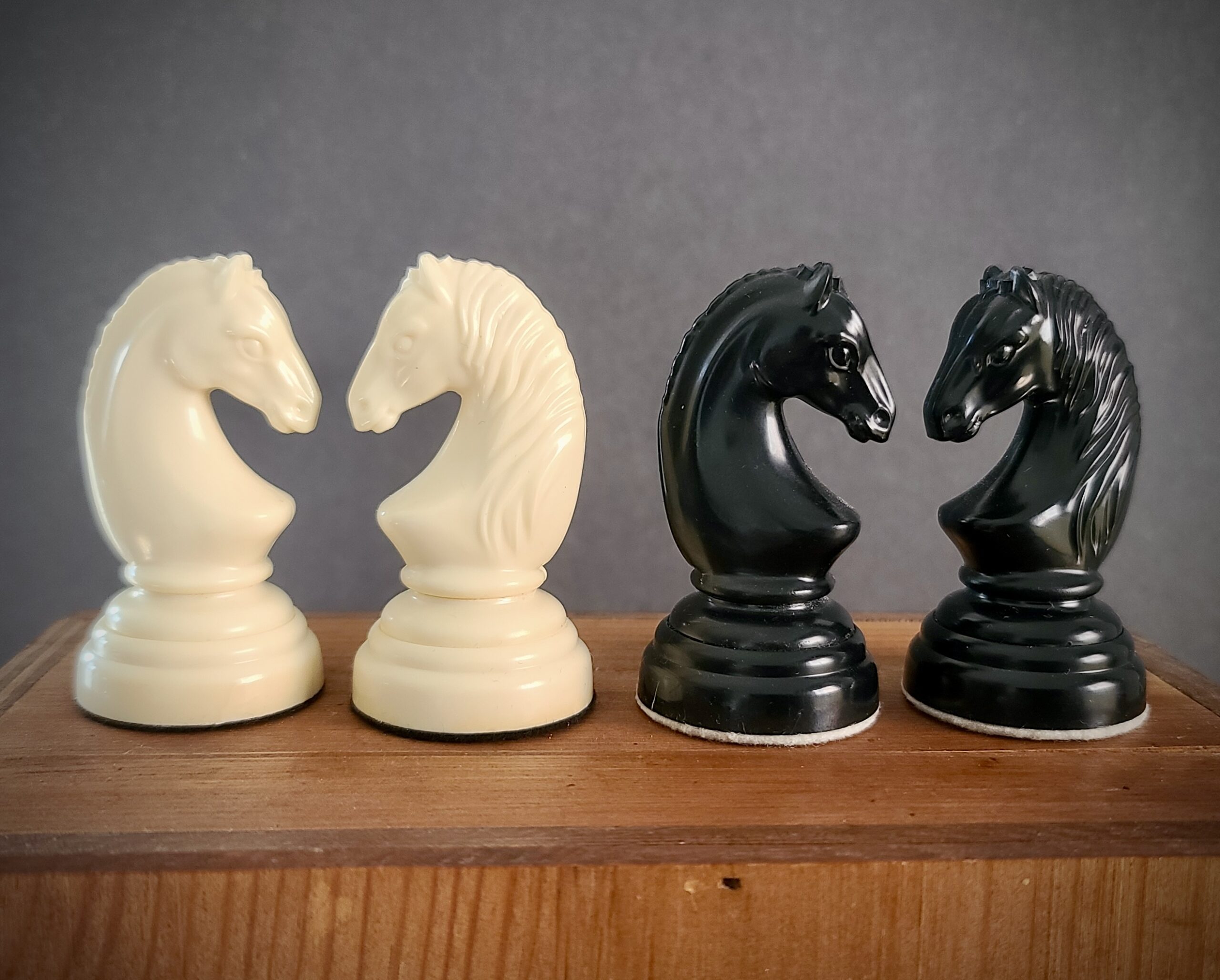
Knight 7cm, 30g
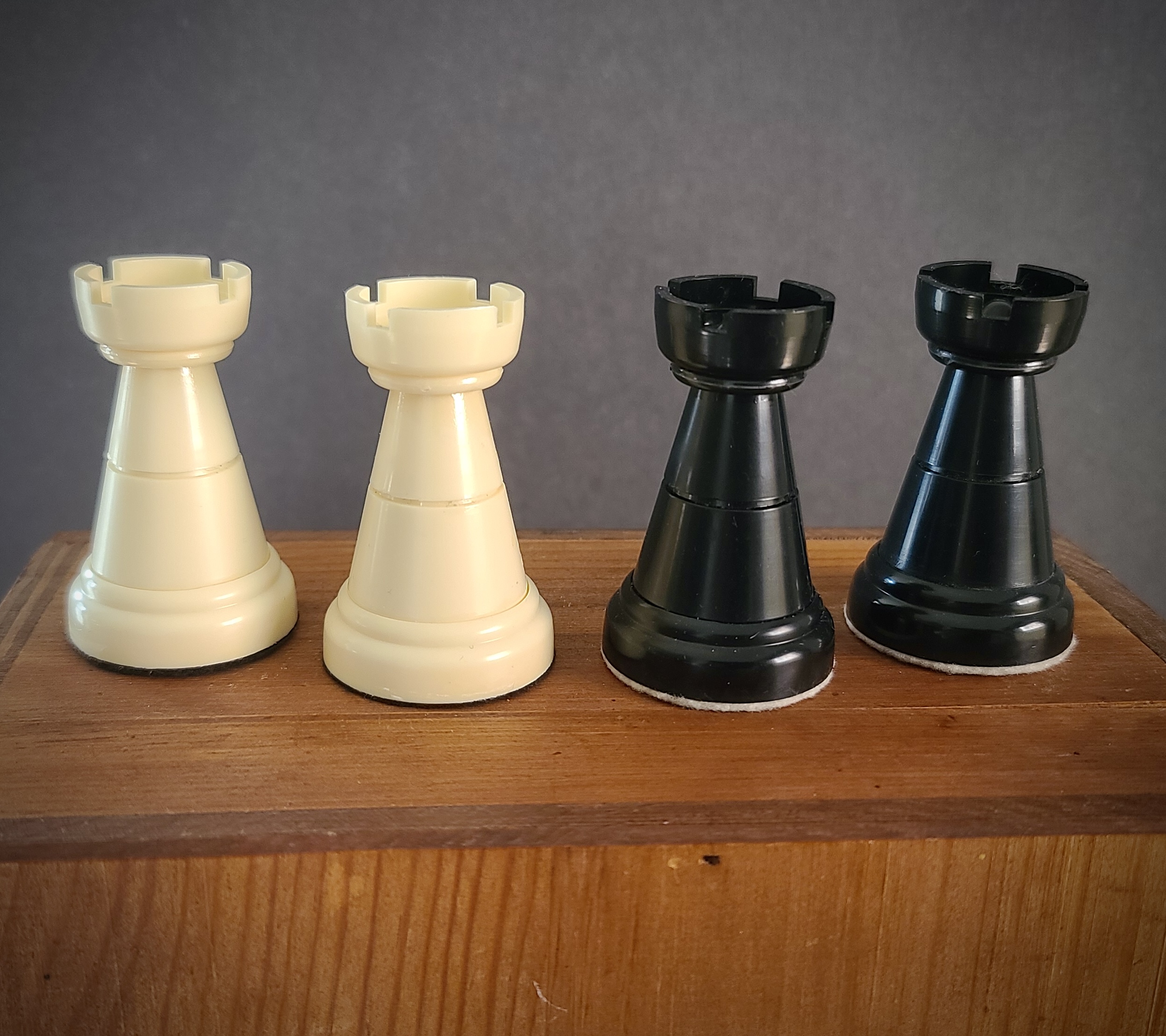
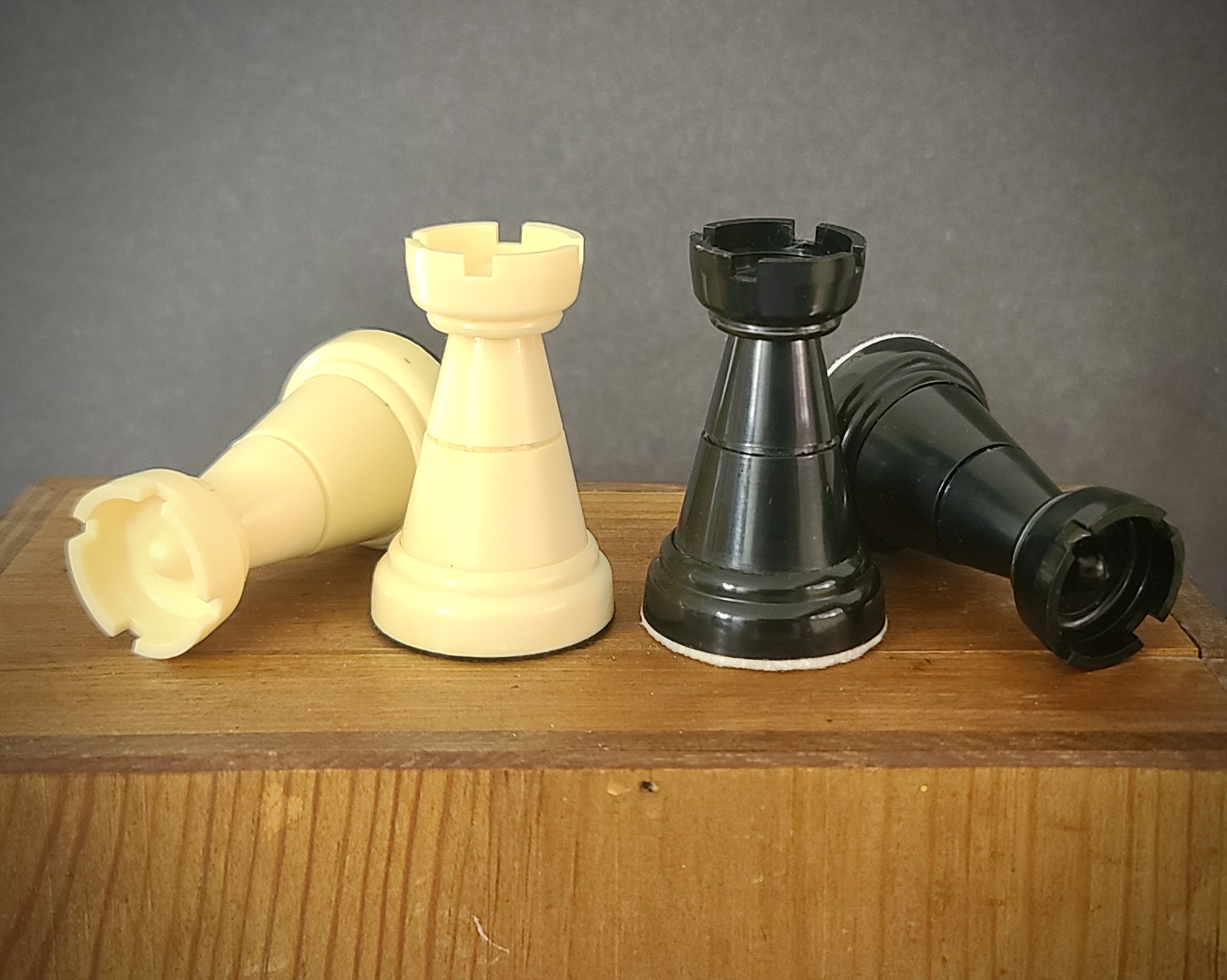
Rook 6cm, 25g
Pawns 5.5cm, 18g
Original storage box: 52cm x 16cm x 4.5cm
Vinyl club board has 6cm squares
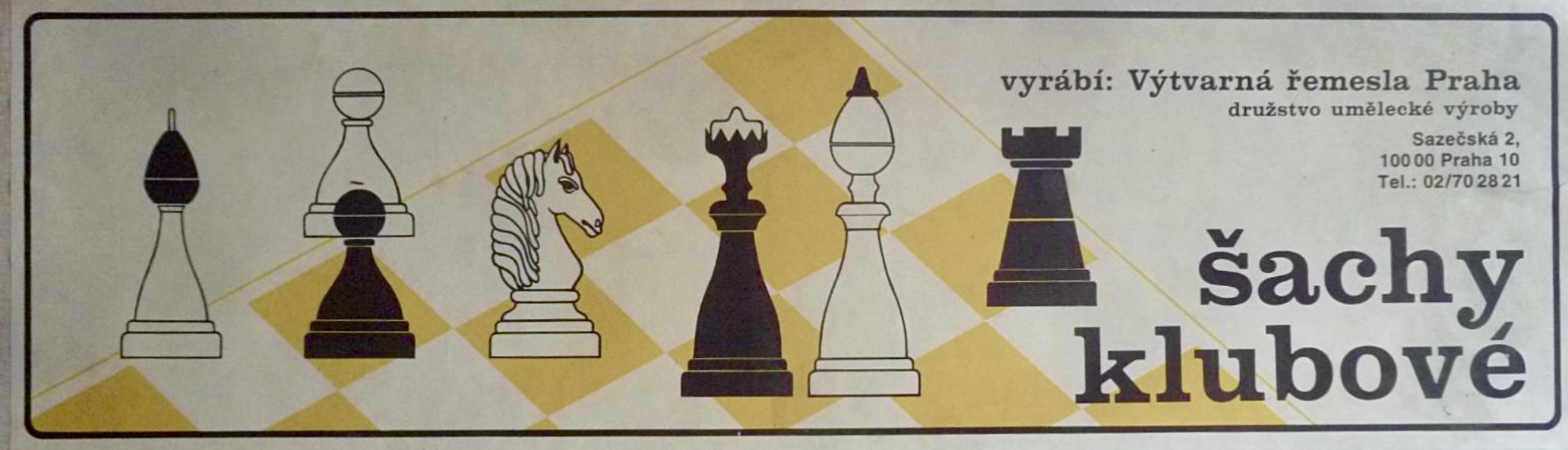
The set’s original box states that it was manufactured by The Arts & Craft Association, based in Prague (‘Praha’), the historical capital of Bohemia and of modern day Czechia.
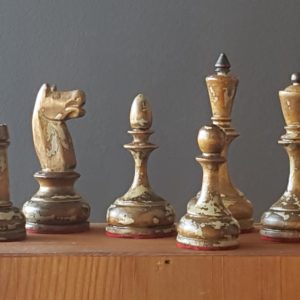
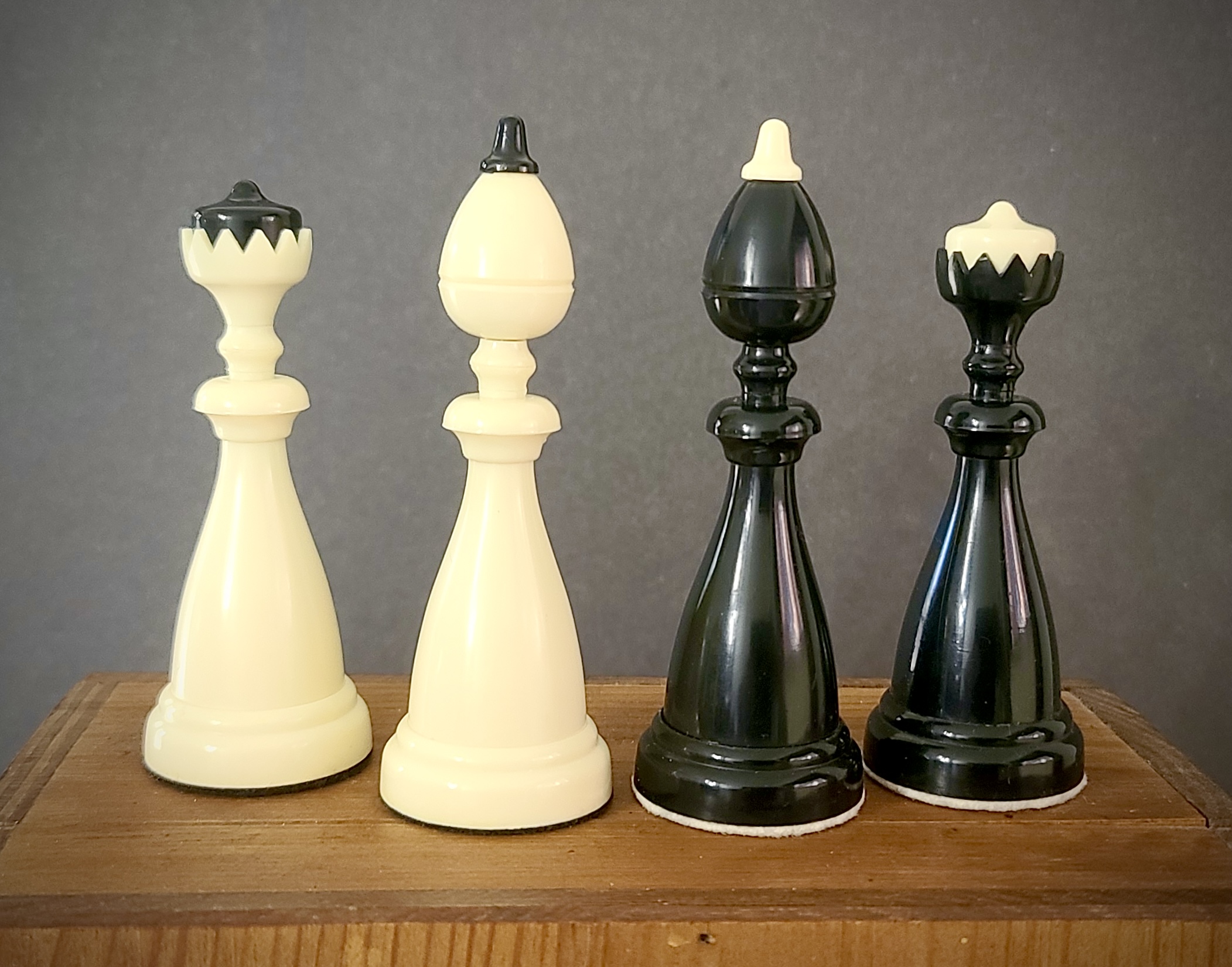
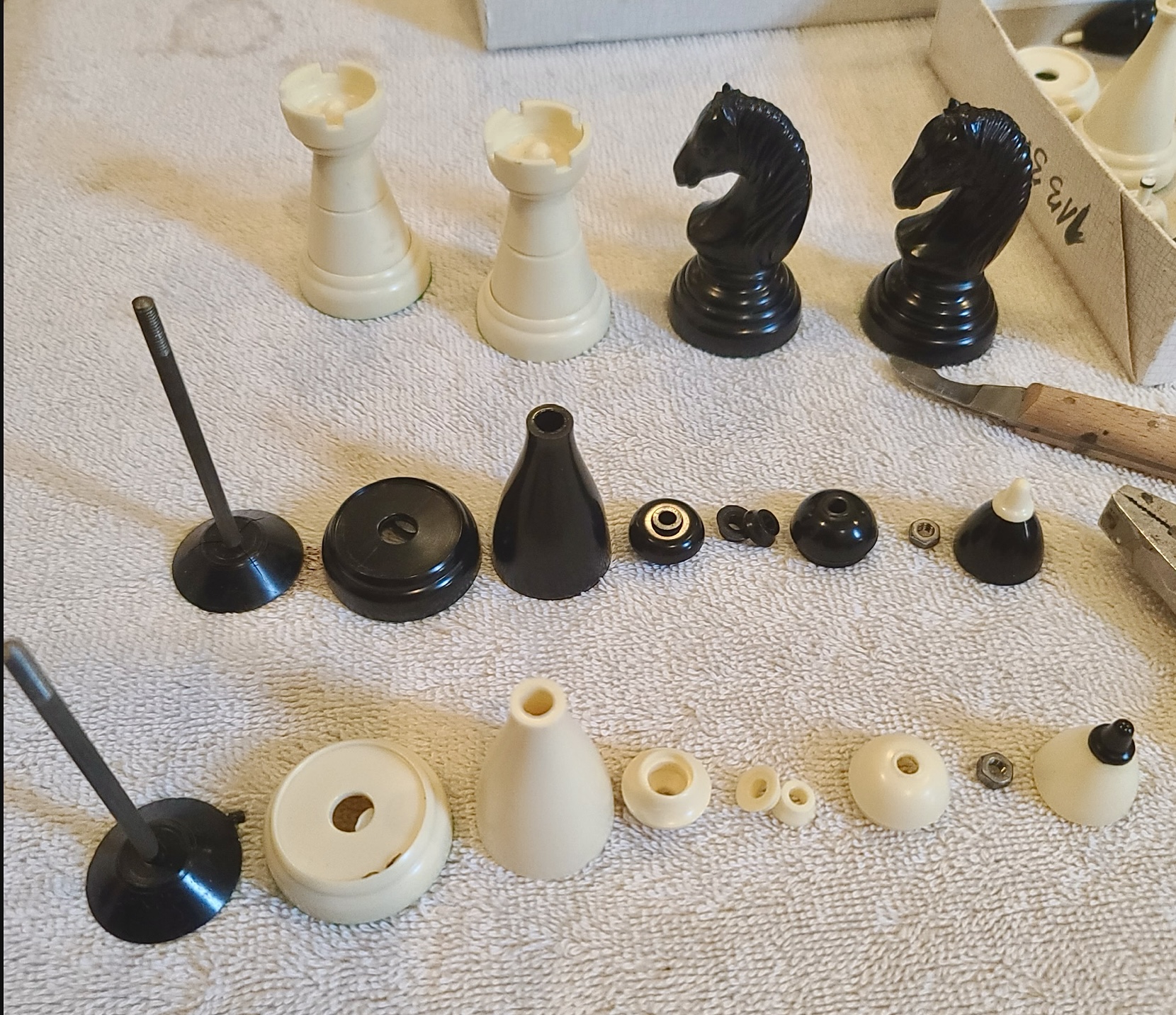
The chessmen were acquired from a Czech collector some years ago and are made of individually moulded plastic sections, making them virtually seamless. For instance, the kings are assembled from 9 sections (see photo), the queens from 8, the bishops 5, and so forth. The irksome flaw of the design, however, was that these sections didn’t quite lock into place and would revolve and come loose during play. Also, like many plastic sets of this era, they were too light. I therefore decided to lock them securely in place and fill the lower portions of the pieces (from the collars down on the royal, clerics and pawns, and the entire cavity of the knights and rooks) with weighted silicone. Additional disc weights were also added to the royals for a little extra oomph! The original green felt pads were also replaced during this process with those of opposing colours, adding another eye-pleasing dimension to these beautifully constructed, monochromatic chess pieces.
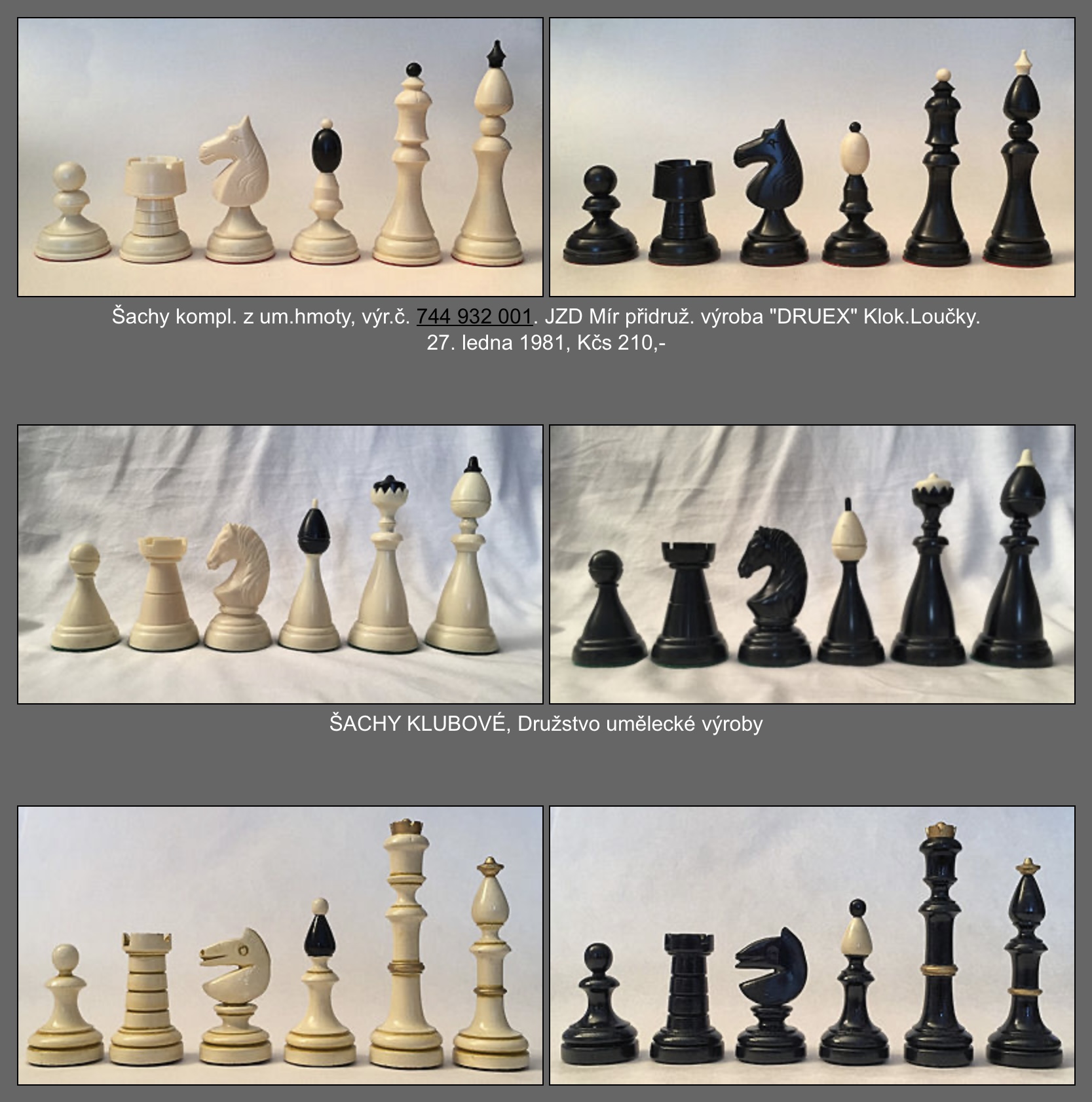
The set is exactly the same as the one shown on the sachy-csla.cz website, which displays a number of Czech sets of similar designs, both in wood and plastic, and combinations of both. The only design element I couldn’t resist changing was to give the bishops a ball finial rather than the small plastic plug shown on the Czech website – that in my opinion was a design error from the get-go! The signifiers of the royals, bishops and pawns are not weighted as I felt this may affect the balance of the pieces.
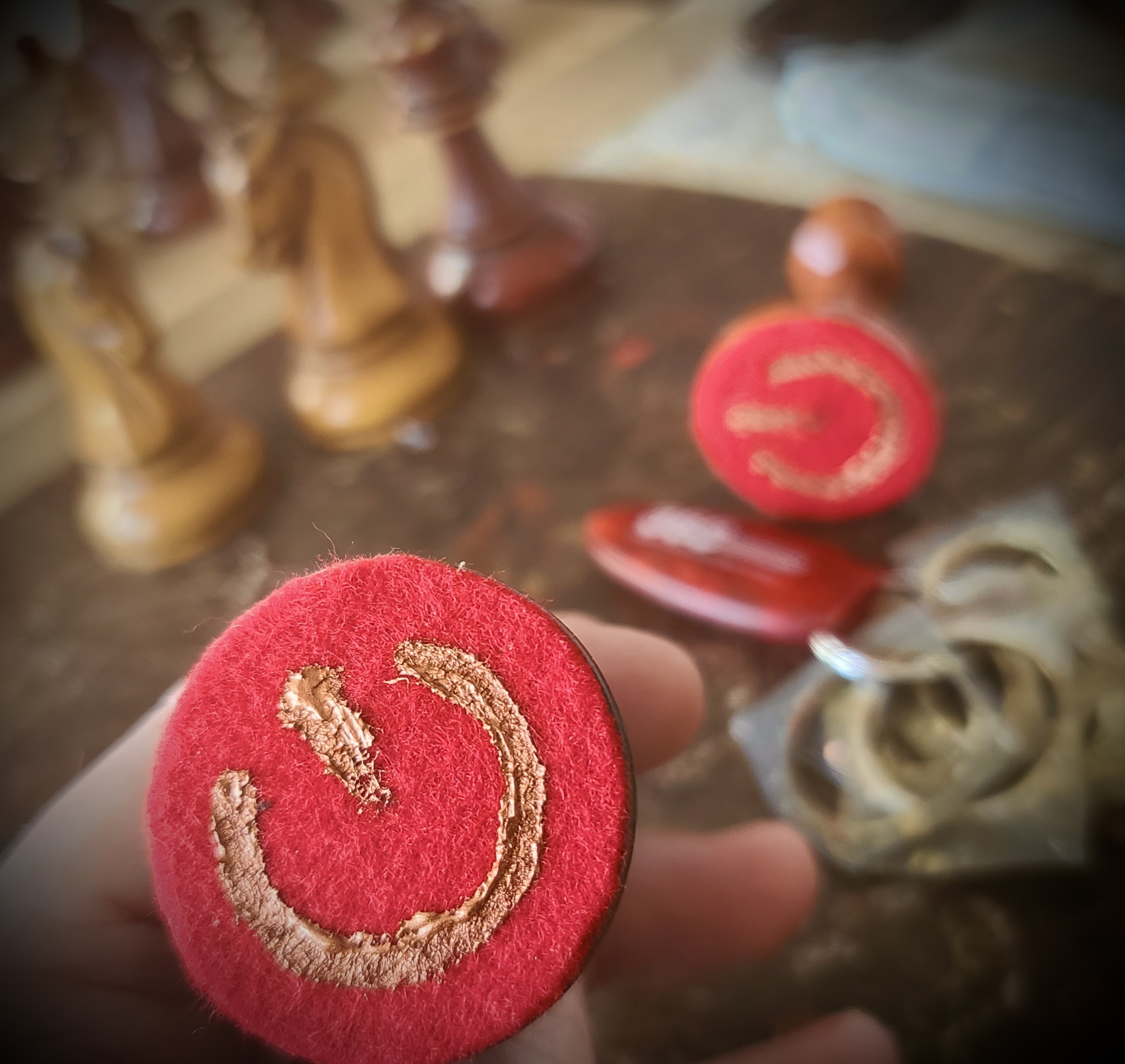
BOTH QUEENS (and not the kings this year!) carry the hand-painted iridescent GOLD 2024 ‘Power signature’ of the artist on their bases. The set is also accompanied by our unique ‘Certificate of Artistry’ (see our Jan 2022 chessay, THE UNTOLD STORY OF THE C.O.A’s for more info on these).
If you have any further questions regarding The Bohemian Club or any other of our listings please don’t hesitate to ask – I’m all ears and answers!
Related products
Out of stock