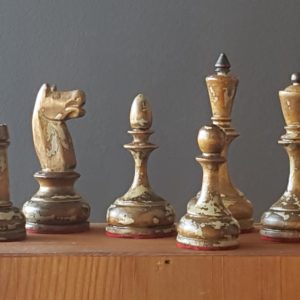
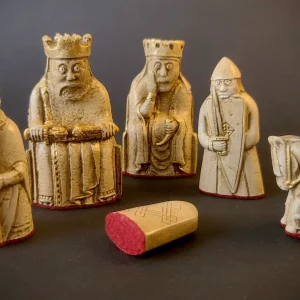
 Figuli Lapis Milites (Stone Army): Hand-Painted ‘One-Off’ Isle of Lewis Chess Set, c.1990


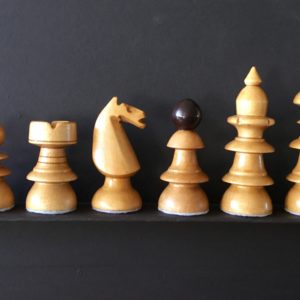
*SOLD* Speculum Oculi (Glass Eyed): German ‘Knubbel’ Analysis Chess Set, circa 1930-1940
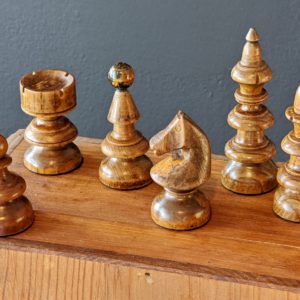
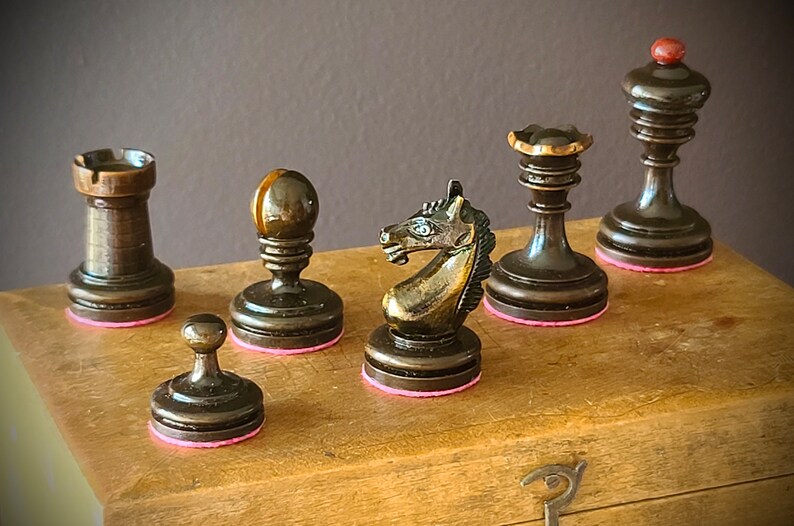
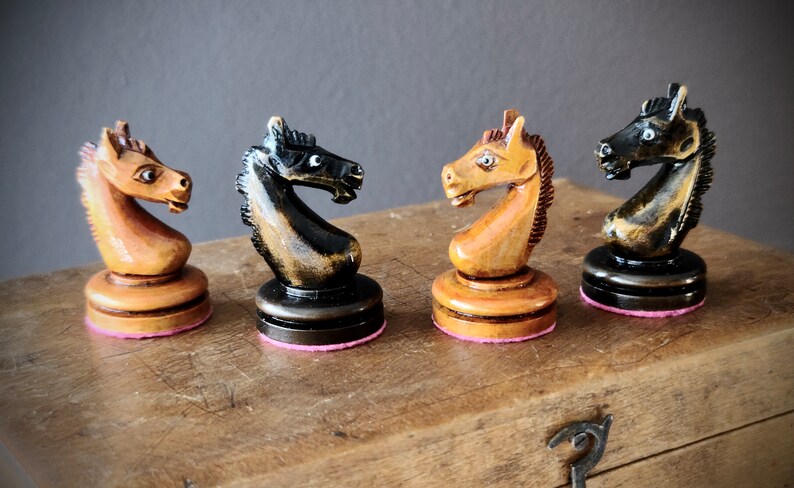
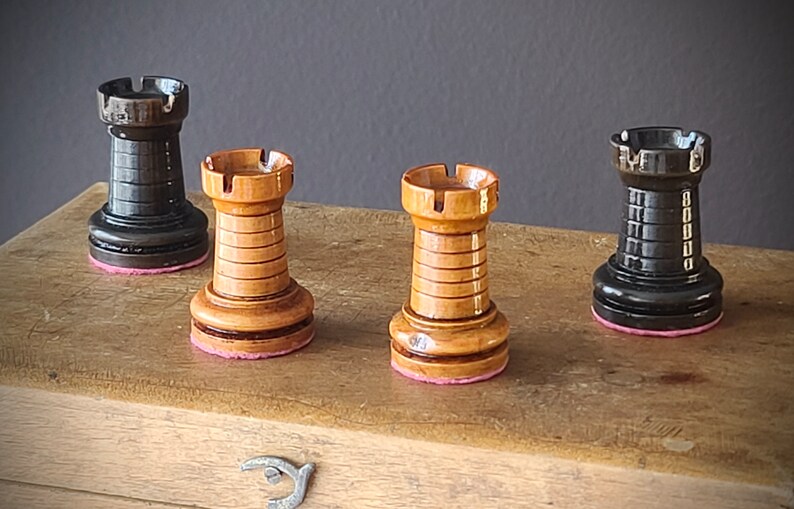
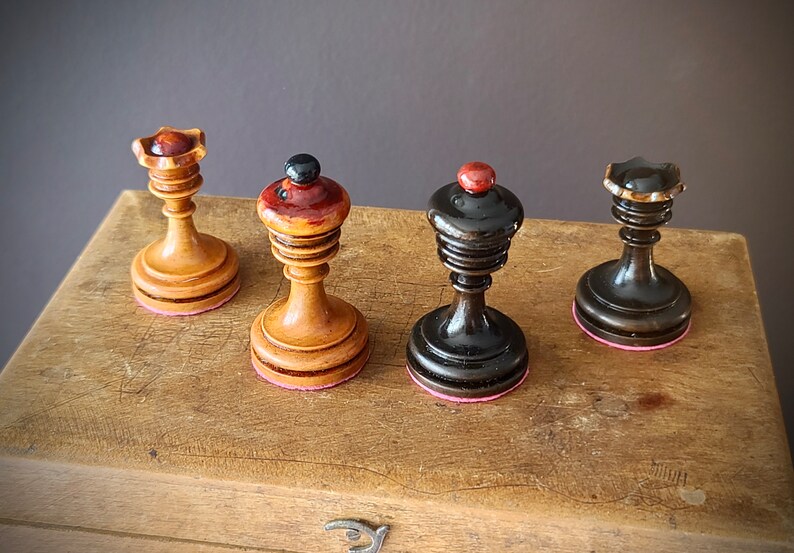
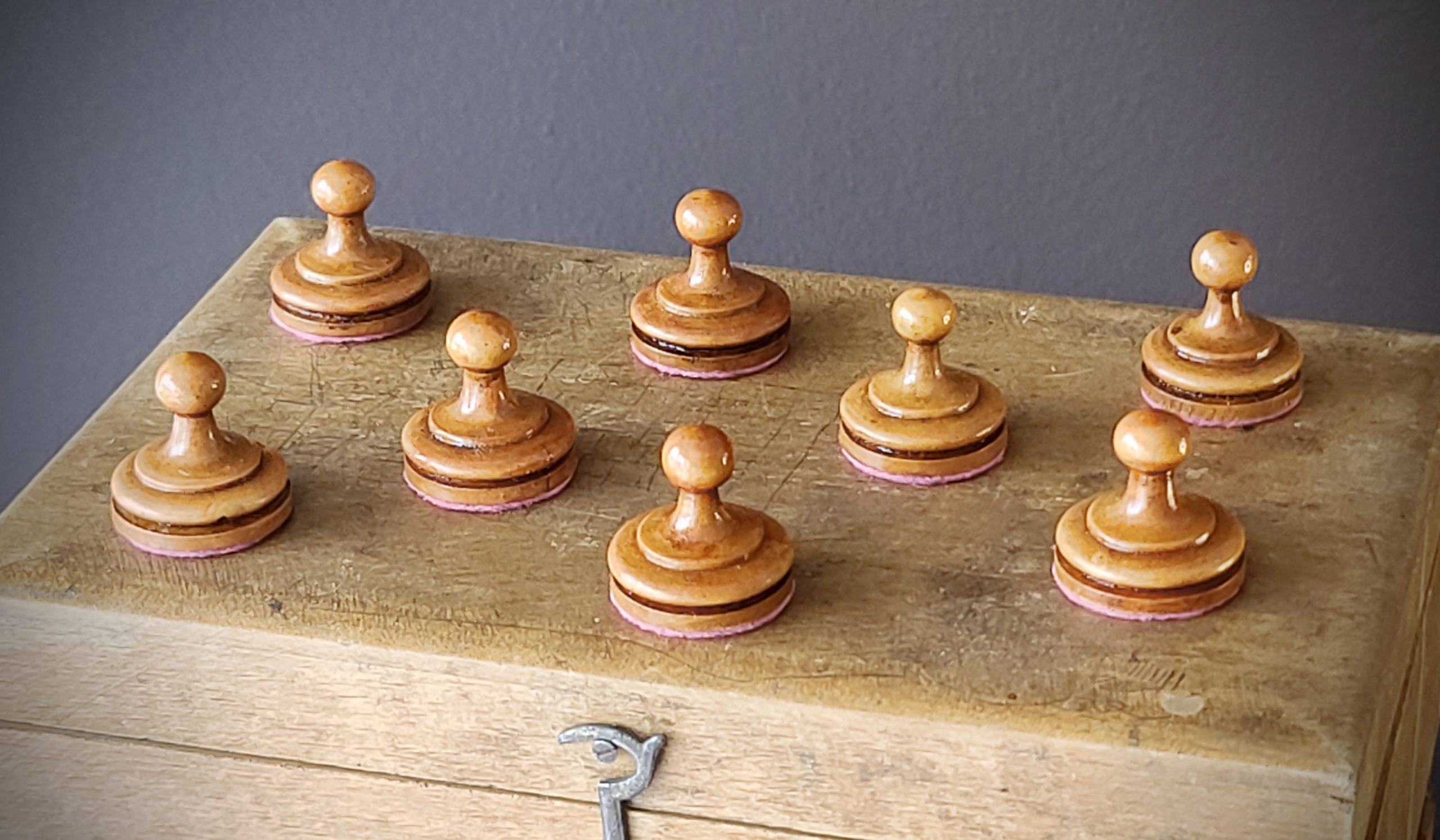
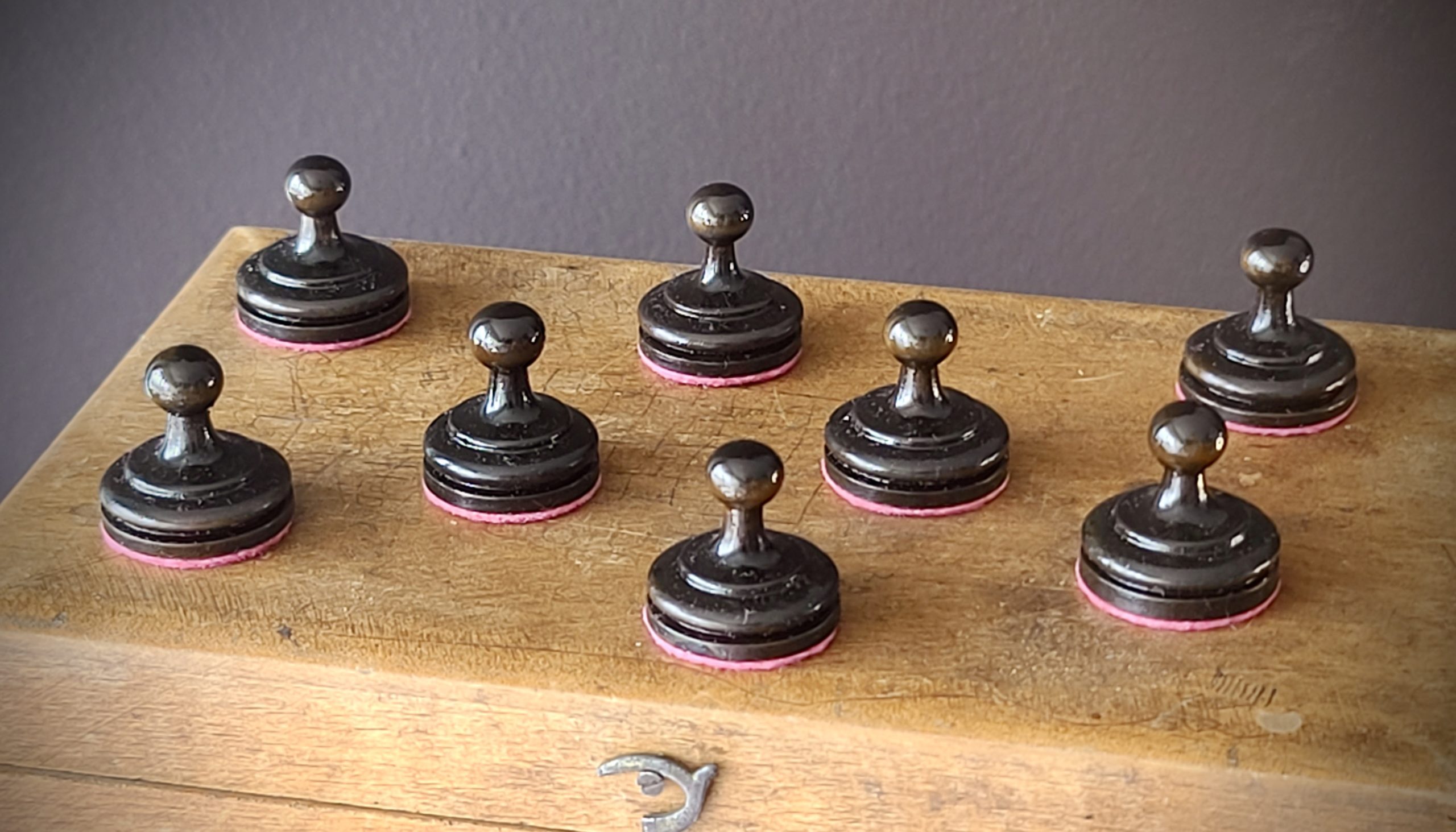
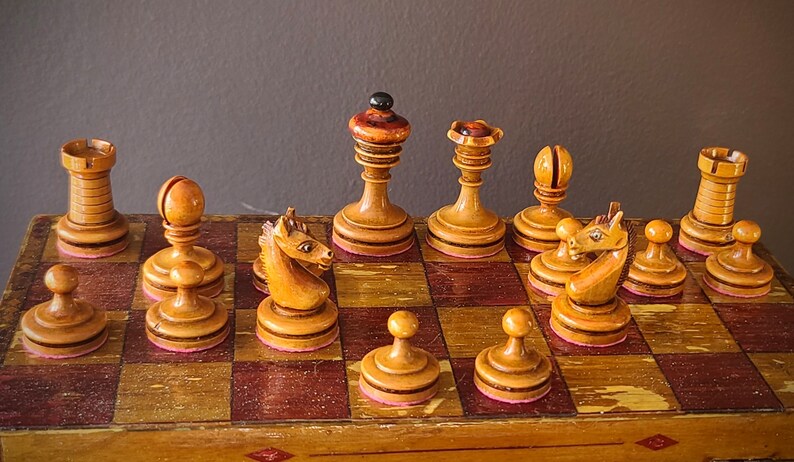
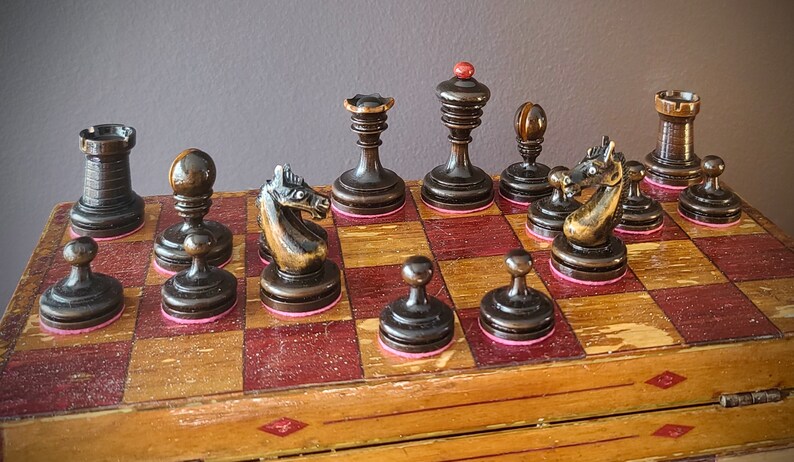
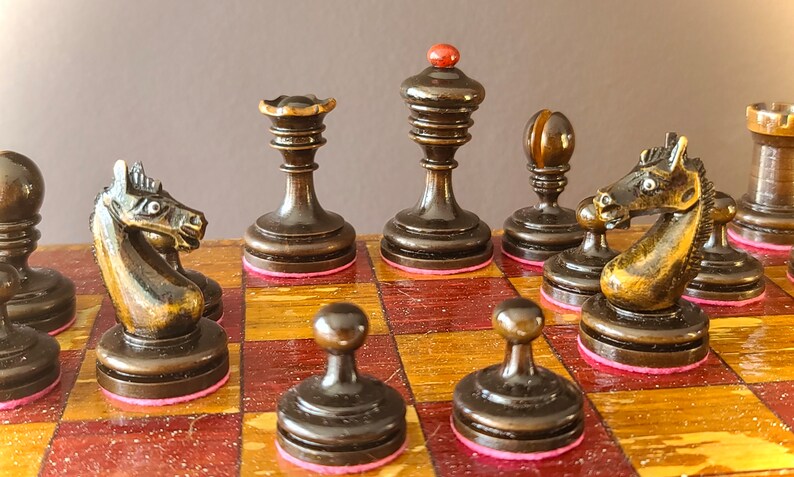
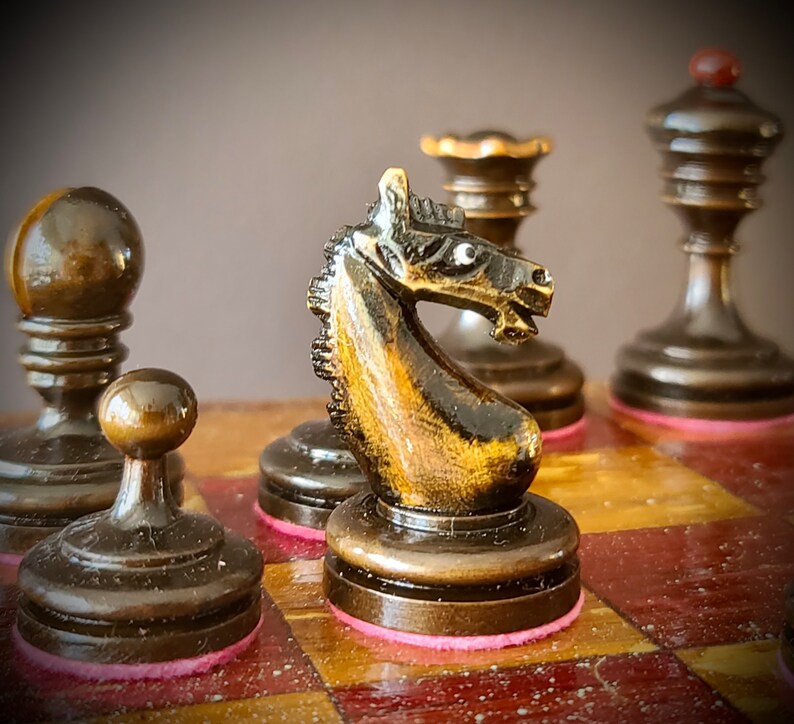
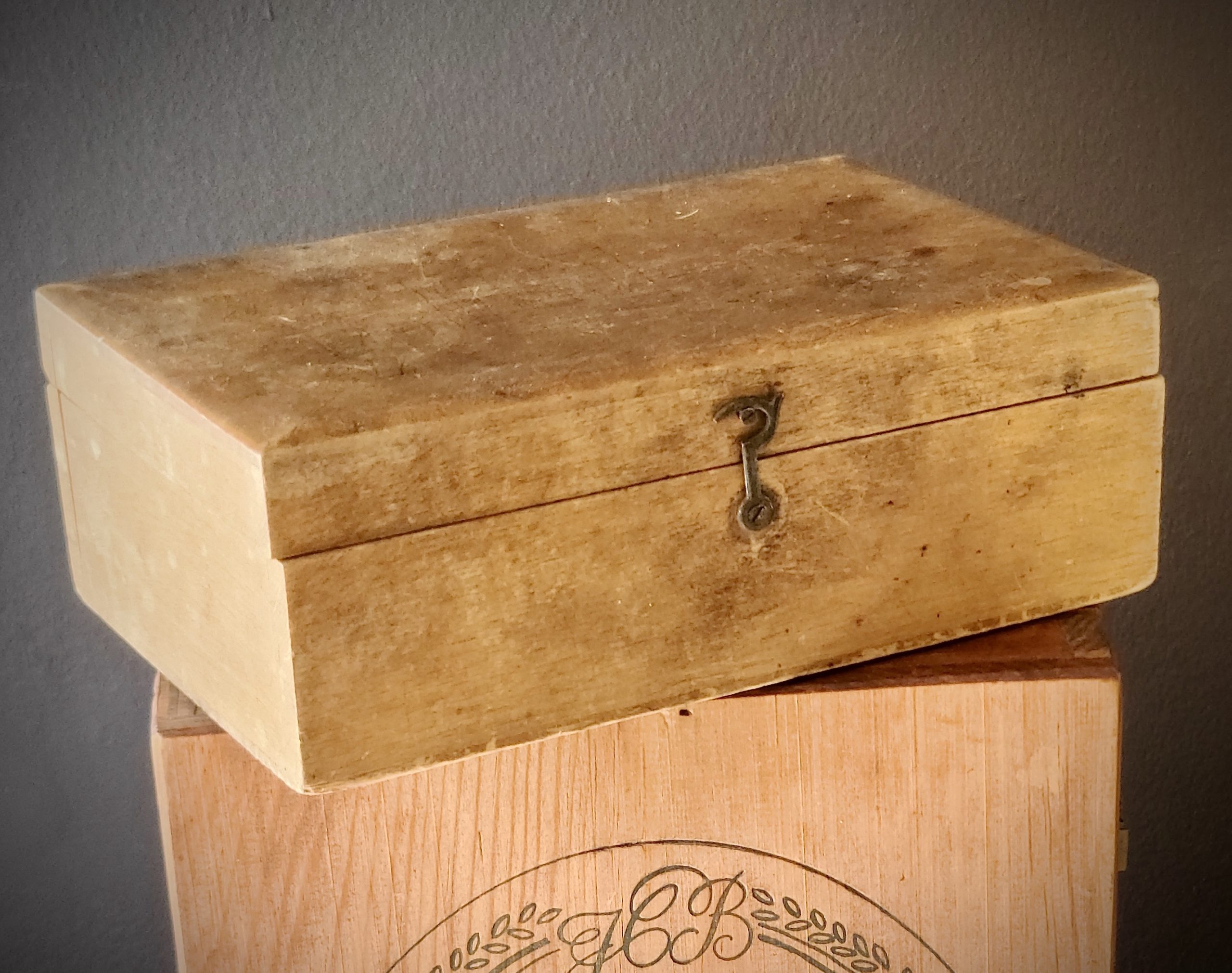
Speculum Oculi (Glass Eyed); 32 naturally weighted wooden chessmen in original box, German, wood/glass, antiqued, amber vs. deep brown, circa 1930-1940
Height: King 6cm, wt 15g, base width 3.1cm, Queen 5cm wt 11g, Bishop 4cm wt 10 g, Knight 4.5cm 4.5g, Rook 3.9cm 9g, Pawn 2.6cm 5g.
W: antiqued pink felt bases B: same
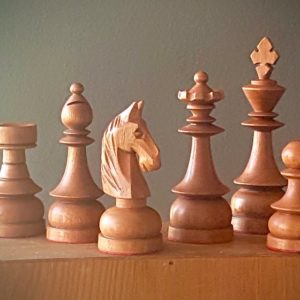
The iconic ‘Knubbel’ design of chessmen (German; ‘knobs’ or ‘knobbled’) is very popular with chess player’s for analysis purposes and a favourite set of the late (and great!) Danish grandmaster, Bent Larsen (1935-2010) and therefore often closely associated with Scandinavian chess, too. There are a number of variations and a few reproductions (clumsier and heavier) of the knubbel chessmen, however nothing can match playing through the games of yesteryear with one of these original 1930s designs.
These particular chessmen are quite a rarity, as unlike most sets the knight’s sport miniature ‘glass-eyes’ and are by far the most intricately carved specimens that I’ve come across with their detailed manes and angular features, making this quite an attractive and very collectible set. For a quick comparison have a rummage through the ARCHIVE GALLERY at our H.Q. (thechessschach.com) where the more standard pattern can be seen (see; Knubbellium – The Nobs) or take a look at Holger’s Antique Chess Set Collection (chess-collection.de) for other fine examples.
Obviously, this is my own personal take on these wonderful German pieces. The light side has been subtly antiqued using multiple layers of tinted shellac and oils. Traditional crimson highlights have also been added using custom-matched oil colours based on other sets of the same era. The black paint on the original set has been partially stripped back, then built back up again using a combination of rich, dark stains and amber shellac for a wonderfully old look and feel. Lastly, as a finishing touch, antiqued pink felt has been added to compliment the colourful goings-on above them – and in all honesty, I sincerely doubt there is a better looking Knubbel on the market – apart from the last set that came out of the studio, of course!
Both kings carry the hand-painted iridescent silver ‘power’ signature of the artist on their bases and are ideal for display as well as casual play.
Ref code: SO20