
*SOLD* Legio Rumae (Romanian Legion); Romanian ‘Political’ Coffee House Club Set, c.1978
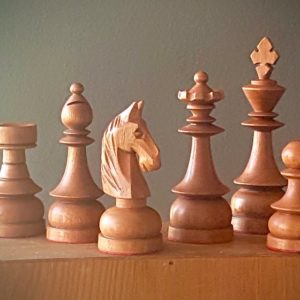
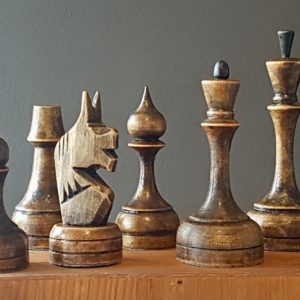
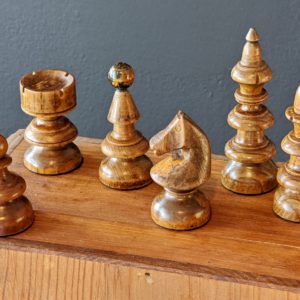
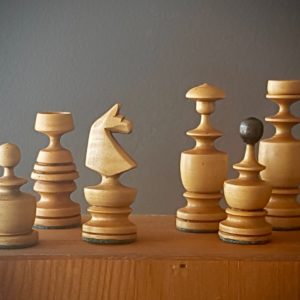
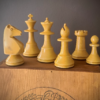
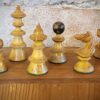
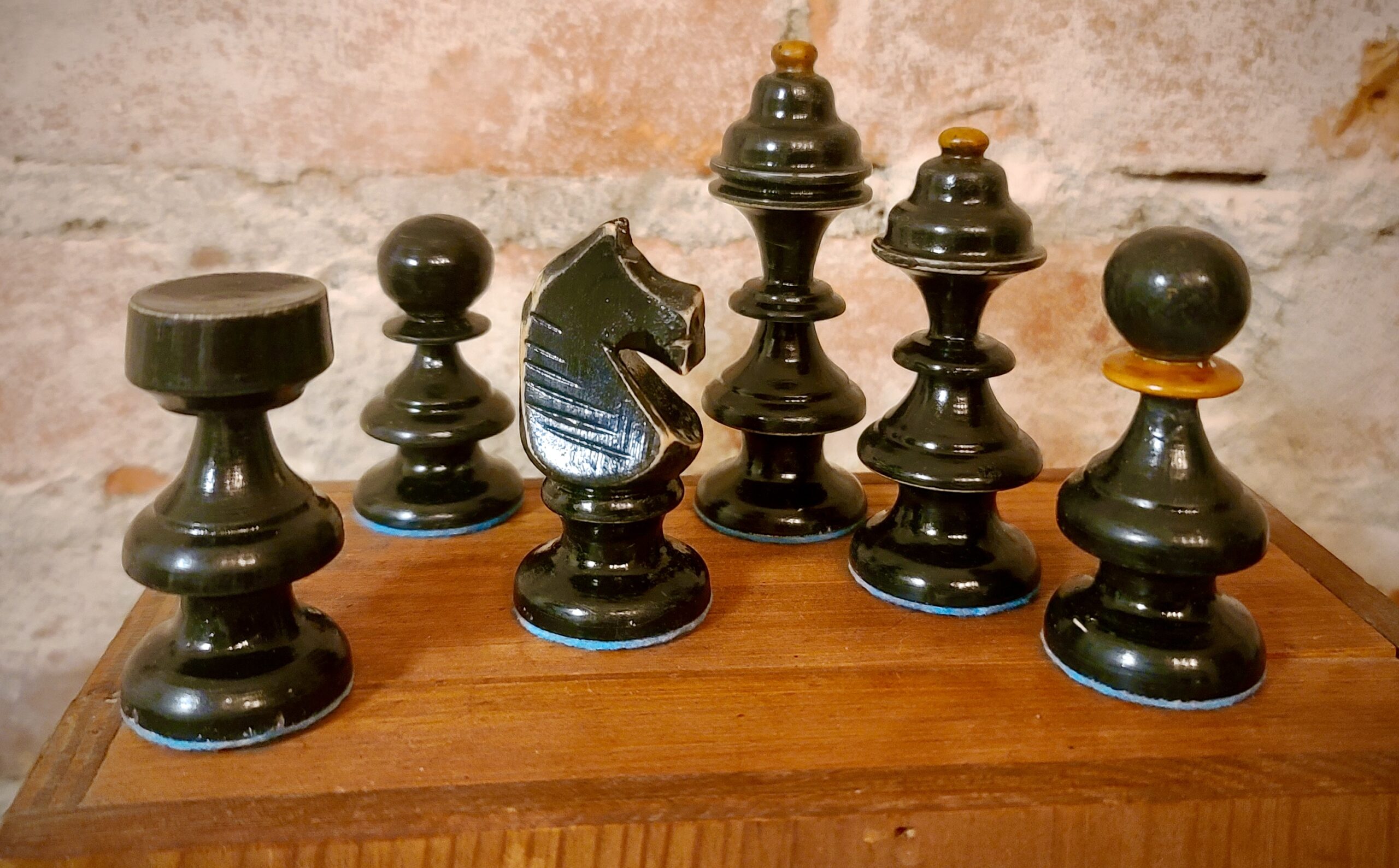
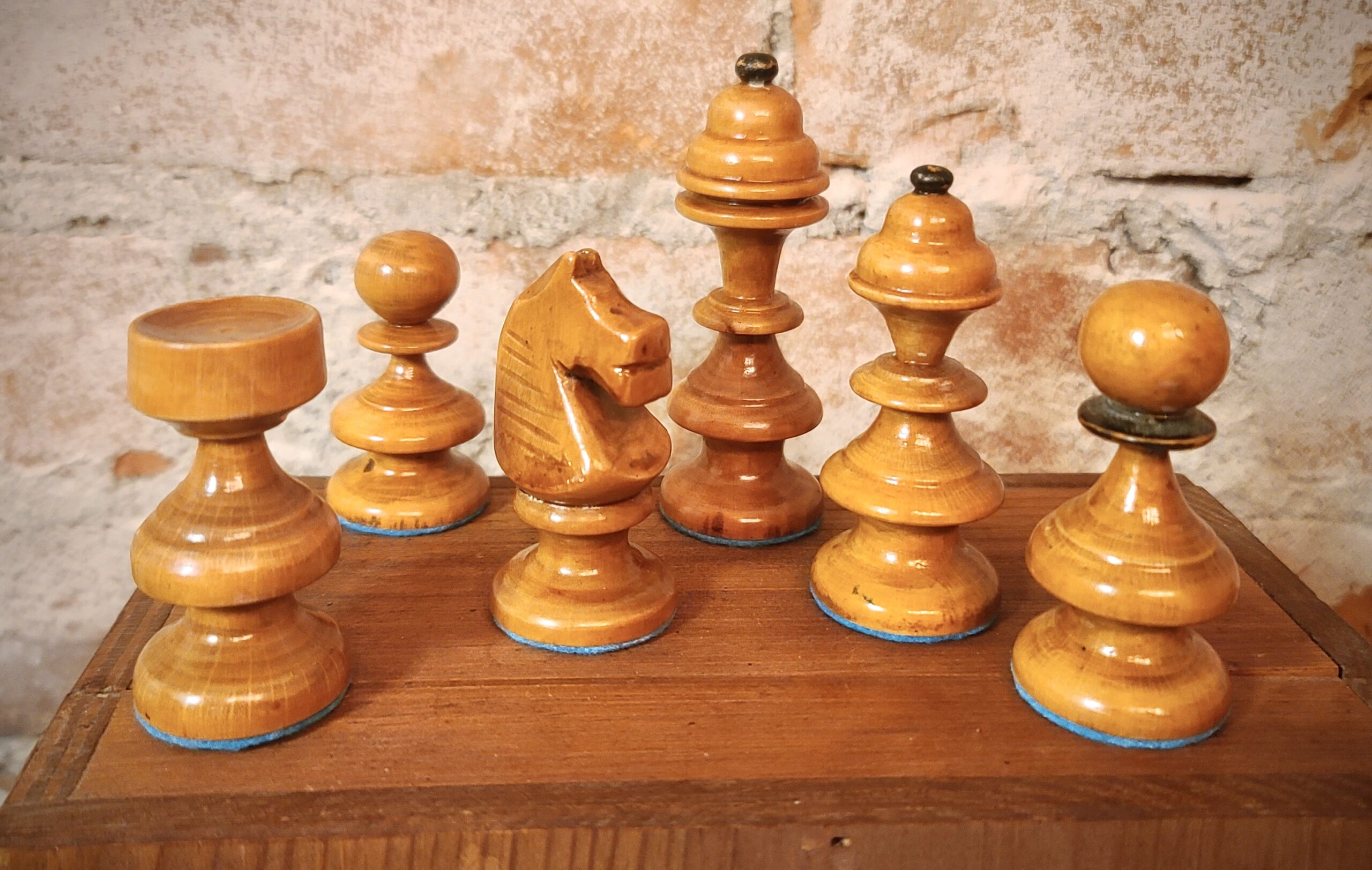
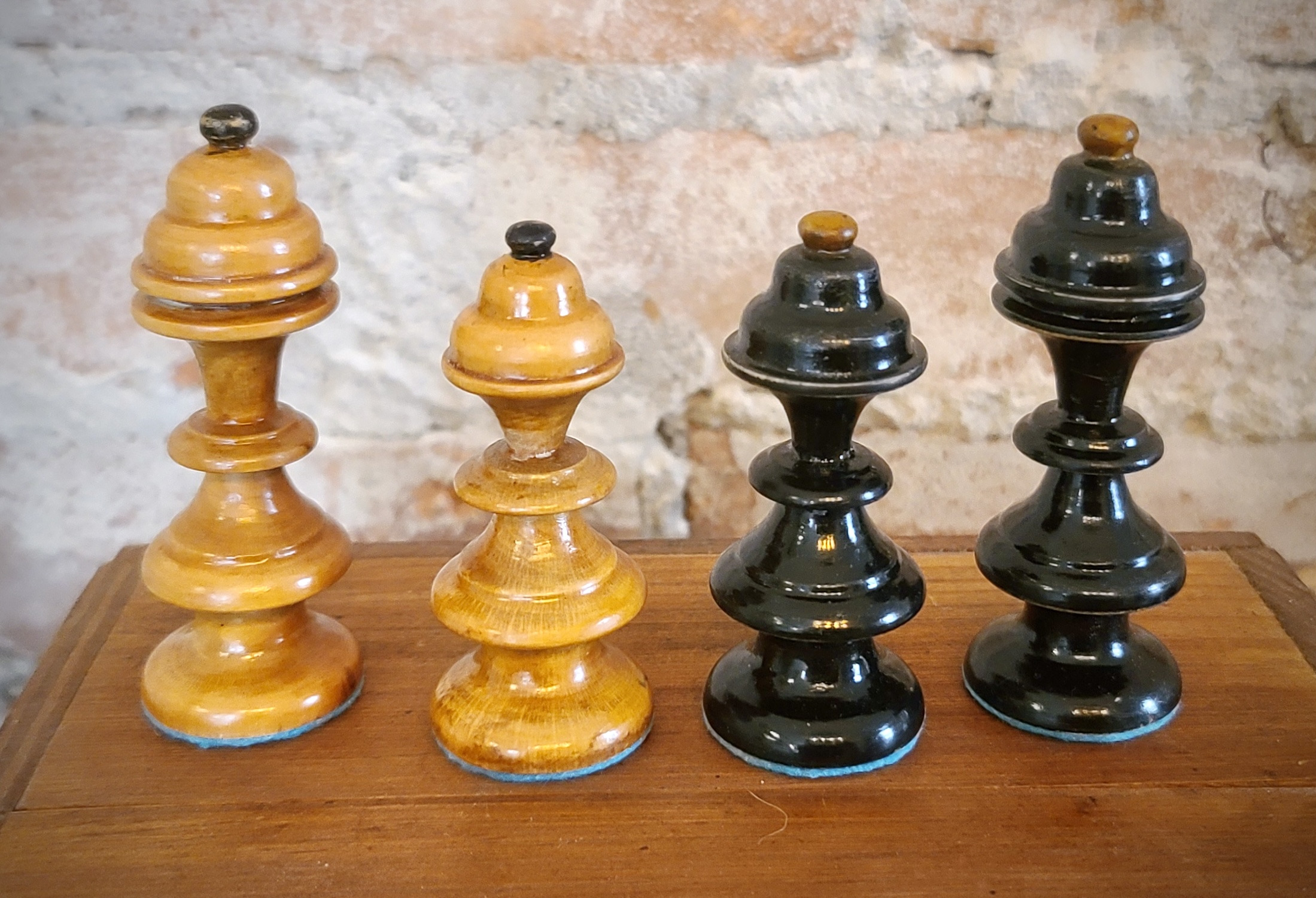
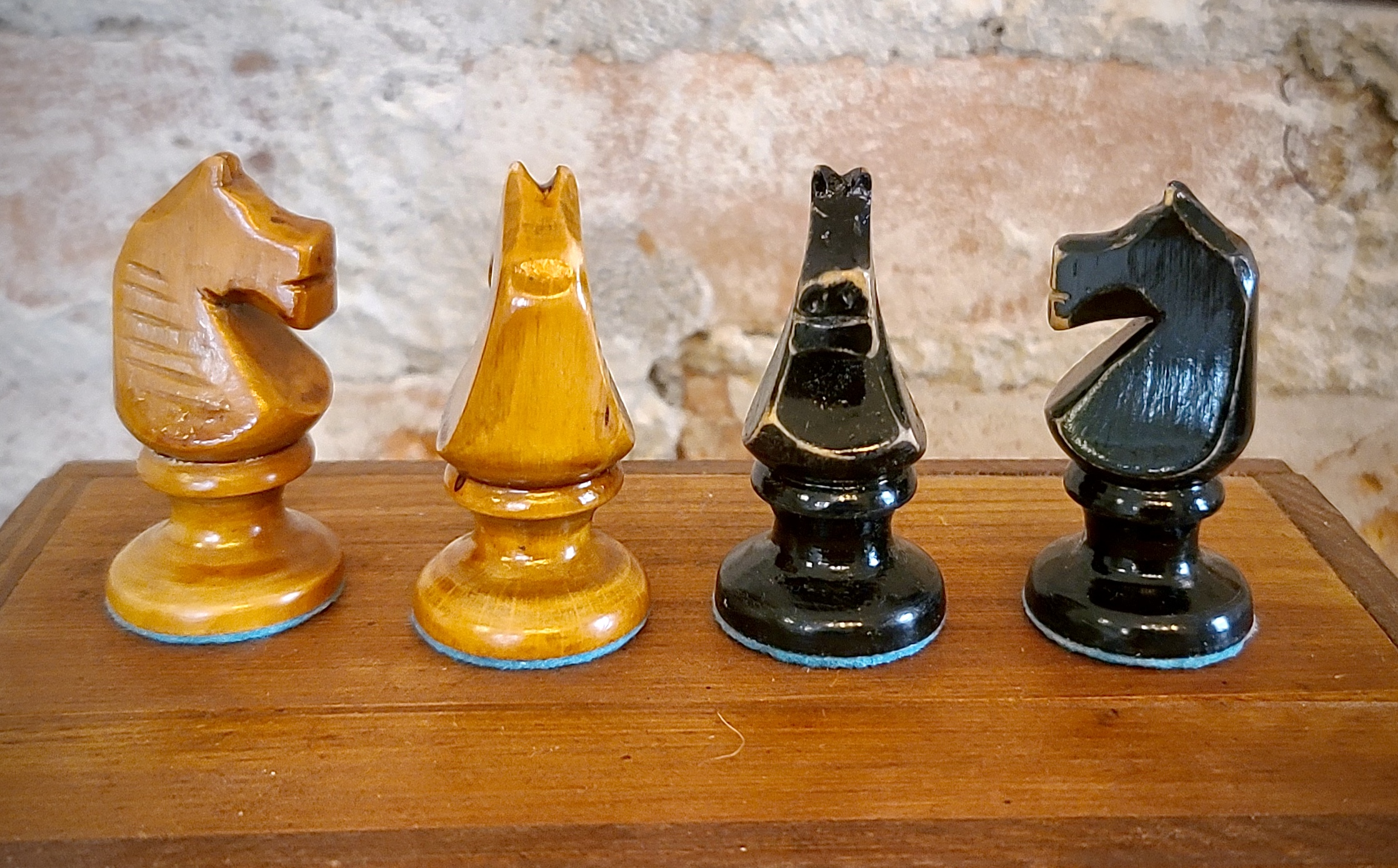
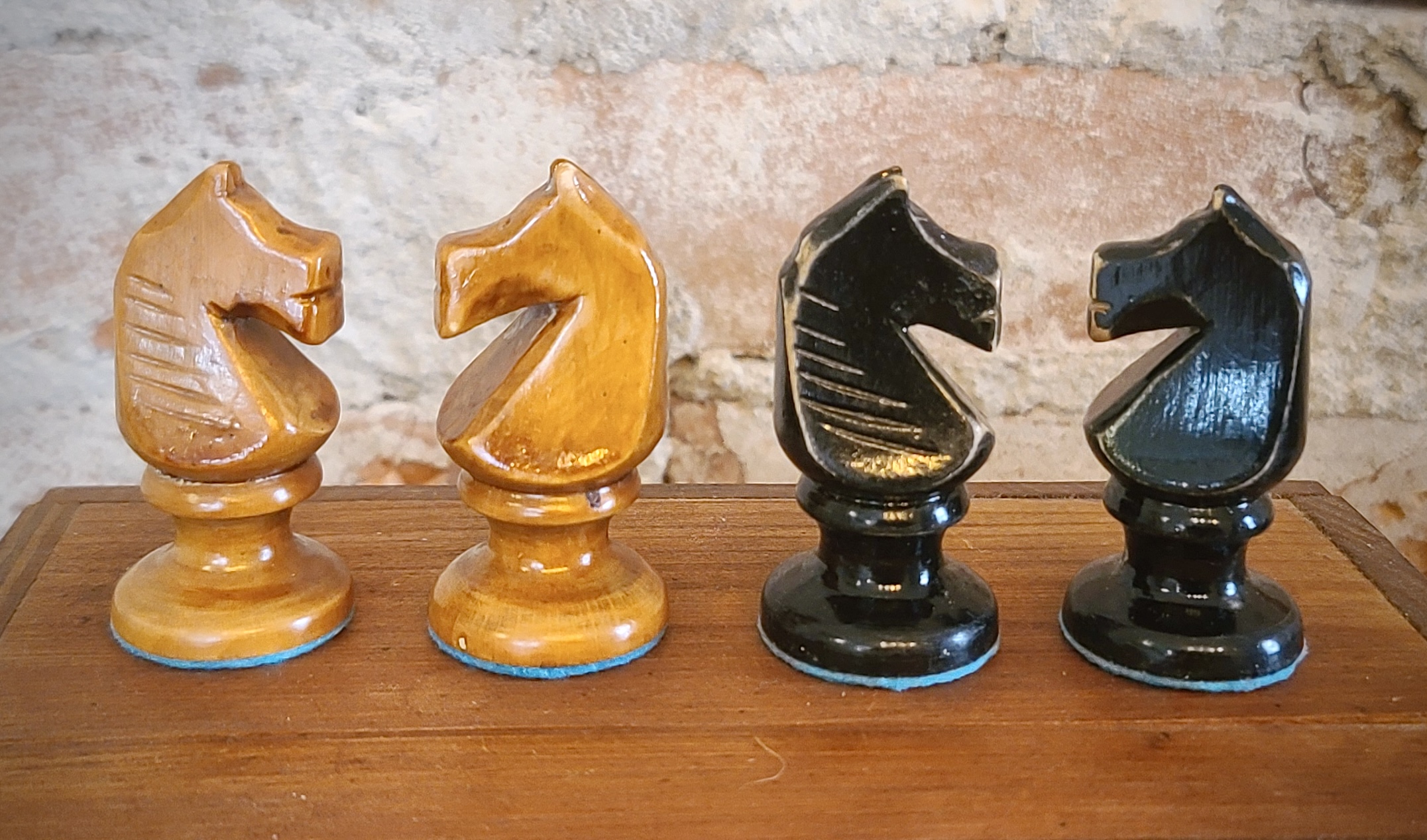
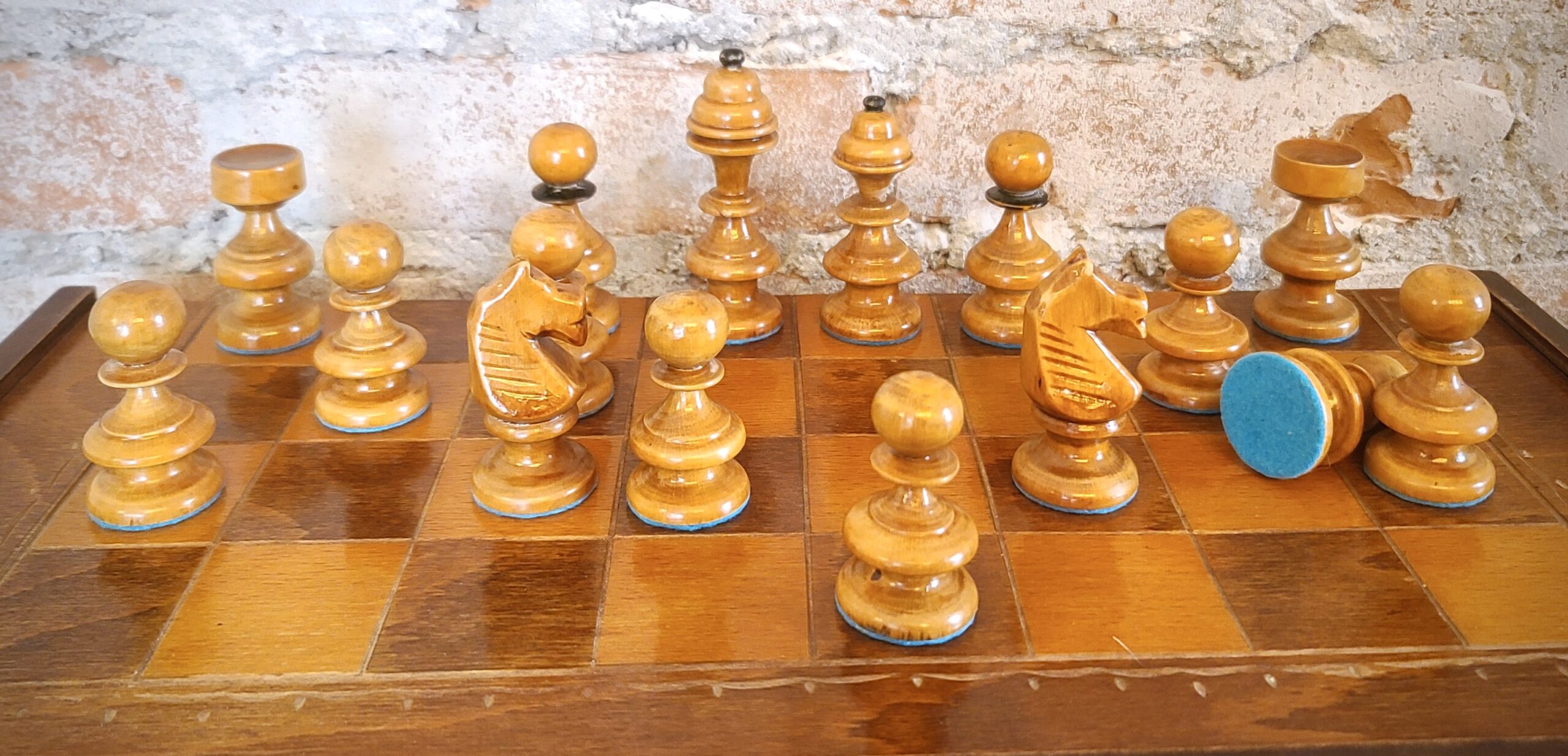
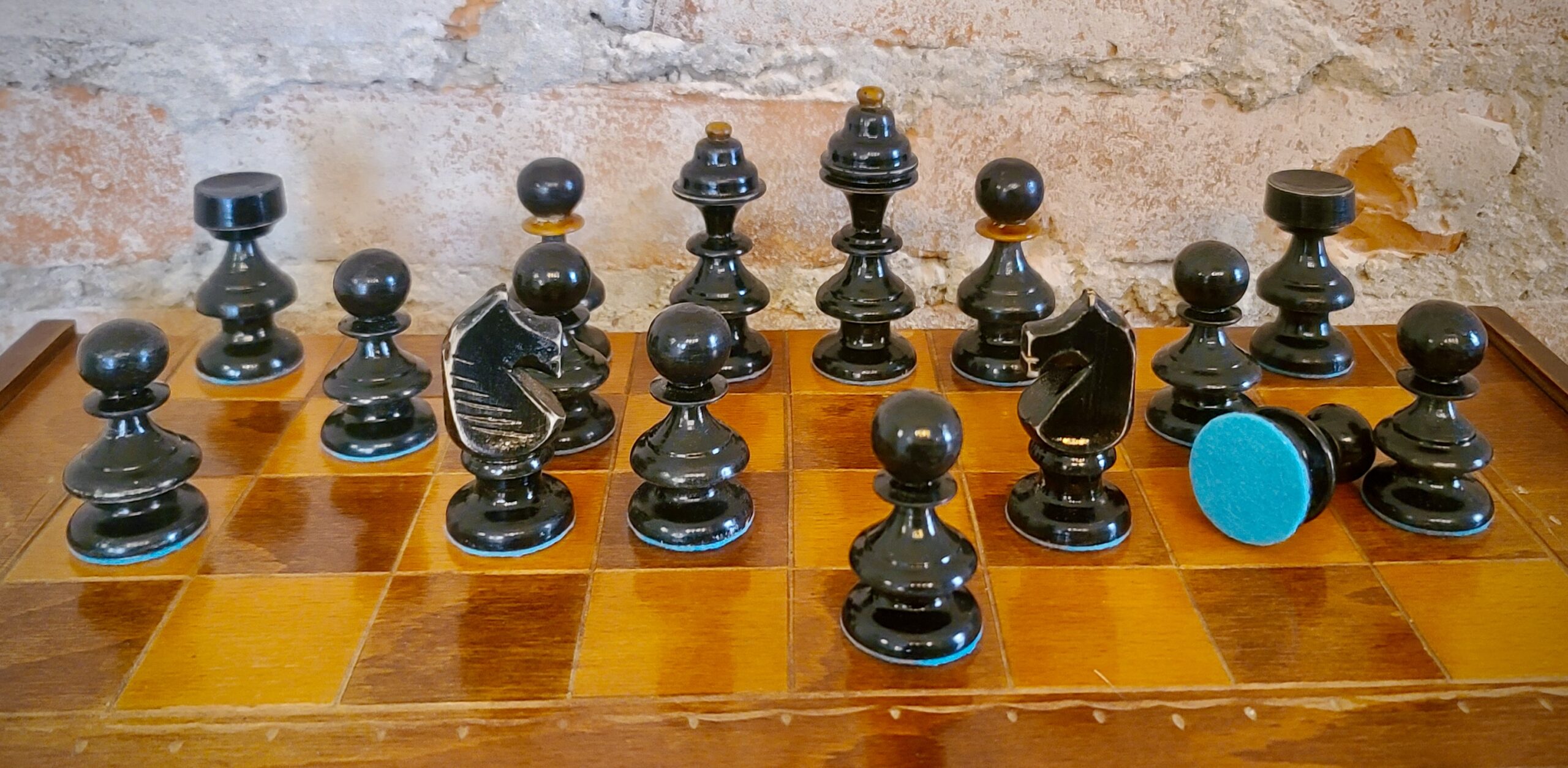
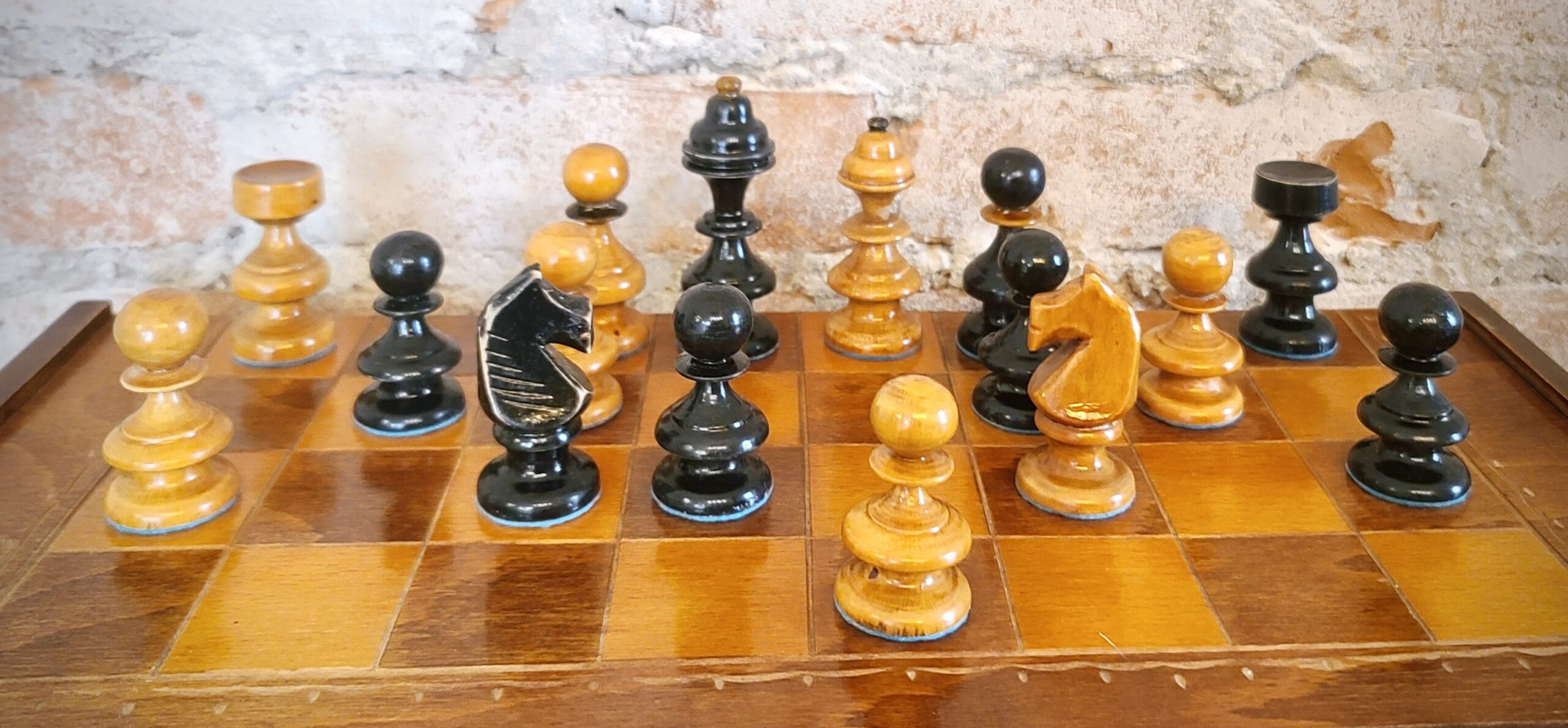
Romanian Legion (Legio Rumae); 32 weighted chess pieces without board, Romanian, wood, artistically reinvented and antiqued, amber vs. black, c.1975-1980
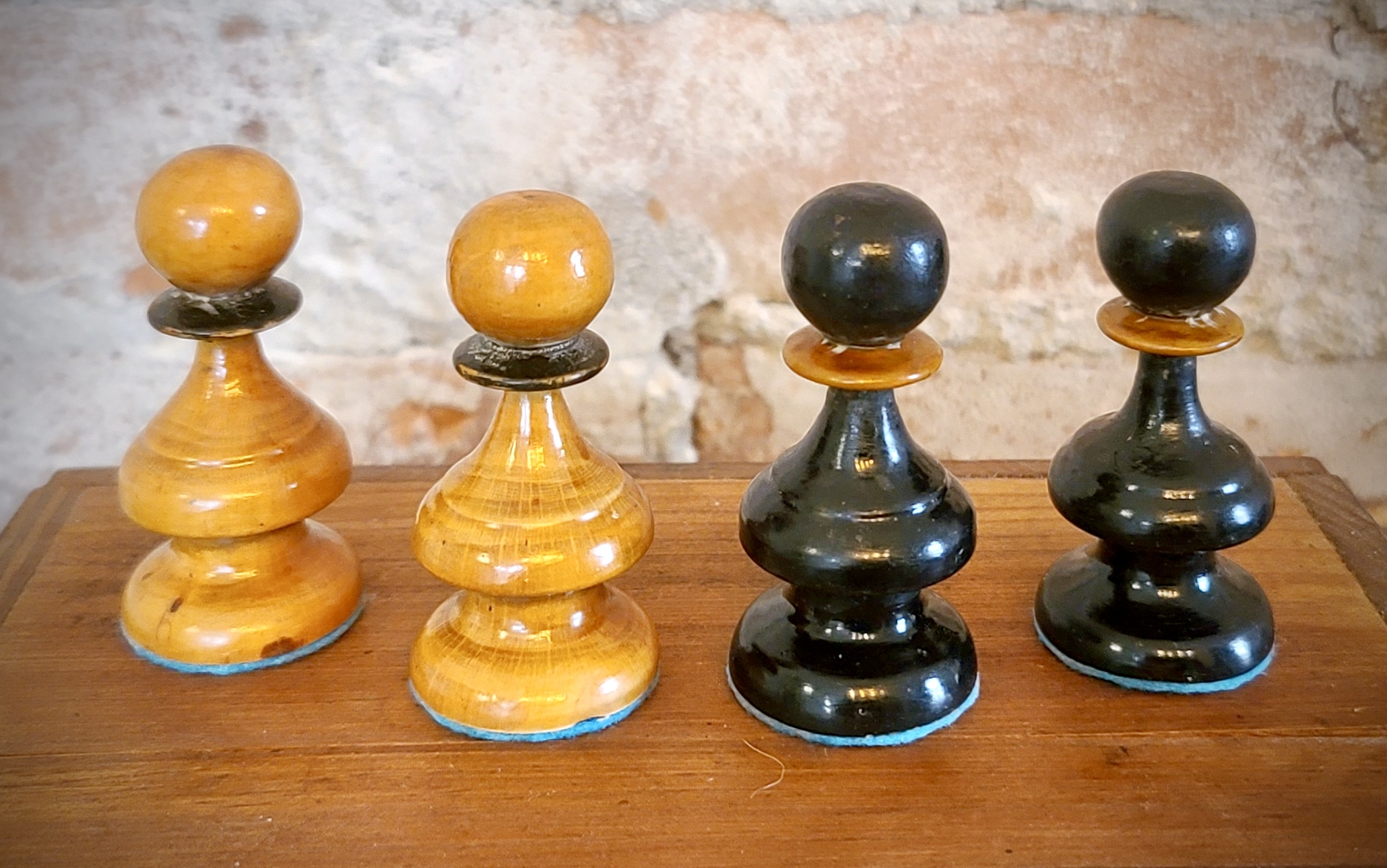
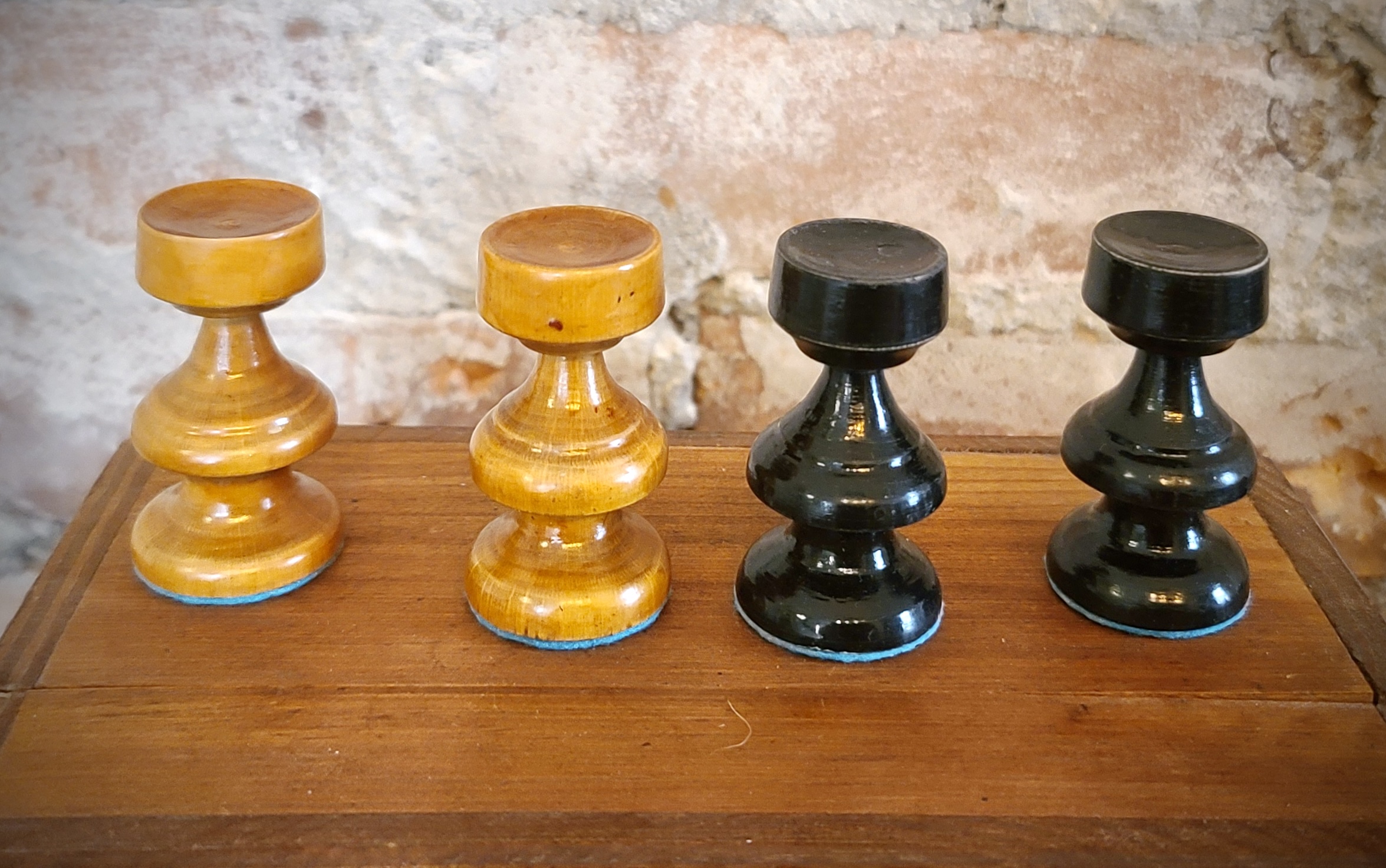
Height: King 3 1/2 inches or 8.8cm, weight 18g, base width 3cm; Queen 7.5cm 16g, Bishop 6.5cm 16g, Knight 6cm 16g, Rook 5.6cm 16g, Pawns 5.3cm 11g.
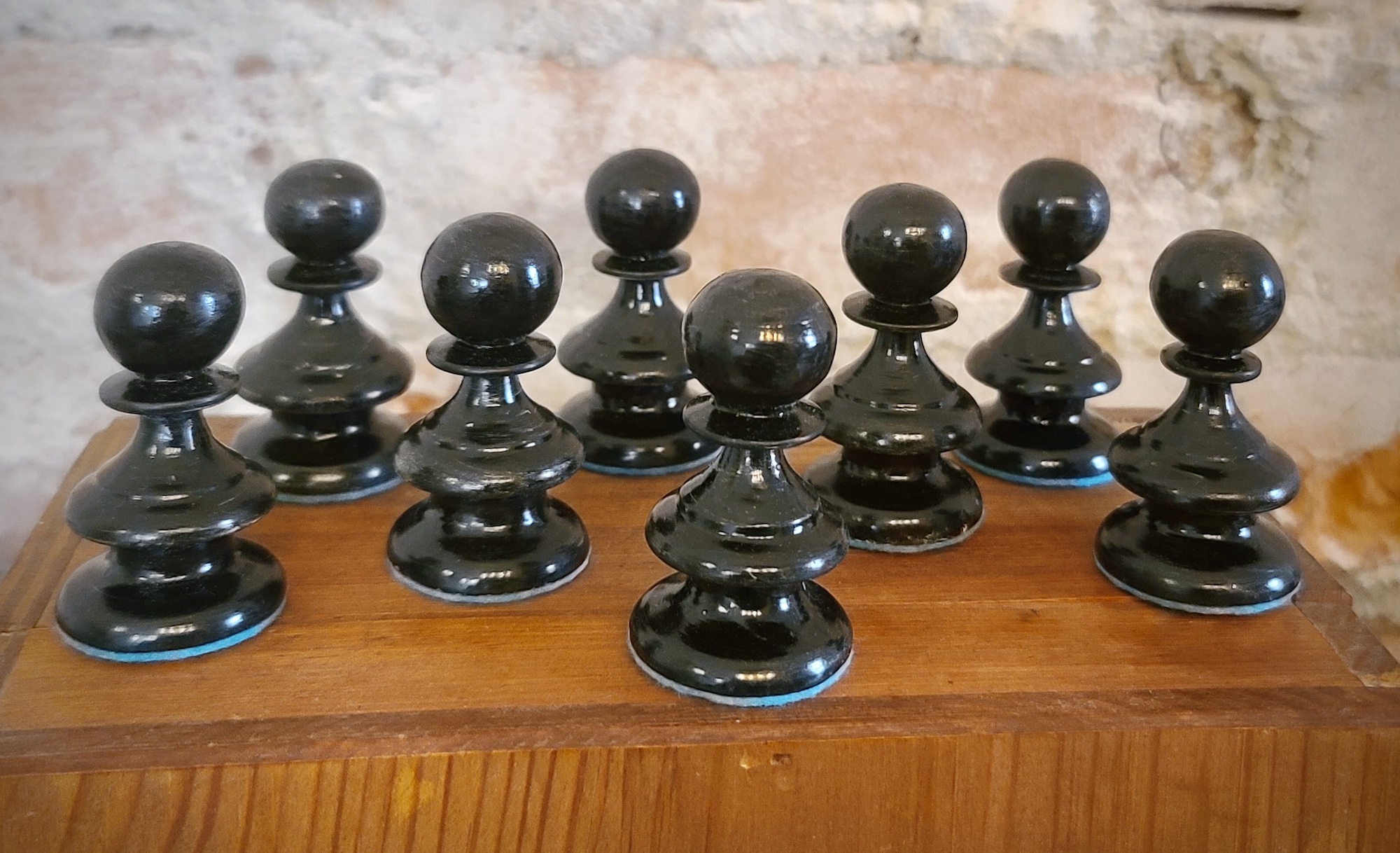
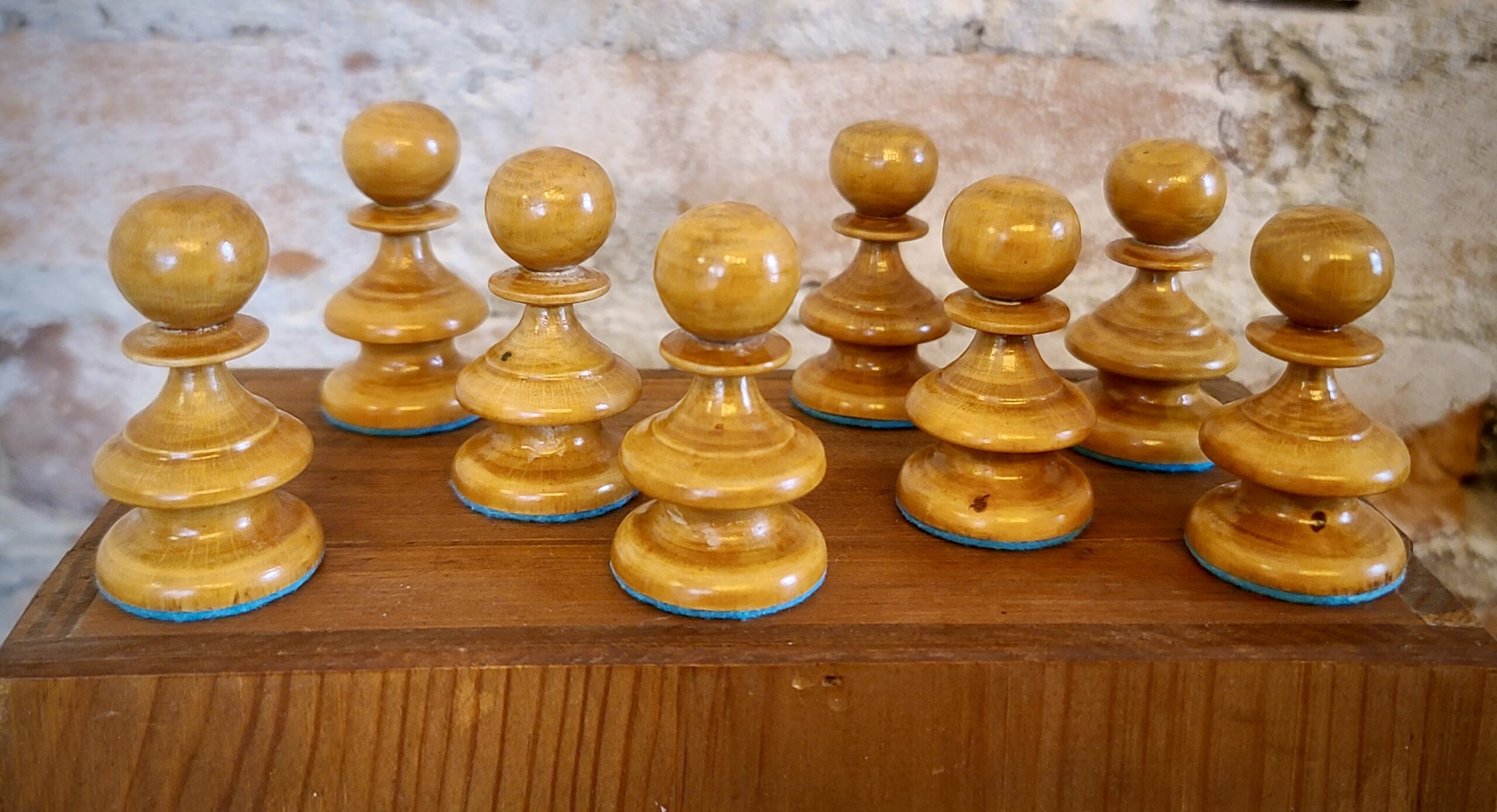
W: lush Romanian blue felt pads, B: same
Here we present a typical example of the Romanian take on the famous Austrian Coffee House patterns of the old Habsburg Empire – with a few twists along the way, of course!
The first twist is that weight has been added, as mostly all of the Kaffeehaus patterns, in general, are unweighted. This addition of weight makes them much more enjoyable to play with over the board as they feel more comfortable in hand, like the old tournament sets. Due to the shallowness of the bases, pipe weighing was used, distributing the weight evenly throughout the chess piece.
The second twist is the appearance of the bishops and royals. Normally, the bishops (called ‘fools’ in Romania) would have opposite coloured ball finials with only the upper portion of the collars painted the same colour as the dome – not something I’m a great fan of, quite frankly. Therefore, for this project, I thought I would ‘march out of step’ by keeping only the collars in opposing colours, giving the reversed colour theme a more delicate feel, whilst lending the set a unique twist at the same time. Likewise, the royals’ finials traditionally stay true to colour, but here they reflect the subtle collars of the bishops. And lastly, the tattered remnants of the original thin blue cloth pads have been replaced with traditional blue felt adding a noticeable splash of colour that compliments the antiqued patina above beautifully.
The light pieces are totally artistically restored. The dark pieces are partially restored.
In a conversation with some prominent Romanian collectors, several versions of this pattern were produced in the Rumanian ‘Nationalized Woodworking Factories’ under Socialist rule up until the early 1990s
The earlier patterns, that Dr. Holger Langer calls “Modern” Coffee House Sets, date from around 1965. These come with a “Western” cross on top of the king’s crown. These cross-finials fell out of favour after “a hardening of the [Socialist] Party’s ideology in Romanian society” (quote, Radu Dak) in the late 1970s.
The second version that Dr. Langer calls the “Political” Coffee House Sets (on his excellent chess-collection.de site) are sometimes referred to as “Coil-Heads” by Romanian collectors. These lack the cross-finials which were frowned upon by the authorities and the bishops have opposing coloured domes and collars. These sets are chunkier than the “Modern” patterns. Confusingly, later sets of the “Modern” pattern (called “Cross Finial II” by Romanian collectors) also carried the cross finial. This second wave began to appear in the mid-80s due to the gradual easing of some political restrictions and is noticeably “more 80s” in appearance.
Socialist Republic 1965-1989
Upheaval c1975-1978
Post-Revolution 1989-present
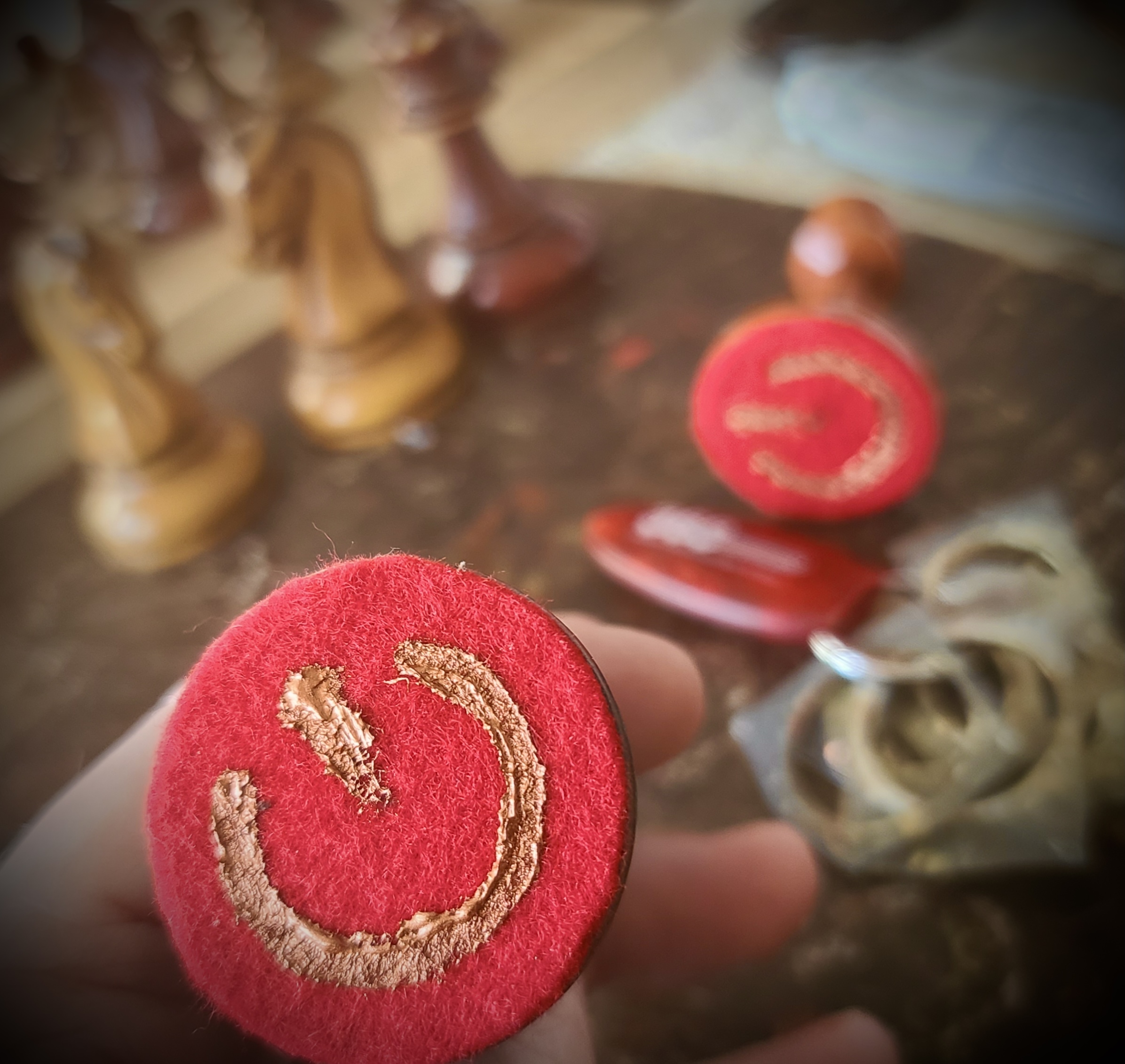
The pieces are UV resistant and ideal for display as well as casual play and both kings carry the hand-painted iridescent copper 2022 ‘Power’ signature of the artist on their bases.
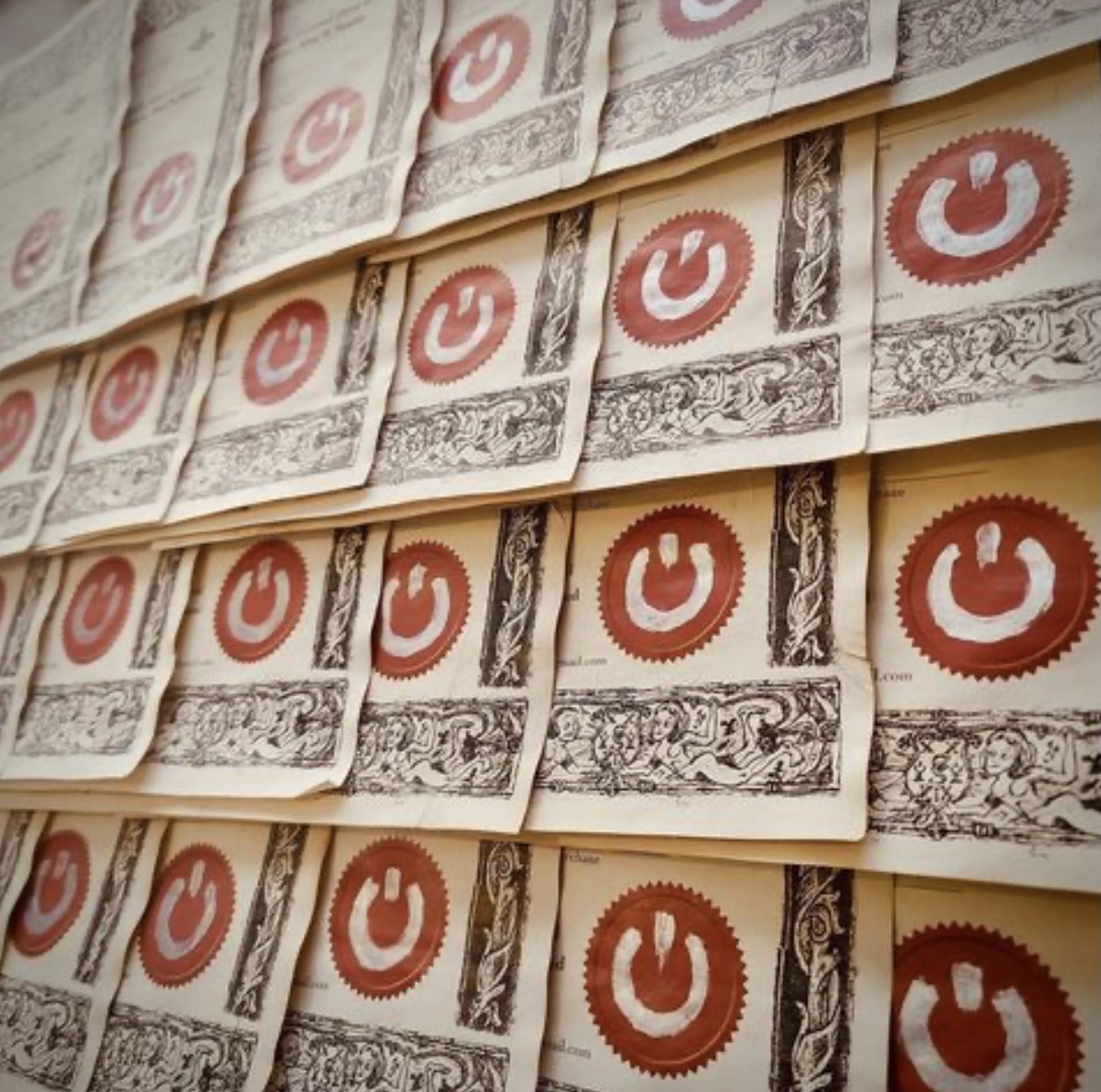
Each set also comes with a ‘Certificate of Artistry’ which will be posted separately once we tally up how many listings passed through our galleries in 2022. “All good things …” as the wise man said.
See the Jan. 2022 chessay on our All About Chess page for more info on the certificate.
Ref Code: LR22