



*SOLD* Modernae Rus (Modern Soviet); Constructivism Chess Set with Native Board, c.1930
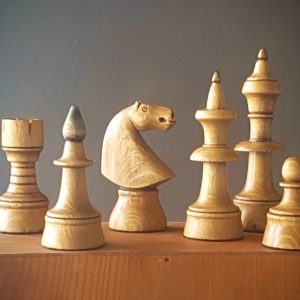
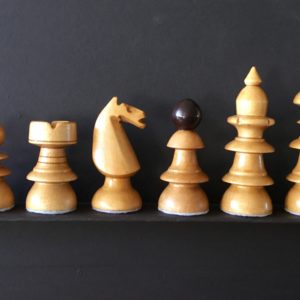
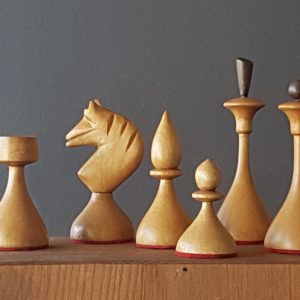
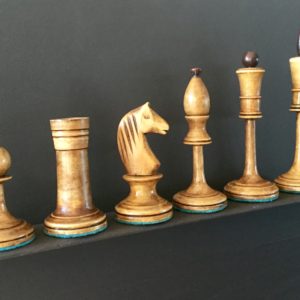
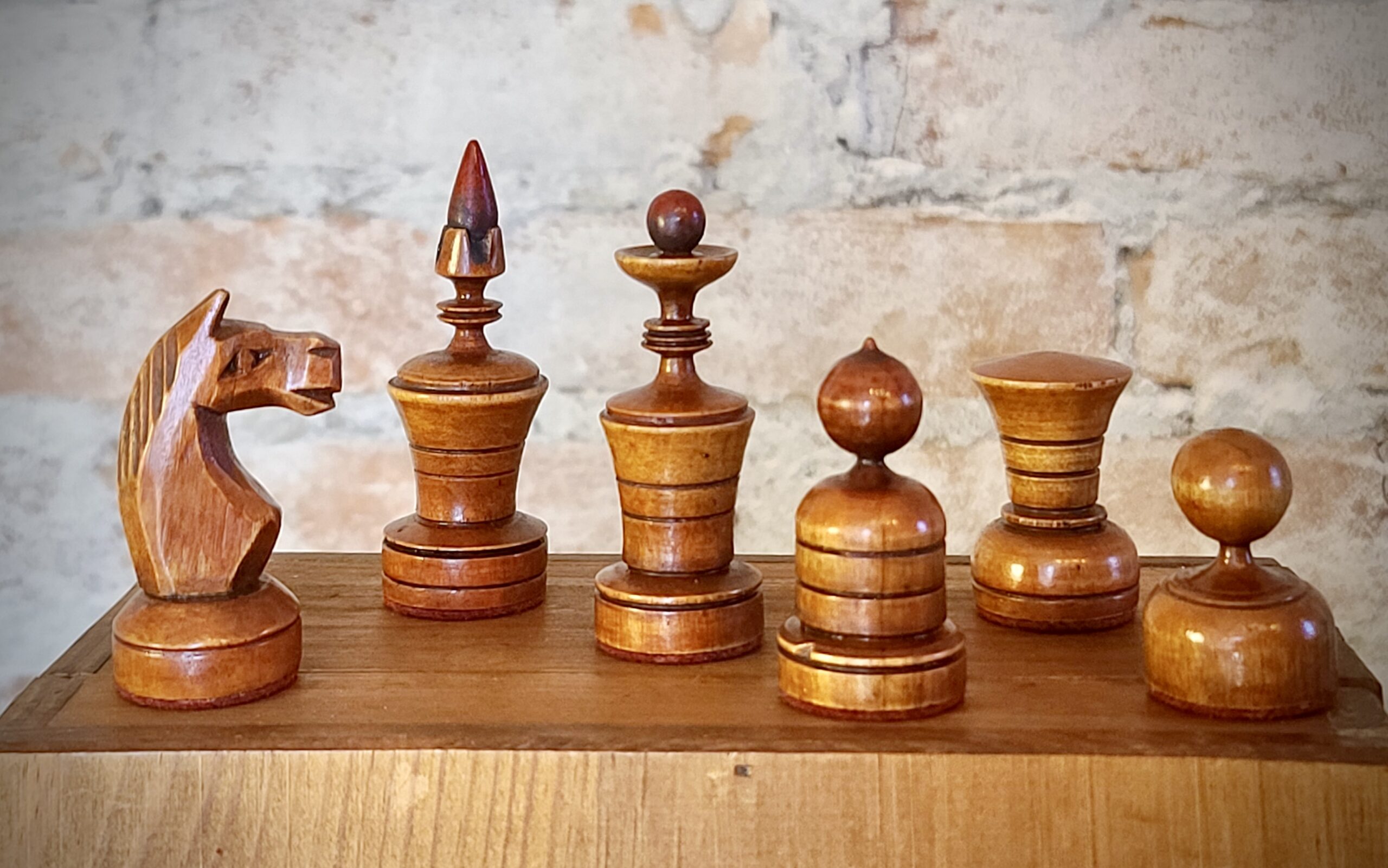
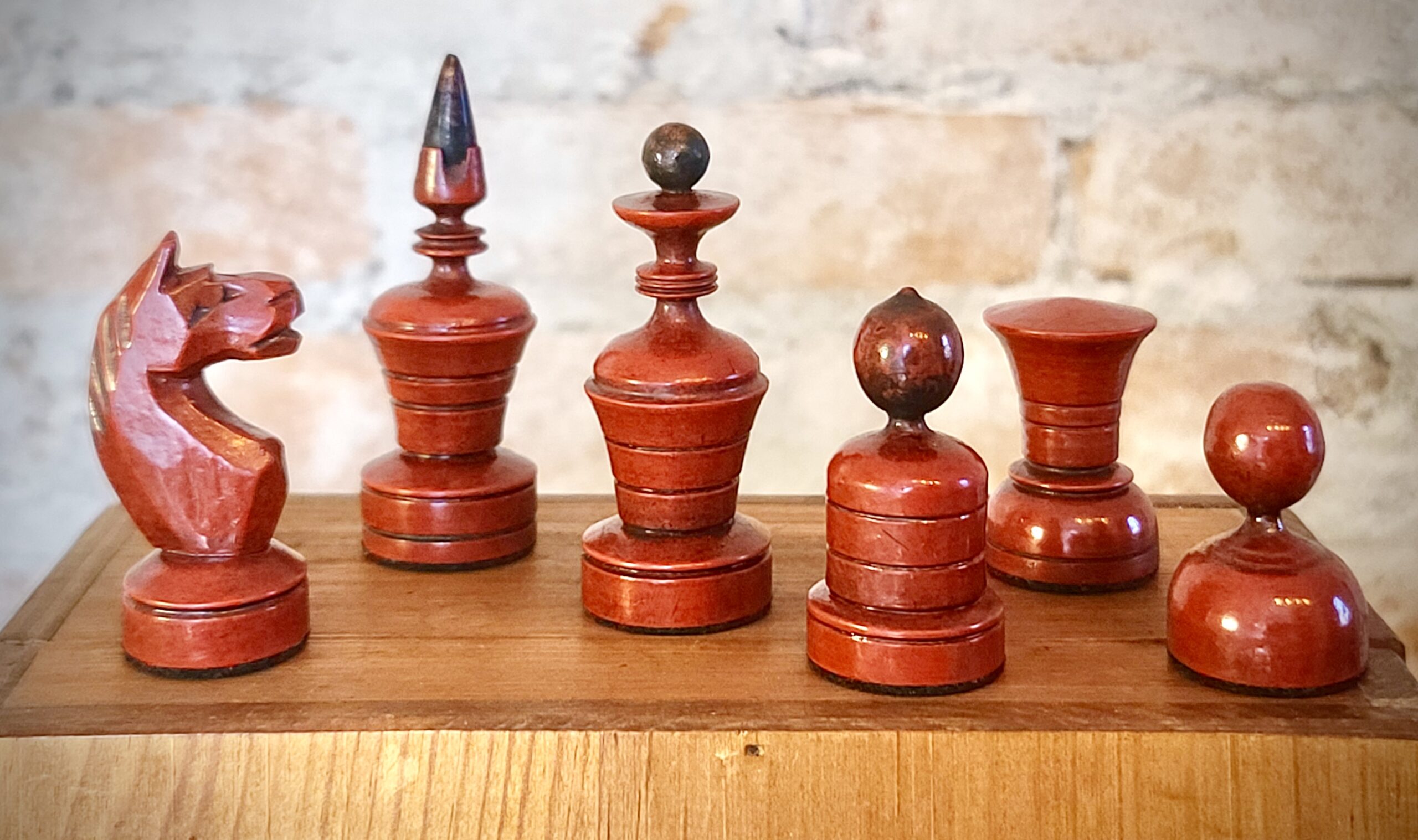
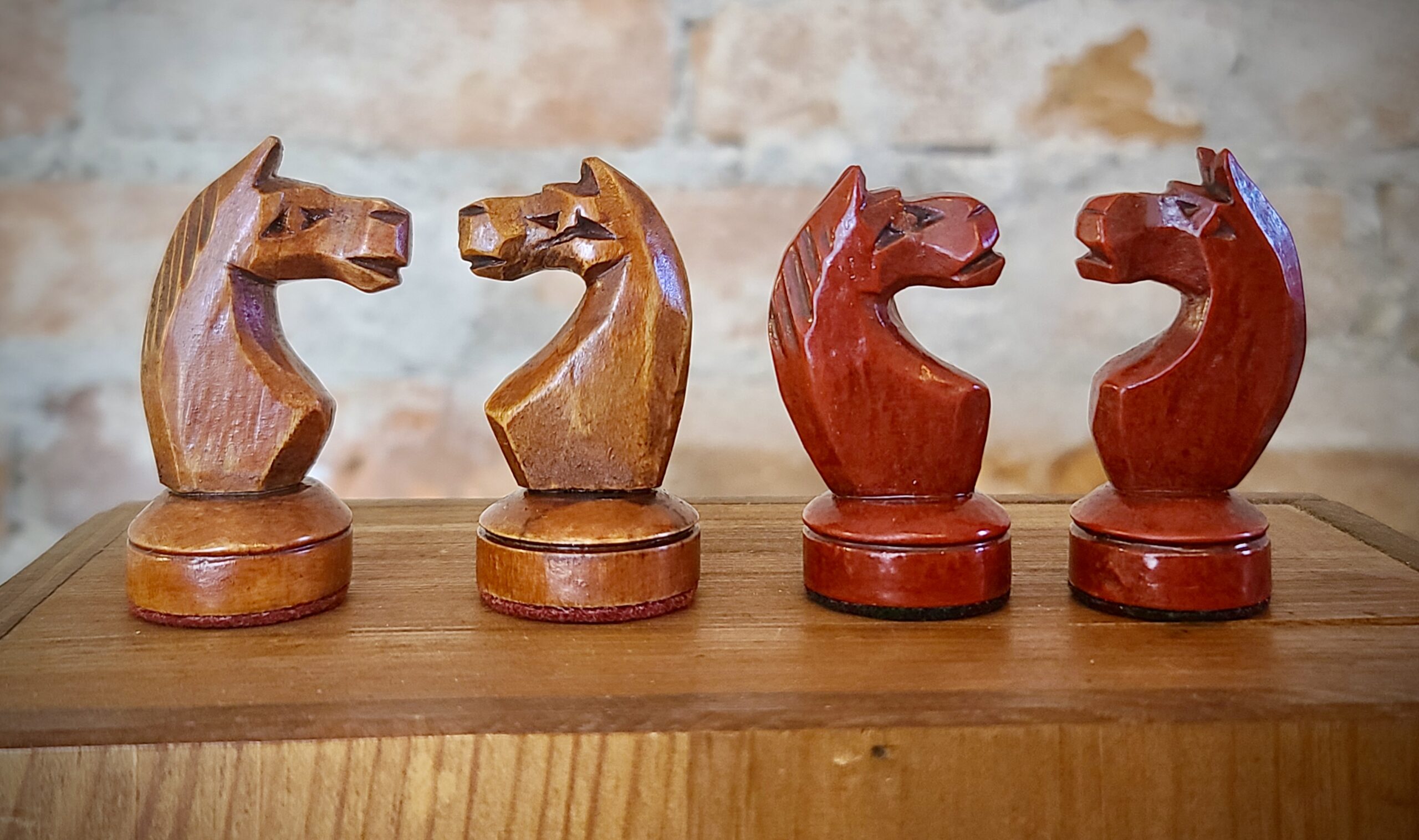
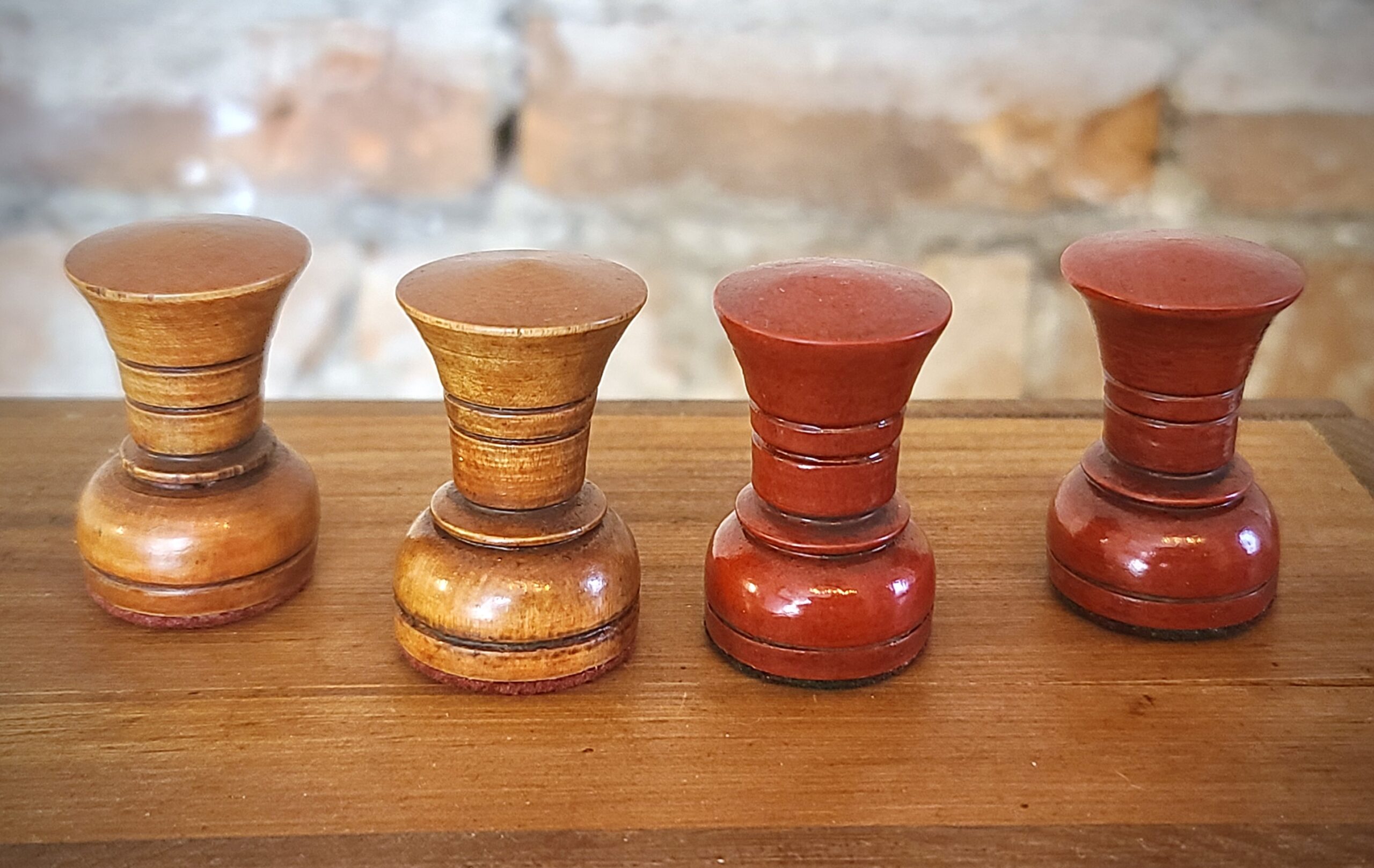
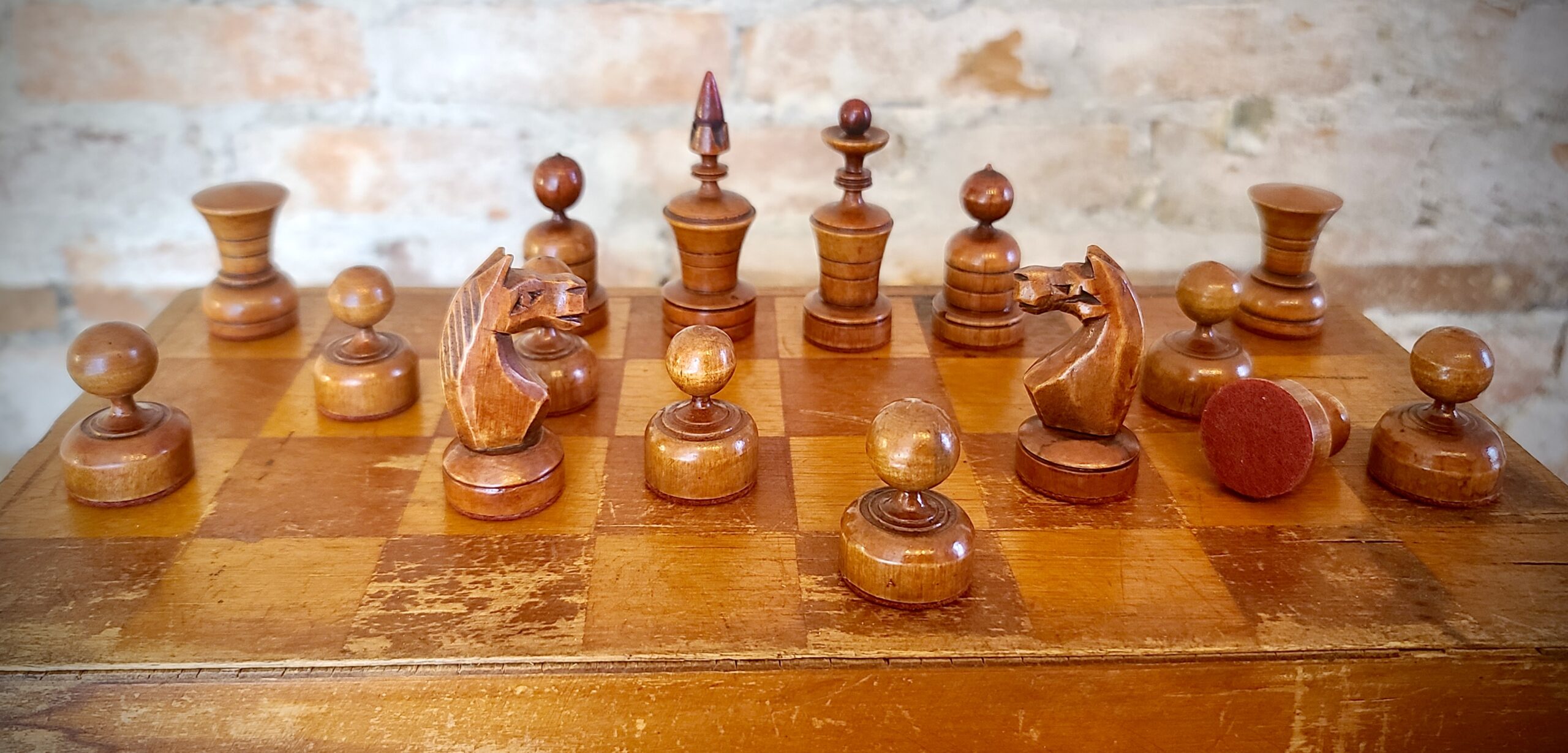
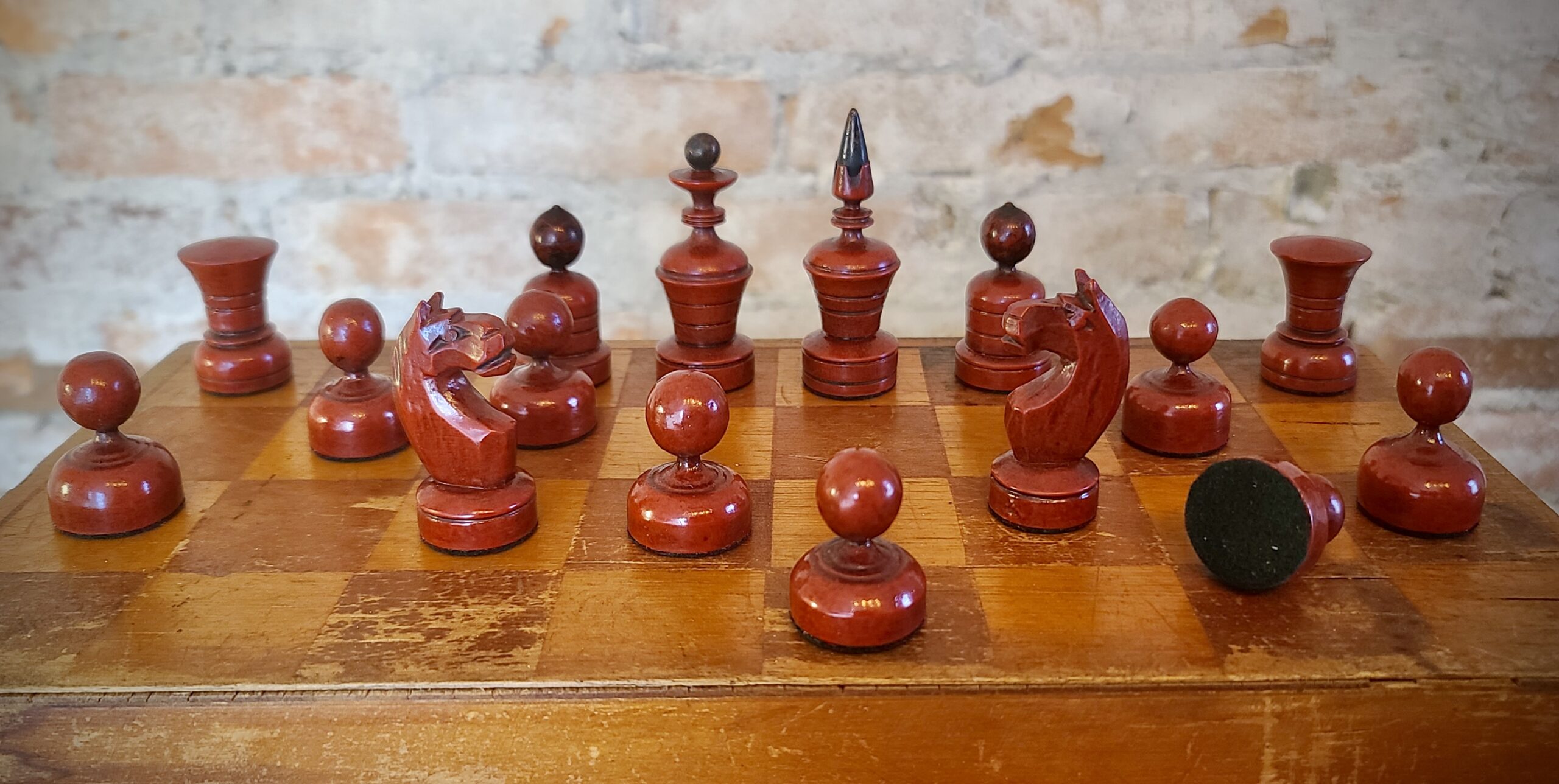
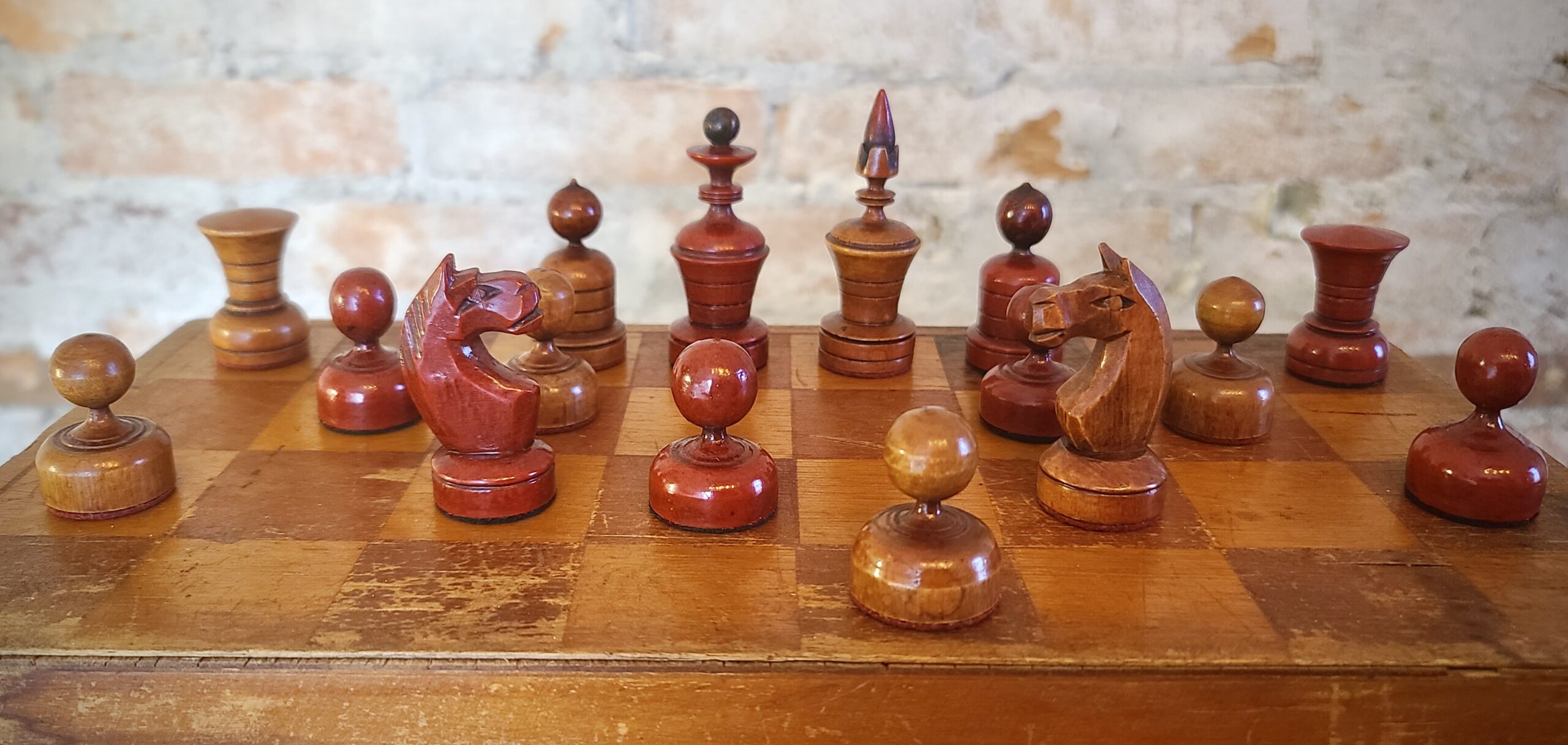
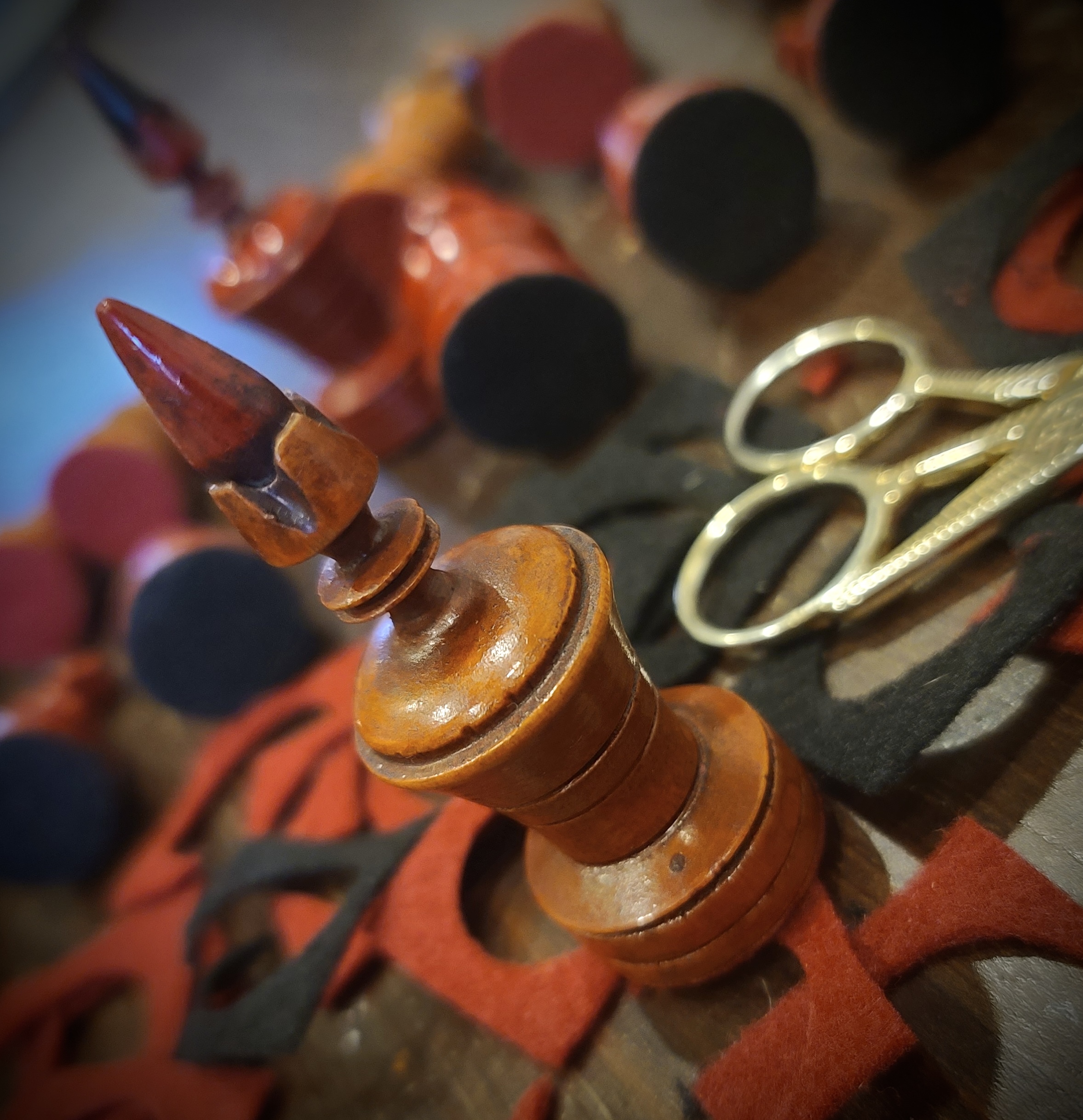
Modernae Rus (Modern Soviet); 32 vintage chess pieces with native board, wood, naturally weighted, light brown vs. red, artistically reimagined, c.1925-1940
Height: King 8cm, weight 13g, base width 2.7cm; Queen 7.3cm, wt. 13g; Bishop 5.2cm 10g, Knight 6cm 9g, Rook 4.2cm 10g, Pawns 4cm 8g.
W: Lush burgundy felt pads; B: Lush black felt pads
Vintage Folding Soviet Board: Squares 4.5cm. The board is in vintage condition and has been purposely selected to compliment the finish of the chess pieces. Total size: 37cm x 37cm.
As if to outrage traditionalists, this unparalleled Soviet design emerged during the 1920s, just a few years after the Great October Revolution of 1917. To me, the design reflects the rise of the Hypermodern school of chess, or the ‘scientific’ era, when the likes of Nimzovitch, Reti and the great Alekhine engineered a new train of thought that would lay the foundation for modern-day chess. These modern chess-thinkers inspired artists like Man Ray, DuChamp and Hartwig to design their sleek, modernist, geometric sets of the 1920s, who perhaps went on to inspire the anonymous artist who created this ‘Modern Soviet’ set?
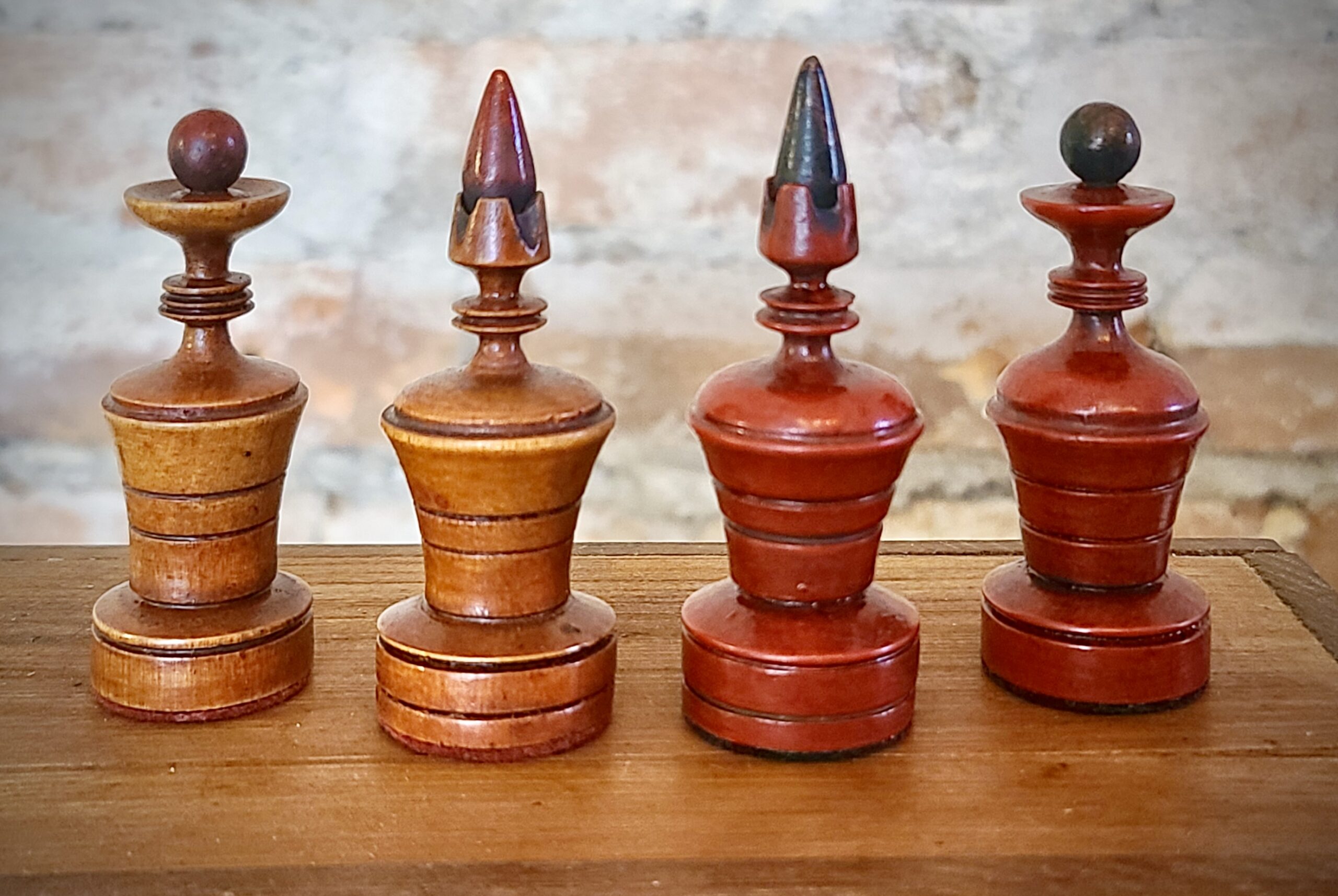
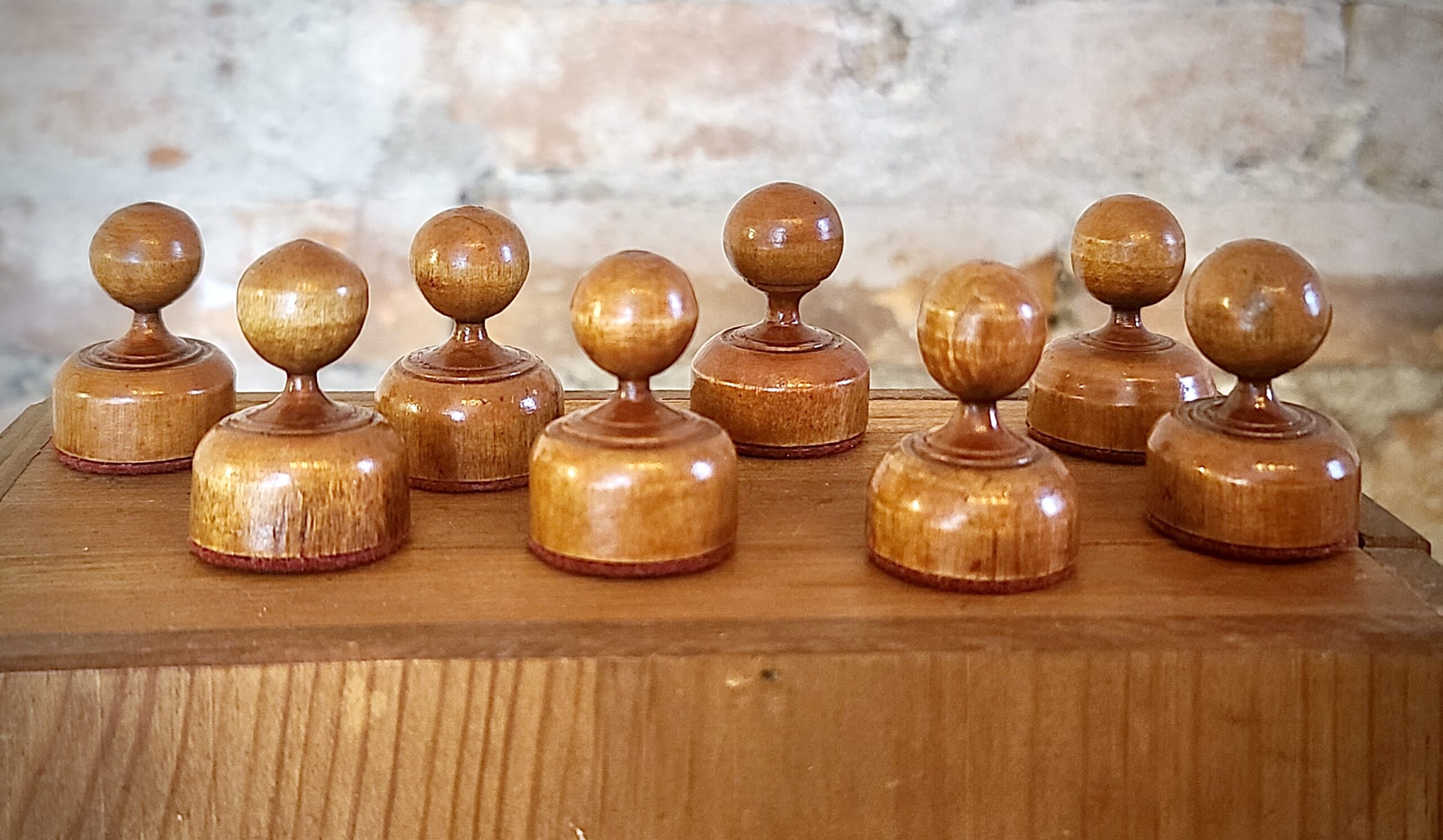
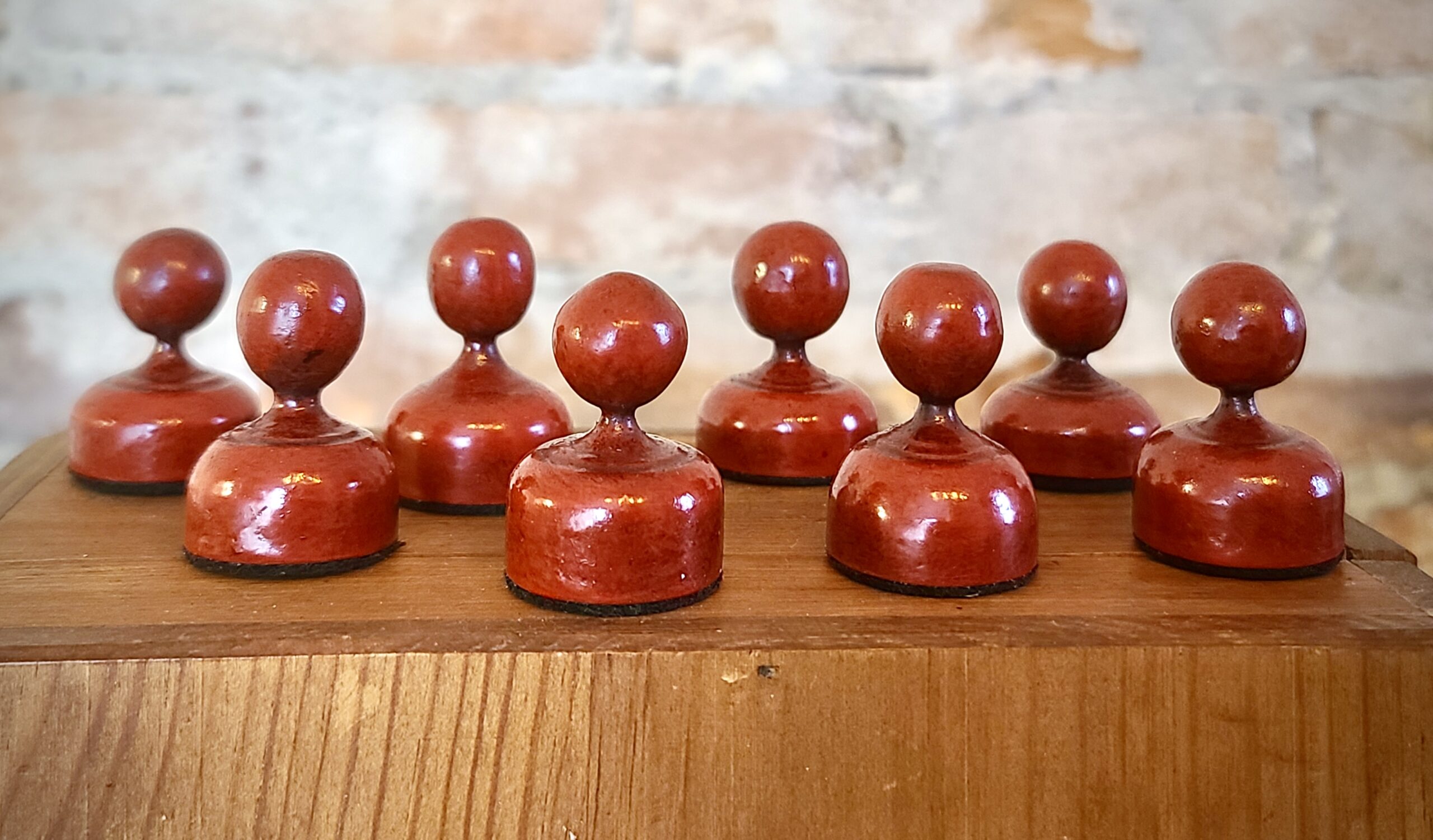
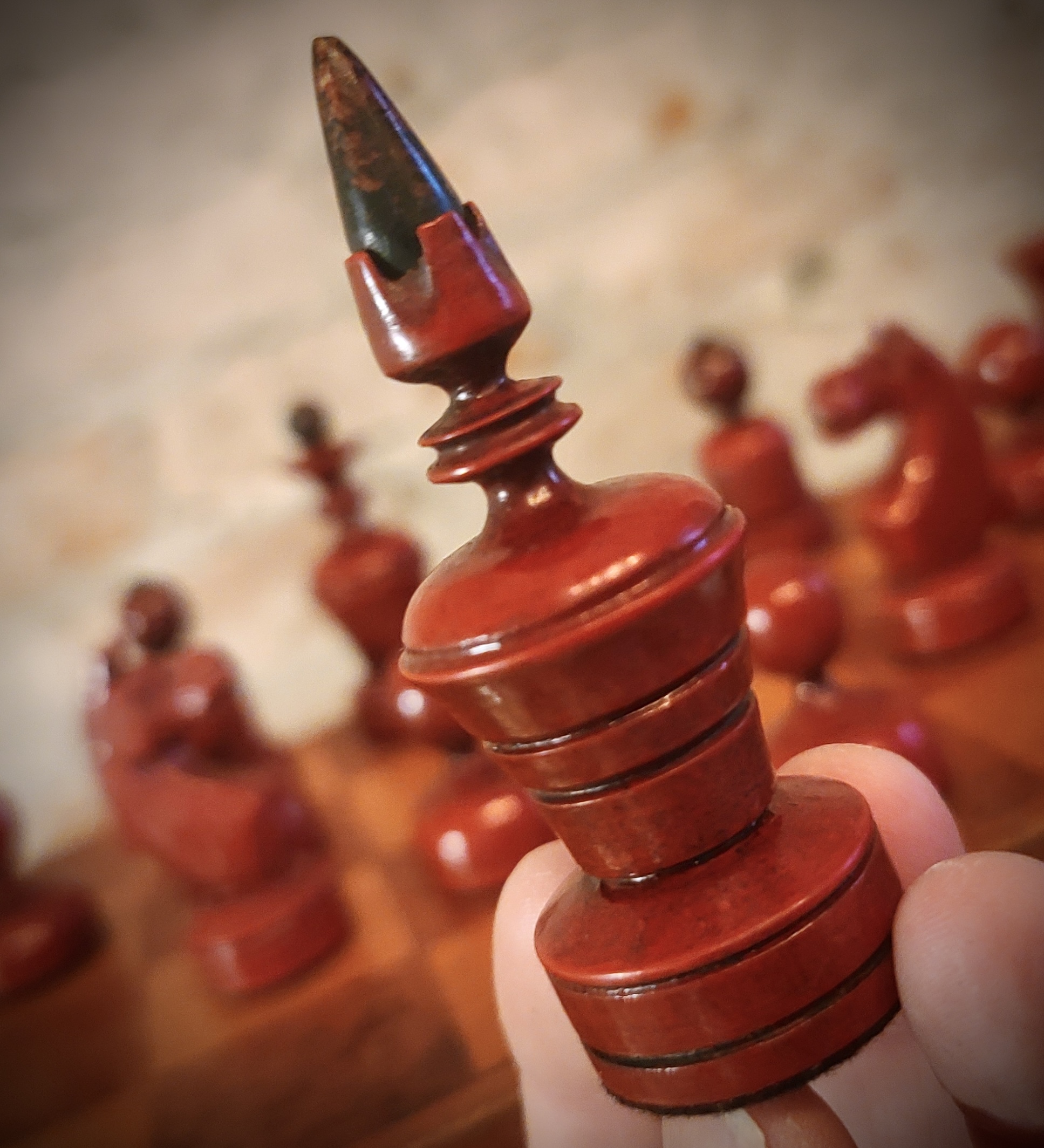
The pieces have a charming functionality about them, no doubt inspired (as Chuck Grau notes on his informative website sovietchesssets.com) by the Soviet Constructivism movement that emerged, like these pieces, just after the Revolution. Flying against convention, the barrels of the rooks and royals taper gently outwards like a growing idea or political movement. The bishops are topped with an orb instead of a mitre, a declaration of anticlericalism, perhaps, taking on the nomenclature of ‘political instructors’ rather than bishops, much like in the Soviet chess variant, Victrix, born of the same era. If the bishops are instructors then the pawns are their Red Army recruits which melt into the battlefield, much like the pawns from the iconic Soviet Valdai Nobles chessmen of the 1940s.
While maintaining the integrity of the original design, I have made a few minor improvements. The rooks and kings have been raised a few millimetres and the knights lowered. The confusion between bishops and pawns has been address with the aid of subtly coloured ball finials for the bishops, which reflect the finials of their respective royals. The original colours of the set were red vs. black. The black pieces are now the ‘red’ side, while the original red side is now the light side, having been stripped and restained using the original red colour (remnants of which were used as tint for my stains) as inspiration.
If you are looking for a thoroughly playable ‘one-off’ Modern Soviet chess set, then look no further – your search is over!
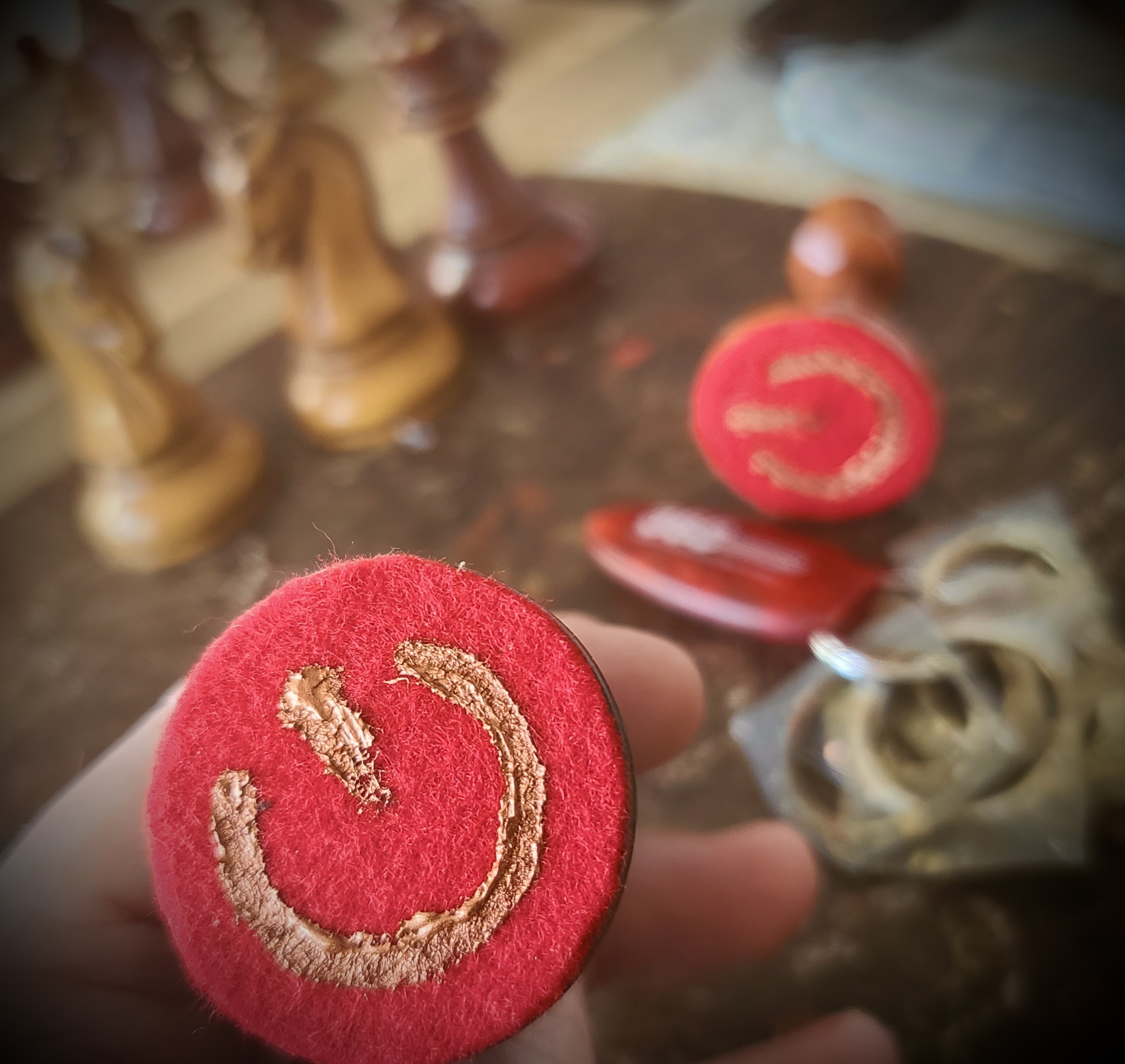
Both kings carry the hand-painted 2023 IRIDESCENT PEARL ‘Power’ signature of the artist on their bases and are accompanied by our unique ‘Certificates of Artistry’ which are posted on separately, once we tally up how many sets passed through our galleries in 2023 – “All good things…” as the old saying goes.
Photo Source: sovietchesssets.com (see Grau’s article ‘1920s-1930s Constructivism Influenced Soviet Chess Sets’)
BB23