
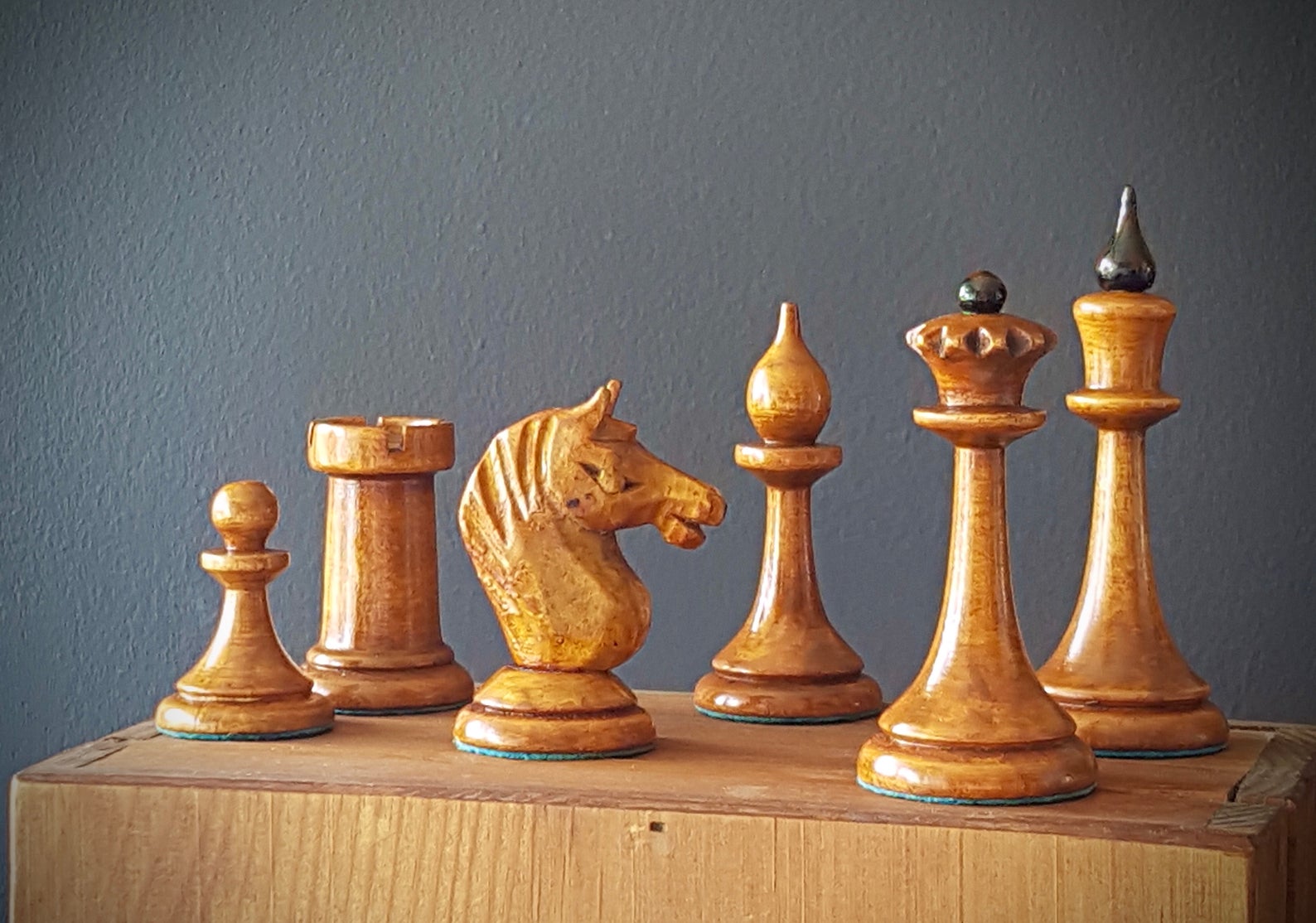
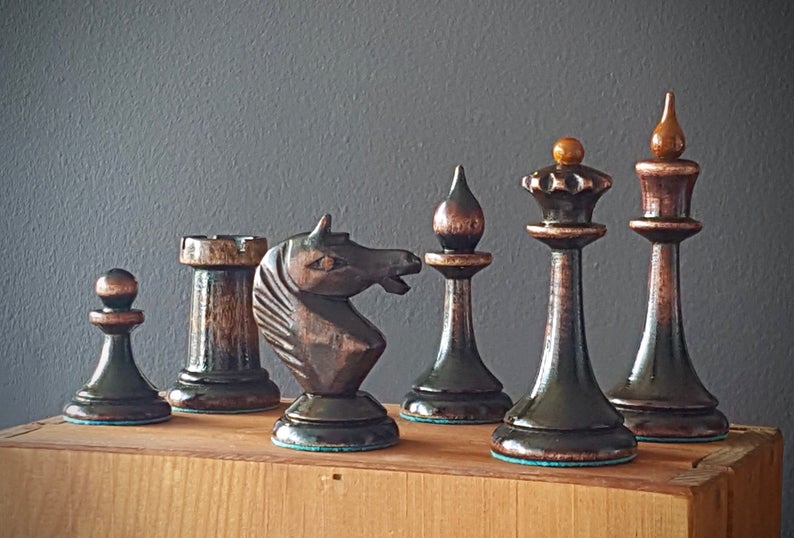
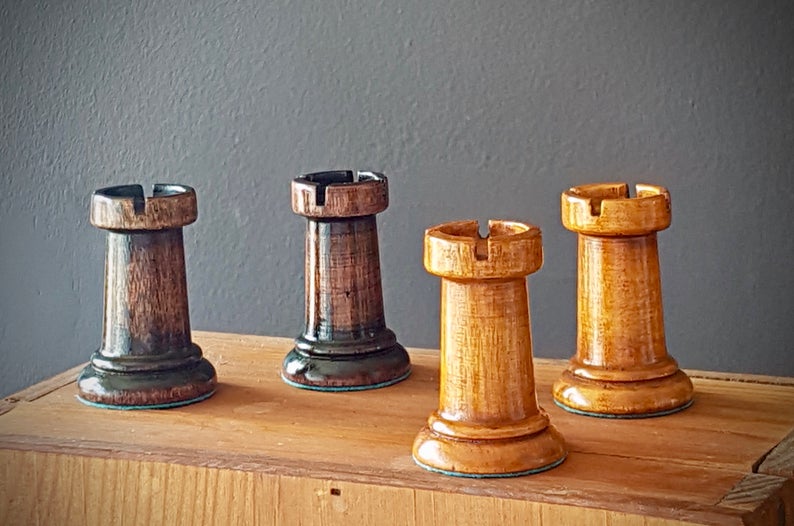
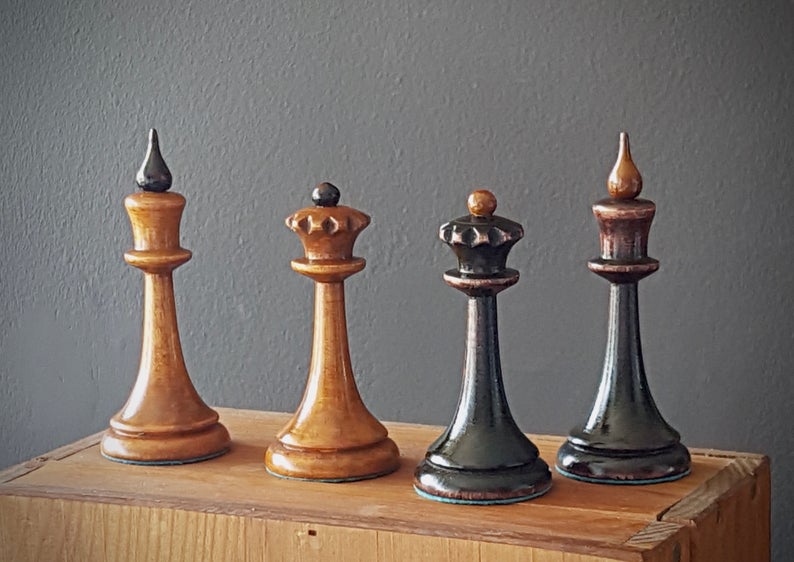

*SOLD* Michaelis Militiae (Misha’s Militia); Soviet ‘Mordovian Style’ Ivanovo Chess Set, c.1955
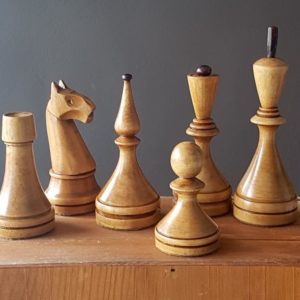
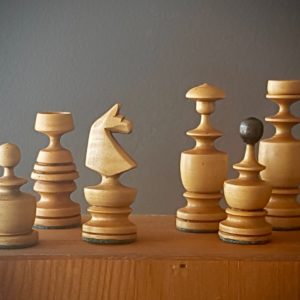
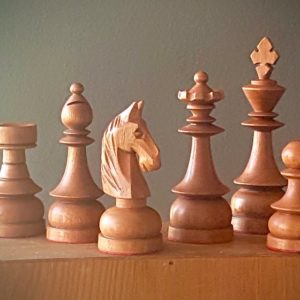
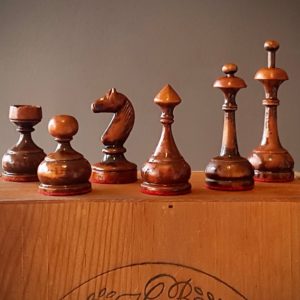
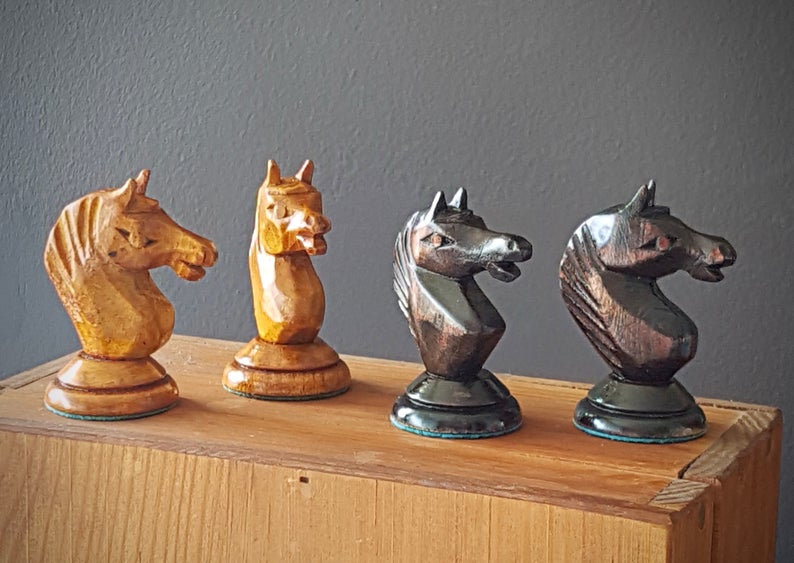
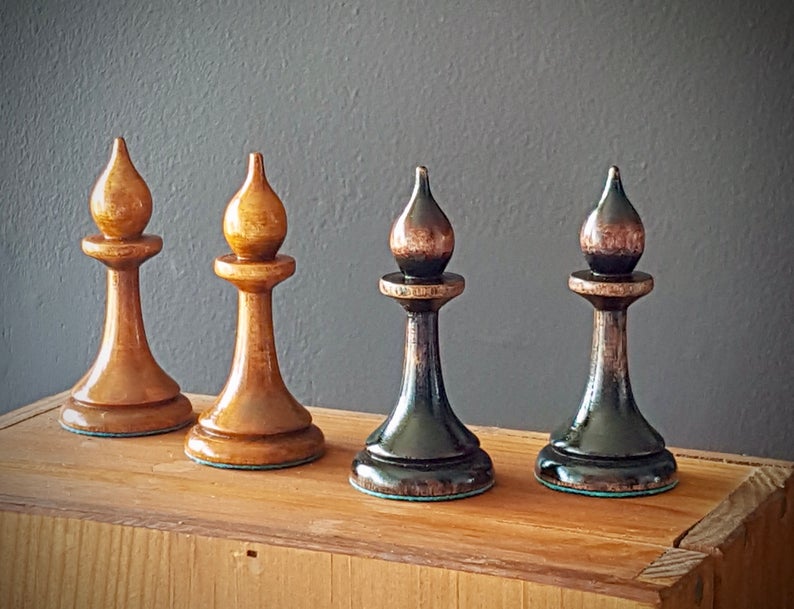
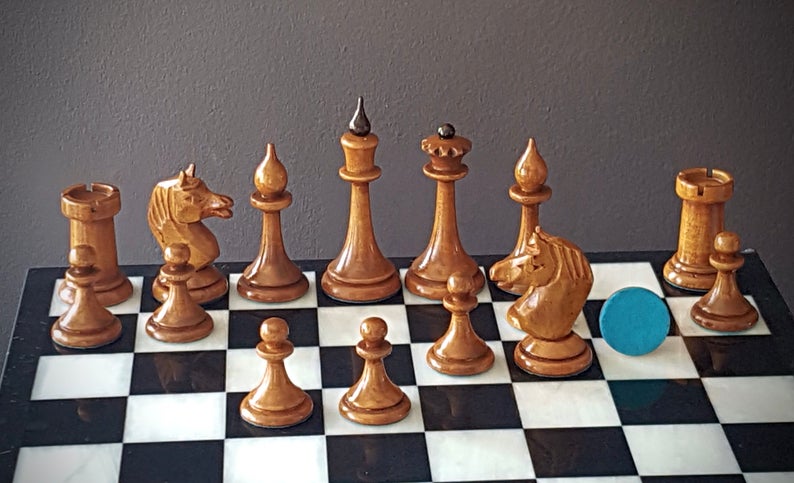
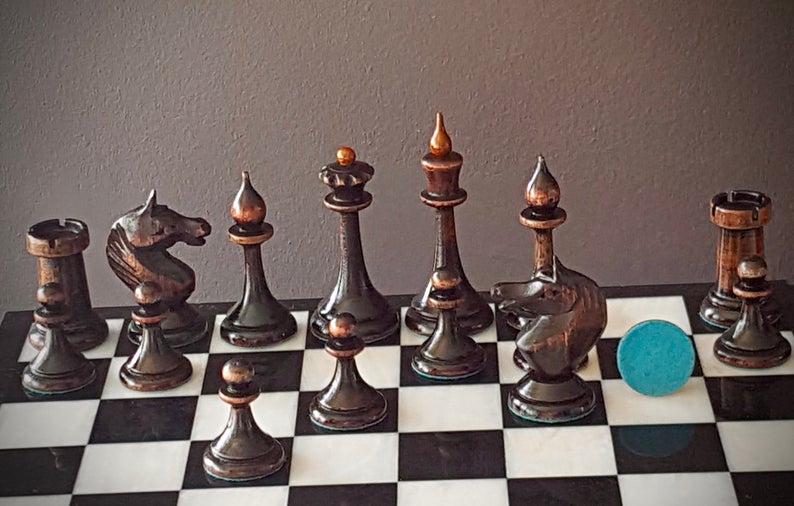
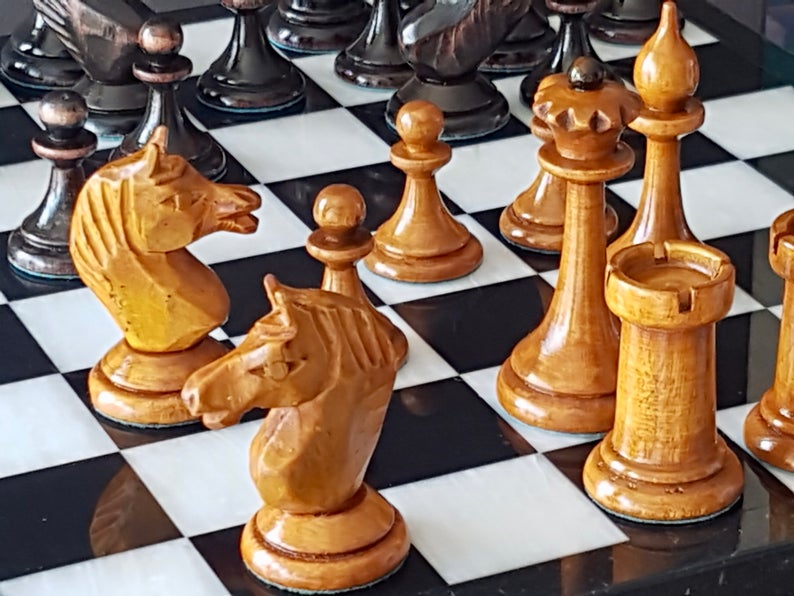
The iconic ‘elbow-shaped’ knights (a slightly earlier form of the more popular “Tal” design pictured in the link below) have a rugged simplicity about them and are very comfortable in hand – even more so with this set, which has been lightly weighted lending them added substance on the field.* The simple tear-drop mitre of the bishop can only be inspired by Moscow’s Saint Basil’s Cathedral and its “towering domes shaped like the flames of a bonfire rising into the sky” (A. Ivanov, The Tsars p.100). A vivid analogy I bore in mind when layering the fiery amber hues over the lighter side of this set. Which, if you follow The Chess Schach on social media, would know were inspired by the white knights. When they came to me the bases of the knights and the rest of the white pieces in general were lighter in colour and had a somewhat less attractive patina. The decision was therefore made to strip down the set and colour-match them to the finish of the stunning white/amber knights – a decision, that in my humble opinion, has resulted in a stunning set all ’round! And a quite historic one to boot.
The pieces are UV resistant and ideal for display, as well as casual/blitz play. Both kings carry the hand-painted iridescent silver signature of the artist on their felt bases.
Ref code: MM20