



*SOLD * Magna Dominus (Grand Master); Classic “Grossmeister” Soviet Tournament Set, circa 1965-1980
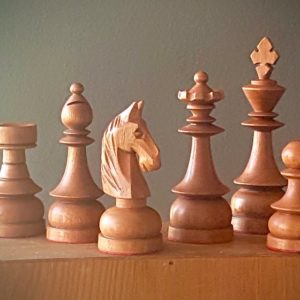
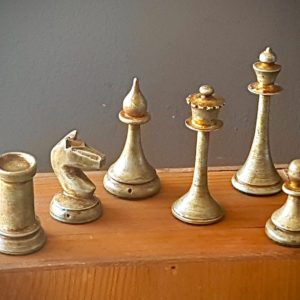
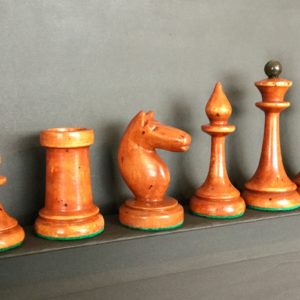
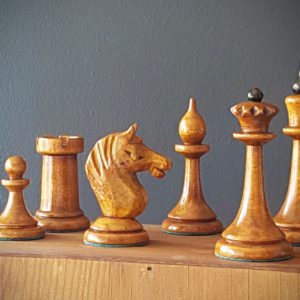
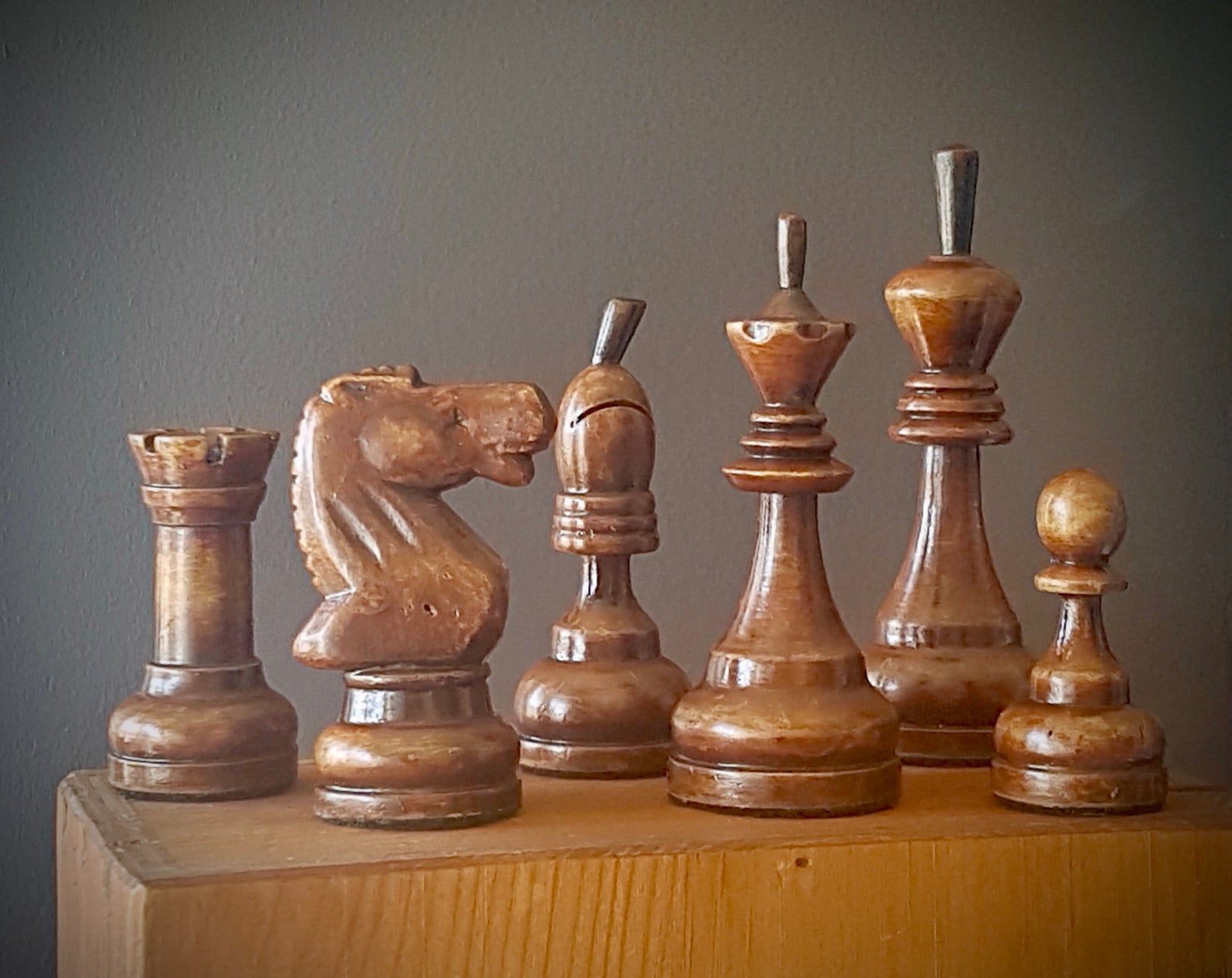
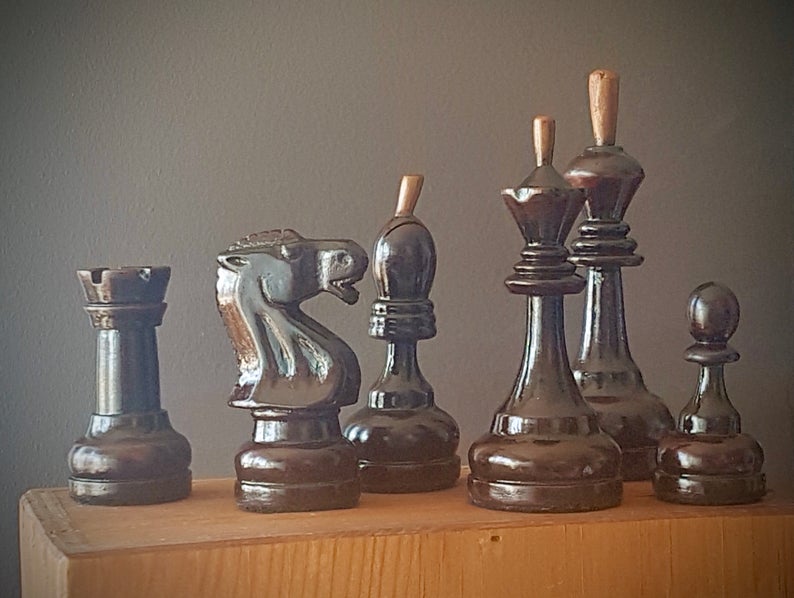
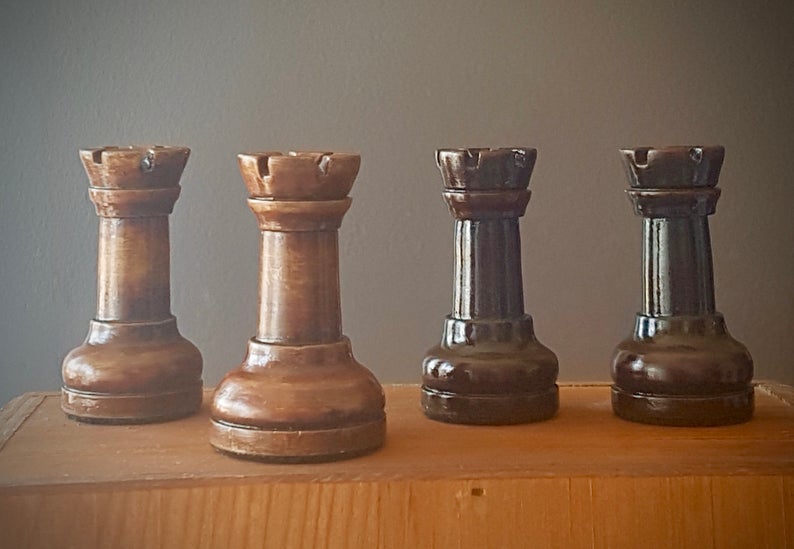
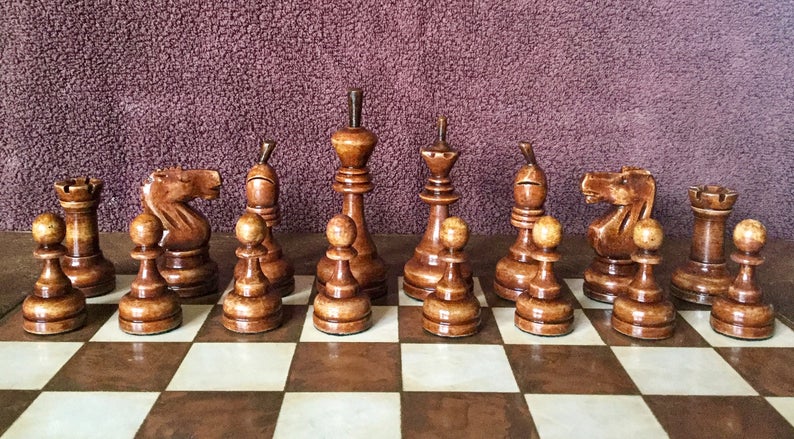
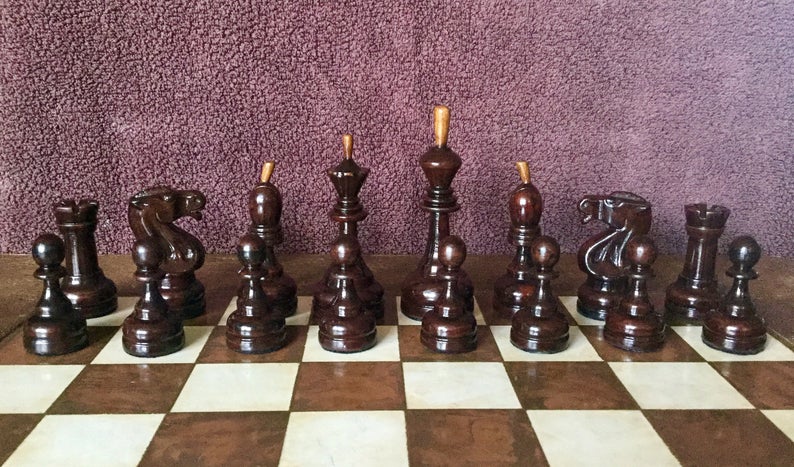
Magna Dominus (Grand Master); 32 weighted chessmen without board, wood/plastic. light brown v. deep red, Soviet, c.1965-1980. Height: King 12cm, wt 45g, base width 4.2cm, Queen 10.5cm wt.38g, Bishop 8.7cm, Knight 7.5cm, Rook 6.3cm, Pawn 6cm. W: black felt pads B: same
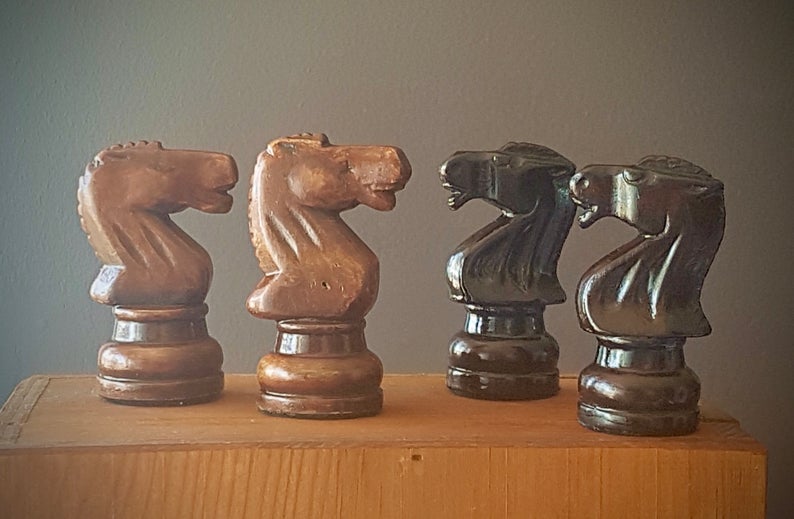
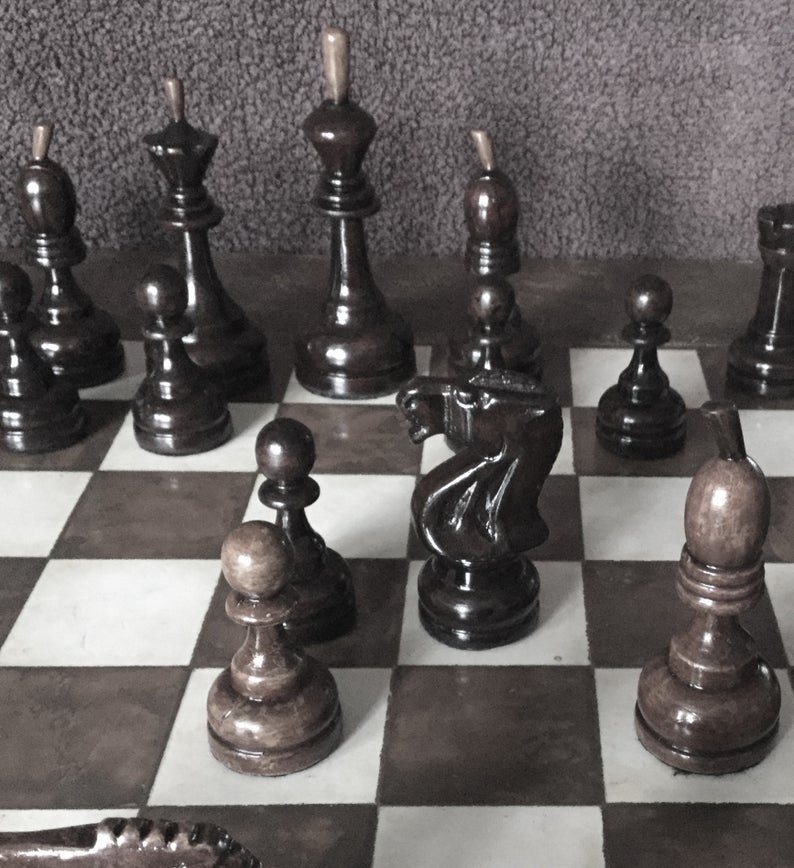
A popular Russian tournament set from the early 1960s on, marking a transitional period in Soviet chess-piece design when the black Knights were molded from dense, dark plastic while the white side was still made of Soviet lumber. These sets are fairly common, varying greatly in design, the earlier forms being all wooden, the later examples (post 1980) having four plastic knights, more slim-line (feeble-looking) than the brawny specimens shown here.
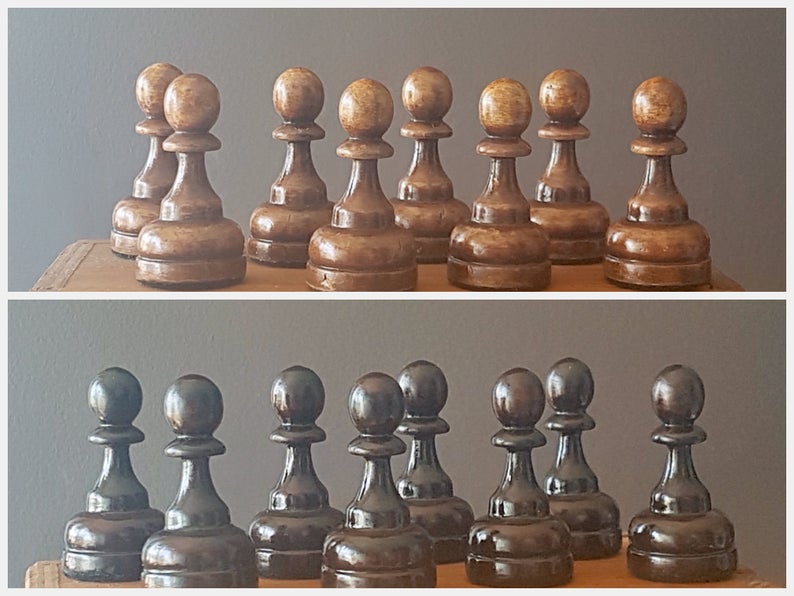
Personally, I was never a fan of the original finial designs, so these are a concoction of my own imagination, as are the finishes; the dark side is naturally stained to a very deep crimson red, the light side faux-finished to resemble aged wood, emulating the “caramel” hues of the fantastic Soviet sets from the glory days of the legendry Mikhail Tal – the Latvian Magician. As you may have noted, the Bishop’s finials are aslant (or crooked!), a little dig at the corruption (monetarily or otherwise) found within the church, inspired by a rare nineteenth century design from France that subtly forwarded the same idea.
The pieces are UV resistant and ideal for display as well as Blitz/casual play. Both Kings carry the hand-painted ‘power’ signature of the artist on their bases.
Ref code MD19