

*SOLD* Torquem Nobilis (High-Collared Nobles); Classic Soviet ‘Valdai’ Weighted Chess Set, Early Brezhnev Era, c.1964-1968
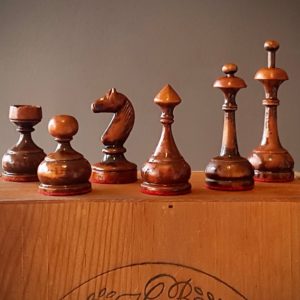
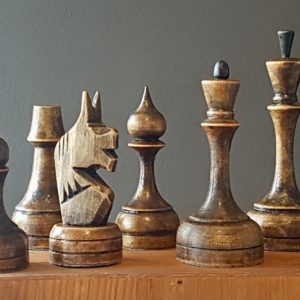
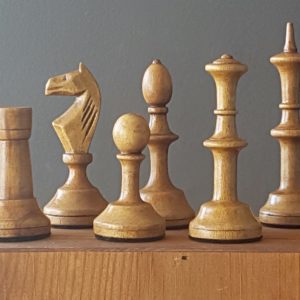
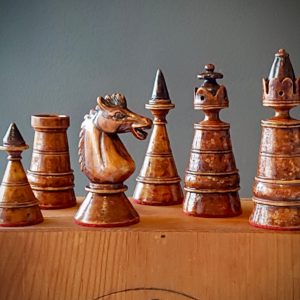
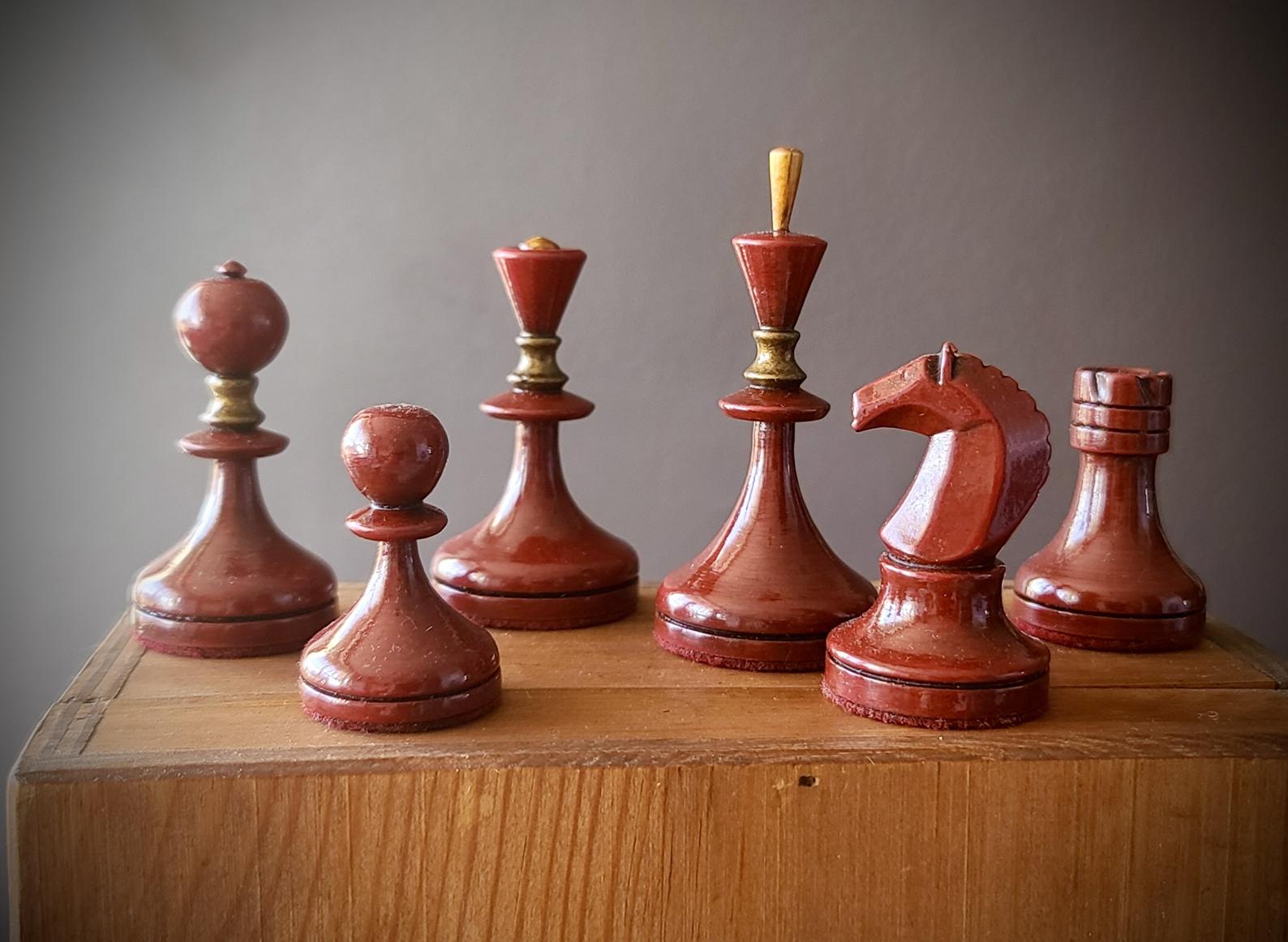
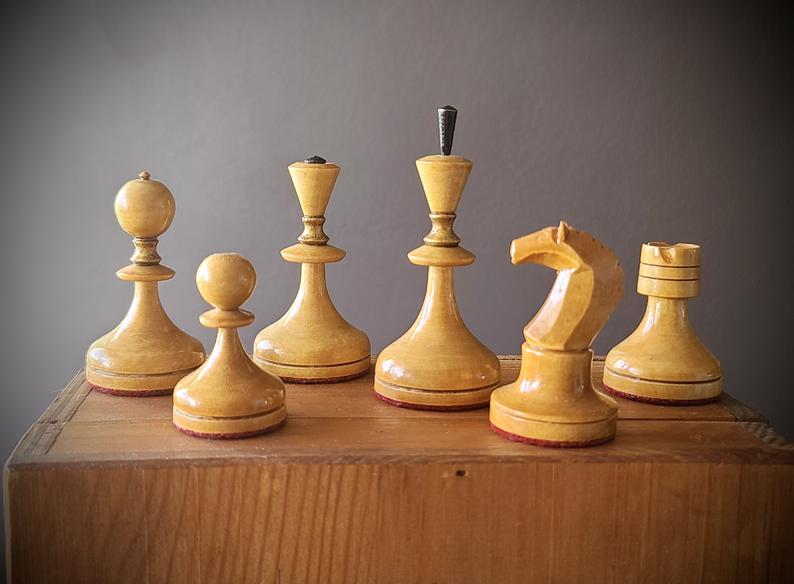
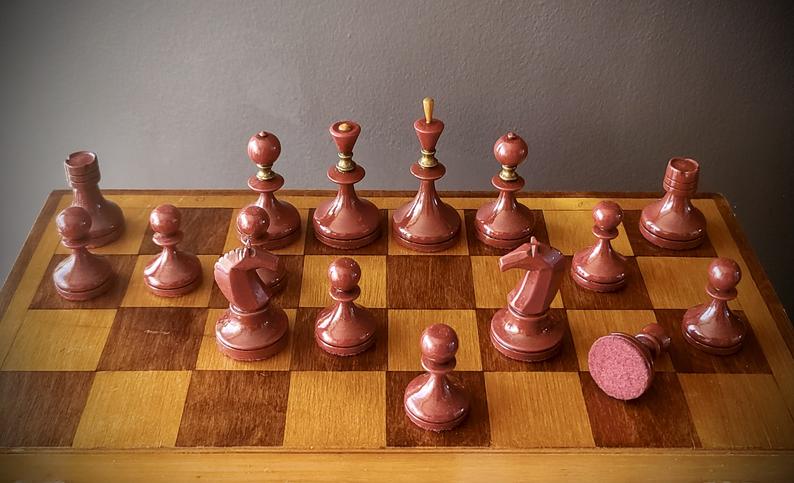
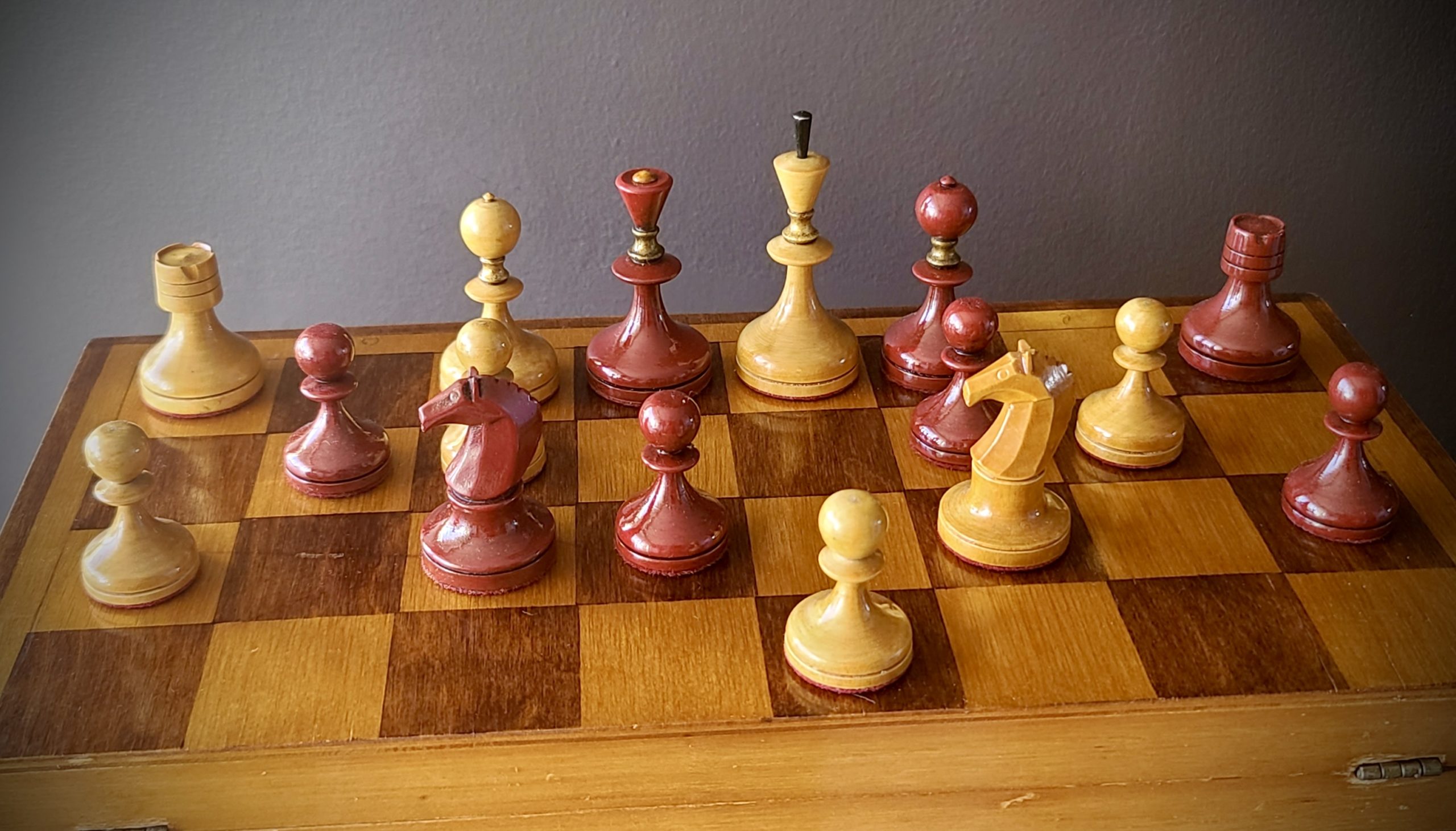
High-Collared Nobles (Torquem Nobilis); 32 weighted ‘Valdai’ chessmen without board, birchwood, Soviet, white v. red, weighted, antiqued, c.1965.
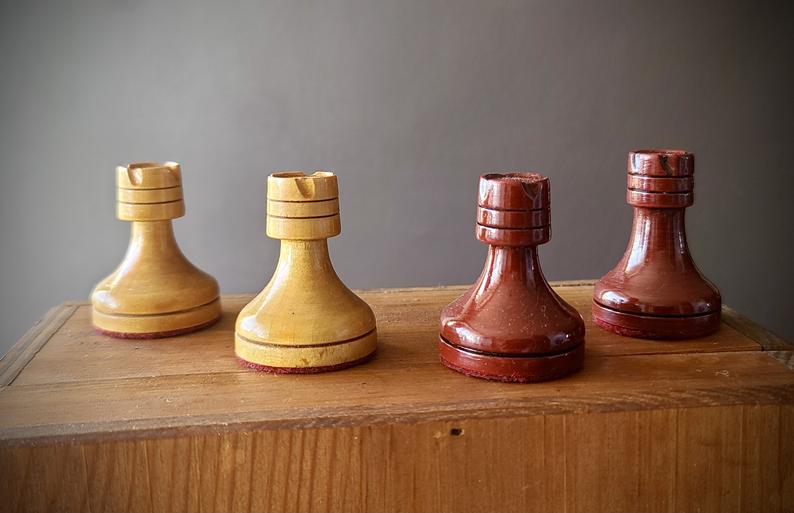
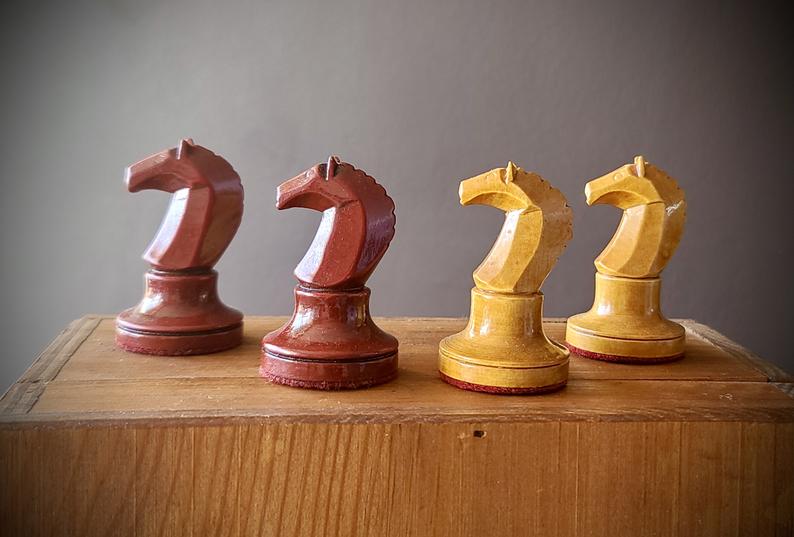
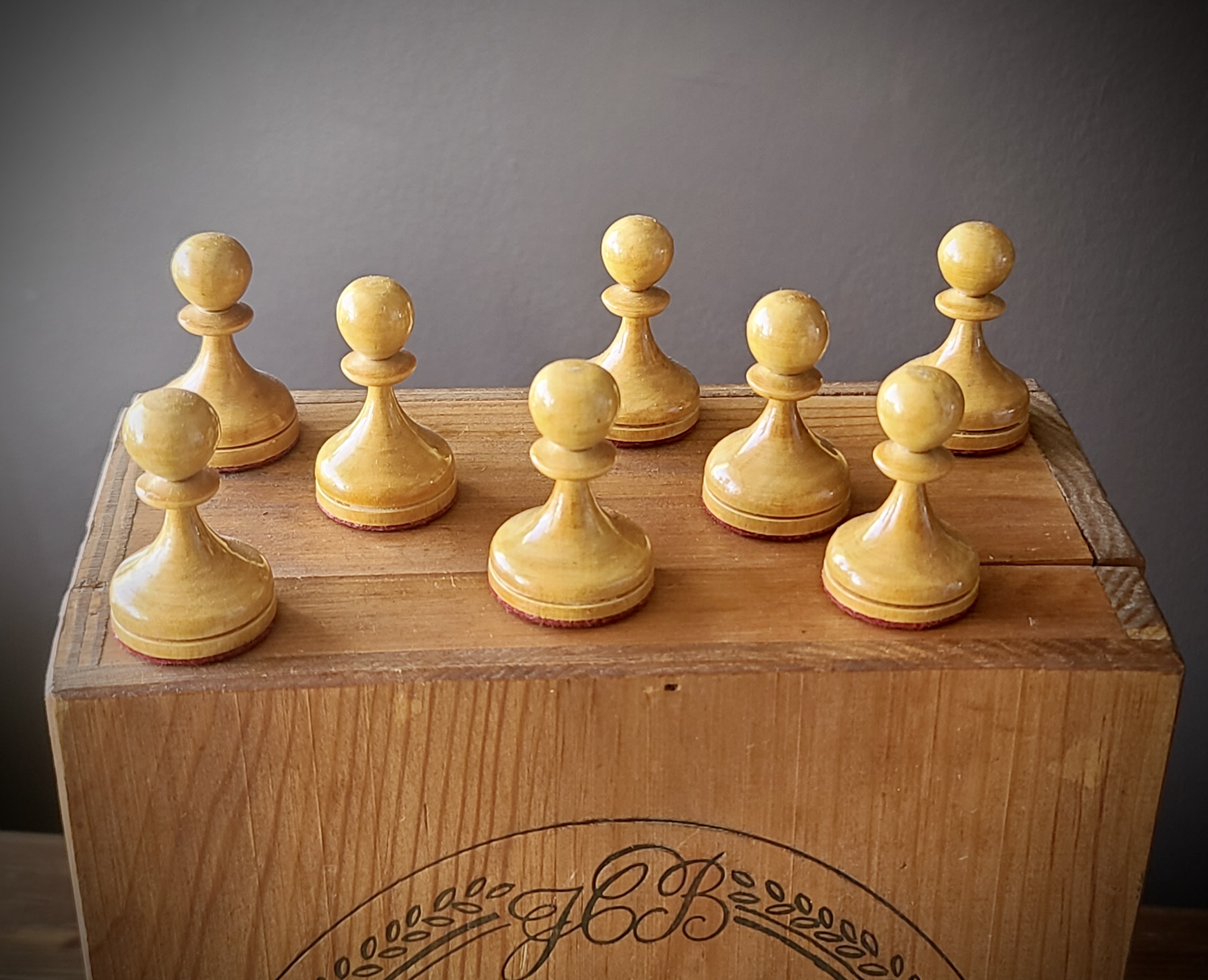
Height: King 8.5cm, weight 20g, base width 3.7cm or 1 1/2”; Queen 7cm wt 18g, Bishop 6.5cm 16g, Knight 5.7cm 16g, Rook 4.5cm 16g, Pawns 4.5cm 10g.
W: lush burgundy felt bases; B: same
This truly iconic Soviet design is the “60s” version of the ‘Valdayski’ or ‘Noble’ chessmen. ‘Valdayski’ referring to the Valdai Regional Industrial Manufactory (a polite term for a ‘work-camp’) in the old Novgorod region near Moscow where many (possibly all) of these sets were produced. An example of the earlier Valdayski patterns, which are smaller and slightly more detailed, can be found in our ARCHIVES.
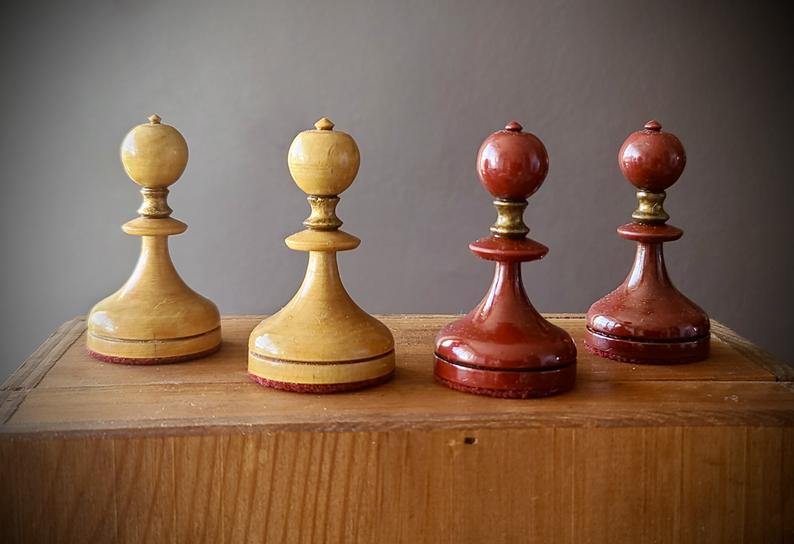
The style is unmistakably Cold War Soviet featuring the broad, bell-bottomed bases, a common design element in these medium-sized sets which compensated for the lack of available weight during the recovery years after WWII. These widely spread bottoms just scream out for more weight – a request that I was happy to fulfil and now the newly weighted pieces feel more like a proper playing set that means business over the board.
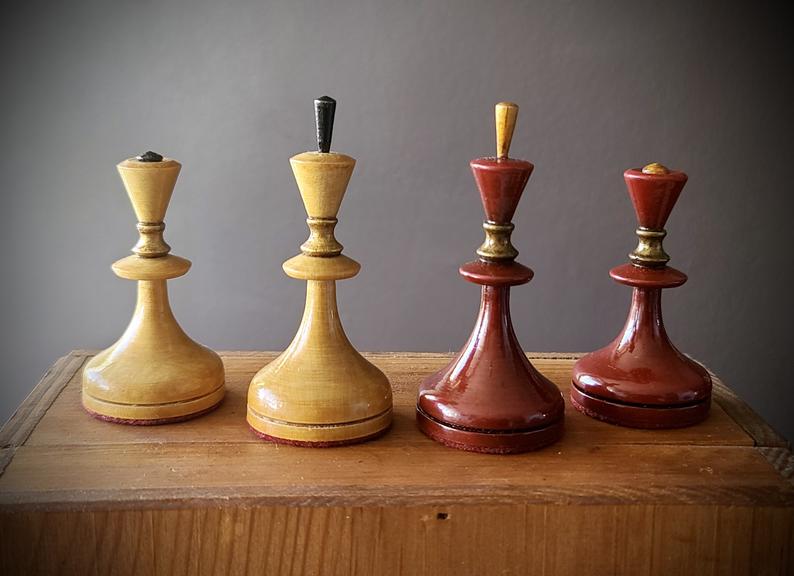
In contrast, the upper portion of the pieces, especially the elongated, svelte collars of the bishops and royals (reminiscent of the Averbakh sets) have an aloof, almost delicate air about them. A subtle, yet intrinsic feature of the Valdai design that I’ve brought to the fore by highlighting the high collars in antiqued gold leaf for the light side and antiqued bronze for the stylish burgundy pieces – these bronze accents are a subtle feature of the 2021 listings in case you haven’t heard…
The set originally came to me in slight disrepair. The light side has a few chips here and there about the pawns collars (all fixed) and three of the major dark pieces (2 rooks and a bishop) were mouthed by a cat or small terrier by the looks of them. An easy repair but all the black pieces would have to be refinished, so instead of going with the trad black I decided to go with a sophisticated burgundy, gently antiquing the pieces to match the original patina of the light side, but also, and this is very important, matching the ‘feel’ of the original pieces using a complicated combination of varnishes, waxes and oils. If you can detect a difference yourself that is not to your satisfaction I’ll pay for the return postage – but I am quite confident it will not come to that!
For a more detailed discussion about the Valdai chess pieces please refer to my November 2019 Chessay, THE GULAG KNIGHTS.
Both kings carry the hand-painted iridescent bronze ‘Power’ signature of the artist on their bases and are ideal for display as well as casual play. The Torquem Nobilis set is also accompanied by a ‘Certificate of Artistry’ which will be posted out separately once we tally up how many ‘Bronze Signature’ sets passed through our galleries in 2021.
“All good things …” as the saying goes.
Ref code: TN21