

*SOLD* Avelignum Eques (Haflinger Knights); Antique Austrian Coffee House Chess Set, circa 1885-1910
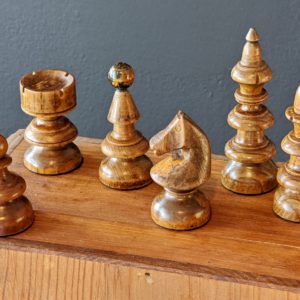
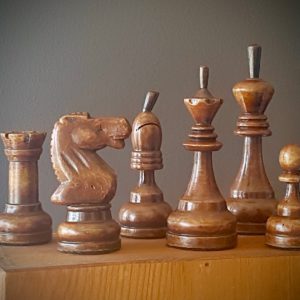
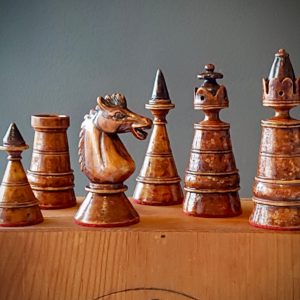
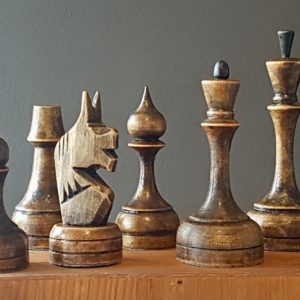
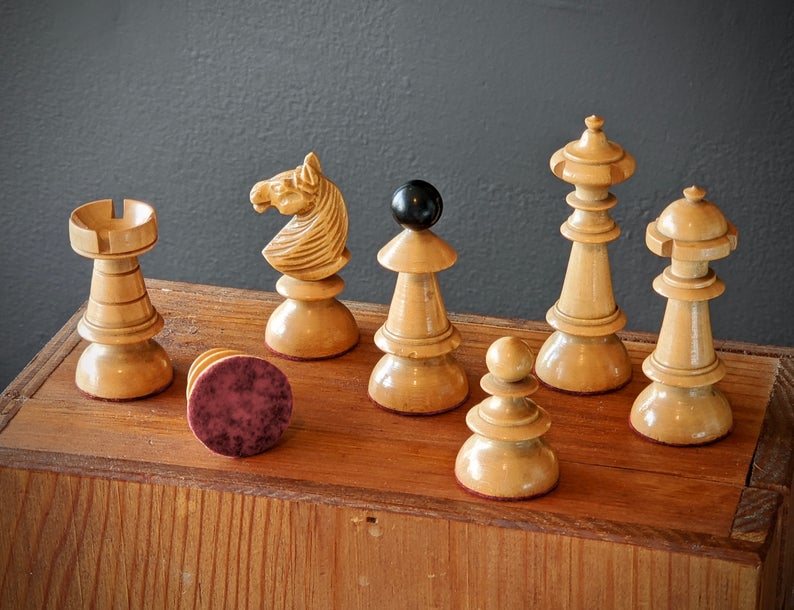
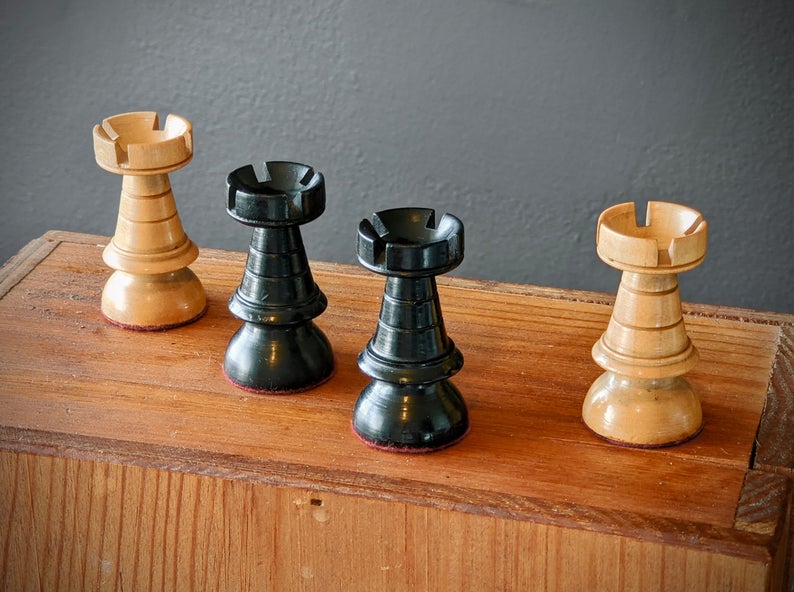
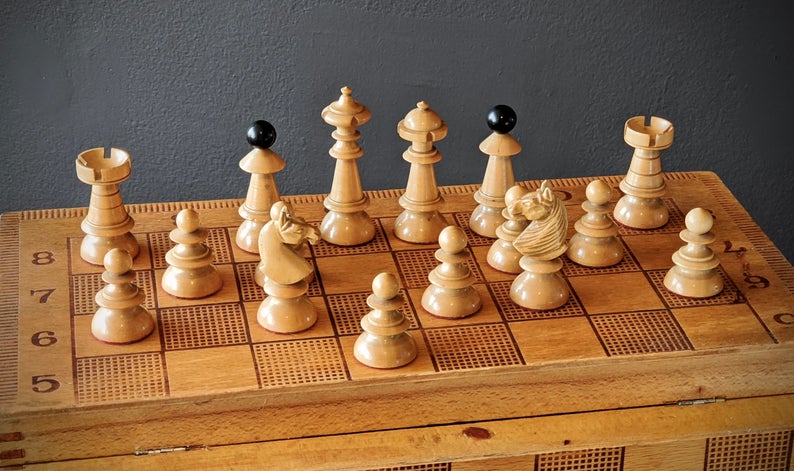
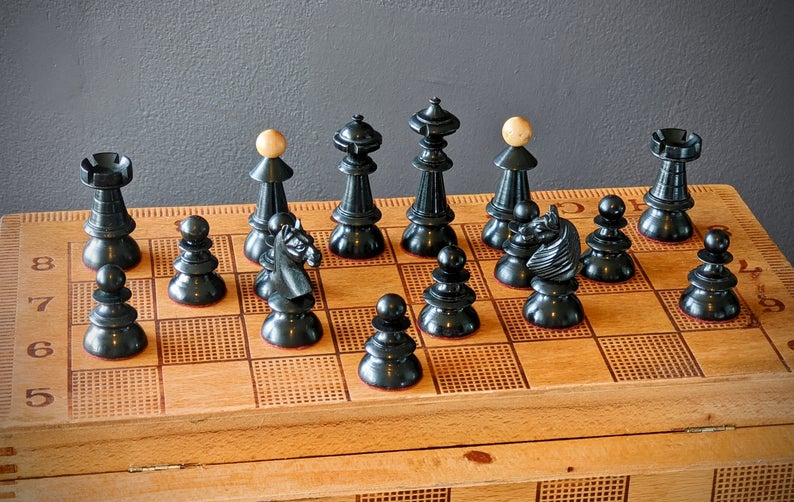
Avelignum Eques (Haflinger Knights); 32 lightly-weighted chessmen without board, wood, Austrian, white v black, c.1885-1910
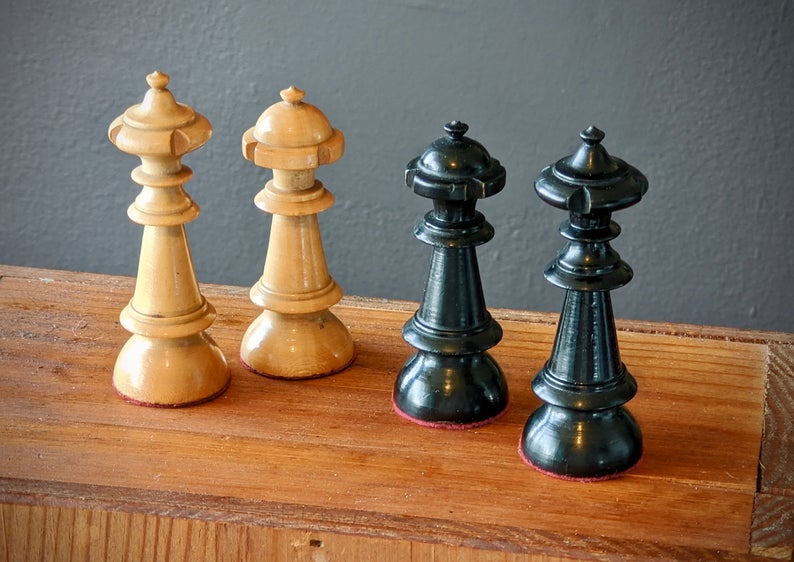
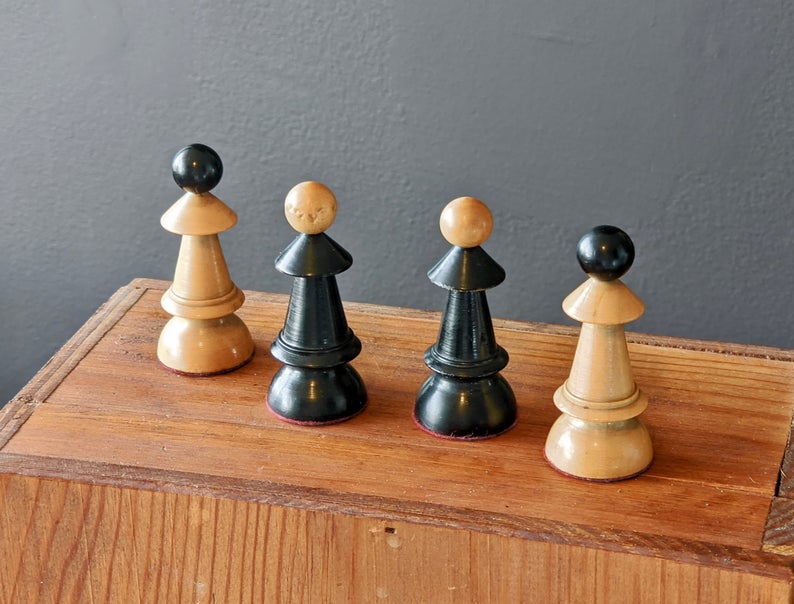
Height: King 7.2cm, wt 10g, base width 2.5cm; Queen 6.4cm, Bishop 6cm, Knight 5.2cm, Rook 4.6cm, Pawn 3.5cm.
W: antiqued red felt pads B: same
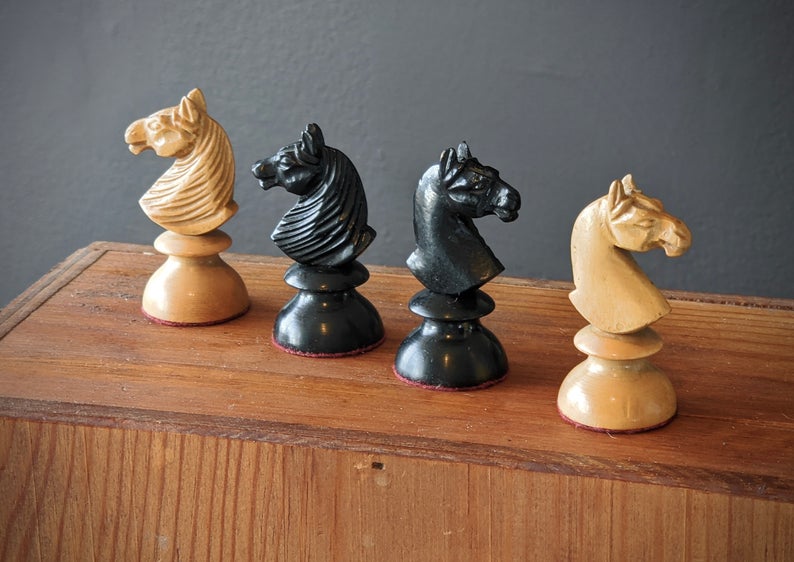
A fine example of the popular ‘kaffeehaus’ or Austrian Coffeehouse designs found throughout the Austro-Hungarian Empire and parts of northern Italy from the late XIXth century on. The knights catch the eye instantly as they are particularly well-carved for this period with their long flowing manes reminiscent of the Haflinger breed, a small but hardy Austrian work-horse (employed by the German army during WWI) renowned for their “Rapunzel-like” manes, handsome looks and strong haunches – the perfect model for a chess knight you might say!
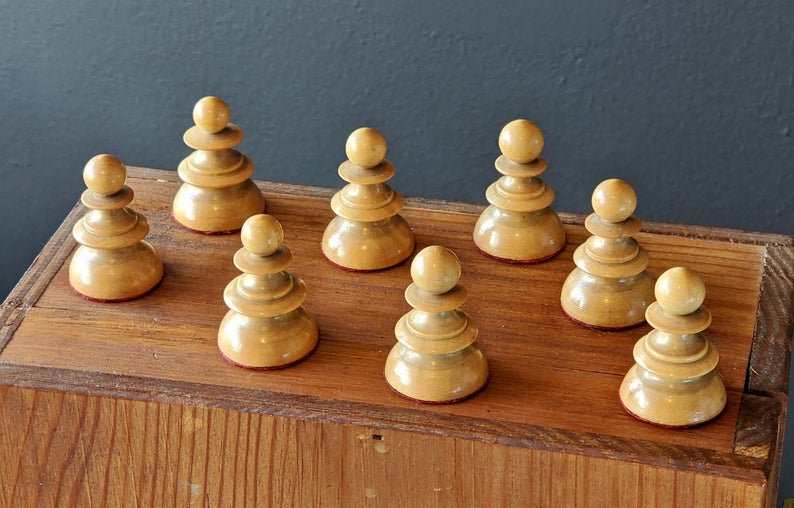
The bones of the set are in excellent overall condition for its age. It came to me with only one main fault – it was short one black pawn. This was remedied by the services of the master craftsman, Alan Dewey, a fellow Englishman, who turned a new pawn based on one of the originals which I then colour-matched to the other pawns – “Alans to the Power of two” as one witty collector from Germany remarked.
Quite honestly, the restoration work on these old warriors was quite minimal. Mainly, I unified the patina of the white pieces (some pieces had lost their finish almost completely) which I colour-matched/antiqued to bring the light pieces together. The dark side just needed a few unsightly chips remedied here and there – nothing drastic. A little weight has been added, again nothing overboard, but many of these early coffeehouse sets need a little extra ‘oomph’ down below and they feel much the better for it. Thin red felt has also been added and subtly aged to complete the sense of antiquity you observe and feel when perhaps running over the old games of Spielmann or Steinitz, the so-called “Austrian Morphy” with these wonderful pieces of Habsburg antiquity.
The pieces are UV resistant and ideal for display as well as casual play. Both kings carry the hand-painted iridescent silver ‘power’ signature of the artist on their bases and come with a unique Certificate of Authenticity (issued separately – see our main site for details).
Ref Code: AE20
Visit our Gallery for more artistically restored vintage chess sets.
Feeling social? Follow us on Instagram, Facebook, or Twitter!