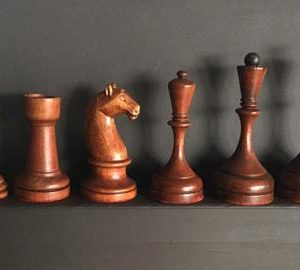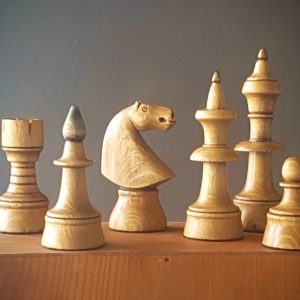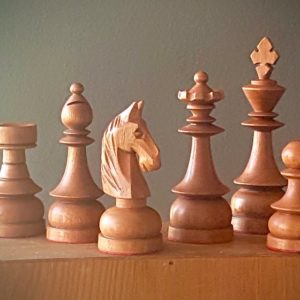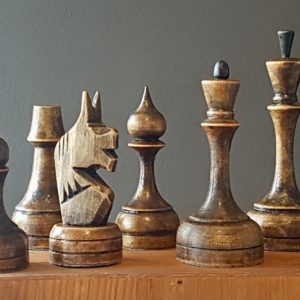
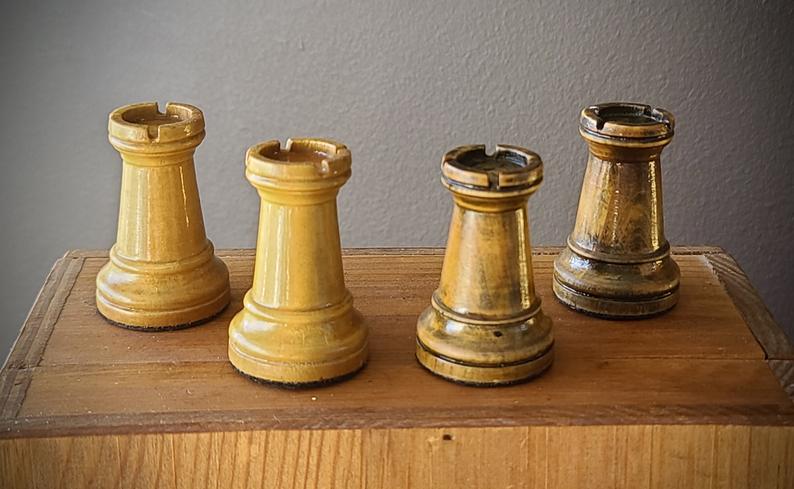
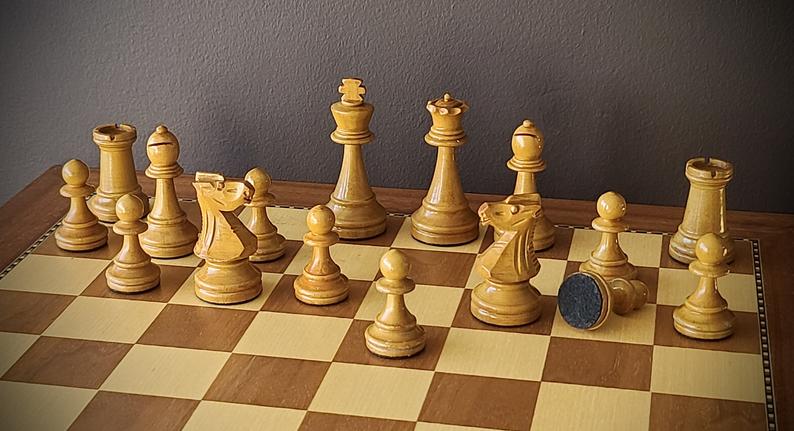
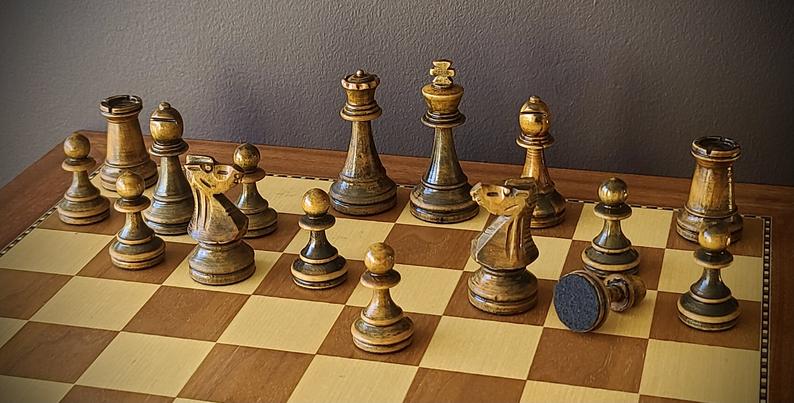
*SOLD* Dente Argente (Toothy Argentines); Classic Argentinian ‘Casa Zanzi’ Wooden ‘Staunton Style’ Chess Set, c.1960-1975
Dente Argente (Toothy Argentines); 32 well-weighted chessmen without board, wood, white vs. brown, Argentina, c.1965
Height: King 9cm, wt 30g, base width 3.8cm, Queen 8.2cm 35g, Bishop 7.4cm 30g, Knight 6.7cm 32g, Rook 5.2cm 32g, Pawn 5cm 15g
W: black felt bases, B: same
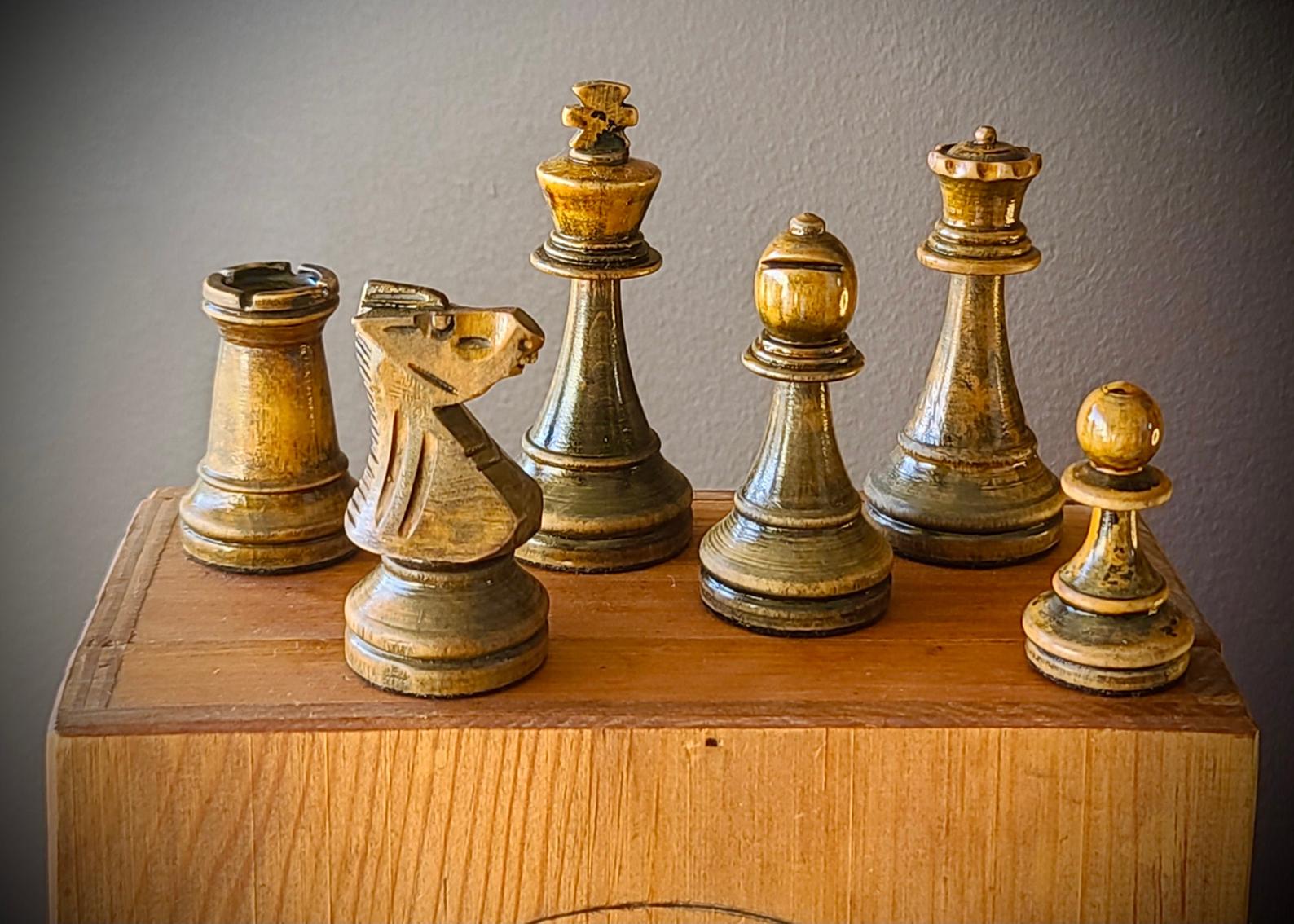
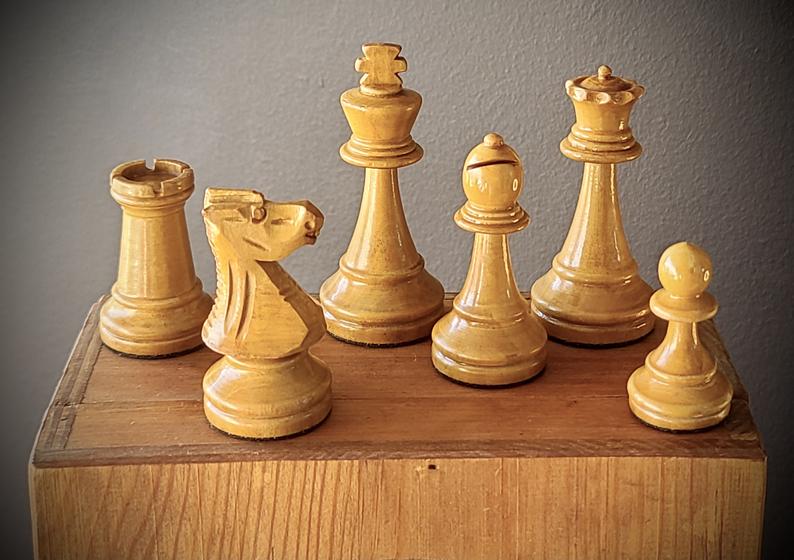
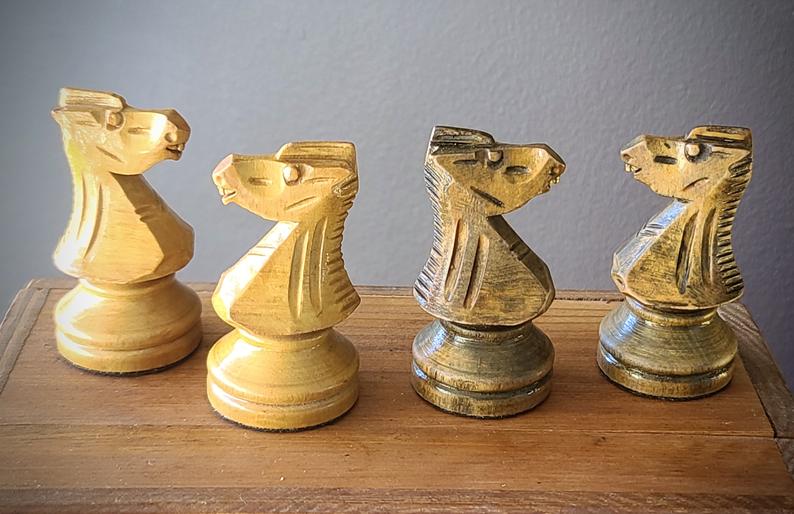
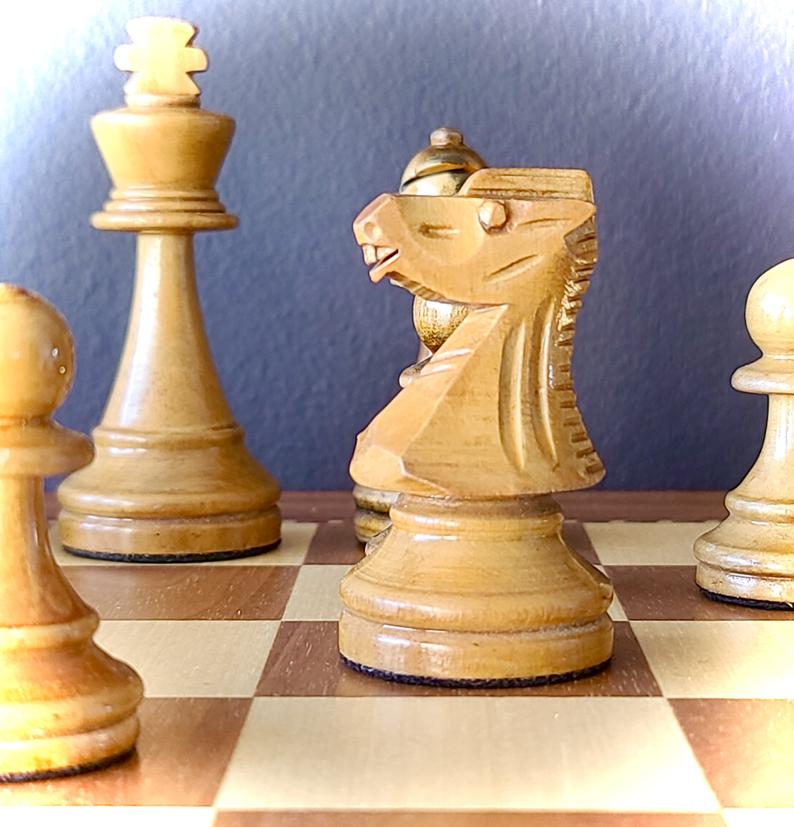
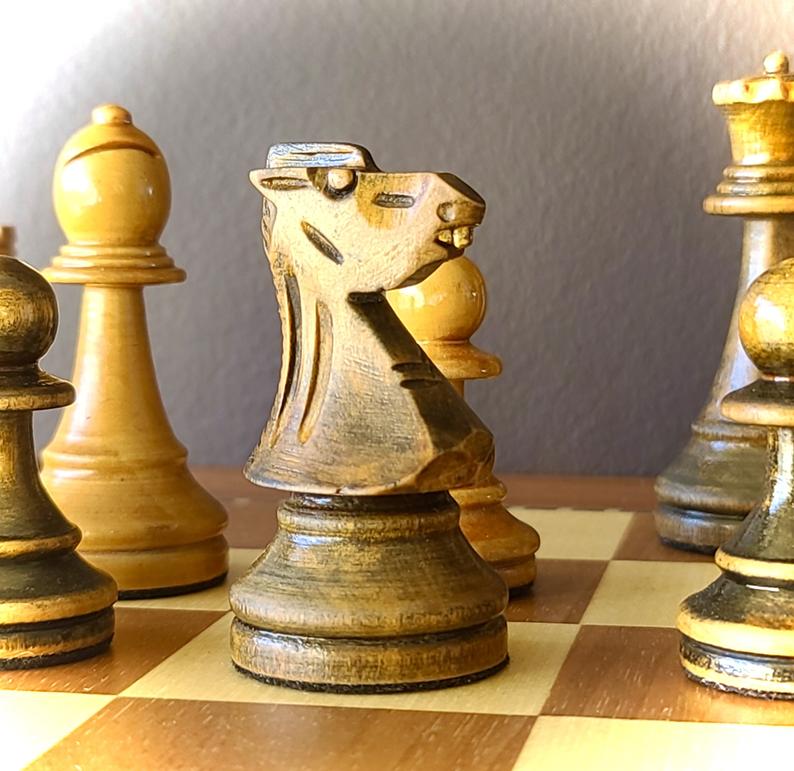
According to the Argentinian vendor from whom I acquired these chess pieces (and I translate) … “this is the first version of a set produced by the long-established Argentinian gaming store called Casa Zanzi (House of Zanzi) and is characterized by the distinct carving of the knights.” These ‘buck-toothed’ knights, as I call them, are reminiscent of the old Spanish ‘Indajesa’ patterns, but are a little more stocky, especially around the head and girth, most probably inspired by the even earlier Lardy ‘Staunton’ designs, produced en masse in France from the late nineteenth century on.
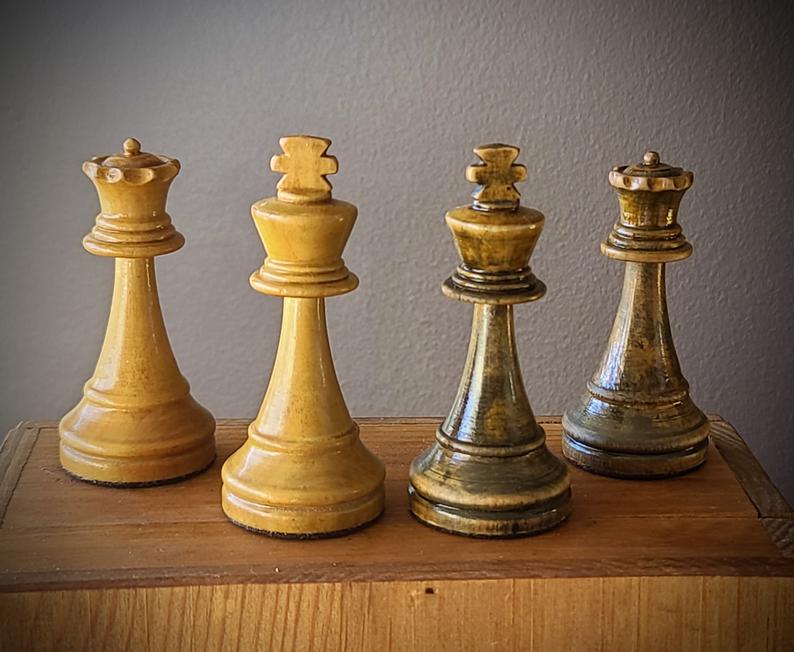
The light side has been kept true to the original honeycomb coloured patina with only a few very minor repairs being made to the queen’s crown and the king’s finial. The dark side has been stripped of the original black lead paint and subtly aged/antiqued to match the patina of the light side in every respect.
New, lush black felt has also been added, replacing the original tatty green baize bases and the original weights have also been retained and secured (as they were slightly loose in a few of the pieces).
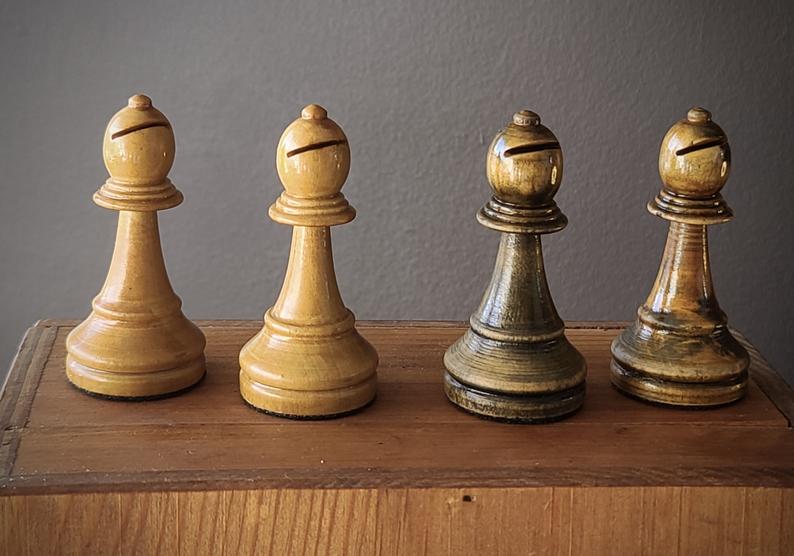
To my roving eye there are also many similarities to the classic Soviet ‘Grandmaster’ sets of the 60s here, in particular the flat, horizontal top-line of the knights, the set of the ears and the exaggerated, robust ‘pot-bellies’ and also the triple collars adorning the royals and the slits in the bishop’s mitres, to address but a few. And as we are gradually discovering, many of these early Soviet patterns were heavily influenced by those of Europe – and perhaps Argentina, too?
The pieces are UV resistant and ideal for display as well as casual play. Both kings carry the hand-painted iridescent silver 2020 ‘Power’ signature of the artist on their felt bases.
Ref code: DA20