
*SOLD* Capuccinus Domus Österrium (Of Austrian Coffee Houses), Austrian, circa 1950 – 1970
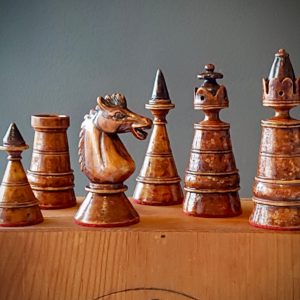
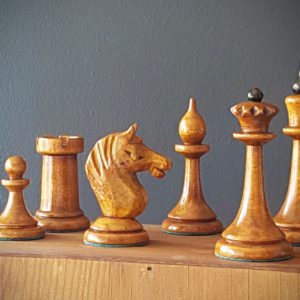
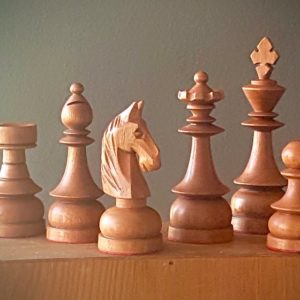
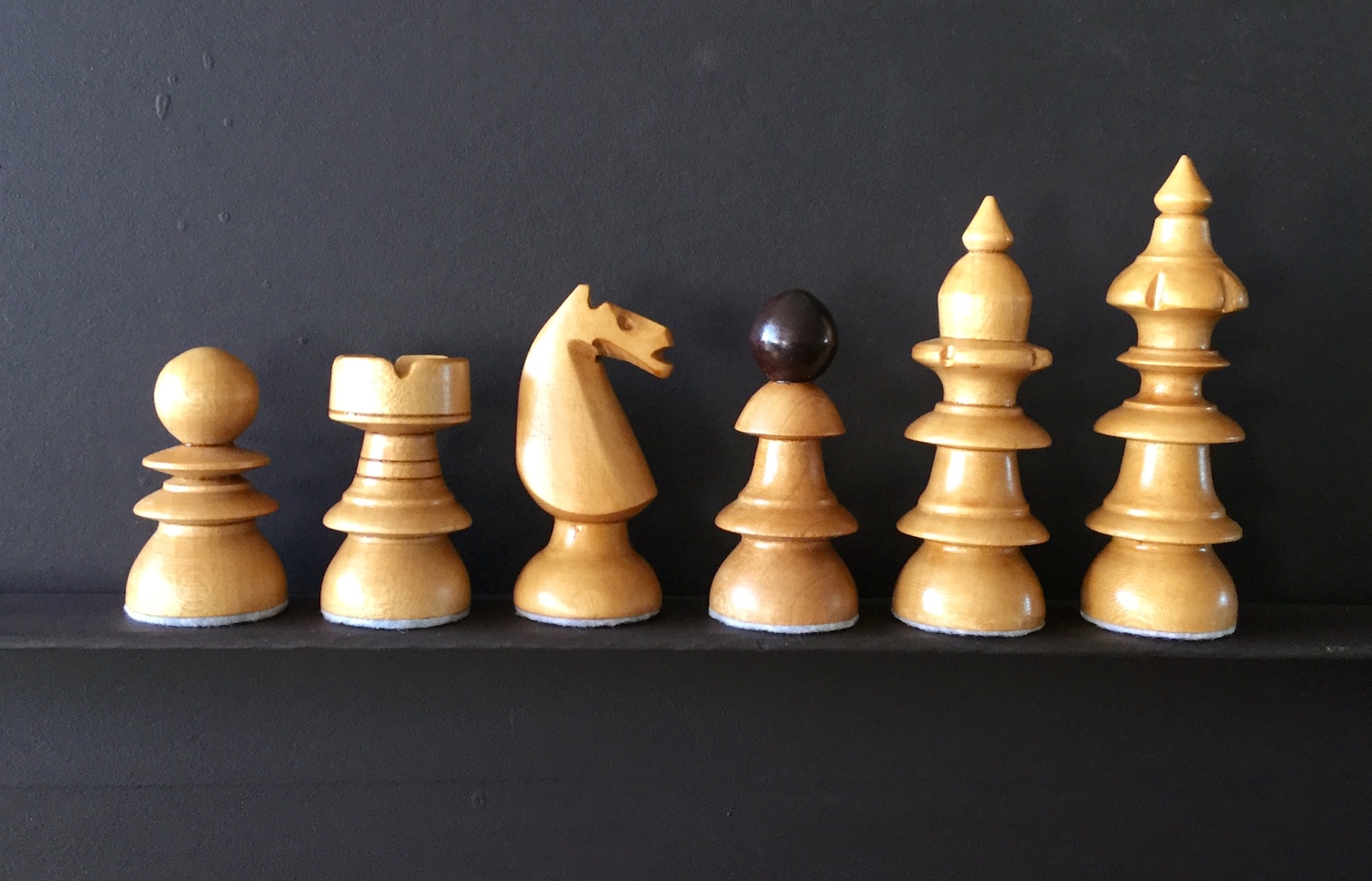
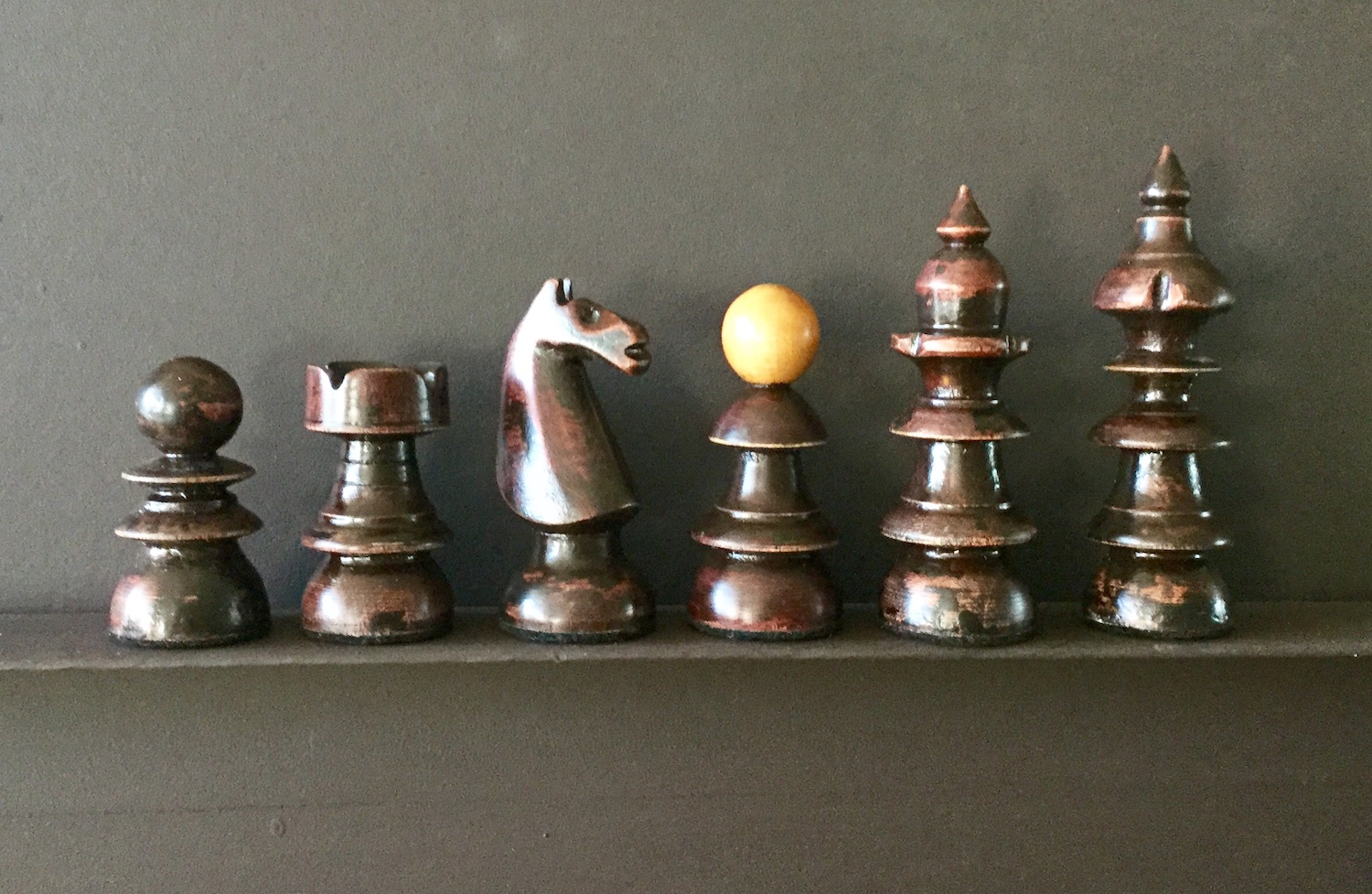
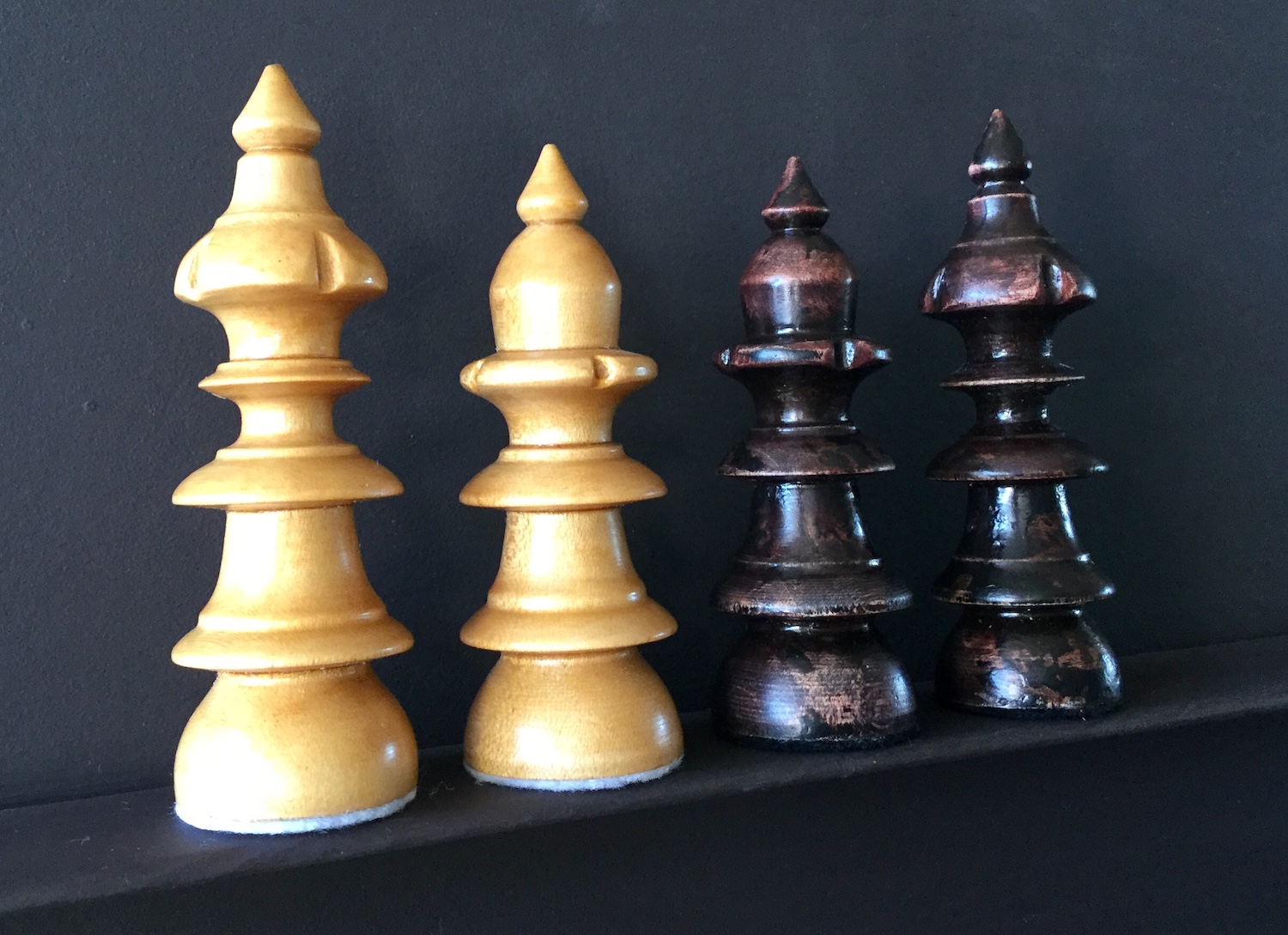
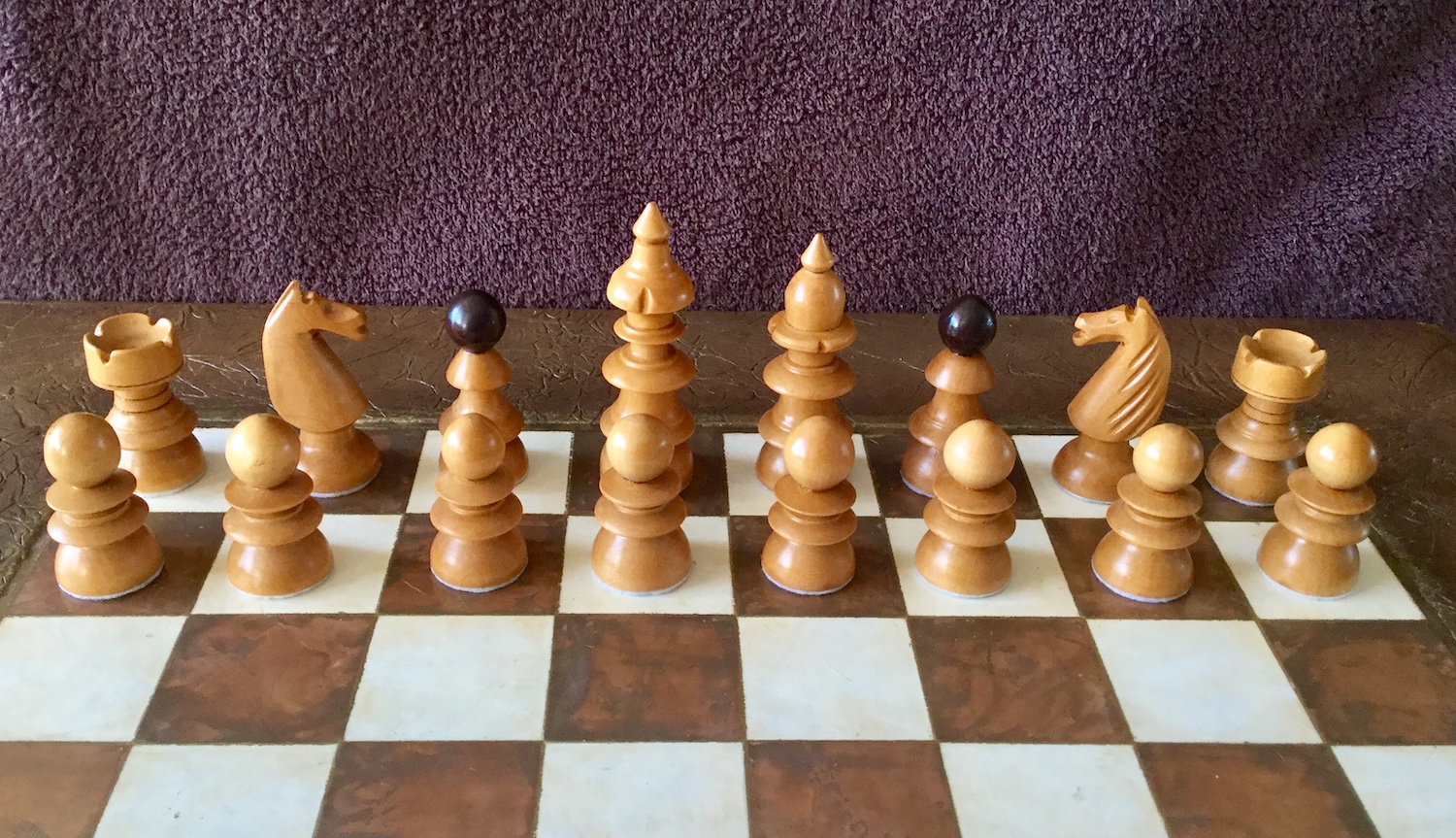
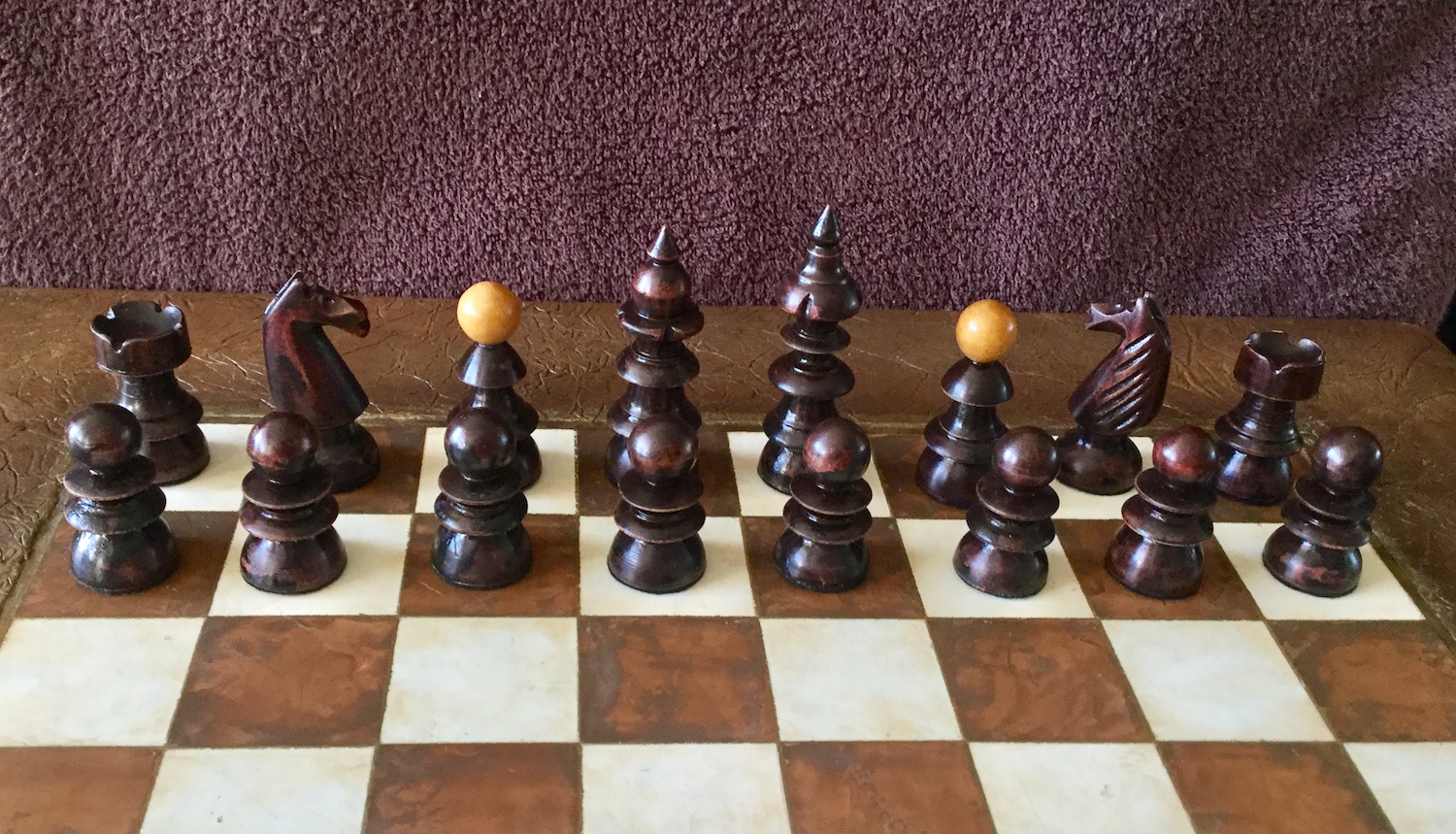
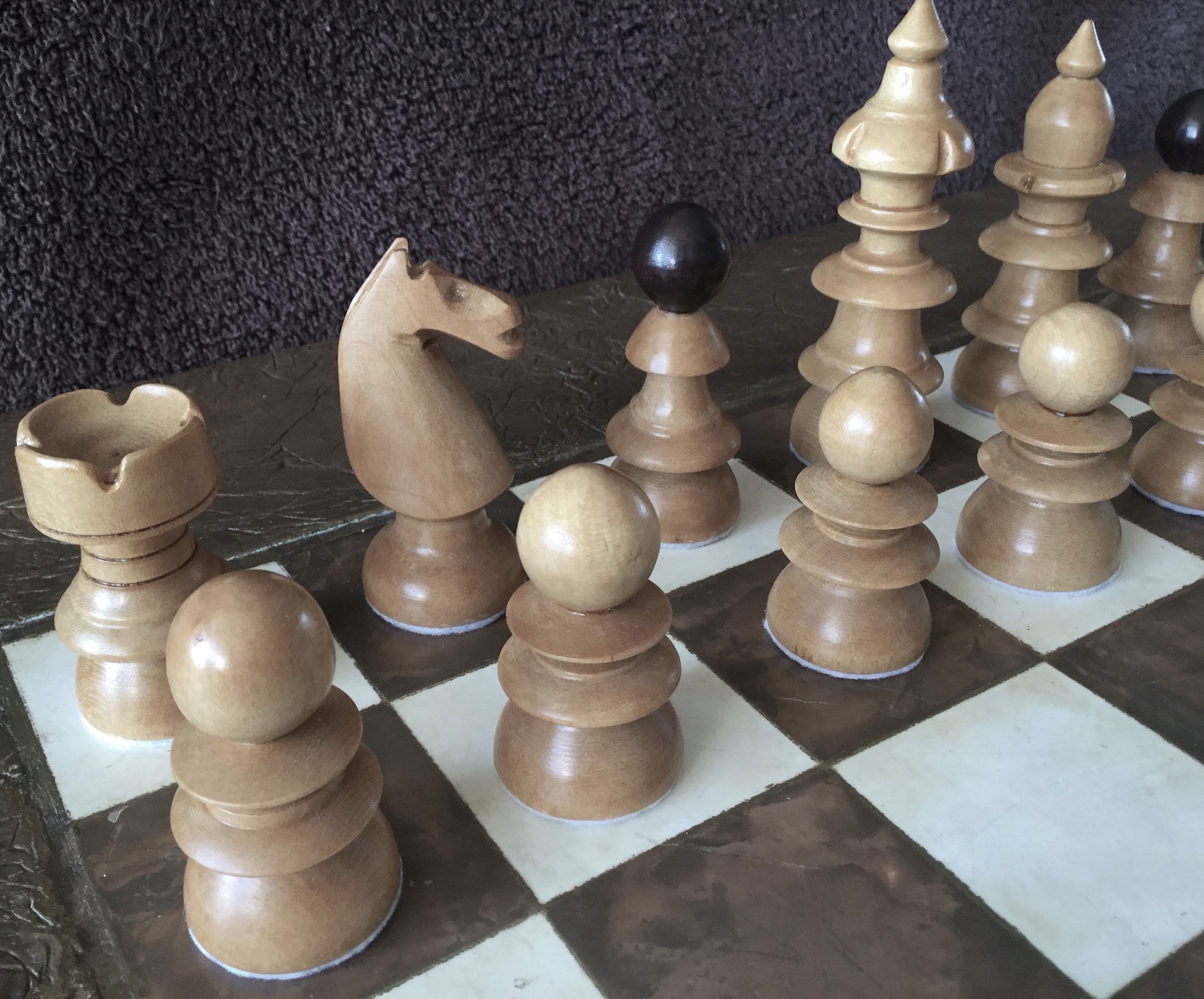
Capuccinus Domus Osterrium (Of Austrian Coffee Houses), 32 lightly-weighted chessmen without board, wood, light brown v. imperial purple, Austrian, circa 1950 – 1960.
Height: King 10cm, weight 25g, base width 3.2cm, Queen 9cm, Bishop 7cm, Knight 7cm, Rook 5.2cm, Pawn 5cm. W: white felt bases B: black felt bases
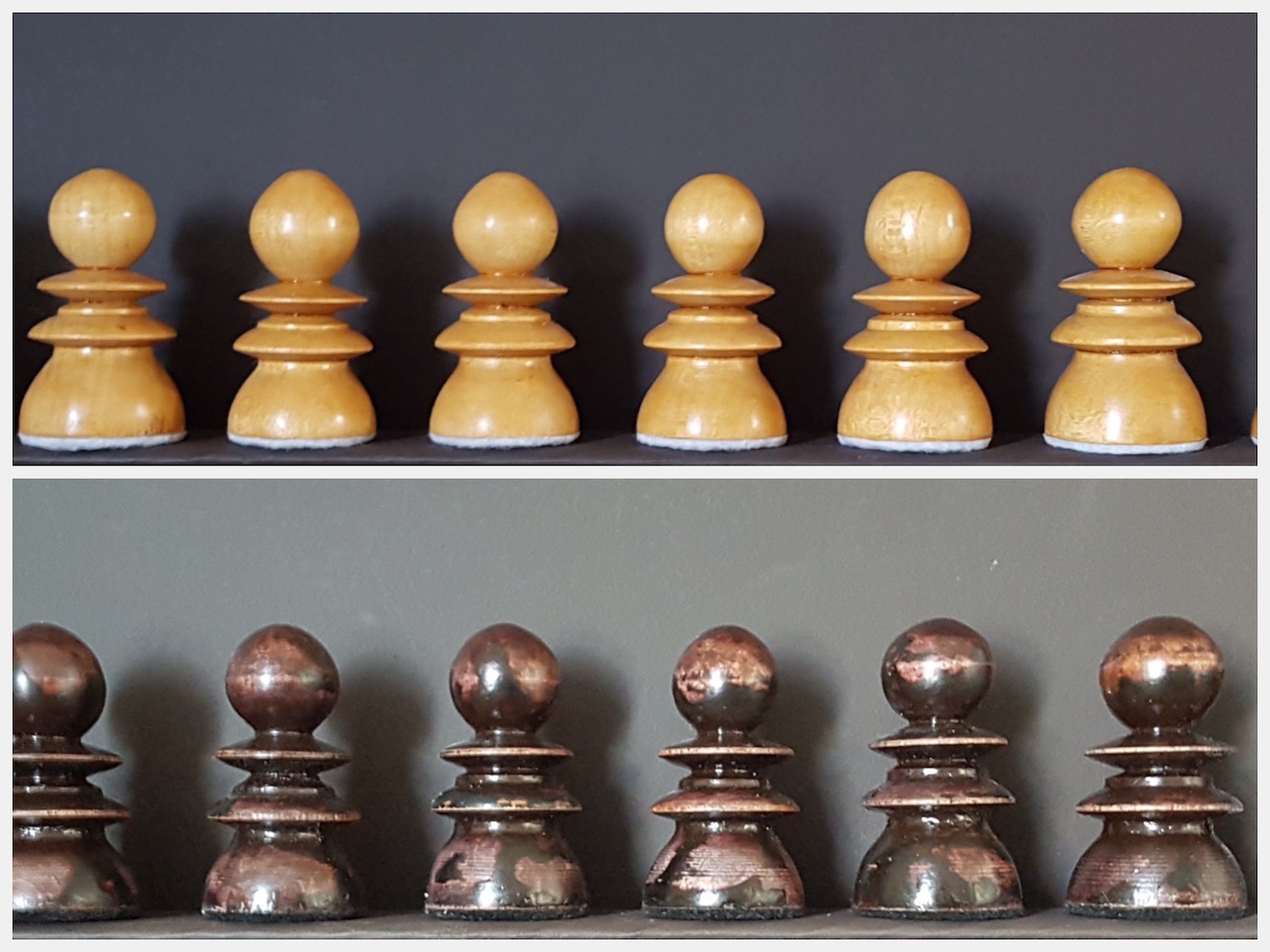
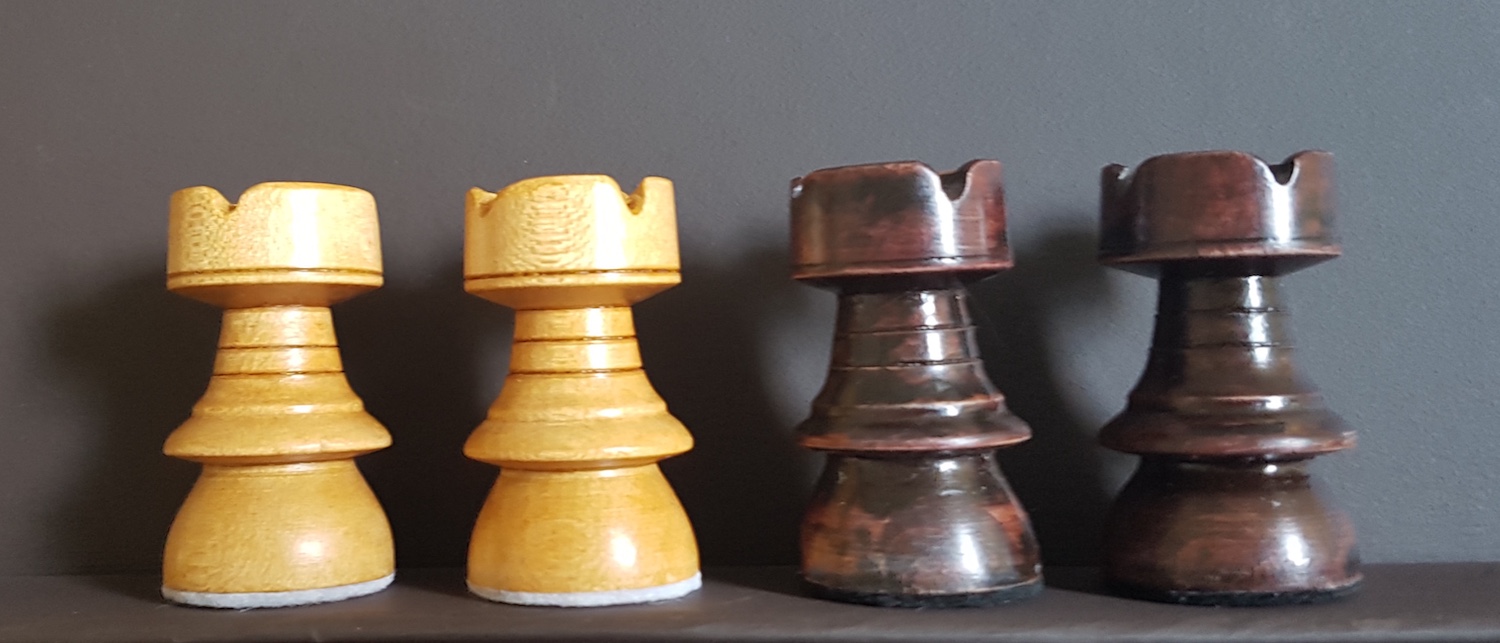
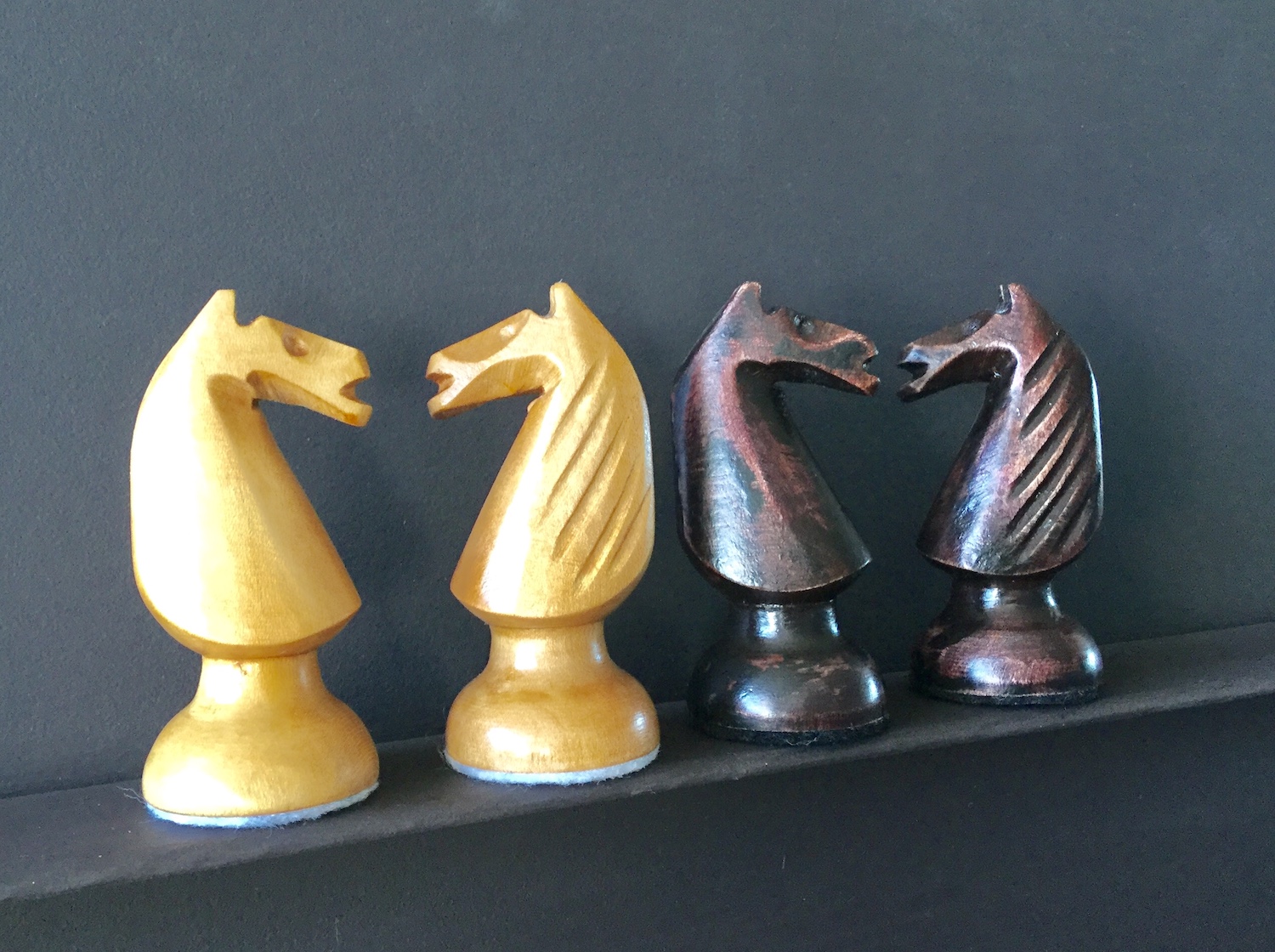
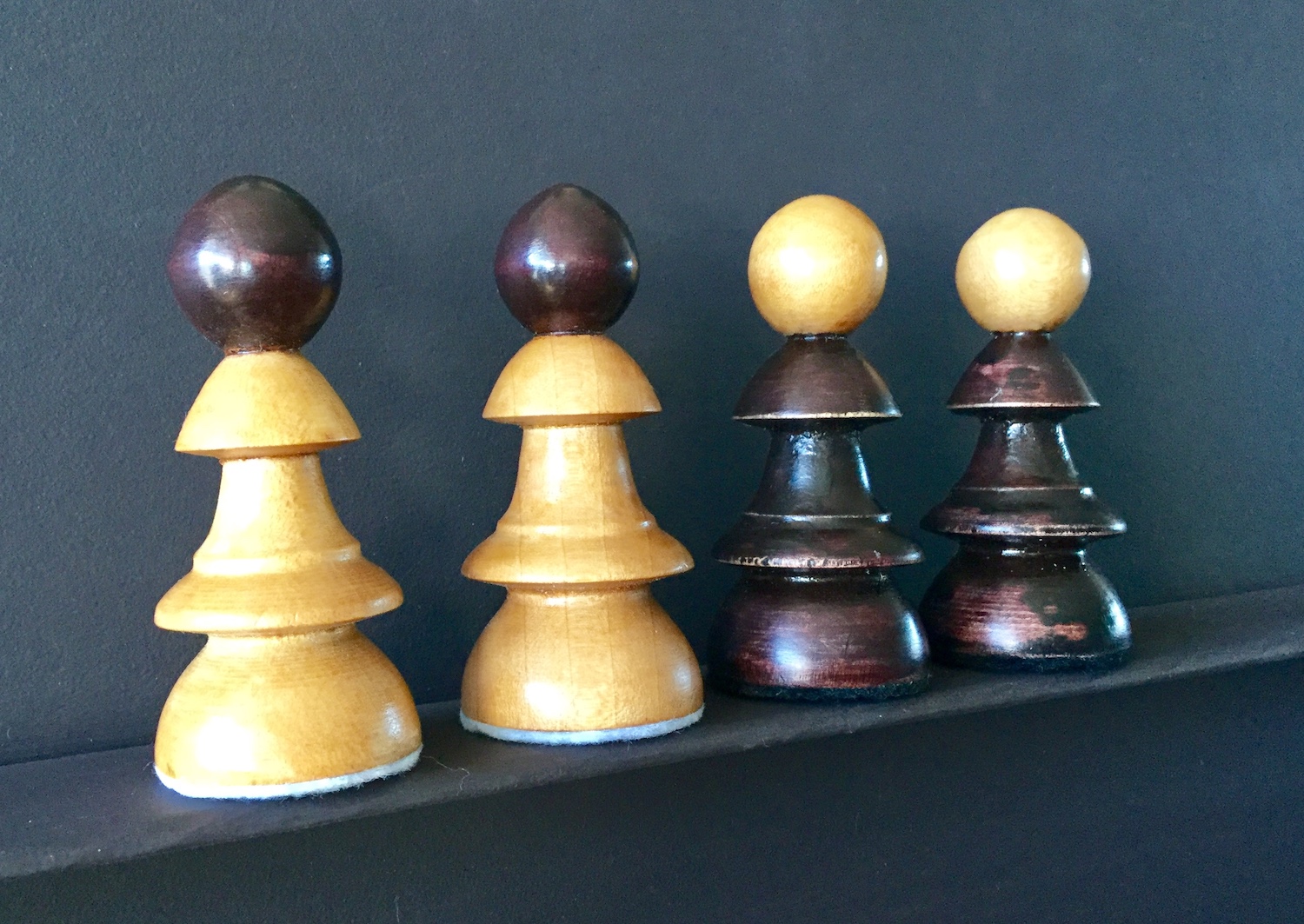
A nice example of an Austrian Coffee House Set, most probably, according to one well known collector (H. Langer),** the manufactory of Jan Nekvasil in the Ottakring district of Austria, which was in operation from the late nineteenth century until the mid-1980s (see chess-museum.com/Nekvasil). The style is simple and traditional. The Knights are carved from one piece and have a slightly alarmed but endearing expression; the Bishops carry the colours of the opposition to clearly distinguish them from the large-sized pawns. The addition of weight has remedied the ‘Austrian wobbles’ – a common affliction in many of these unweighted, top-heavy Old Vienna designs. In this set, the King, Queen and Rook are slightly heavier than the Bishop and Knight – adding a certain authority to these pieces in the endgame.
The pieces are UV resistant and ideal for display, as well as casual play.
Both Kings carry the hand-painted signature of the artist on their felt bases.
Ref code CD4