
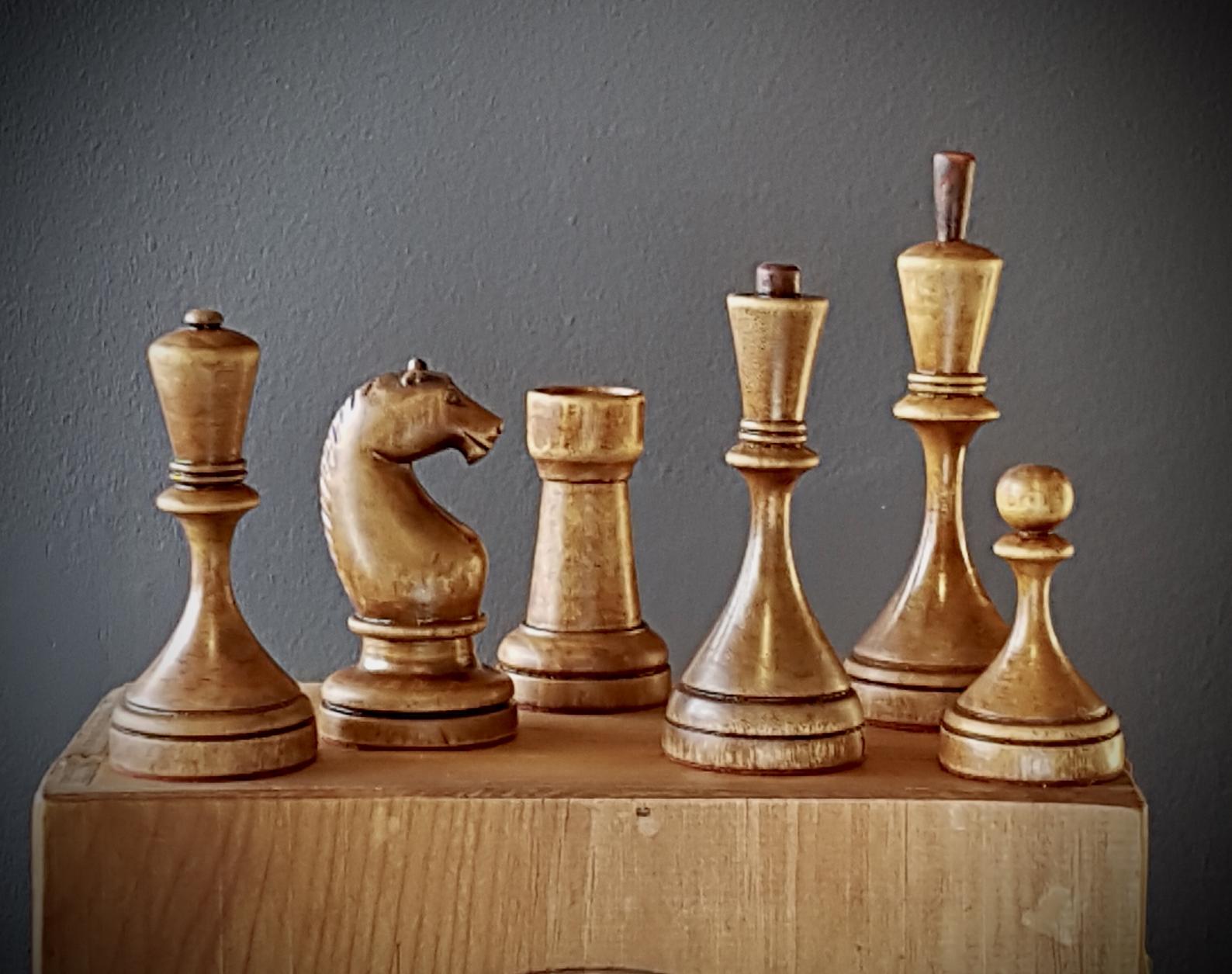
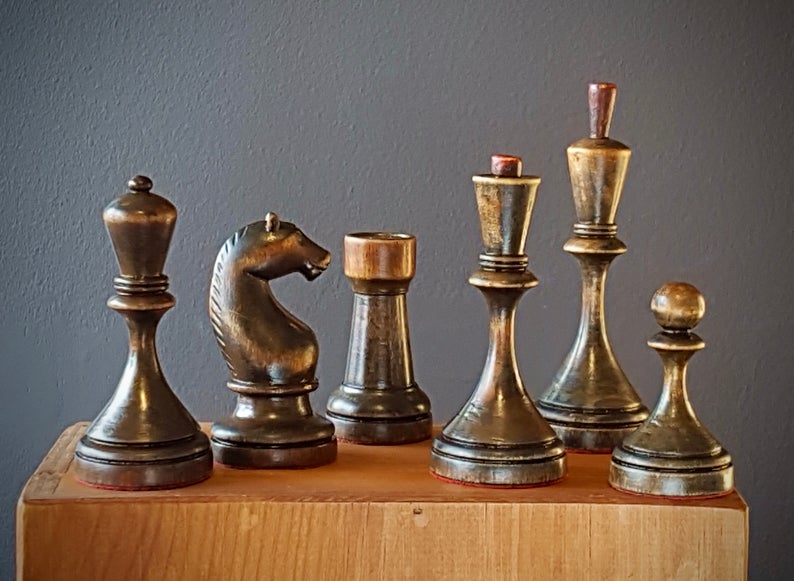

*SOLD* Botannikum-Flora (Botvinnik-Flohr II), 32 Weighted Wooden Chessmen, Soviet (Stalin Era) circa 1950
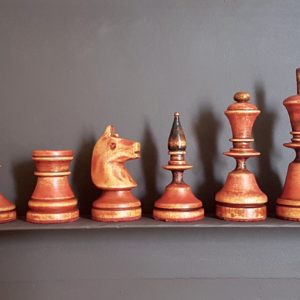
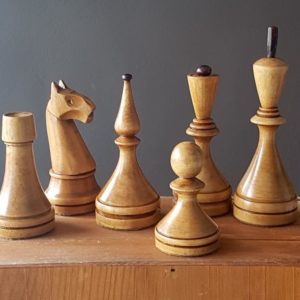
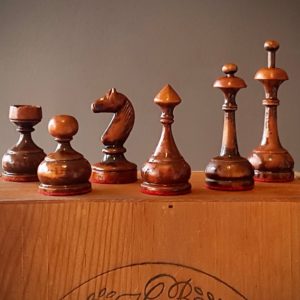
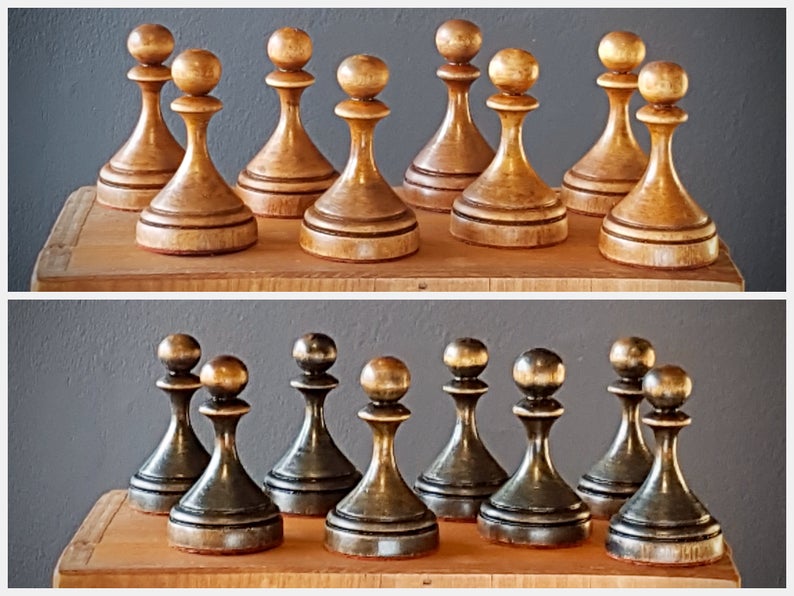
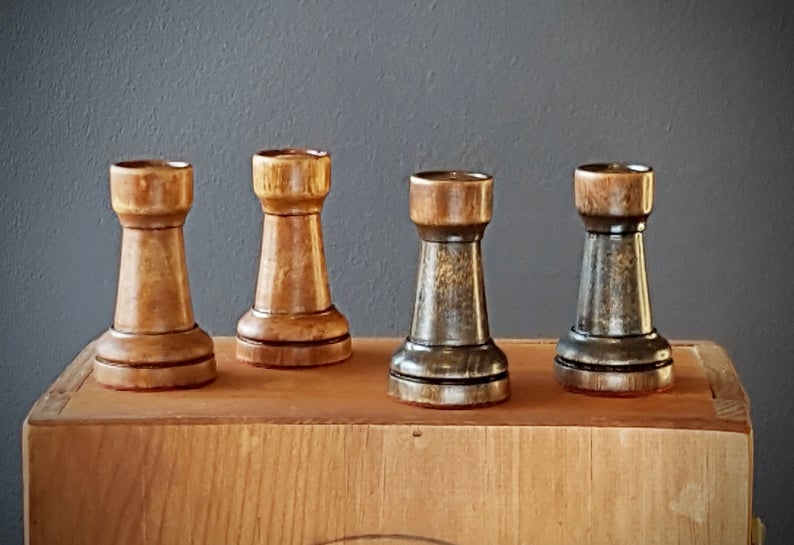
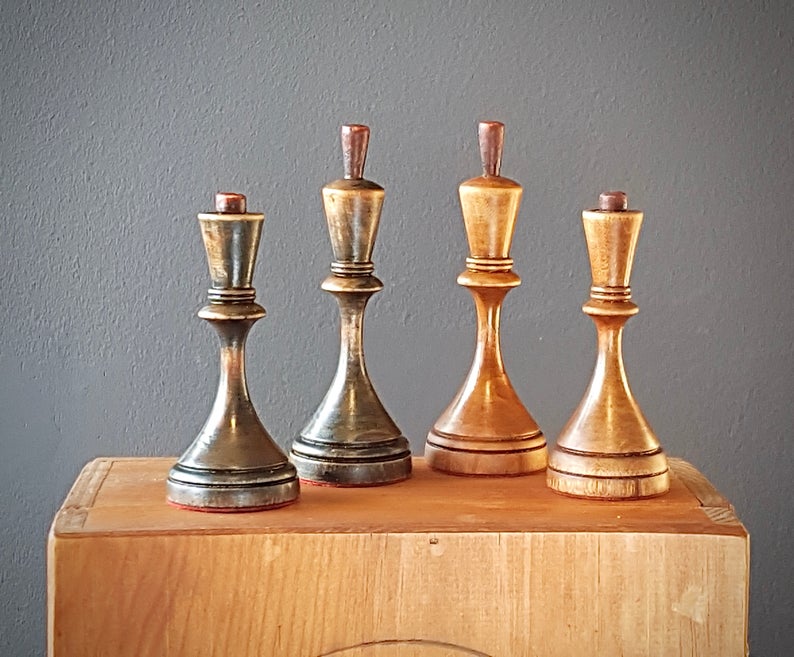
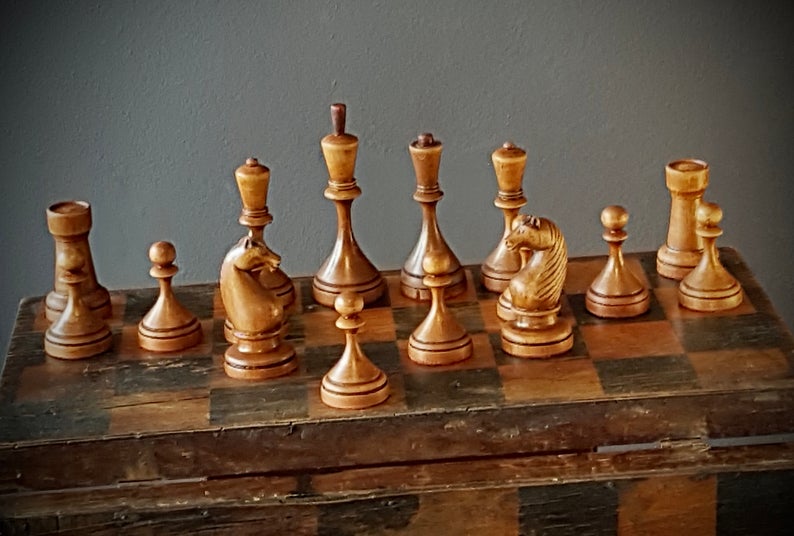
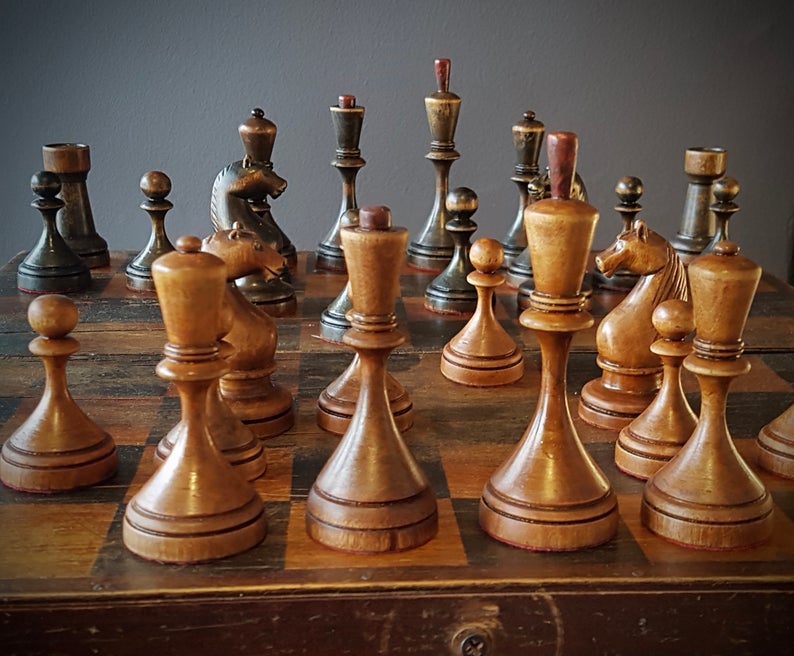
Botannikum-Flora (Botvinnik-Flohr II); 32 weighted chessmen without board, light brown v. dark brown, Soviet (Stalin Era), circa 1950. Height: King 11.5cm, wt 32g base diameter 4cm, Queen 9.3cm wt 29g, Bishop 8.3cm, Knight 7.5cm, Rook 6.3cm, Pawn 6cm; W: antiqued red felt bases B: same
An early version of the classic set made famous by the Moscow International Tournament of 1935, when Botvinnik and Flohr shared the purse for 1st place while the great Emanuel Lasker and the Cuban legend, Capablanca, placed 3rd and 4th respectively. These now-classic pieces were widely used throughout the USSR between 1935 and 1960 and in the words of the well-known U.S. chess collector, Chuck Grau, are one of “the most iconic Soviet designs ever produced.” And I couldn’t agree more with the learned gentleman.
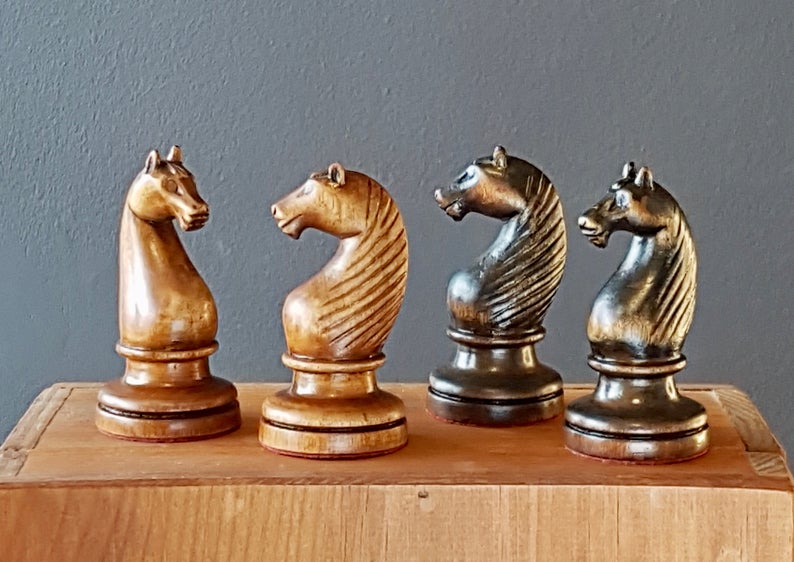
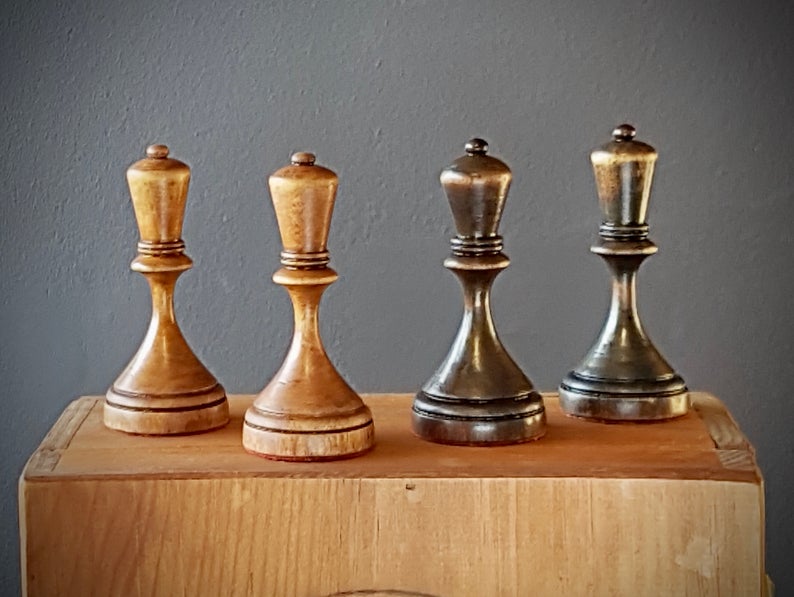
The manes and heads of the Knights are particularly well carved in this early set and the ‘rounded’ tops of the Bishops clearly distinguishes them from later, similar versions. The pawns are heavily weighted (21g) and carry the typical broad bases of tournament sets of this era.
The pieces are UV resistant and ideal for display as well as casual /blitz play.
Both kings carry the hand-painted iridescent silver ‘power’ signature of the artist on their bases,
Ref code BF20